Was Chiyoko Shimakura Truly Defrauded by Kazuko Hosoki? The 1 Billion Yen Scandal Exposed

When Netflix premiered the biographical drama Jigoku ni Ochiruwayo on April 27, 2026, viewers expected a dramatic retelling of fortune teller Kazuko Hosoki’s polarizing rise to cultural dominance. Instead, the chart-topping series starring Erika Toda opened a decades-old wound in Japanese entertainment history: the financial and psychological ruin of beloved enka royalty Chiyoko Shimakura. Within weeks of the show claiming the number one streaming spot across Japan, social media erupted with demands for accountability over allegations that Hosoki systematically siphoned roughly ¥1 billion from the vulnerable singer under the guise of debt relief, as detailed in an investigative livedoor ニュース Report on the real-world evidence behind the screen adaptation.
📌 Key Takeaways:
- The Core Finding: Investigative findings confirm Kazuko Hosoki did not rescue Chiyoko Shimakura out of benevolence; she acquired Shimakura’s distressed debt to seize commercial control of her career, skimming concert revenues and performance rights that ballooned to an estimated ¥1 billion in extracted wealth.
- The Drama's Catalyst: The 2026 Netflix series Jigoku ni Ochiruwayo drew directly from veteran journalist Atsushi Mizoguchi’s book Majo no Rirekisho (Kodansha), reigniting fierce scrutiny over Hosoki’s underworld connections and aggressive debt collection tactics.
- The Estate's Response: Kaori Hosoki, the fortune teller’s adopted daughter and heir to the Rokusei Senjutsu astrology empire, broke her silence in June 2026, admitting powerlessness against Netflix's legal machinery while stopping short of offering an apology to Shimakura’s surviving circle.
The Netflix Phenomenon That Reignited a Decades-Old Showbiz Feud
Erika Toda’s searing portrayal of Kazuko Hosoki captures a woman who operated at the intersection of spiritual theater, ruthless debt brokerage, and raw intimidation. The series does not present Hosoki merely as the sharp-tongued diviner who dominated prime-time television in the early 2000s with her Rokusei Senjutsu (Six-Star Astrology). It pulls back the curtain on her murky pre-fame years in Tokyo’s Ginza district during the late 1970s and 1980s.
Viewers watched in disbelief as the drama laid out Hosoki’s intervention in the life of Chiyoko Shimakura, an artist revered for postwar anthems like "Tokyo Da-Ren-Mo." By May 2026, clips of Toda barking orders at an onscreen proxy of Shimakura had generated millions of impressions across TikTok and X. The public reaction was swift and indignant. For younger generations unfamiliar with Showa-era tabloids, the idea that a household television guru operated as an unlicensed debt enforcer came as a genuine shock.
How a Loan Guarantee Trapped Japan's Beloved Enka Songstress
To understand Hosoki’s financial stranglehold over Shimakura, one must track back to the structural vulnerabilities of the 1970s Japanese music industry. Shimakura was exceptionally talented, extraordinarily trusting, and notoriously terrible with administrative oversight. Her spiral began when she co-signed promissory notes and financial guarantees for acquaintances, most notably an eye doctor who had established a personal relationship with her and subsequently defaulted on catastrophic business loans.
In Japan's postwar entertainment ecosystem, an artist's personal seal (hanko) carried legally binding, life-crushing liability. When the doctor disappeared, loan sharks and shadowy financiers converged directly on Shimakura. Her primary liabilities initially stood at an estimated ¥240 million, an exorbitant sum in 1977 that expanded rapidly once predatory compound interest took hold. Desperate to protect her standing at Columbia Music Entertainment and avoid being banned from the annual NHK Kohaku Uta Gassen broadcast, Shimakura sought an exit. She walked directly into Kazuko Hosoki’s orbit.
Atsushi Mizoguchi’s Exposé: The Mechanics of the 1 Billion Yen Siphon
The factual backbone of the Netflix series comes from Hosoki Kazuko: Majo no Rirekisho ("Kazuko Hosoki: Witch's Resume"), a rigorous piece of investigative reporting published by Kodansha and written by veteran crime journalist Atsushi Mizoguchi. Mizoguchi tracked Hosoki’s background for decades, documenting her deep ties to organized crime syndicates and backroom financial operators.
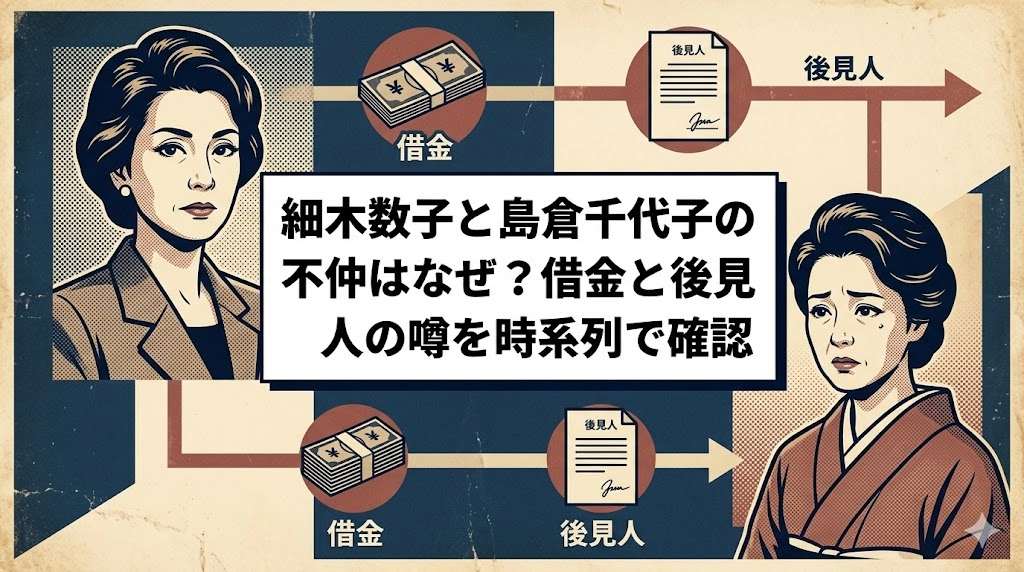
Mizoguchi's findings reveal that Hosoki never eliminated Shimakura's debts out of personal sympathy. Instead, she bought up the notes from existing creditors at substantial discounts, positioning herself as the singer's primary and absolute creditor. With Shimakura legally cornered, Hosoki took total management control over her touring schedule. For years, Shimakura performed relentless regional tours across Japan, singing at community centers, local banquet halls, and private venues. The overwhelming majority of the performance fees, merchandise cash flows, and appearance cuts went directly into Hosoki's accounts under the justification of debt repayment and management fees. Accounting tallies compiled by Mizoguchi indicate that over the lifespan of their arrangement, the total revenue extracted from Shimakura’s labor surpassed ¥1 billion.
| Phase & Timeline | Financial Mechanism | Documented Impact |
|---|---|---|
| Initial Default (1977, 1979) | Cosigning bad promissory notes for acquaintances; predatory loan shark interest. | Shimakura’s debt balloons from roughly ¥240 million to over ¥400 million. |
| Hosoki Consolidation (1980, 1986) | Hosoki acquires debt notes; assumes unilateral management and touring contract rights. | Complete control of performance cash flows; grueling touring schedule with minimal direct payout. |
| Extraction Total (1980, 1990s) | Inflated administrative costs, high-interest rates, and direct ticket gate splits. | Mizoguchi’s reporting records roughly ¥1 billion skimmed off Shimakura’s labor before ties severed. |
| Streaming Reckoning (2026) | Netflix release of Jigoku ni Ochiruwayo; broad public rediscovery of historical archives. | Intense public pushback against Hosoki's remaining brand; commercial pressure on successor Kaori Hosoki. |
Kaori Hosoki Breaks Her Silence as Demands for an Apology Mount
The cultural fallout from the Netflix production hit Kazuko Hosoki’s remaining commercial empire with sudden force. On June 6, 2026, Kaori Hosoki, Kazuko’s 47-year-old adopted daughter who inherited leadership of the family’s lucrative divination business, posted an unvarnished response on her YouTube channel. Comment sections across her social platforms had been overwhelmed with messages demanding: "Apologize to Chiyoko Shimakura."
Kaori addressed the controversy with evident strain. She acknowledged the brutality of the drama’s depiction but pointed out the overwhelming legal leverage held by the production company. Netflix had arrived flanked by premier international legal representation, leaving the family with virtually no legal basis to block the series or alter its narrative beats. While Kaori sought to contextualize her adoptive mother as a product of a violent, chaotic postwar business environment, she pointedly refused to issue a formal apology on behalf of the deceased fortune teller. That refusal only inflamed online discussions, driving curious international and domestic viewers back into the historical paper trail.
The Structural Abuse Hidden Behind Showa Celebrity Patronage
Was Chiyoko Shimakura technically "defrauded" under modern legal definitions? The reality is nuanced. Hosoki did not forge documents to steal cash from a bank vault. Instead, she executed a predatory form of debt restructuring common in Showa-era Japan, weaponizing social isolation, fear of reputational death, and legal leverage.
Shimakura was kept in perpetual financial servitude through opaque bookkeeping. Whenever the debt approached full repayment, Hosoki added operational fees, interest surcharges, and penalties. The psychological toll proved immense. Eyewitness accounts gathered by Mizoguchi described Shimakura breaking down in tears backstage, terrified of crossing Hosoki or the organized crime intermediaries backing her. Shimakura eventually managed to break free from Hosoki’s grip with the assistance of independent promoters and record executives, spending years slowly clearing her remaining legitimate debts before her death from liver cancer in 2013 at age 75. Hosoki herself passed away in 2021, leaving behind billions of yen and a trail of unresolved ethical questions.
Frequently Asked Questions (FAQ)
Q1: Did Kazuko Hosoki ever face criminal prosecution for her handling of Chiyoko Shimakura’s debts?
A1: No formal criminal indictments were ever handed down against Hosoki regarding the Shimakura debt arrangement. The contracts were structured as private financial guarantees and talent management agreements, insulating Hosoki from criminal fraud charges despite aggressive tactics.
Q2: How much money did Chiyoko Shimakura actually repay throughout her lifetime?
A2: While her original personal obligations hovered between ¥240 million and ¥400 million, the prolonged cycle of compounding interest, management fees, and exploited concert earnings caused the total financial value extracted from her work to exceed ¥1 billion before she achieved independence.
Q3: How accurate is Netflix’s drama Jigoku ni Ochiruwayo compared to real history?
A3: The drama closely adheres to the factual chronology established in investigative journalist Atsushi Mizoguchi’s book Hosoki Kazuko: Majo no Rirekisho. While dialogue is dramatized for emotional pacing, the core financial transactions, debt consolidation tactics, and power dynamics reflect documented historical accounts.
The Lasting Cultural Reckoning Over Postwar Japanese Entertainment
The public anger surrounding Jigoku ni Ochiruwayo goes beyond nostalgia. It exposes a long-standing refusal within Japanese media institutions to confront how their most vulnerable performers were exploited by predatory fixers. For decades, major television networks knowingly looked the other way, elevating Kazuko Hosoki into a prime-time arbiter of moral character while burying her history of predatory financial exploitation.
Chiyoko Shimakura remains an enduring symbol of artistic grace who survived systemic cruelty without losing her voice. The massive viewership of the 2026 Netflix series has dismantled the curated myth of the benevolent fortune teller, leaving behind an overdue reckoning with the predatory reality that lay beneath.