Why Daiso's 100-Yen Pocket Tissue Pouches Are Selling Out Everywhere
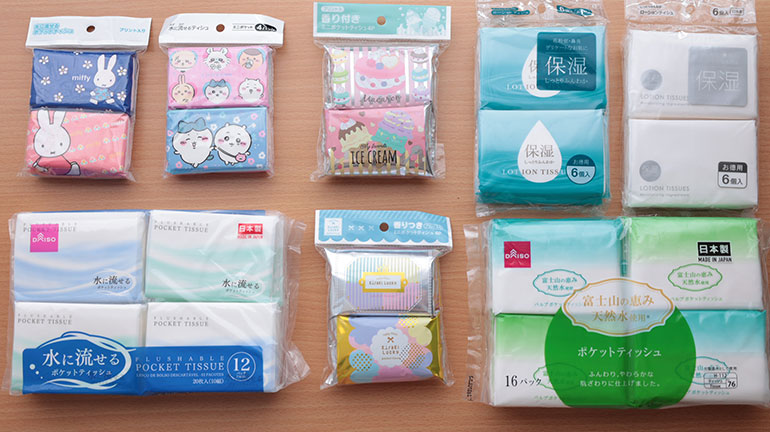
Every spring across Tokyo, convenience stores and train stations fill with people desperate for allergy relief as cedar and cypress pollen counts soar. Yet this year, the most sought-after defense mechanism is not an expensive antihistamine or a high-tech filtration mask. It is an unassuming nylon pouch dangling from backpacks and tote handles across the country. According to an [MSN Report](https://www.msn.com/ja-jp/lifestyle/shopping/100%E5%9D%87%E3%81%A7%E8%A6%8B%E3%81%A4%E3%81%91%E3%81%9F%E3%83%9D%E3%83%BC%E3%83%81-%E3%81%93%E3%81%86%E8%A6%8B%E3%81%88%E3%81%A6%E5%AE%9F%E3%81%AF%E6%A9%9F%E8%83%BD%E7%9A%84-%E3%83%90%E3%83%83%E3%82%B0%E3%81%AB%E4%BB%98%E3%81%91%E3%82%8B%E3%81%8A%E5%AE%88%E3%82%8A%E7%9A%84%E3%82%B0%E3%83%83%E3%82%BA/ar-AA21Xji0), Japanese discount giant Daiso has struck retail gold with its latest batch of exterior-mount tissue pouches, transforming a humble dollar-store staple into an indispensable piece of daily carry hardware.
The rush highlights a fundamental shift in how people view cheap accessories. Rather than relying on generic plastic sleeves that tear inside a crowded bag, commuters and international travelers are treating these 100-yen shop organizers as modular gear. By pairing rugged exterior hardware with quick-access dispensing slits, Daiso engineered an answer to an annoying, universal urban problem: retrieving a tissue without unzipping three separate bags while your eyes are streaming on a crowded subway.
📌 Key Takeaways:
- The Hardware: Daiso rolled out dedicated pocket tissue dispensers equipped with metal carabiner clips and spring hinges priced between ¥110 and ¥220 ($0.70 to $1.45).
- The Price Gap: Retail watchers have singled out Daiso's spring-mouth utility case as a direct competitor to Muji’s ¥800 alternative, delivering comparable daily utility at a 75% discount.
- Hygiene Utility: Viral pickup across social platforms centers on dual-compartment designs that separate clean wipes, eye drops, and medication from temporary trash storage.
How Pollen Season Turned a Cheap Sleeve Into an Urban Shield
Japan's allergy season is not a minor inconvenience; it is a full-scale public health event. Millions navigate peak spring weeks carrying nasal sprays, prescription drops, and heavy packs of paper wipes. For decades, the standard response was stuffing complimentary promotional tissue packets directly into coat pockets, where the thin plastic wraps disintegrated within hours.
Japanese lifestyle reporting from Excite documented how shoppers began calling the latest Daiso pocket tissue pouch an "omamori", a lucky protective talisman, against sudden bouts of rhinitis. Daiso moved the item out of stationary corners and directly into the front-of-store hygiene sections. The strategic placement paid off immediately. Commuters who spotted the pouches while buying hand sanitizers bought multiple units, clipping one to work briefcases, another to gym bags, and keeping spares in their vehicles.
The sudden surge in demand caught retail analysts by surprise. 100-yen store novelties typically flare up on short-form video platforms before vanishing, but these cases address an everyday logistical headache. You no longer have to stop walking, pull off a backpack, and rummage blindly through a dark main compartment. The tissue pulls cleanly through an external slit in under two seconds.
The Engineering Behind Built-in Carabiners and Spring Hinges
The breakthrough lies in mechanical convenience rather than fancy textiles. Daiso's carabiner clip pouch uses a reinforced top loop linked to a lightweight aluminum clip. Users snap the case directly onto external bag rings, belt loops, or stroller handles. The slit across the front keeps tension on standard pocket-pack tissues, allowing one-handed dispensing without letting dirt or rain inside.
Simultaneously, Daiso's spring mouth utility case gained traction for an entirely different tactile reason. Known colloquially as a "bane-kuchi" pouch, this design ditches external zippers in favor of two flexible internal steel strips sewn into the fabric rim. Squeezing the side edges pops the pouch open instantly; releasing your grip snaps it shut with a firm slap. It eliminates zipper snags, prevents loose pills or nasal drops from tumbling out, and keeps moisture contained.
This spring-frame mechanism transformed what used to be a passive tissue cover into an active everyday carry hygiene case. Parents attach them to diaper bags for instant access during toddler spills. Commuters squeeze them open with one hand while holding an umbrella or an overhead train strap with the other. The deliberate physical tension of the spring hinge keeps contents sealed without requiring two free hands.
Daiso vs. Muji: The Battle for Everyday Carry Organizers
The retail rivalry between budget giant Daiso and minimalist icon Muji reached new heights when livedoor News flagged Daiso's release of the Pocket Tissue Utility Spring-Mouth Pouch. Lifestyle shoppers noticed the new arrival matched the exact form factor, utility loops, and internal layout of a popular Muji pouch selling for roughly ¥800 (about $5.25). Daiso priced its version at just ¥220 (tax included).
The price contrast triggered immediate stock shortages across major metropolitan branches in Shinjuku, Shibuya, and Osaka. Online reviewers systematically weighed whether the five-dollar brand-name version justified a four-fold price premium over the Japanese dollar store finds.
| Product Model | Retail Price | Closure Mechanism | Primary EDC Role |
|---|---|---|---|
| Daiso Carabiner Pouch | ¥110 ($0.70) | Zip top + Center Slit | Exterior bag mounting, rapid dispensing |
| Daiso Spring-Mouth Case | ¥220 ($1.45) | Internal steel spring hinge | One-handed storage, lip balm and meds |
| Muji Utility Case | ¥790, ¥890 ($5.20, $5.85) | Spring hinge + Heavy Canvas | Long-term premium durability, office carry |
While Muji still claims an edge in long-term fabric weight and muted Scandinavian-inspired color palettes, Daiso’s Muji dupe pouch matches its mechanical function stride for stride. For an item intended to carry tissues, sanitizing wipes, and small first-aid items through a muddy, rain-soaked spring, the vast majority of consumers prefer replacing a ¥220 pouch every few seasons over babying an ¥800 canvas original.
The Dual-Pocket Layout: Solving the Used-Tissue Problem
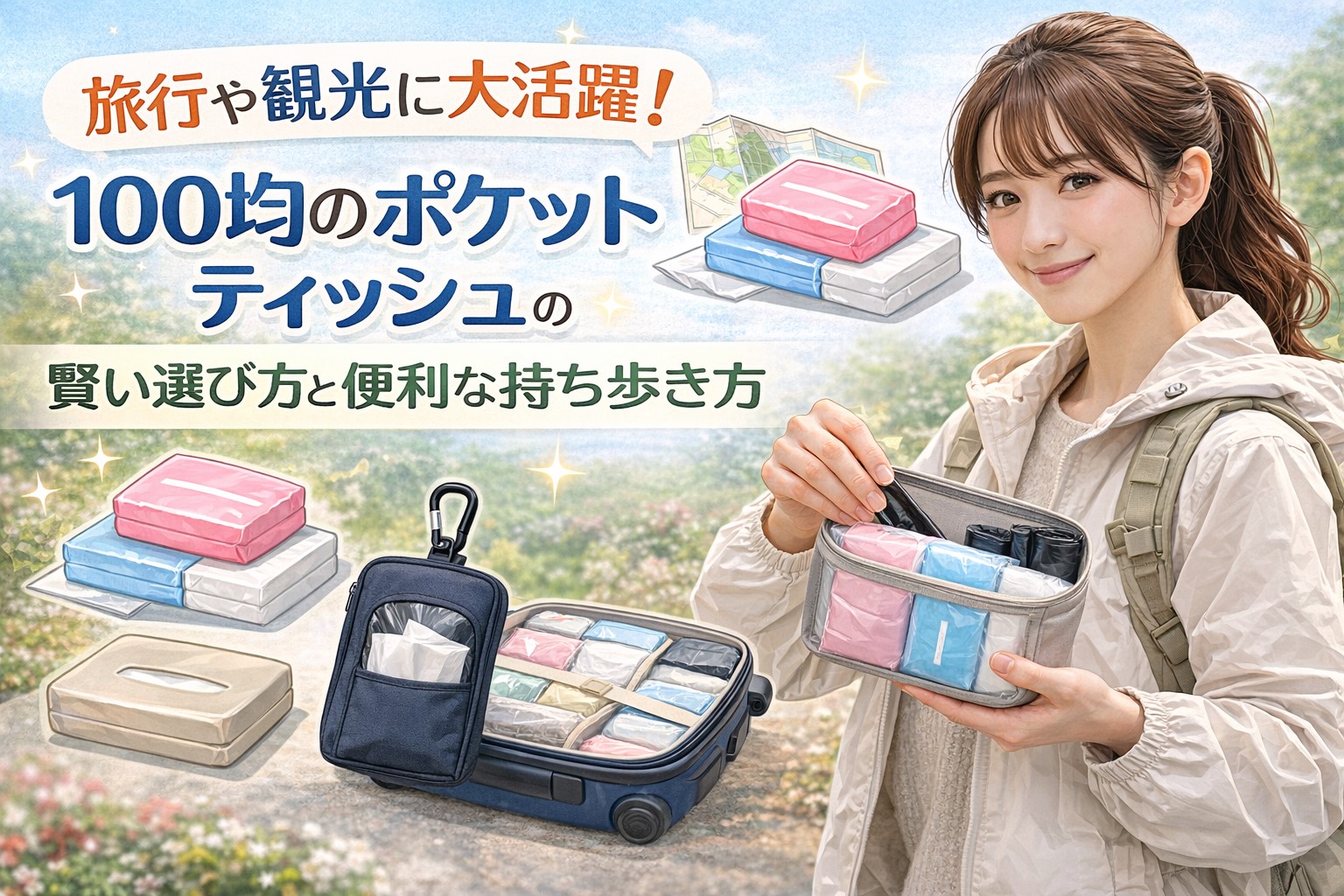
A second major driver behind the virality of these cases is sanitary layout. Modelpress detailed a multi-pocket variant in Daiso’s pouch section featuring distinct compartments separated by an interior divider. The primary chamber houses a standard packet of dry tissues or wet wipes, while the front elasticized pouch holds eye drops, throat lozenges, compact lip balms, and small pill blisters.
Japan’s public spaces are notoriously clean, yet municipal trash cans are almost nonexistent on city sidewalks. During allergy season, this absence creates a persistent dilemma: what do you do with a crumpled, used tissue when you are nowhere near a station garbage receptacle? Yahoo! Japan lifestyle columnist akaneko pointed out that urban commuters are using the secondary compartment of these pouches as an airtight temporary waste depot.
By lining the back pocket with a tiny disposable plastic film, users create an odor-free, concealed spot to stash used tissues until they find an appropriate recycling station. The multipurpose hygiene pouch acts as a portable sanitation station, cleanly separating unused tissues from contaminated waste. That practical feature alone has cemented the organizer's place in daily commuters' gear rotations.
Who Should Buy It and What Limitations to Expect
Despite the overwhelming praise across Japanese social channels, these budget pouches have real limitations that buyers should understand before loading them up.
Ideal Profiles:
- Daily Mass-Transit Commuters: Those who need fast, one-handed access to tissues on crowded trains without opening deep bags.
- Budget Travel Pack Builders: Backpackers looking for a lightweight, compact travel organizer that clips onto daypack webbing for quick access.
- Seasonal Allergy Patients: Individuals who carry an assortment of eye drops, prescription pills, and nasal sprays that frequently get lost in large bag pockets.
Risk Flags and Limitations:
- Standard Carabiner Strength: The included clip on the ¥110 model is made of pressed aluminum. It handles the weight of paper and eye drops easily, but it will bend or snap if caught on a turnstile or heavy train door. Swapping it for a small climbing-rated mini carabiner is recommended.
- Non-Standard Tissue Sizing: These pouches are measured for standard Japanese pocket-pack dimensions (roughly 4.5 by 3 inches). Bulky Western travel tissue packs or full-size lotion tissues must be folded or repacked to slide through the slit smoothly.
- Water Resistance: While the synthetic outer shell repels light rain, the tissue slit itself does not feature a water-tight rubber gasket. Heavy downpours will eventually soak the paper inside if the pouch hangs exposed on an outer pack loop.
Frequently Asked Questions (FAQ)
Q1: Can Western pocket tissue packs fit inside Daiso's tissue pouches?
A1: Flat, rectangular travel packs fit easily. However, thick, cube-style mini tissue packs common in North American drugstores are too bulky for the back slot and will jam the dispensing slit. Flat refill packs work best.
Q2: Is the spring hinge on the 220-yen utility pouch durable enough for daily use?
A2: Testing by lifestyle reviewers indicates the internal steel band maintains its snapping tension through hundreds of open-close cycles. The most common wear point is the fabric stitch at the far corners of the hinge, not the spring steel itself.
Q3: Are these specific tissue pouches available in international Daiso locations?
A3: Daiso stores in North America, Australia, and Southeast Asia regularly stock seasonal Japanese inventory roughly 6 to 12 weeks after domestic rollouts. However, inventory varies by distributor, making cross-border buying via import services popular during spring.
Where Utility Organizers Head Next
The viral success of Daiso's spring-mouth and carabiner tissue holders marks a clear evolution in functional accessories. Consumers are no longer willing to purchase single-use plastic cases or struggle with basic bag clutter when thoughtful hardware design can solve multiple everyday frustrations for less than the price of a takeout coffee.
By blending external clip systems, dual-compartment hygiene separation, and spring-frame mechanics, 100-yen organizers have redefined practical convenience. As seasonal allergies intensify and urban commuters demand smarter, modular gear, the humble pocket tissue pouch has officially outgrown its novelty status to become a permanent everyday carry staple.