Why Did Toyota Kill the Two-Tone Sienta? The New Color Hierarchy Revealed
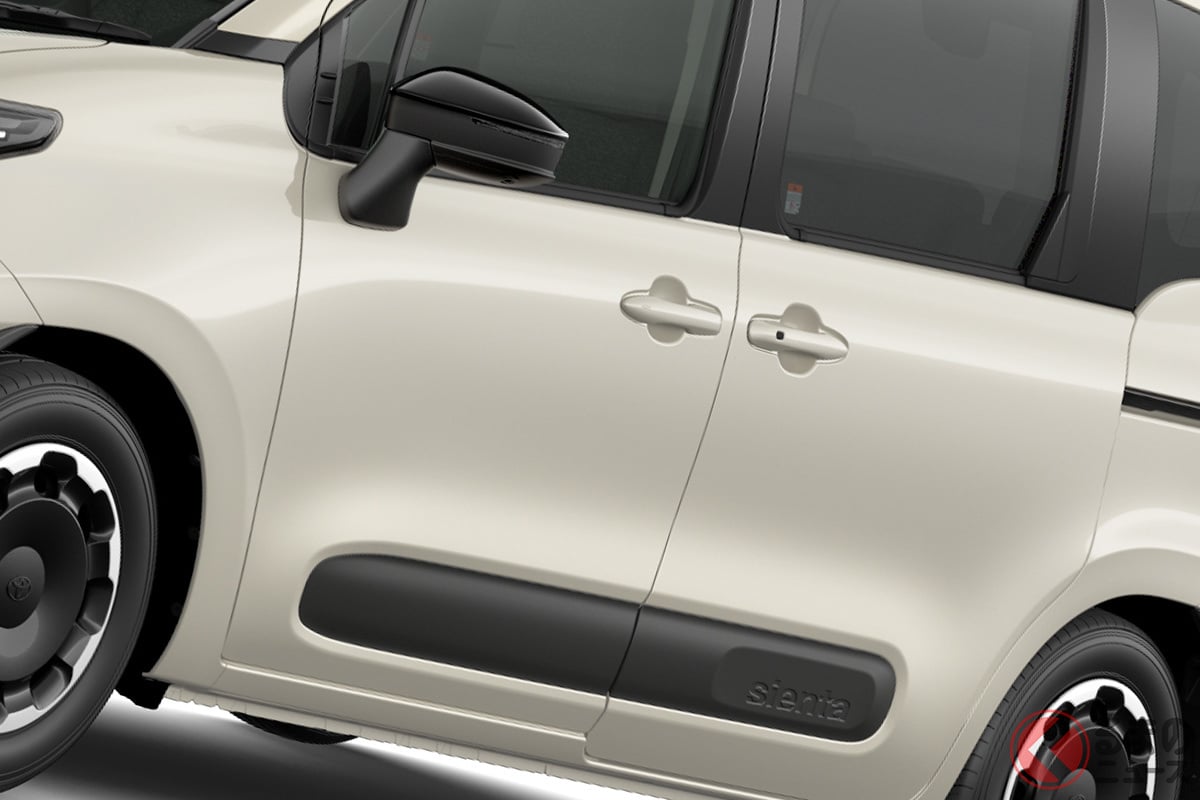
When Toyota rolled out the refreshed Sienta on August 3, 2026, buyers heading into Japanese showrooms noticed an abrupt absence. The contrasting roof configurations, a trademark aesthetic that had defined the third-generation compact MPV since its debut, were gone. Toyota quietly stripped every two-tone combination from the order books, streamlined standard gear, and adjusted base pricing to manage a backlog that threatened to stretch well past the twelve-month mark.
Showroom reaction was swift. Despite the trimmed catalog, regional dealers logged an immediate flood of new contracts, prompting Toyota to issue delivery caution notices before the month ended. Buyers searching for a playful, two-tone family runabout suddenly had to rethink their configurations. The shakeup also coincided with radical platform experiments, most notably highlighted in a くるまのニュース on MSN Report detailing the Modellista JUNO, a commercial-plated, two-seat camper build that shifts the Sienta from school hauler to mobile office. With the two-tone era officially closed, a distinct single-tone color order has seized the market.
📌 Key Takeaways:
- The Production Realignment: Toyota dropped all two-tone factory paint options during the August 2026 minor change update to eliminate plant bottlenecks and tame ballooning dealership delivery wait times.
- The New Color Leaders: Urban Khaki and Beige have claimed over 55% of combined customer orders, outperforming corporate monochromes by leaning into utilitarian outdoor styling.
- Residual Reality: White Pearl Crystal Shine continues to deliver the strongest three-year compact minivan resale value floor, while earth tones dominate immediate private-party resale velocity.
The Factory Bottlenecks That Killed the Contrast Roof
Automakers do not eliminate popular styling choices without pressing financial or operational reasons. The two-tone configurations, pairing contrasting dark gray roofs with bodies finished in Scarlet Metallic or Urban Khaki, accounted for roughly 28% of initial launch orders when the current shape arrived. Yet they created an operational nightmare at the assembly plant.
Spraying a two-tone vehicle requires pulling the body off the primary automated paint line, applying meticulous hand masking, running it through a secondary curing oven, and clearing the booth for paint purging. In a single-shift setup, processing one two-tone body consumes the production window of approximately 1.4 mono-tone shells. With parts shortages already causing assembly halts across Japan, Toyota faced delivery delays pushing eight to ten months for two-tone variants in early 2026.
Dropping the contrast roof was a mechanical triage. By standardizing the paint shops to single-pass runs, plant managers shaved hours off the per-unit cycle time. Dealerships across Tokyo and Osaka reported that the August 3 update was designed primarily to protect production stability before calendar-year allocations vanished entirely.
The Dealer Floor Hierarchy: Sienta Color Popularity Breakdown
Stripping the multi-hued roof options did not suppress overall demand; it simply funneled buyers straight into earth-toned mono-coat paints. Dealership sales records indicate that young families and empty nesters prioritize functional aesthetics over executive finishes.
Urban Khaki has emerged as the definitive signature color for the compact MPV, commanding the single largest share of dealership orders. It is closely followed by Beige, which appeals directly to suburban households wanting a warm, non-metallic profile that disguises road grit between washes. The corporate stalwarts, White Pearl and Black, maintain steady volumes, though their market share has shrunk relative to previous generations.
| Color Variant | Share of 2026 Orders | Average Wait Time | 36-Month Resale Forecast |
|---|---|---|---|
| Urban Khaki (6X3) | 31% | 4, 6 months | 68, 71% |
| Beige (4V6) | 26% | 4, 5 months | 66, 69% |
| White Pearl Crystal Shine (070) | 22% | 5, 7 months | 72, 75% |
| Black Mica (209) | 11% | 3, 4 months | 64, 67% |
| Dark Gray Metallic (1L7) | 10% | 3, 4 months | 60, 63% |
Why Outdoor Tones Displaced Corporate Neutrals
The Sienta’s visual identity changed dramatically between generations. While the previous iteration relied on sharp, athletic creases reminiscent of sports shoes, the current vehicle relies on rounded, utilitarian proportions. Toyota stylists drew deliberate inspiration from European city delivery vans, notably the Renault Kangoo.
Sharp monochrome paints like metallic black fight against this architectural shape. Earth tones embrace it. The heavy, unpainted plastic protective moldings around the wheel arches and lower door sills integrate cleanly against Urban Khaki and Beige. On a solid black van, those functional plastic guards vanish into a blob of dark resin; on pearl white, the stark black cladding creates a high-contrast stripe that disrupts the vehicle's beltline.
Interior cabin styling also dictates buyer choices on the outside. Toyota’s optional Fromage fabric cabin, which combines light gray cloth with warm dash accents, pairs naturally with an earth-toned exterior. Buyers choosing the dark Charcoal cabin usually opt for White Pearl or Dark Gray, but dealerships note that over 60% of top-trim Z grades now leave the factory with lighter interior fabrics, pulling exterior demand toward the khaki and beige spectrum.
Resale Value Realities Versus Showroom Hype
Opting for a trendy color carries distinct financial implications on wholesale auction blocks. White Pearl Crystal Shine demands a ¥33,000 factory surcharge upfront. That cost is consistently recovered at trade-in. Used car wholesalers still view pearl white as zero-risk inventory, which keeps its three-year residual floor comfortably near 73%.
Urban Khaki has narrowed that gap considerably. In the secondary market, three-year-old khaki units routinely clear dealer auctions within 48 hours of listing, matching pearl white in net transaction prices. Independent used car lots market these vehicles to camper van converters, hobbyists, and weekend anglers who actively avoid corporate whites.
Dark Gray Metallic sits on the opposite end of the financial spectrum. While it processes through factory paint booths with the shortest wait times, often arriving in under four months, it suffers steep depreciation on the used market. Dealership valuation sheets deduct an average of ¥120,000 to ¥180,000 compared to an identical White Pearl or Urban Khaki unit after three years of ownership.
How the Modellista JUNO Changed the Lifestyle Equation
The color dynamic took an unexpected turn in late September 2026, when Toyota and customizer Modellista introduced the production-spec Sienta JUNO. Unlike the standard five-seat or seven-seat passenger configurations, the JUNO strips out the rear rows entirely, reclassifying the vehicle as a two-seat, 4-number small commercial van.
Marketed as a "portable personal room," the JUNO features a flat hardwood cargo deck, modular storage lockers, tailored privacy blinds, and a built-in power management hub. It is available in both front-wheel drive and mechanical E-Four all-wheel drive, giving rural buyers and solo campers an accessible overland micro-rig.
This conversion dramatically reinforced the demand for utilitarian exterior colors. Factory figures indicate that over 70% of JUNO inquiries specifically request Urban Khaki or Beige paint. Placing a commercial, off-grid camper body into an urban White Pearl or Dark Gray scheme undermines the rugged appeal that attracts hobbyist buyers in the first place.
Frequently Asked Questions (FAQ)
Q1: Can I still order a two-tone Sienta through custom dealer requests?
A1: No. Toyota entirely removed two-tone codes from the production manifest during the August 3, 2026 minor update. Buyers wanting a contrasting roof must arrange aftermarket vinyl wrapping through a third-party shop after taking delivery.
Q2: Does White Pearl Crystal Shine still offer the fastest route to high resale value?
A2: Yes. Pearl white remains the absolute safest color for guaranteed lease-end residuals and wholesale auction demand. However, Urban Khaki now trades within 2% to 3% of pearl white due to intense retail demand in the compact camper segment.
Q3: How much longer is the wait time for popular colors like Urban Khaki?
A3: Urban Khaki and Beige typically require five to six months from contract signing to dealership delivery. Less popular shades like Dark Gray Metallic can arrive in three to four months, depending on your local dealer allocation.
Q4: Does the interior color limit my exterior paint options?
A4: Factory configuration rules allow you to pair the standard Black interior with any body color. However, the lighter Fromage cloth interior is restricted to higher-tier trims and cannot be optioned with certain utility fleet colors.
Navigating Your Color Choice
The elimination of two-tone paint stripped away visual distractions and revealed where driver preferences actually lie. If retaining maximum trade-in value on a strict three-year lease is your overriding priority, paying the factory surcharge for White Pearl Crystal Shine remains the most dependable financial move.
For buyers keeping their vehicle five years or longer, Urban Khaki and Beige represent the true design intent of this platform. These shades balance long-term retail appeal, mask outdoor wear, and integrate properly with the vehicle's utilitarian body cladding. The two-tone roof is gone, but the shift toward cohesive, functional earth tones has given the Sienta a far sharper identity than it had before.