Why Modern Living Rooms Are Ditching Bulky Couches for Modular 3-Seater Sofas

Urban floor plans shrink every year, yet the expectations placed on living room furniture have never been higher. The traditional six-foot couch, heavy, immovable, and wrapped in delicate upholstery, increasingly feels like an outdated relic of mid-century suburban housing. In its place, a quieter spatial reorganization is underway across global metropolitan apartments and renovated single-family homes alike.
The standard three-person couch has shed its rigid wooden skeleton. Design directors and direct-to-consumer manufacturers now prioritize modularity, washable slipcovers, and flat-pack logistics. As detailed in an ELLE Report on Australia-born brand Koala, consumers are migrating toward tool-free assembly couches and dual-purpose sleeper configurations that adapt effortlessly to tight living quarters without demanding an afternoon of Allen-wrench frustration.
📌 Key Takeaways:
- Urban Footprint Pressure: Shrinking square footage in metropolitan hubs has turned the modular 3-seater sofa into the default anchor piece for modern layouts.
- Mechanical Simplicity: Tool-free friction latches and slot-together construction eliminate moving hardware while facilitating walk-up apartment deliveries.
- Long-Term Durability: High-resilience polyurethane foam cores paired with removable washable covers solve the twin problems of premature seat sagging and surface stains.
The Urban Floorplan Squeeze That Broke the Traditional Couch
Square footage in newly constructed rental units and urban condominiums has contracted significantly over the last decade. A standard compact living room layout rarely accommodates both a dedicated entertainment couch and a secondary guest bed. Bulky chesterfields and monolithic sectionals block sightlines, crowd narrow walkways, and turn narrow stairwell deliveries into logistical nightmares.
Homeowners and renters now approach interior layout like naval architects. Every piece of space-saving furniture must pull double duty without visually overwhelming the room. The three-person footprint remains the spatial sweet spot: wide enough to stretch out fully on a Sunday afternoon, yet narrow enough to clear baseboard radiators and balcony doors. Rather than committing to a permanent left- or right-facing chaise, modern buyers lean toward modular units that can be detached, swapped, or expanded when moving across town.
Engineering the Tool-Free Setup and Modular Footprint
Furniture assembly historically carried a reputation for chipped veneer, missing metric screws, and compromised structural joints. Direct-to-consumer innovators have systematically eliminated those pain points. Today's apartment-scale sectional models lean on friction locks, drop-in metal brackets, and precision-cut interlocking birch plywood.
These frames arrive in manageable, courier-shipped cartons that clear 30-inch doorways and tight elevator cabs. One person can assemble an entire modular 3-seater sofa in under 15 minutes without reaching for a single wrench. The absence of threaded hardware also reduces long-term frame squeaks: wood friction rails settle with weight rather than vibrating loose over years of daily impact.
Seating Depth, Cushion Density, and the Ergonomics of Daily Lounging
A sofa's lifespan depends on what sits beneath the fabric. Low-cost furniture brands frequently pack seat cores with lightweight foam rated under 1.5 lbs/cu.ft., which compresses permanently within 18 months. Premium direct-to-consumer designs specify high-resilience foam densities between 2.2 and 2.8 lbs/cu.ft., often layered over pocketed steel coils or high-tensile serpentine springs to balance immediate softness with lasting structural rebound.
Proportions matter just as much as chemical formulations. Finding the balance between compact external dimensions and comfortable seating depth requires careful balance:
| Sofa Category | Average Width & Depth | Core Cushion Density | Assembly Method | Typical Price Tier |
|---|---|---|---|---|
| Fixed Traditional 3-Seater | 84″, 92″ W × 36″ D | 1.5, 1.8 lbs/cu.ft. | Pre-assembled / Bolt-on legs | $600, $1,400 |
| Modular Flat-Pack Couch | 78″, 86″ W × 34″, 38″ D | 2.2, 2.8 lbs/cu.ft. | Tool-free interlocking slots | $1,100, $2,200 |
| Convertible Pull-Out Sleeper | 80″, 88″ W × 38″, 42″ D | 2.0, 2.5 lbs/cu.ft. hybrid | Integrated slide track | $1,300, $2,600 |
For upright, conversational postures, an interior seating depth of 21 to 23 inches prevents lower-back strain. Households that prefer cross-legged lounging or movie marathons lean toward deep-profile bases measuring 25 to 27 inches. Cushion density and support dictate whether the frame accommodates both needs without sagging down to the timber rails after two years of heavy use.
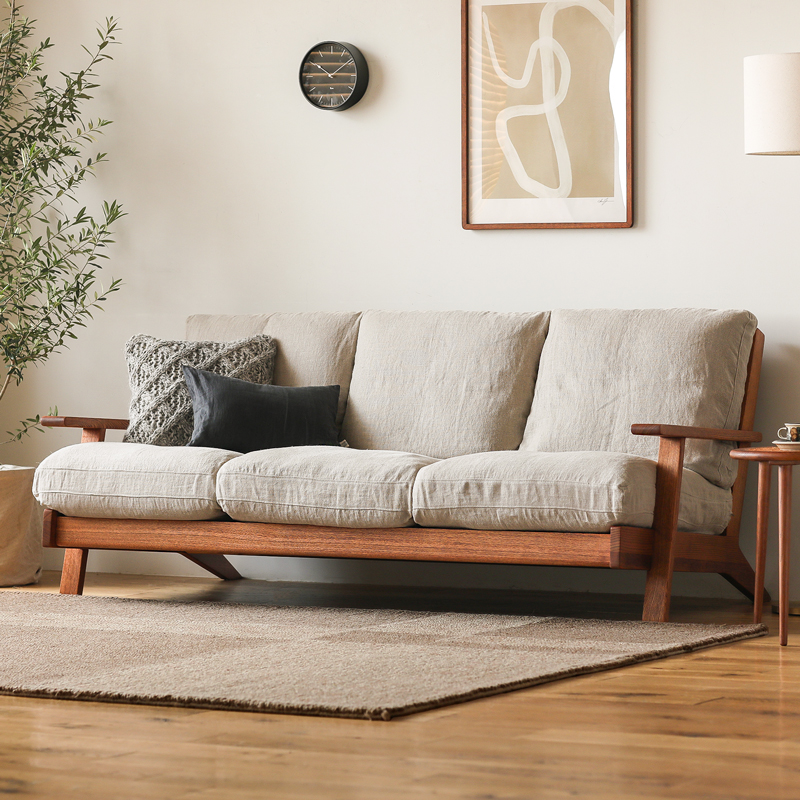
The Functional Evolution: Performance Fabrics and Removable Covers
Upholstery failure used to mean calling a professional reupholsterer or hauling the entire frame to a landfill. Interior coordinator Amane Yamashita notes that long-term satisfaction hinges on balancing textile aesthetics with real-world cleanability. Modern multifunctional seating pairs minimalist interior aesthetics with heavy-duty performance fabric upholstery engineered from solution-dyed acrylics, tight polyester weaves, or recycled olefin yarn.
These synthetic blends resist liquid absorption and hold up against pet claws without feeling like stiff commercial vinyl. Crucially, brands have integrated removable washable covers secured with heavy-duty industrial zippers. Spilling coffee or dealing with a pet accident no longer ruins the couch. Owners simply unzip the casing, run a cold gentle machine cycle, and zip the cover back over the foam core, preserving the clean lines of the room without plastic slipcovers.
From Daytime Lounger to Overnight Guest Bed
Dedicated guest bedrooms are an expensive luxury in modern cities. The pull-out couch of decades past solved that dilemma through brute force, relying on a 70-pound steel mechanism with a paper-thin mattress that gave guests backaches. Today's convertible sofa bed relies on high-density foam folding blocks or smooth cantilevered drawer mechanisms.
Instead of wrestling metal bars out of the center frame, users pull forward on an integrated fabric handle. The seating platform slides forward, the back cushions pivot into the void, and a level queen-width sleep surface appears within seconds. This seamless transition makes modern multifunctional seating indispensable for remote workers who host visiting family or friends without dedicating an entire room to an unused bed.
Evaluating Your Space: Who Should Buy Modular vs. Who Should Walk Away
A modular 3-seater sofa provides unmatched flexibility, but it does not fit every living scenario. Choosing the wrong configuration leads to awkward circulation paths and unnecessary expense.
Ideal Profiles:
- Urban Renters: Relocating every few years requires furniture that breaks down into portable components without stripping screw holes.
- Families and Pet Owners: Washable slipcovers and stain-resistant performance weaves handle dirt, hair, and spills that would permanently ruin traditional velvet or aniline leather.
- Small Open-Concept Layouts: Low-profile backs preserve sightlines between small galley kitchens and compact media rooms.
Risk Flags and When to Steer Clear:
- Grand, High-Ceiling Living Rooms: A streamlined, apartment-scale sectional looks visually lost in rooms exceeding 400 square feet with 12-foot ceilings. Traditional deep-tufted profiles anchor those proportions far better.
- Pure Mid-Century Collectors: If your aesthetic strictly demands delicate spindled wooden legs, tailored blind tufting, and exposed timber aprons, modular block designs will look out of place.
- Budget Shoppers Unwilling to Spend on Density: Ultra-cheap modular knockoffs cut costs using sub-1.8 lb foam that caves in quickly. If a modular sofa costs under $500 brand new, its lifespan will likely disappoint.
Frequently Asked Questions (FAQ)
Q1: What are the standard dimensions for an apartment-friendly 3-seater sofa?
A1: An apartment-scale 3-seater generally measures between 78 and 86 inches wide, with an external depth of 34 to 36 inches. This width lets three adults sit comfortably while keeping overall clearances manageable for apartment hallways and service elevators.
Q2: Will tool-free assembly couches loosen or rattle over time?
A2: Reputable brands rely on self-locking wedge brackets and heavy-duty steel drop pins that tighten under human weight. Because they avoid wood screws that strip soft composite panels, tool-free friction systems often maintain structural rigidity better over repeated disassemblies than conventional flat-pack builds.
Q3: Can performance fabric slipcovers be dried in a machine?
A3: Most manufacturers recommend line drying or tumble drying on an air-only cycle. High heat shrinks synthetic weaves and degrades waterproof backing membranes, which can make re-fitting the cover over dense foam cushions nearly impossible.
Rethinking Living Spaces for the Decades Ahead
The rise of the modular 3-seater couch marks a decisive break from static, heavy home furnishings. Domestic life today moves fluidly between remote desk work, casual streaming, and accommodating overnight visitors on short notice. Furniture must adapt to these shifting rhythms rather than locking a floor plan in place.
By pairing high-density foam foundations with tool-free construction and washable performance upholstery, contemporary designers have turned the living room couch into a practical, adaptable centerpiece. Investing in adaptable, well-built pieces allows small living spaces to feel functional, comfortable, and effortlessly organized.