Why Your Long Fringe Keeps Collapsing: The Blow-Drying Mistake Ruining Your Style

You spend fifteen minutes in front of the bathroom mirror sculpting the perfect curtain bangs or textured flow, only to watch the entire structure collapse against your forehead before lunch. By 2:00 PM, strands are poking your eyes, excess scalp sebum has turned your volume into limp curtains, and you find yourself repeatedly flicking your head back in frustration. Most men assume their hair is simply too heavy, too straight, or too thin to support long front styling.
The issue rarely stems from genetics. Long fringe architecture collapses because traditional men’s grooming relies on heavy paste and surface styling rather than manipulating the root structure during the wet-to-dry phase. When you hang three to five inches of hair over the forehead without an engineered base, gravity will win every single time. Resetting your routine requires understanding hair chemistry, mechanical tension, and a strict shift toward weightless styling compounds.
📌 Key Takeaways:
- The Root Cause: Hair sets as it cools; styling with clay on damp hair weighs down roots and causes collapse within 90 minutes.
- The Mechanical Fix: Blow-drying roots in the opposite direction of natural fall creates structural lift before any product touches the strand.
- Product Weight: Swapping oil-heavy pomades for sea salt pre-stylers and silica texture powder keeps the fringe off your face for 10 to 12 hours.
The Physics of Fringe Collapse and the Root Direction Mistake
Hair shape is governed by temporary hydrogen bonds that break when wet and reform as moisture evaporates. When you step out of the shower and immediately push your damp fringe into its final resting position, those hydrogen bonds lock flat against the curve of your cranium. No amount of ultra-hold wax can lift a root that has dried parallel to the scalp.
Barbers in Tokyo and Seoul, where textured curtains and parted fringe styles dominate men's grooming, rely on over-direction. Instead of drying hair backward, they blast the roots forward, downward, and across the opposite side of the natural parting line. Pushing a left-falling curtain to the right under heat forces the hair follicle to dry at an acute, upward angle. When you finally toss the fringe back to its natural side, the strand must clear an upright structural bend before dropping. That simple directional offset creates two to three inches of self-sustaining elevation without a single drop of product.
The Round Brush and Cool-Shot Locking Protocol
Relying solely on your fingers to manipulate hair leaves gaps in air tension, producing inconsistent wave patterns that separate within an hour. A dedicated ceramic vented roller or small round brush provides the continuous surface tension needed to control the cuticle layer.
To establish durable middle part curtain bangs, separate the fringe into two distinct triangular sections running from the crown down to the temples. Place the brush directly underneath one section at the root. Roll the brush a quarter-turn upward, pull forward to create mechanical tension, and point the blow-dryer nozzle downward down the hair shaft using medium heat. The downward airflow seals the hair cuticle, reducing frizzy flyaways while creating a smooth, sweeping arc.
The step most men skip is the thermal reset. Hair stretches when exposed to heat between 130°F and 160°F, but it permanently sets its shape only when it cools below 90°F. After five seconds of directional heat, hit the blow-dryer’s cool-shot button while keeping the brush locked against the root for another four to six seconds. Releasing the hair while still warm causes the root to buckle immediately under the fringe's physical weight.
Pre-Styling Sprays Versus Heavy Waxes: The Product Weight Breakdown
The standard grooming instinct when hair does not hold is to add more wax. With long front styles, adding heavy pomades or traditional fiber clays is counterproductive. Hair weighs mere fractions of a gram; layering beeswax, petroleum, or heavy oils onto five-inch strands acts like wet cement, dragging the base downward.
A functional men's long fringe routine separates hold into two distinct phases: wet pre-styling for volume and dry post-styling for texture. A lightweight sea salt spray or mineral volume tonic adds friction and grip directly to the shaft while damp, allowing strands to interlock and support each other. Heavy pomades provide slick shine, but their density ruins root elevation.
| Product Type | Density & Weight | Ideal Fringe Profile | Average Hold Duration |
|---|---|---|---|
| Sea Salt Pre-Spray | Near-Zero (Aqueous base) | Fine to medium hair; natural curtains | 8, 10 hours (Foundation) |
| Silica Texture Powder | Zero (Dry micronized powder) | Oily scalps, limp fringes, fine strands | 10, 14 hours (Absorbs oils) |
| Matte Clay Paste | Medium-Heavy (Bentonite / Wax) | Thick hair; ends definition only | 4, 6 hours (Prone to sagging) |
| Oil-Based Pomade | Heavy (Petrolatum / Microcrystalline) | Slick-backs; completely unsuited for fringe lift | 1, 2 hours before collapsing downward |
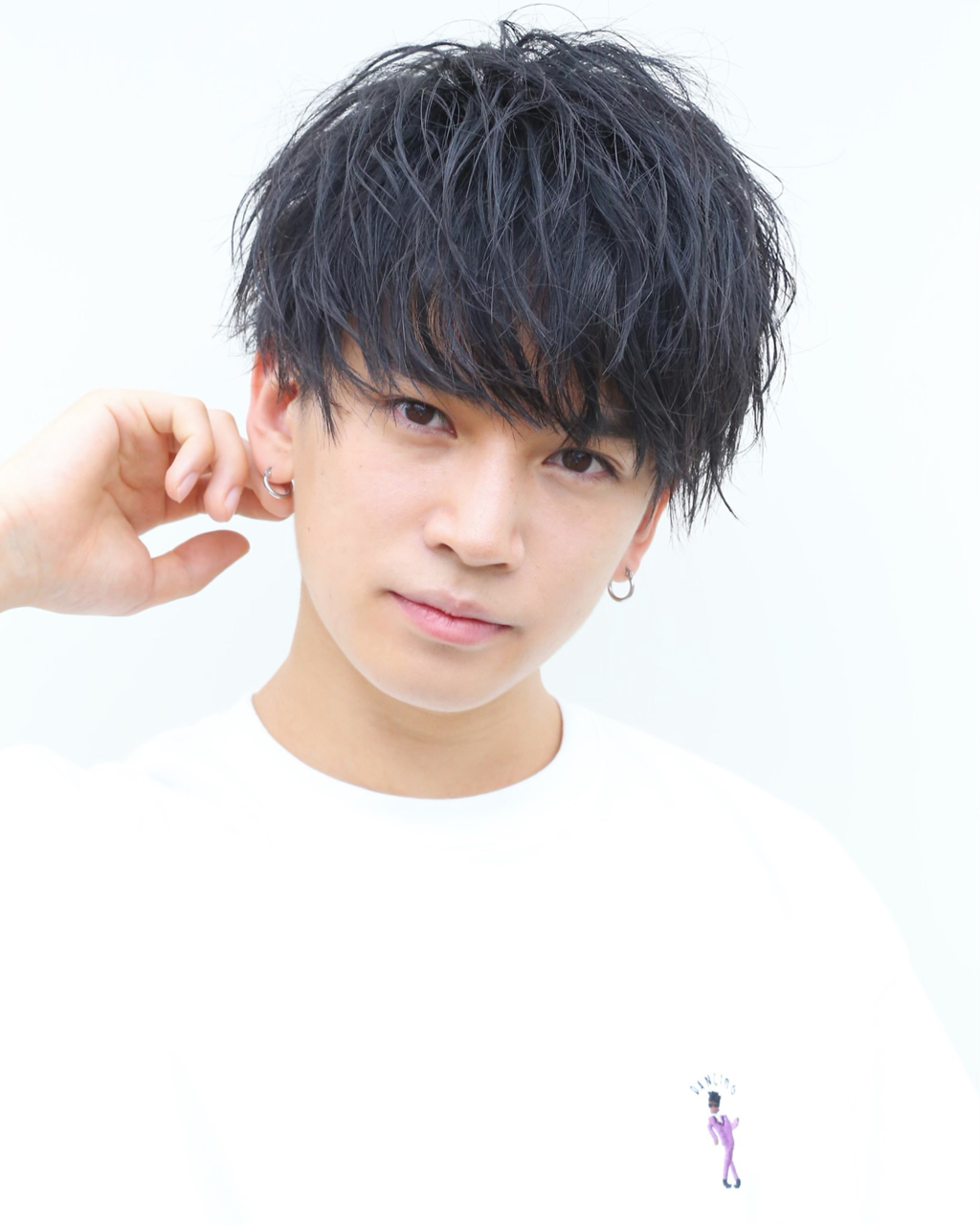
Neutralizing Front Cowlicks and Stubborn Parts
Nearly 80% of men carry an irregular growth whorl or cowlick along their frontal hairline. If your fringe continuously splits in an awkward location or springs up directly at the left temple, you are likely working with a natural whorl that resists your intended styling angle.
Fighting a cowlick by plastering it down with gel causes it to rebound the moment the product dries and flexes. The correct approach is cross-drying, a technique developed in high-end Japanese salons. Take a fine-toothed comb or flat paddle brush and anchor it directly at the problematic root on completely wet hair. Blow-dry the root hard to the left for three seconds, then immediately brush and blow-dry the exact same spot hard to the right for three seconds.
Repeating this alternating motion four to five times stretches the follicle’s growth memory, creating a neutral center baseline. Once the cowlick's dominant direction is broken down, the hair will flow smoothly into whatever curtain or swept shape you choose without splitting into jagged patches.
The Two-Product Finish: Texture Powder and Weightless Hairspray
Once your hair is completely dry and set off your forehead, finish the look with products that do not depend on heavy moisture carriers. Traditional waxes introduce oil back into freshly dried strands, immediately reversing the root lift achieved during blow-drying.
Instead, apply a pea-sized sprinkle of hair texture powder (silica silylate) directly to the roots around your temples and along the central part. Gently massage the powder in with dry fingertips. Silica silylate expands the physical distance between individual hair strands by absorbing microscopic sebum and creating high-friction contact points. If your fringe shifts while walking in windy conditions, running your fingers through the roots instantly activates the powder and restores the initial shape.
Lock the movement with a misting of weightless finishing spray held 10 to 12 inches away from your face. Look for aerosol formulas labeled "micro-fine" or "dry finish." Spraying too close saturates the hair with liquid alcohol, which wets the fringe and compromises the delicate root lift you spent minutes building.
Frequently Asked Questions (FAQ)
Q1: Why does my fringe fall into my eyes even after applying strong-hold clay?
A1: Strong clays contain dense waxes like beeswax and bentonite that coat the hair shaft. While they provide grip on short hair, their physical weight pulls longer strands downward. If the root was not heat-set during blow-drying, the clay simply accelerates gravitational collapse.
Q2: How long should my front hair be before attempting a parted curtain fringe?
A2: The front fringe should reach at least the bridge of your nose when pulled straight down, which corresponds to roughly 4.5 to 5.5 inches of growth. Anything shorter lacks the weight needed to drape naturally over the temples, while lengths extending past the upper lip require round-brush tension to stay out of the eye line.
Q3: Can I maintain volume in high humidity without making my hair stiff?
A3: Yes. Skip water-based pastes and rely on the combination of a sea salt pre-styler, silica root powder, and a humidity-resistant dry hairspray. The texture powder absorbs moisture and perspiration along your forehead, preventing atmospheric water from breaking the hydrogen bonds at the root.
Building a Sustainable Daily Styling Routine
Long fringe styling is fundamentally an engineering task. Perfecting this look does not demand half an hour of meticulous grooming or an expensive collection of salon pastes. It requires shifting your effort from the post-dry phase to the pre-dry foundation.
Spend five focused minutes at the sink using directional heat, mechanical tension from a round brush, and a decisive cool shot to set the root angle. Follow that with a light dusting of texture powder to resist natural scalp oils. Once the roots are trained to stand upright before dropping down into natural curtains, your fringe will remain lifted, separated, and clean through long workdays and windy commutes.