Why Your Platform Boots Hurt: The Posture Mistake Ruining Your Stride

Thick-soled footwear has officially reclaimed the street-style vanguard for the 2025, 2026 fashion cycle. As highlighted in an ORICON NEWS Report tracking the resurgence of Y2K aesthetic staples, today's boots are engineered with far lighter compounds than the ankle-breaking wooden blocks of the late 1990s. From shearling-lined slip-ons to aggressive combat profiles, modern footwear houses have slimmed down silhouettes to deliver immediate height without traditional high-heel pitch.
Yet orthopedic clinics and physical therapy practices report an identical wave of complaints every winter: burning shin pain, throbbing lower back stiffness, and plantar arch exhaustion. Most walkers assume these aches stem from sheer footwear weight or insufficient break-in periods. The actual culprit is a fundamental biomechanical breakdown in how the foot meets the pavement.
📌 Key Takeaways:
- The Biomechanical Flaw: The flat-footed stomping mistake occurs when wearers slap the entire rigid sole onto the concrete, halting the foot's natural rolling motion and causing acute chunky sole fatigue.
- The Joint Toll: Eliminating the natural flex of the metatarsals transfers ground strike forces upward, magnifying knee joint impact and overloading the tibialis anterior muscle.
- The Immediate Correction: Mastering an intentional heel-to-toe gait cycle alongside core posture alignment redistributes mass, boosts ankle stability and support, and prevents recurring shin splints.
The Y2K Platform Renaissance Meets Modern Biomechanics
The runaway popularity of chunky silhouettes in 2026 reflects a distinct engineering evolution. Footwear labels like ORiental TRaffic have gained massive traction by engineering boots explicitly designed for 10,000-step city commutes, utilizing dual-density ethylene-vinyl acetate (EVA) foams that slash total unit weight. Concurrently, platforms from brands like UGG have pivoted from nostalgic winter novelties into daily lifestyle essentials, offering thick platform foundations that promise sneaker-like softness.
Lighter materials do not automatically guarantee natural mobility. When a boot sole exceeds 1.5 inches in solid thickness, it becomes virtually non-flexible. Traditional sneakers bend at the ball of the foot, allowing the metatarsophalangeal joints to hinge smoothly through push-off. Thick platform soles strip away that natural hinge. Wearers suddenly find themselves walking on solid, unyielding planks, oblivious to the fact that their regular walking mechanics no longer apply.
The Flat-Footed Stomp: The Gait Error Destroying Your Joints
The single most destructive habit when wearing elevated footwear is the flat-footed stomping mistake. In conventional flat shoes, a normal stride begins with a subtle heel strike, transitions through midfoot loading, and finishes with a fluid roll off the toes. Because a lugged platform sole cannot flex during mid-stance, the brain subconsciously compensates by picking the entire leg straight up and slamming the foot down flat.
This stamping motion bypasses the foot's built-in shock absorption mechanism. When your sole slaps the pavement all at once, the deceleration force sends an unmitigated kinetic shockwave through the musculoskeletal system. Instead of the plantar fascia dissipating the impact, the ground force travels directly into the talus, through the ankle mortise, and into the patellofemoral complex.
This kinetic backfire explains why platform boots often cause severe knee joint impact even during casual walks. When the foot lands flat, the quadriceps must contract prematurely to decelerate the knee joint, forcing the patella firmly against the femur. Within an hour of continuous walking, wearers experience dull, aching anterior knee soreness that mimics running-related tendinitis.
Biomechanical Stress Across Modern Sole Architectures
Different platform constructions impose vastly different physical strains on the lower body. Understanding the trade-offs between sole density, rocker angles, and stack height helps identify why certain pairs trigger acute fatigue while others remain wearable all day.
| Sole Architecture | Stack Height Range | Primary Biomechanical Strain | Joint Load Shift |
|---|---|---|---|
| Solid Dense Rubber Lugs | 45 mm, 60 mm | High rotational inertia; extreme tibialis anterior load | Ankle mortise shear; patellar compression |
| Blown EVA Lightweight Platform | 35 mm, 50 mm | Lateral instability; rapid heel compression fatigue | Subtalar joint strain; Achilles tendon stretch |
| Curved Rocker-Sole Combat | 40 mm, 55 mm | Premature propulsion; hip flexor overcompensation | Lumbar spine shear; hip socket rotation |
| Zero-Drop Block Platform | 50 mm, 75 mm | Zero forefoot roll; full-contact shock transfer | Tibial bone stress; lower back muscular spasm |
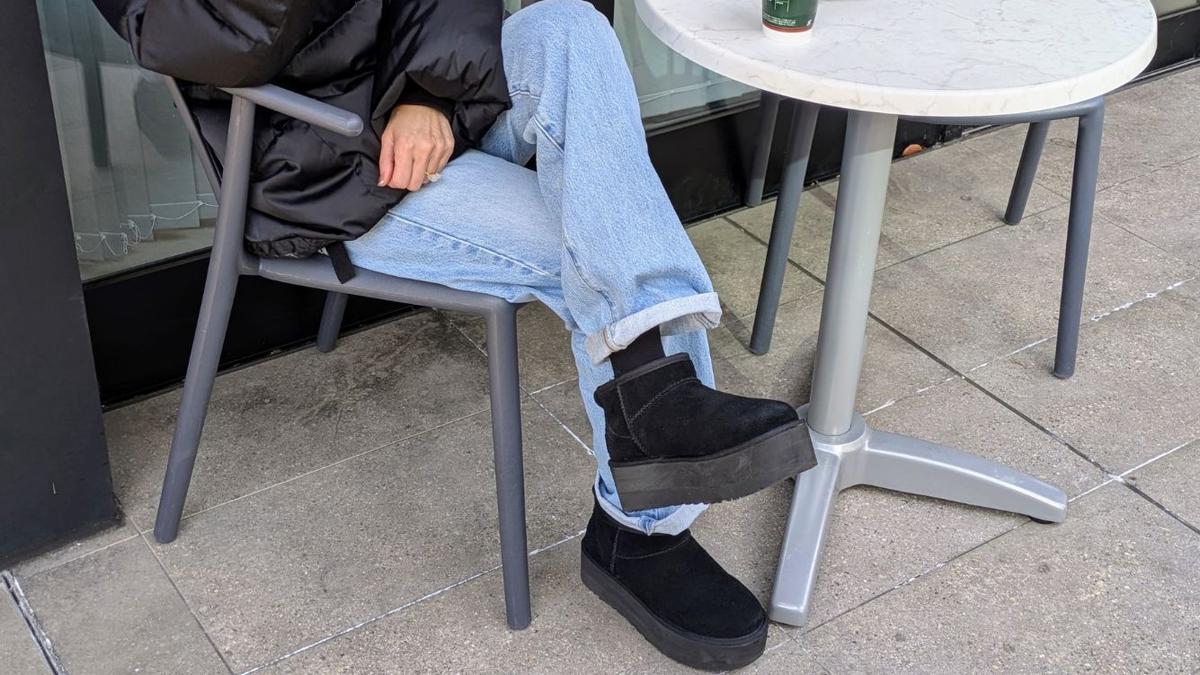
Rebuilding Your Stride: Center of Gravity and Ankle Stability
Walking comfortably in platforms requires treating the shoe like a rigid rolling base rather than a flexible sneaker. The primary objective is shin splint prevention. When you stomp, the tibialis anterior muscle on the front of your lower leg works overtime to pull the heavy, unbending toe box upward with every step. Over 4,000 to 8,000 daily steps, this chronic eccentric loading produces micro-tears along the periosteum of the tibia.
To eliminate this tension, adopt an adapted heel-to-toe gait cycle:
First, shorten your stride length by roughly 10 to 15 percent. Overstriding forces the heel down at an aggressive angle, levering the heavy sole downward with uncontrollable velocity. A compact stride allows your foot to land almost directly under your center of gravity shift, dramatically reducing the mechanical torque placed on your lower leg.
Second, engage your core posture alignment before pushing forward. When standing on elevated soles, the brain naturally compensates for the elevated height by tilting the pelvis anteriorly, causing an exaggerated curve in the lower spine. By pulling your navel slightly inward and keeping your pelvis neutral, you lock in the glutes and hamstrings to propel your stride, taking the workload off the delicate ankle flexors.
Third, roll the boot rather than trying to bend it. If your footwear features a slight bevel or beveling curve at the front and back of the sole, lean into that curve. Land on the posterior edge of the heel, glide weight across the midfoot block, and use glute activation to lift the leg cleanly into the next step, rather than forcing the rigid toe rubber to hinge against the ground.
Hardware Adjustments: Shock Absorption and Lug Balance
Form adjustments solve half the battle; internal boot stabilization solves the rest. A significant cause of ankle instability and support failures is the gap between the foot and the boot's upper leather. If your foot slides horizontally inside a wide platform chassis, the leverage of the thick sole acts as a massive wrench against your ankle ligaments during the slightest misstep.
High-density, shock absorbing insoles provide critical stabilization. Factory insoles in fashion platforms are often paper-thin pieces of cheap foam designed solely for initial try-on appeal. Replacing them with orthotic-grade inserts featuring deep heel cups and rigid arch cradles physically locks the calcaneus bone in place. This prevents internal foot slippage and ensures that your ankle stays centered over the shoe's base of support.
Pay equal attention to lug sole boot balance. Deep, widely spaced tread patterns excel at outdoor traction, but on slick stone floors or pavement, they concentrate pressure on narrow ridges of rubber. When shopping for everyday boots, prioritize lightweight platform design configurations that balance aggressive outer aesthetics with broad, ground-contact surface areas. Wide, stable outsoles minimize lateral roll risks, allowing joints to relax through daily commutes.
Frequently Asked Questions (FAQ)
Q1: Why do my shins burn within ten minutes of walking in platform boots?
A1: Shin burn is typically caused by overstriding and overworking the tibialis anterior muscle. Because thick platform soles do not bend, your front shin muscles work twice as hard to lift the heavy, rigid toe box with each step. Shortening your stride and rolling your weight smoothly across the sole immediately relieves this tension.
Q2: Are lightweight EVA platforms healthier for your feet than traditional heavy rubber soles?
A2: Lightweight platforms reduce overall muscular fatigue because lifting the boot requires less mechanical effort. However, ultra-soft EVA foams can create lateral instability if the sole compresses unevenly under the heel, which increases the risk of ankle roll. Balance lightweight materials with a secure heel counter and supportive insole.
Q3: How should I break in stiff platform boots without wrecking my feet?
A3: Avoid wearing new platforms for high-mileage days right out of the box. Begin with 20- to 30-minute indoor sessions wearing thick wool socks to mold the upper leather around your instep and ankles. Securing your laces or zippers firmly is essential; keeping platforms loose forces your toes to claw for stability, causing severe plantar fascia strain.
The Future of Elevated Footwear Ergonomics
Elevated soles are no longer just seasonal fashion statements. They represent a permanent pillar of modern wardrobe utility, combining commanding presence with urban practicality. But enjoying the stylistic and height benefits of platforms should never come at the expense of joint health.
By shedding the habit of flat-footed stomping, shortening your forward stride, and maintaining active core engagement, you instantly neutralize the mechanical stress that plagues chunky footwear. Approach your platform boots with intentional biomechanics, and you will walk with effortless balance, fluid power, and zero pain across city streets.