bhc Chicken Expands Tech Footprint to 40 Stores as Shin-Okubo Crowds Flock for Authentic K-Chicken
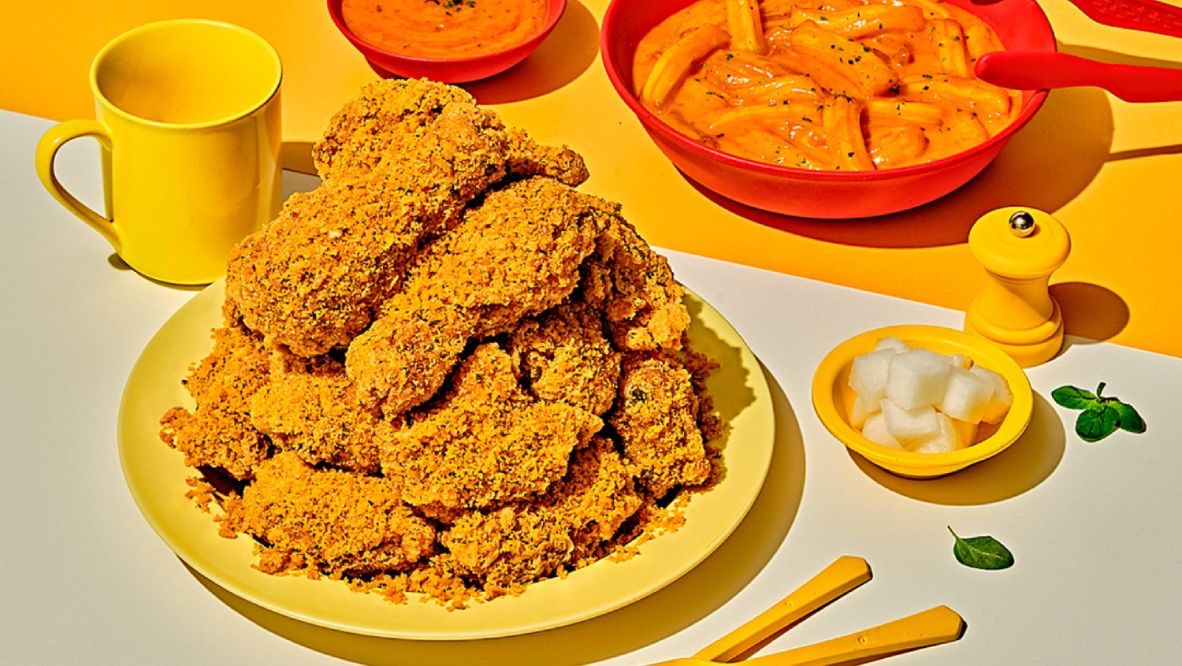
Every afternoon along Okubo-dori, the aroma of fried batter, garlic, and sweet cheese powder settles over the pavement. Crowds snake down the block outside the doors of Shin-Okubo’s flagship storefronts, waiting upwards of ninety minutes for a single cardboard box dusted in Buringkle seasoning. The phenomenon reflects a broader international offensive: South Korean dining giant bhc Chicken is scaling its global operations, pairing culinary hype with smart store technology rollouts across Asia. As detailed in The Straits Times Report on the company's aggressive master franchise push with Hao Open Foods, the brand is targeting rapid footprint multiplication across Southeast Asia while re-engineering its high-volume kitchens with robotics.
Behind the customer queues in Tokyo lies a distinct operational pivot. Facing tight hospitality margins and persistent kitchen labor shortages across regional Asian capitals, bhc parent company Diners Group has deployed 40 TuiiBot automated frying robots across select high-traffic branches. This technical overhaul runs parallel to a multi-territory expansion that spans Singapore, Malaysia, and a landmark pact to establish up to 120 locations in Vietnam, testing whether Seoul's reigning fast-casual export can sustain artisanal flavor profiles through industrialized automation.
📌 Key Takeaways:
- The Tokyo Influx: Shin-Okubo Koreatown dining queues for bhc Chicken reflect soaring Japanese demand for authentic Korean chimaek culture, anchored by signature items like Buringkle chicken seasoning and fried cheese balls.
- The Automation Mandate: The brand has integrated 40 cooperative TuiiBot robotic fryers to stabilize oil temperatures, maintain crispness, and mitigate acute regional hospitality labor shortages.
- Cross-Border Scale: Backed by a master franchise agreement with Hao Open Foods, the group is aggressively expanding across Southeast Asia, targeting up to 120 stores in Vietnam alone.
The Queue Along Okubo-dori: Why Tokyo Fell for Buringkle
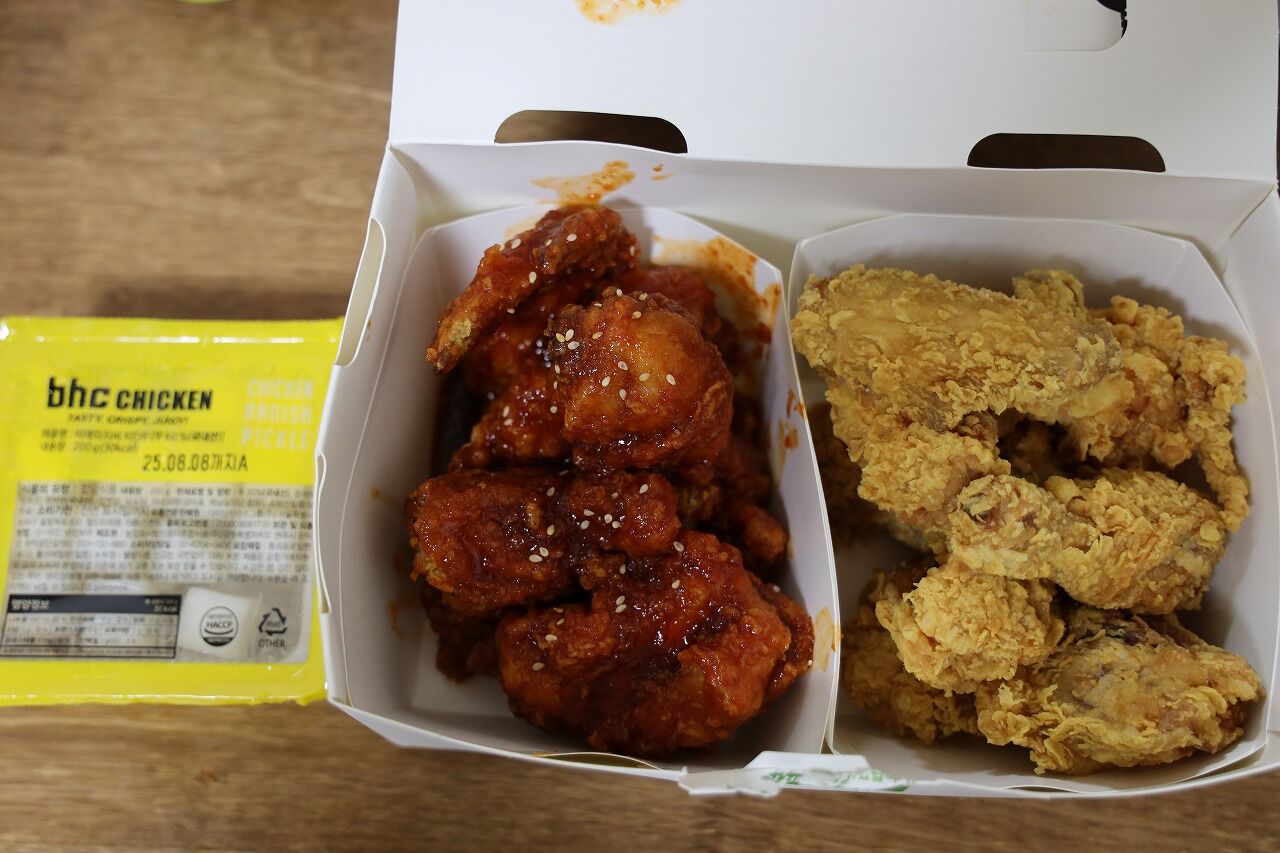
Tokyo's Shin-Okubo district has weathered several waves of Korean cultural imports over the past two decades, yet the current obsession with Korean fried chicken Tokyo outposts shows an evolution in consumer behavior. Diners no longer settle for generic sweet-and-spicy poultry. They seek specific, branded Korean culinary IP. When bhc launched its presence near Shin-Okubo station, local food vloggers and students swarmed the venue, primarily drawn by the viral reputation of Buringkle, a proprietary dusting of cheese, onion, and garlic powder accompanied by sweet-tart yogurt dip.
The operational draw is the full-service chimaek experience: draft beer poured alongside double-fried wings. Unlike traditional Japanese karaage joints, which operate as grab-and-go counters or standard izakaya side offerings, bhc's Tokyo outposts function as immersive social dining spaces. Customers regularly order towering spreads that include crispy fried chicken wings, red-bean or mozzarella-filled cheese balls, and seasoned fries. Japanese diners view the experience as an accessible, high-octane taste of Seoul nightlife without booking a flight to Incheon.
The retail footprint inside Tokyo remains notoriously constrained. Rent along the main corridors of Shinjuku commands a heavy premium, forcing franchise operators to optimize seating turnover while cooking raw chicken from scratch, a process that typically demands 12 to 15 minutes of attentive double-frying per order. Managing those bottlenecks required an intervention that extended far beyond traditional manual line cooking.
Forty Automated Fryers: How TuiiBot Entered the Kitchen
To eliminate kitchen bottlenecks, bhc rolled out 40 proprietary TuiiBot robotic frying arms across dense urban branches. Developed to handle repetitive, high-heat kitchen labor, the robotic systems manage the crucial dipping, agitation, and extraction cycles of the frying process. In high-volume operations, human fry cooks inevitably introduce subtle timing discrepancies, pulling baskets early during order surges or letting oil temperatures crater by overloading vats.
The TuiiBot apparatus functions with millimeter precision. Once kitchen staff batter and drop the prepped poultry into the oil, optical sensors monitor cooking metrics while the mechanical arm shakes the basket at designated intervals to prevent individual pieces from clustering. When the internal timer confirms optimal core temperature and surface crystallization, the arm hoists the basket, shakes off excess grease, and places the batch on the finishing counter for seasoning.
The economic logic behind the deployment is straightforward: kitchen burn injuries drop, labor costs per shift compress by roughly 20% to 30%, and batch consistency hits strict standardized thresholds. For a franchise built on an uncompromisingly crispy exterior that must support heavy sauces and powdered seasonings, automation solves the operational variability that routinely breaks overseas restaurant expansions.
The Global Trajectory: From Seoul Flagships to Southeast Asia
The current international push did not occur in a vacuum. It follows years of intense domestic rivalry in South Korea, where the brand fought legacy titans like BBQ Genesis and Kyochon for market share. Having captured dominant market share domestically, bhc turned outward, using Southeast Asia and Tokyo as proof-of-concept testing grounds for corporate-owned and franchised formats.
| Phase / Region | Operational Focus | Key Strategic Milestone |
|---|---|---|
| Domestic Korea (2014, 2021) | Menu IP establishment, Buringkle launch | Surpassed 2,000 domestic locations; solidified top revenue rank |
| East Asia Hubs (2022, 2024) | Tokyo (Shin-Okubo) & Hong Kong flagships | Established chimaek lifestyle branding; validated cross-border demand |
| Southeast Asia (2024, 2026) | Hao Open Foods partnership, multi-unit rollout | Contracted up to 120 stores across Vietnam; scaled robot-assisted kitchens |
The timeline demonstrates a deliberate move away from passive licensing agreements toward structured master-franchise partnerships backed by regional capital. By the time operations consolidated in Singapore and Malaysia, corporate leadership recognized that expanding further into emerging markets required reliable local partners capable of securing prime real estate in high-density shopping centers.
The Hao Open Foods Partnership and Regional Fast-Casual Growth
The boldest move in bhc's overseas pipeline arrived via its alliance with Hao Open Foods. Industry reporting from Inside Retail Asia documented the franchise's intent to treat Vietnam as its primary growth engine for Southeast Asia, tapping into a young demographic with high per-capita chicken consumption and strong affinities for Korean entertainment culture.
Under the terms of the master franchise agreement, Hao Open Foods will oversee the rollout of up to 120 BHC Chicken outlets in Vietnam over the next several years. This deal mirrors the fast-casual strategy executed by global hamburger chains during the late 1990s: establish flagship dine-in stores in central metropolitan plazas, then branch out into compact, delivery-centric satellite units in residential suburbs.
Securing cold-chain logistics across Southeast Asian markets presents distinct challenges compared to managing domestic supply lines in South Korea. The proprietary batter mixes, pickling brines, and seasoning blends must be imported under strict moisture-control conditions to maintain identical taste profiles across thousands of kilometers. Hao Open Foods provides the regulatory, real estate, and customs infrastructure needed to bypass localized supply bottlenecks, ensuring that poultry served in Ho Chi Minh City matches the quality standard set in central Seoul.
Menu Economics and the Realities of Shin-Okubo Pricing
For visitors exploring Shin-Okubo Koreatown dining corridors, bhc menu and pricing structures reflect premium fast-casual positioning rather than budget takeout. A full whole-chicken order of Buringkle chicken in Tokyo regularly hovers between ¥2,800 and ¥3,400 ($18, $22) depending on portion options and boneless selections. Side items, most notably the signature cheese balls, add an extra ¥600 to ¥800 ($4, $5.50) for a set of five.
These price points sit significantly higher than domestic South Korean rates, where promotional delivery deals frequently undercut dine-in tabs. The markup stems directly from Tokyo retail overhead: premium commercial rents within walking distance of JR Shin-Okubo Station, specialized imported seasonings, and higher energy costs associated with constant commercial fryer ventilation. Despite these premiums, average ticket sizes remain sturdy because consumers treat bhc visits as social gatherings rather than quick utilitarian meals.
The economics rely on high alcohol attachments. While fried chicken carries manageable food cost margins, draft beers, highballs, and soju deliver gross margins exceeding 70%. By leaning into the chimaek pairing ritual, the brand offsets elevated kitchen equipment overhead and recoup investments in robotic automation faster than standalone fast-food concepts can.
Operational Hurdles Behind High-Tech Franchising
Automating kitchens with commercial robotics is not an effortless fix. Franchisees deploying hardware like TuiiBot encounter friction points that kitchen floor staff must navigate daily. Robotic arms manage immersion and extraction seamlessly, but they cannot replace human judgment regarding fryer vat maintenance, oil degradation, or sediment buildup from heavily seasoned breading.
Flour-heavy crusts drop fine crumbs into the oil basin during cooking. Left unchecked, those crumbs scorch, bittering subsequent batches and compromising the distinctive golden-brown sheen of the chicken wings. Kitchen crews must continually strain frying fats, clean sensory optical lenses, and run calibration sequences on the mechanical limbs during peak service rushes. When a robot arm experiences a servo failure during a busy Friday night shift, the kitchen must instantly revert to manual operation without missing order tickets.
There is also the friction of consumer expectations. A segment of diners in traditional culinary districts like Shin-Okubo prizes visible human craftsmanship. While tech enthusiasts celebrate robotic consistency, casual food lovers often view high-tech frying systems as an industrial cost-cutting maneuver. Operators must strike a careful balance: market the robotics as a badge of hygiene and precision without stripping away the hospitality and warmth that define Korean dining culture.
Frequently Asked Questions (FAQ)
Q1: What are the must-order items at bhc Chicken in Shin-Okubo?
The consensus favorite is Buringkle Chicken, which comes dusted in a sweet cheese-and-garlic powder paired with a creamy Bburing Bburing dipping sauce. Visitors also routinely add the Buring Cheese Balls and red-bean cheese balls, which have become viral staples on Japanese social media feeds.
Q2: How does the pricing in Tokyo compare to locations in Seoul?
Tokyo branches carry an average premium of roughly 25% to 35% compared to Seoul outlets. A standard whole-chicken dish runs approximately ¥2,800 to ¥3,400 in Shin-Okubo, reflecting prime urban leasing costs, imported specialized seasoning shipments, and high commercial utility rates in Japan.
Q3: Are all bhc Chicken branches using TuiiBot robot fryers?
No. The TuiiBot robotic fryer rollouts currently target select high-volume corporate flagships and heavy-traffic franchised locations, accounting for approximately 40 units across regional hubs. Standard suburban outlets still operate using manual dual-vat commercial fryers managed directly by line cooks.
The Road Ahead for Modern Fast-Casual Brands
The simultaneous expansion of bhc Chicken into the neon-lit alleys of Shin-Okubo and the sprawling commercial centers of Vietnam marks an inflection point for the global fast-casual sector. Cultural momentum alone cannot sustain a hospitality enterprise across distant international markets. By marrying craveable, highly defensible flavor profiles with automated kitchen mechanics, the brand is constructing an operational framework capable of handling explosive customer demand without sacrificing core execution.
As the rollout continues, the company’s ability to coordinate complex supply networks through regional partners like Hao Open Foods will determine whether it matches the enduring global footprints of Western fast-food conglomerates. For the crowds gathered outside Shin-Okubo station, the corporate logistics remain invisible. What matters is the unmistakable crunch of the first wing, the snowfall of sweet cheese seasoning, and the promise of an authentic Seoul ritual delivered with mechanical precision.