The Ultimate Dance Bandana Handbook: Styles, Tying Techniques, and Rehearsal Styling Tips

A single aggressive head whip during a routine can send an unsecured cotton square flying across the studio floor. Long before high-profile rehearsal photos sparked widespread discussions on social media, street dancers relied on precise folding methods to turn basic square cloth into functional performance gear. When pop icon Takuya Kimura posted behind-the-scenes rehearsal updates in August 2026 sporting tour-merchandise bandanas paired with a Michael Jackson graphic shirt, as covered by an MSN Report, fan communities quickly debated whether the style prioritized aesthetic flair or pure athletic function.
The reality is that tying a bandana for intense movement demands engineering discipline. Whether managing heavy sweat during commercial rehearsals or keeping dreadlocks anchored through breaking rounds, the right wrap secures line of sight and preserves personal style.
📌 Key Takeaways:
- The Slip-Proof Rule: A base triangle fold method anchored below the occipital bone prevents shifting during sharp rotational head movements.
- Celebrity Rehearsal Cues: High-profile stage rehearsals by artists like Takuya Kimura highlight how rolled forehead bands channel heavy sweat away from the eyes while serving as essential street dance accessories.
- Material Selection: 100% heavyweight cotton (minimum 55x55 cm) provides superior grip and moisture absorption compared to slippery polyester blends.
Studio Roots and the Surge in Performance Headwear
Dance studios are notoriously punishing on personal styling. Sweating through a two-hour choreography block tests headwear to its breaking point. For decades, urban dance streetwear treated head wraps as tools of trade before they ever crossed into luxury high fashion. Dancers across breakin', popping, and hip-hop culture adopted bandanas in the late 1970s and 1980s out of practical necessity. Breaking required low-friction skull coverings for headspins, while fast-paced upright styles demanded sweat control that conventional elastic bands could not deliver.
The renewed focus on dance rehearsal hair styling in 2025 and 2026 stems from performers sharing unpolished training footage directly on social platforms. When Kimura revealed rehearsals for his fourth solo album drop in mid-August 2026, his black-on-black bandana look caught immediate traction among street dancers and casual stylists alike. Fans pointed out that while pulling off a folded crown wrap feels intimidating for beginners, the look solves the dual challenge of hair management and sweat absorption under hot stage lights. Similar retro experiments, such as TV personality Suzanne's June 2025 modern variations on heritage wraps, prove that classic cotton squares remain practical utility items across performance subcultures.
Tying Techniques for High-Impact Rehearsals
A street dance headwrap technique must withstand explosive transitions, spins, and floor drops without loosening. Three core methods dominate modern studio sessions.
1. The Forehead Sweatband Wrap
This fold keeps stray hair locked away while building a four-layer sweat barrier across your brow:
- Lay a 100% cotton bandana flat, patterned side down.
- Fold one corner diagonally toward the opposite corner, forming a broad triangle.
- Starting from the wide base, fold inward in clean 1.5-inch strips until reaching the pointed tip.
- Center the thick band across your mid-forehead, roughly half an inch above the eyebrows.
- Pull the two loose ends around to the nape of the neck, running directly beneath the occipital bone.
- Cinch tightly and complete a secure double knot placement.
2. The Full Pirate Skull Cap
Ideal for b-boy head protection and floor sweeps, this variation covers the crown completely to minimize scalp friction on dance floors:
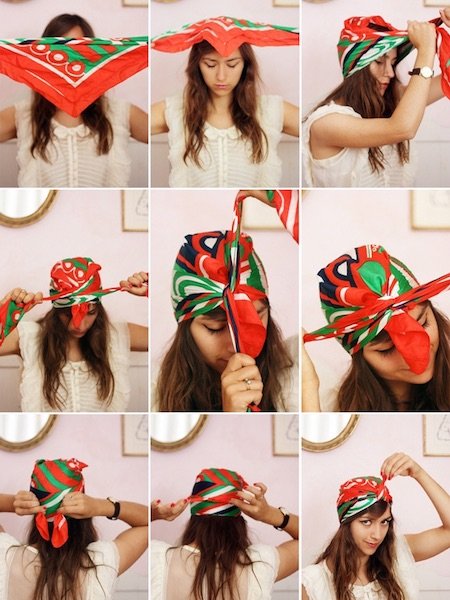
- Fold your square bandana into a wide triangle.
- Position the folded edge across your forehead, letting the center point drape over the crown down to the base of your skull.
- Pull the two side tails back over your ears toward the rear.
- Knot the tails tightly over the hanging center point at the nape.
- Tuck the hanging triangle tip up and under the completed knot to lock the structure in place.
3. The Front-Knot Urban Roll
Favored in commercial choreography movement styling, this method reverses the knot location to balance visual silhouettes:
- Roll the bandana into a thin 1-inch strip.
- Rest the center at the base of your neck.
- Bring the tails upward over the ears and tie a snug double square knot directly above your hairline.
- Fold excess tail fabric back into the band for a clean profile.
Headwear Construction and Studio Performance
Not every wrap performs identically across dance genres. Weight, fabric density, and friction coefficients dictate whether a wrap stays put during a drop freeze or slips mid-combo.
| Style Variant | Best Dance Discipline | Primary Performance Benefit | Slip Resistance Rating |
|---|---|---|---|
| Wide Forehead Sweatband | Commercial Hip-Hop, House | Maximum brow absorption, zero visual obstruction | High (8.5/10) |
| Pirate Skull Wrap | Breakin', Floorwork, Krump | Scalp protection, friction reduction on vinyl | Very High (9.5/10) |
| Durag & Bandana Hybrid | B-Boy Powermoves, Street Cyphers | Double-layer headspin traction and compression | Maximum (10/10) |
| Crown Bun Wrap | Waacking, Vogue, Contemporary Fusion | Anchors long dreads/locs; weight distribution | Moderate (7/10) |
Cotton bandanas measuring 55x55 cm (approx. 22x22 inches) remain the baseline studio standard. Dancers dealing with thicker textured hair or protective styles frequently upgrade to oversized 65x65 cm cloths to avoid over-stretching seams during full inversions.
The Mechanical Logic of Slip Prevention
Why do wraps slip off some dancers after ten minutes while others survive whole battles without an adjustment? The answer comes down to anatomical anchoring. The human skull features a slight bone protrusion at the lower rear known as the external occipital protuberance. If your rear knot rests on top of this ridge, sudden downward neck whips will nudge the fabric upward, causing tension to collapse.
To create a slip-proof bandana fold, always position your knot in the hollow directly below the occipital bone. The natural taper of the neck prevents the knot from sliding higher.
Material choice matters just as much as anatomy. Avoid silk, synthetic polyester, and rayon for dance training. These fabrics lack the abrasive friction needed to bite into hair shafts. Raw, unwashed woven cotton often feels rigid straight from the packaging, but a single wash cycle softens the hand without sacrificing grip. Dancers with silky or freshly washed hair should mist their roots with dry texturizing spray or salt water before wrapping. Alternatively, slide two flat bobby pins horizontally across the side folds directly above each ear.
Matching Headwraps to Studio Aesthetics and Urban Streetwear
Performance headwear serves as an extension of dance silhouette. In commercial industry auditions, visual balance determines how casting directors perceive body movement from the front row. A wide headwrap thickens your upper line, drawing immediate focus to clean isolations, shoulder snaps, and facial expressions.
Layering durag and bandana styles remains a signature technique in high-impact breaking. Dancers secure a breathable polyester or spandex durag first to preserve hair patterns and protect against friction burns, then knot a stiff cotton bandana over the forehead line. The outer wrap absorbs running sweat, keeps the durag flap contained during high-speed tracks, and introduces contrasting color accents against oversized training tees.
Matching your wrap to rehearsal gear involves balancing scale. If you wear oversized cargo pants with wide-hem hoodies, thin headband ties vanish visually. A full skull wrap or broad front roll re-centers visual weight. In contrast, dancers wearing fitted tracksuits often opt for narrow rolls to keep overall lines streamlined.
Frequently Asked Questions (FAQ)
Q1: What size bandana works best for adult dance rehearsals?
A1: Standard 55x55 cm (21.5x21.5 inch) squares work for most dancers. If you have thick curly hair, long dreadlocks, or intend to tie complex skull wraps, opt for oversized 60x60 cm or 65x65 cm bandanas to guarantee enough tail length for secure double-knotting.
Q2: How do I stop my forehead from breaking out under sweatbands?
A2: Wash rehearsal bandanas after every high-sweat training block. Build-up from sweat, pomade, and skin oils trapped against the brow causes rapid pore clogging. Avoid fabric softeners during wash cycles, as silicone residues reduce cotton absorbency and aggravate skin sensitivity.
Q3: Can bandanas replace protective headgear for breakdance headspins?
A3: No. A cotton bandana prevents turf burn and floor abrasions, but it cannot absorb blunt trauma or eliminate compressive friction during high-speed spins. B-boys and b-girls should use dedicated spin caps with padded neoprene inserts or plastic friction plates for technical spin training.
Practical Performance Takeaways for Studio Dancers
Treat your headwrap as functional choreography gear rather than an afterthought. Clean technique starts with proper fabric: source durable cotton squares, secure your knot tightly beneath the occipital ridge, and adjust fold widths to match the athletic intensity of your dance discipline. When anchored correctly, a bandana keeps your vision clear through every turn and delivers an authentic, functional edge to your rehearsal streetwear.