Complete Buyer's Guide: Seria Bottle Stand Hacks, Alternatives, and Longevity

Urban kitchens rarely offer the luxury of sprawling counter space, especially when an infant arrives with an armada of bottles, pump valves, and pacifiers. For years, parents across Japan and budget-conscious organizers globally turned to 100-yen retail giant Seria, repurposing its modular plastic stands into ultra-cheap drying stations. What started as an obscure Japanese home-hack community thread quickly grew into a mainstream kitchen trend, pushing parents to ask whether a ¥110 plastic rack can truly replace specialized baby gear.
The conversation shifted noticeably following an official product rollout covered in a PR TIMES Report, where Niigata-based metal manufacturer Beworth Style introduced a dedicated stainless-steel bottle stand on October 22, 2025. This launch highlighted a growing rift in nursery organization: should parents rely on disposable 100-yen hacks that require constant scrubbing, or invest in durable, multi-functional kitchen hardware designed to outlast the toddler years?
📌 Key Takeaways:
- The Budget Reality: Seria 100 yen hacks offer unmatched immediate savings and modular flexibility for cramped kitchens, but require diligent upkeep.
- The Hygiene Bottleneck: Lightweight plastic racks struggle with structural balance and water pooling, creating persistent risks around hygiene and mold prevention.
- The Long-Term Transition: Upgrades like the Beworth Style bottle stand bridge infant feeding with school-age water bottle storage, shifting the purchasing strategy from temporary plastic to multi-year utility.
The Viral Rise of Seria's Modular Bottle Racks
Seria built an empire on clean aesthetics, ditching the garish neon plastics typical of discount stores in favor of muted whites, frosted tones, and clear acrylics. That design shift caught the attention of postpartum parents navigating cluttered countertops. Rather than spending $20 to $40 on bulky commercial drying lawns or tiered plastic trees, shoppers realized that Seria’s dish racks, test-tube style holders, and compact nursery storage pegs could be recombined for a fraction of the cost.
Parents took to Instagram, X, and lifestyle blogs to show off their custom layouts. A ¥110 vertical rack paired with a narrow drip tray could hold two narrow-neck bottles, while an attachable utensil basket served as a dedicated nipple and pacifier organizer. The appeal was instant. It was cheap, fully customizable, and took up minimal counter space next to the sink.
Yet the hack gained traction not merely because it cost pocket change. It resonated because baby gear carries an notoriously short lifespan. Most infants transition off formula bottles within 12 to 15 months, leaving parents with specialized equipment that has no clear secondary purpose. Seria’s low-stakes components felt easily disposable, allowing families to construct a temporary kitchen countertop space saver without long-term commitment.
Decoding the Seria Ecosystem: Nipple Trays, Pegs, and Countertop Real Estate
The standard Seria drying hack relies on three distinct components from the kitchen and bath aisles. The core piece is a foldable peg rack, originally sold for tumbler drying or plate stacking, which suspends wide-neck bottles upside down. To catch run-off water, users pair the rack with shallow melamine trays or silicone drying mat alternatives. For tiny valve pieces, breast pump diaphragms, and bottle collars, parents clip small hanging wire baskets directly to the peg frame.
This DIY modularity solves the spatial puzzle of apartment living. You can tuck a two-bottle setup into a four-inch strip between the sink basin and the backsplash. If twins arrive or feeding demands increase, another ¥110 investment doubles the capacity immediately.
The system falters under physical stress. Seria’s plastic racks are featherweight, often tipping backward when loaded with heavy 240ml borosilicate glass bottles. Parents managing nighttime feeds often report knocking the entire assembly over while reaching for a sanitized bottle in dim lighting. Plastic pegs also lack the structural rigidity to keep wide-mouth silicone bottles from touching the countertop, negating the sanitization achieved through steam or chemical sterilizers.
Hygiene, Drainage, and Mold Prevention: The Budget Trade-off
Infant feeding requires medical-grade sanitation, an area where budget household hacks face serious mechanical limits. In commercial drying systems, air circulates beneath the bottles while runoff drops into an isolated basin. Seria’s modular components rarely feature sloped drainage or elevated sub-frames. Instead, moisture pools on flat plastic bases, creating a moist microclimate where pink slime (Serratia marcescens) and black mold colonize within days.
Routine bottle sterilization accessories, such as microwave steam bags and boiling water baths, introduce hot, dripping wet parts directly to the rack. When exposed to repeated temperature spikes, thin polypropylene components can warp, reducing drainage clearance even further. To maintain strict hygiene and mold prevention standards on a Seria setup, caregivers must perform daily disassembly, wiping down individual joints and drying the collection trays by hand.
While the upfront cost remains remarkably low, the labor investment climbs. What starts as a convenient hack turns into a daily sanitation chore for sleep-deprived parents trying to keep infant feeding equipment sterile.
Comparing Everyday Racks: Seria vs. Commercial Brands vs. Beworth Style
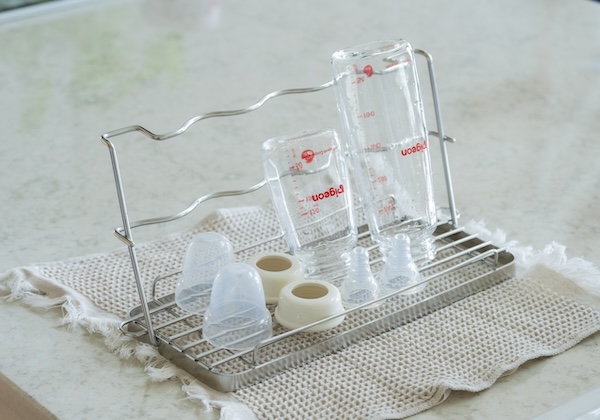
The tension between cheap plastic setups and permanent kitchenware came to a head with the release of the "Sukkiri Kurasu Baby Bottle Stand" by Beworth Style on October 22, 2025. Designed and manufactured in Sanjo, Niigata, a region world-renowned for stainless steel craftsmanship, the stand targets the exact design flaws that plague 100-yen hacks: stability, drainage elevation, and product longevity.
| Product Type | Estimated Cost (USD/JPY) | Primary Material | Useful Lifespan |
|---|---|---|---|
| Seria DIY Modular Rack | ~$2, $4 (¥220, ¥440) | Polypropylene & Polystyrene | 3, 6 Months (High Wear) |
| Commercial Plastic Lawn (e.g., Boon) | ~$20, $30 (¥3,000, ¥4,500) | Molded ABS & Phthalate-free Plastic | 12, 18 Months (Infancy Only) |
| Beworth Style Multi-Drainer | ~$35, $45 (¥4,950, ¥5,500) | 18-8 Stainless Steel Wire | 5, 10+ Years (Household Multi-use) |
The Beworth Style unit addresses hygiene via an elevated wireframe base that suspends bottle mouths well clear of standing moisture, as reported in design reviews across Japanese outlets including getnews.jp. Unlike commercial baby drying trees, which are awkward to repurpose, its frame is sized specifically to dry adult sports flasks, school thermos bottles, and kitchen sponges. It marks a shift from single-use nursery gear toward multi-functional drainers built for decade-long use.
Calculating Lifecycle Value: From Formula Feedings to School Hydroflasks
Evaluating baby gear strictly on immediate purchase price ignores long-term utility. A ¥330 Seria combination serves its purpose well during travel, temporary stays at grandparents' homes, or within micro-apartments where every square inch is contested. However, once a child graduates from formula to straw cups, insulated tumblers, and heavy stainless-steel drink bottles, lightweight plastic hacks buckle.
Parents navigating toddler stages inevitably need a reliable water bottle drying tray. Heavy insulated flasks require deep vertical support pegs and balanced wire foundations to prevent toppling. Low-grade plastics stain easily from tea and juice residue, retain detergent odors, and eventually degrade under UV sterilization cabinets or regular dishwasher cycles.
Investing in high-grade long-term baby essentials alters the lifecycle equation. Premium steel wire stands blend directly into adult kitchen decor once bottle-feeding ends. They dry coffee travel mugs, blender cups, and reusable silicone bags without looking like an abandoned daycare station on your counter.
Frequently Asked Questions (FAQ)
Can Seria bottle stands support heavy glass baby bottles safely?
Most Seria plastic stands struggle to support 240ml glass bottles. Their lightweight plastic bases lack counterweights, meaning an unevenly placed glass bottle can tip the rack over and cause breakage. If you rely on glass bottles, stick to heavy-gauge wire stands, wide-base commercial drying racks, or place your Seria peg rack against a solid wall inside a deep sink tray.
How do you sanitize a 100-yen bottle rack without melting it?
Do not expose Seria polypropylene or polystyrene racks to boiling water, steam sterilizers, or high-temperature dishwasher drying cycles, as they will warp. Wash them by hand using lukewarm water and mild dish soap. To eliminate mold or mineral scale, spray the components with a diluted food-grade citric acid solution or alcohol sanitizer, then let them air-dry completely in a well-ventilated space.
When should a family upgrade from a 100-yen hack to a stainless steel stand?
Upgrade when your child begins using heavy insulated straw cups and water bottles, or if your kitchen environment struggles with high humidity and recurrent mold. A stainless steel stand, like the Beworth Style frame, is also the better choice if you want a permanent fixture that will dry adult travel mugs, tumblers, and kitchen sponges long after the infant stage ends.
Rethinking Nursery Organization for the Modern Kitchen
The ongoing popularity of Seria baby bottle hacks reflects a healthy skepticism toward an infant gear market flooded with high-priced, short-lived plastic gadgets. For temporary stays, emergency travel kits, or ultra-tight rental counters, spending a few hundred yen on modular racks remains an ingenious, practical solution.
Yet infant feeding hardware eventually gives way to the relentless cycle of school water bottles, travel tumblers, and daily cookware. A makeshift system that demands constant mold maintenance and risks toppling glass containers can quickly outlive its welcome. True efficiency in the kitchen comes from balancing upfront thrift against everyday utility, choosing items that carry their weight long after the last bottle is put away.