Does Cracking Your Knuckles Actually Make Them Thicker? The Truth Behind the Habit
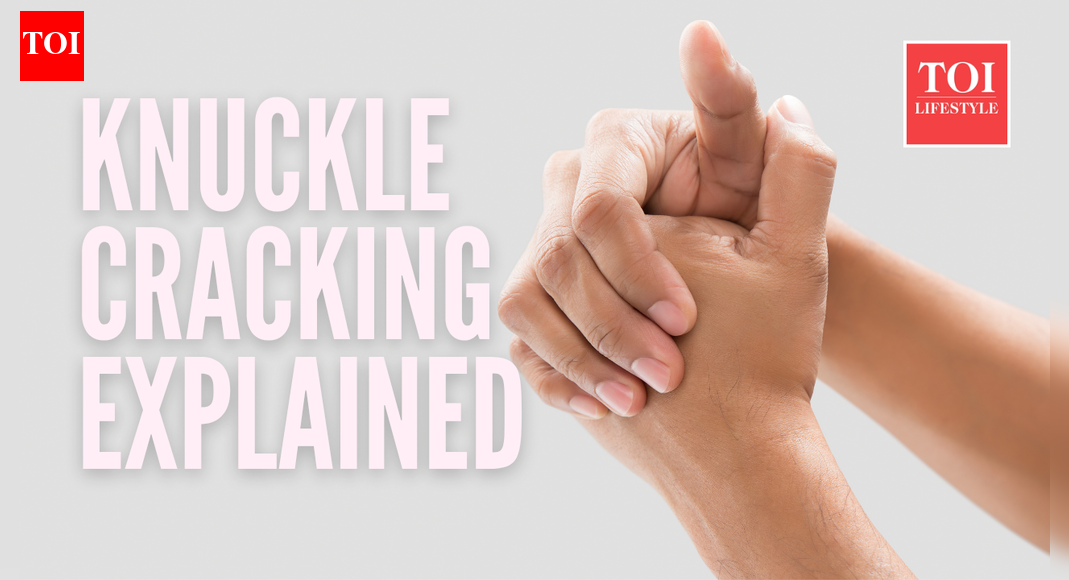
Few bodily habits provoke as much unsolicited medical advice as cracking your knuckles. For generations, parents, teachers, and concerned friends have warned that tugging or bending your fingers until they snap will permanently stretch your connective tissue, weaken your hands, and leave you with swollen, bulbous knuckles. Yet orthopedic researchers have repeatedly examined this ritual under acoustic sensors, high-speed magnetic resonance imaging, and long-term cohort surveys. As documented in a classic self.com report, medical consensus shows that intentional joint popping does not cause chronic enlargement or trigger osteoarthritis.
The anxiety persists because people often notice their finger joints expanding as they age, mistakenly blaming their nervous habits rather than underlying physiological shifts. Finger circumference fluctuates based on systemic fluid dynamics, soft-tissue hypertrophy, and genetic bone remodeling. Addressing joint thickness requires separating physical acoustics from structural pathology.
📌 Key Takeaways:
- The Mechanism: The audible crack stems from synovial fluid cavitation, the formation and sudden collapse of microscopic gas bubbles within joint capsules, not bones grinding together.
- The Knuckle Myth: Repeated habitual cracking does not cause permanent connective tissue enlargement, structural knuckle thickening, or osteoarthritis.
- True Drivers: Visible knuckle enlargement typically results from genetic bone architecture, systemic fluid retention, mechanical trauma, or degenerative bone remodeling such as Bouchard’s nodes.
The Physics of the Pop: Synovial Cavitation Explained
The distinctive pop produced by flexing a finger joint sounds violent, but the underlying event is purely hydraulic. Knuckles, specifically the metacarpophalangeal (MCP) and proximal interphalangeal (PIP) joints, are encased in a flexible capsule filled with viscous synovial fluid. This fluid lubricates articular cartilage and delivers nutrients to avascular tissue. It also holds dissolved gases, primarily nitrogen and carbon dioxide, in microscopic suspension.
When you pull, twist, or hyperflex a finger, you force the articular surfaces of the bones apart. This sudden expansion increases the physical volume inside the joint capsule, causing internal pressure to drop precipitously. Dissolved gases rapidly flash out of solution to form a microscopic vacuum pocket. In 2015, a research team led by Dr. Gregory Kawchuk at the University of Alberta used continuous cine-MRI to capture this phenomenon in real time. The imaging demonstrated that the sound coincides with the rapid formation, known as synovial fluid cavitation, rather than the bursting of the bubble. Once the void forms, the gas gradually redissolves into the synovial fluid over a refractory period of 15 to 30 minutes, during which the joint cannot be cracked again.
Because cavitation occurs entirely within the liquid medium, it generates no structural friction between the opposing cartilage plates. The process does not shave bone, tear ligaments, or stimulate the periosteum to deposit extra bone layers.
The Myth of the Bulky Joint: Donald Unger and Decades of Clinical Evidence
The belief that cracking causes physical disfigurement has been thoroughly tested by researchers, most famously by California physician Dr. Donald Unger. Motivated by childhood reprimands, Unger conducted an official 60-year trial on himself. He cracked the knuckles of his left hand at least twice daily while leaving his right hand uncracked as a biological control. Over six decades, he cracked his left knuckles roughly 36,500 times. At the conclusion of his experiment, physical and radiographic examinations showed zero signs of arthritis in either hand, and neither hand displayed increased knuckle thickness or diminished range of motion. His findings earned him the 2009 Ig Nobel Prize in Medicine.
Broader clinical research reinforces Unger’s individual findings. Controlled studies examining hand radiographs of hundreds of older adults have repeatedly found no correlation between a lifelong habit of knuckle cracking and the prevalence of hand osteoarthritis. While an isolated 1990 study suggested habitual crackers might experience slightly reduced grip strength and localized soft-tissue swelling, subsequent updates and contemporary reviews from orthopedists confirm that grip strength remains clinically unaffected by the habit alone. The idea that popping your fingers transforms slender joints into bulky knobs is biomechanically unsupported.
| Knuckle Characteristic | Synovial Cavitation (Cracking) | Fluid Retention & Edema | Osteoarthritis (Degenerative) |
|---|---|---|---|
| Structural Change | None (zero bone or tissue alteration) | Soft-tissue swelling, doughy texture | Hard osteophytic bone spur growth |
| Reversibility | Self-resolving gas flash (15, 30 min) | Highly reversible via hydration & diet | Irreversible structural bone remodeling |
| Symptom Profile | Audible pop, perceived joint relief | Tightness, difficulty sliding rings off | Stiffness, aching, reduced grip strength |
| Primary Location | MCP and PIP finger joints | Entire digit, dorsum of hand | DIP (Heberden's) and PIP (Bouchard's) |
Real Drivers of Thick Knuckles: From Genetics to Inflammation
If cracking is harmless, what causes fingers to thicken over time? Hand geometry is heavily determined by inherited anatomy. The width of your distal epiphyses, the flared ends of your finger bones, dictates your baseline knuckle profile. People with naturally prominent condyles will always have pronounced joints, regardless of their lifestyle or body fat percentage.
Beyond skeletal shape, soft-tissue fluctuations create noticeable changes in finger volume. High dietary sodium, hormonal shifts, and temperature extremes often trigger transient fluid retention in fingers. When extracellular water pools in interstitial tissues, the skin over the knuckles tightens, giving the impression that the joints themselves have expanded.
Chronic low-grade inflammation is another major driver. Repetitive micro-trauma from heavy manual labor, powerlifting, rock climbing, or vocational grip strain can lead to connective tissue enlargement. The collateral ligaments supporting the finger joints thicken in response to recurrent mechanical load. Unlike bone spurs, this ligamentous hypertrophy is the body’s adaptive defense mechanism to stabilize high-stress joints.
Heberden's and Bouchard's Nodes: When Enlargement Signals Pathology
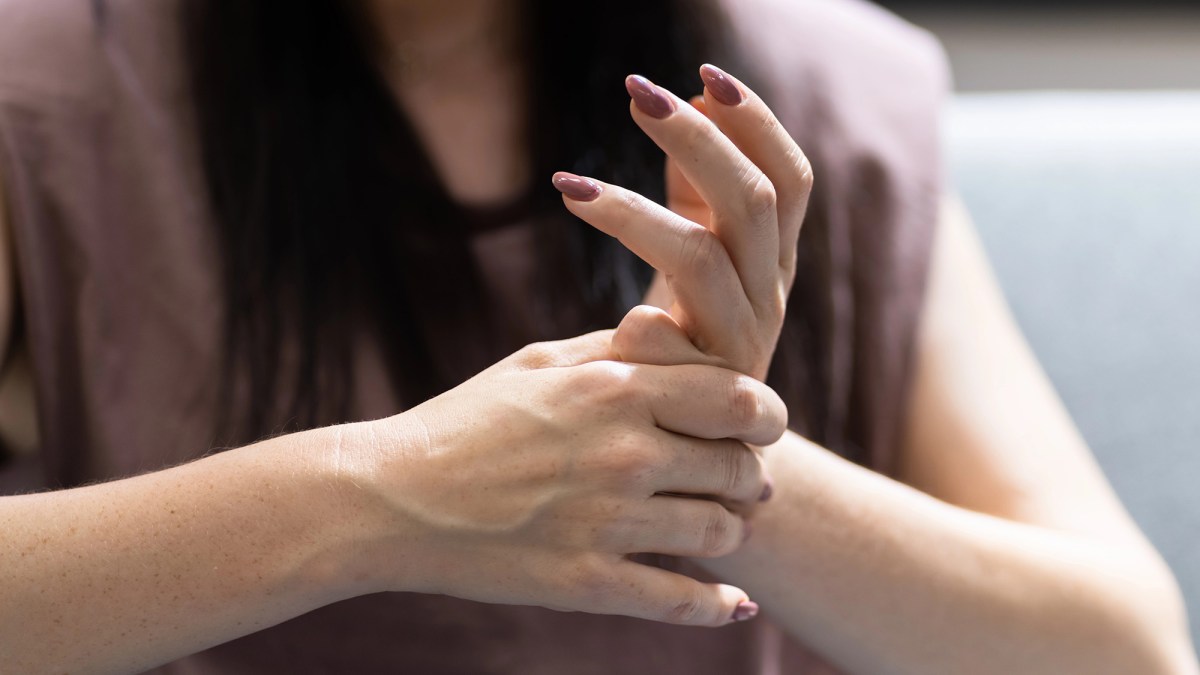
When knuckle expansion is hard, irregular, and permanent, it often reflects a structural joint condition rather than soft-tissue edema. In osteoarthritis, the gradual loss of articular cartilage prompts the body to attempt joint repair by laying down new bone tissue along the articular margins. These bony outgrowths are known as osteophytes.
When osteophytes form on the proximal interphalangeal joints (the middle knuckles), they are classified as Bouchard's nodes. When they appear on the distal interphalangeal joints (closest to the fingernails), they are called Heberden's nodes. These nodes feel rock-hard to the touch, frequently appear during middle age, and show a strong genetic predisposition, disproportionately affecting women.
In inflammatory conditions like rheumatoid arthritis or psoriatic arthritis, joint enlargement stems from a completely different mechanism: synovial proliferation (pannus formation) and systemic autoimmune attacks. This swelling feels warm, soft, and spongy, accompanied by morning stiffness lasting longer than 30 minutes. Distinguishing hard osteophytic bone spurs from spongy, inflamed synovium is essential for getting an accurate diagnosis.
Evidence-Based Methods to Manage Finger Swelling and Joint Volume
Can you physically slim your finger joints? The answer depends entirely on which tissues are expanded. Hard bone cannot and should not be filed down or altered through cosmetic routines. Attempting aggressive compression wraps or rigid splints to shrink knuckles can damage collateral ligaments and restrict capillary blood flow. However, if joint volume is amplified by edema, excess body fat, or acute inflammation, specific non-surgical interventions provide measurable relief.
Targeted lymphatic drainage for hands helps evacuate pooled extracellular fluid. Performing light, distal-to-proximal strokes, gently sweeping from the fingertips toward the wrist, encourages sluggish lymph fluid back into deep circulatory channels. Pair this with active tendon-gliding exercises: alternate between making a straight fist, a hook fist, and an open hand spread. This active muscle pumping clears venous congestion and preserves joint mobility.
Dietary adjustments also play a role in reducing knuckle inflammation. Lowering processed sodium intake directly minimizes peripheral fluid retention, while maintaining consistent daily hydration prevents the body from storing excess water. For acute puffiness triggered by exertion or heat, brief contrast baths (alternating between lukewarm and cool water for 3 to 5 minutes) stimulate microvascular constriction and dilation, flushing accumulated fluids out of the digits.
Frequently Asked Questions (FAQ)
Q1: Does cracking knuckles cause arthritis in old age?
A1: Decades of epidemiological and radiological studies have found no causal connection between habitual knuckle cracking and the development of osteoarthritis. The popping sound is produced by harmless gas bubble cavitation in the synovial fluid, not articular cartilage degeneration.
Q2: Why do my knuckles hurt when I crack them?
A2: Normal knuckle cracking should be entirely painless. If popping your joints causes sharp pain, tenderness, or lasting soreness, you may be aggravating an underlying ligament sprain, a tendon subluxation, or early cartilage erosion. Stop intentionally cracking the joint and consult an orthopedic physician.
Q3: Can finger exercises permanently slim down thick knuckles?
A3: Hand exercises cannot alter the width of your bones or shrink genetic joint structures. However, active finger extensions and tendon glides stimulate lymphatic flow, which reduces fluid retention and soft-tissue swelling around the joints, producing a leaner overall finger profile.
Navigating Hand Health and Structural Realities in 2026
The habit of cracking knuckles remains a benign sensory curiosity rather than an orthopedic risk. Modern ultrasound and cine-MRI imaging have effectively closed the debate: synovial cavitation does not wear down cartilage, loosen joint capsules, or provoke the bony overgrowths that cause visible knuckle enlargement.
When finger joints do appear bulky, the cause typically traces back to skeletal genetics, systemic fluid fluctuations, or the natural bone remodeling of osteoarthritis. Managing finger aesthetics means working with your anatomy rather than fighting normal biomechanics. Focusing on systemic hydration, anti-inflammatory nutrition, and gentle hand mobility will keep your joints healthy, functional, and pain-free far better than worrying about an occasional harmless pop.