Fact-Checking Job Difficulty in 2026: What Mynavi’s Latest Hiring Research Actually Reveals
Headlines celebrating Japan's severe labor shortage suggest that landing a job in Tokyo or Osaka has never been simpler. The reality facing job seekers tells a sharply different story. While corporate boardrooms lament shrinking candidate pools, the lived experience of candidates navigating selection processes reveals entrenched structural friction. Newly published labor research by employment services firm Mynavi exposes this glaring contradiction: an economy starved for personnel running parallel to thousands of willing workers who find corporate doors firmly locked against them.
The core tension surfaces clearly among those attempting to re-enter professional life. According to a 日本経済新聞 Report analyzing Mynavi’s findings, roughly 40% of stay-at-home spouses express a clear desire to return to work, a figure climbing above 50% for candidates in their twenties and thirties. Yet despite intense market-wide labor demands, nearly 60% of these applicants report that securing a job remains exceptionally difficult. The gap between macroeconomic headcounts and real-world hiring feasibility metrics exposes an uneasy truth about modern Japanese recruitment.
📌 Key Takeaways:
- The Paradox: Japan's labor shortage has not translated into universal hiring access, leaving major applicant cohorts stranded despite rising corporate vacancies.
- The Demographic Divide: A Mynavi survey of 6,534 married women reveals that while over 50% of respondents under 40 want to work, nearly 60% encounter severe career restart obstacles.
- The Root Friction: Corporate selection difficulty remains elevated because legacy hiring rituals prioritize unbroken domestic work histories over adaptable mid-career skills.
How the Perceived Labor Shortage Misleads Modern Applicants
Macroeconomic indicators in Japan frequently highlight a favorable jobs-to-applicants ratio, breeding an assumption that corporate selection difficulty has evaporated. International observers view Japan as an open hiring market driven by an aging demographic cliff. That premise fails to account for how major employers filter talent pools. Companies seek exact profiles: freshly minted university graduates groomed for traditional lifetime tracks or experienced mid-career specialists holding uninterrupted domain expertise.
This mismatch leaves an enormous swath of the domestic talent pool stranded on the margins. Applicants seeking non-traditional pathways encounter invisible barriers, including stringent scheduling requirements, rigid resume gaps evaluations, and an unwillingness among hiring managers to train mid-career entrants. The public discourse tells workers that jobs are everywhere. The daily experience of sending out resumes reveals an unforgiving gauntlet of corporate filters.
Inside the 2026 Mynavi Employment Survey Findings
To quantify these dynamics, Mynavi surveyed 6,534 married women aged 20 to 59 who were neither employed nor enrolled in educational institutions. The sample provides an unvarnished snapshot of latent labor supply across Japan. The research measured employment appetite against perceived recruitment difficulty, painting a stark portrait of systemic friction.
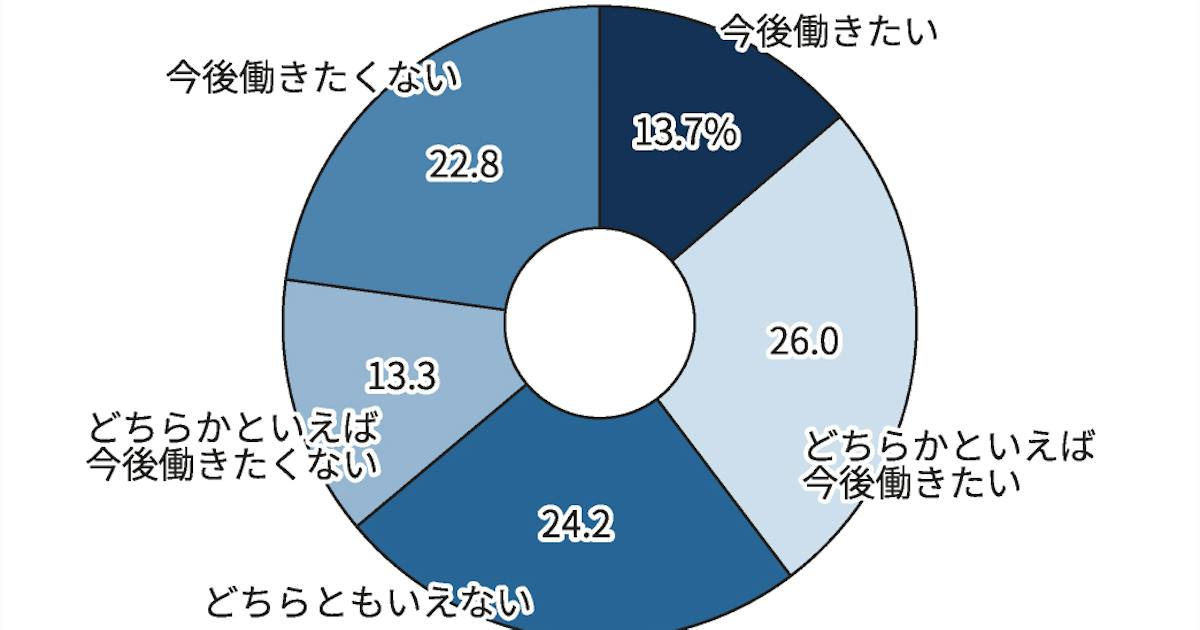
Interest in joining the workforce runs high among younger demographics. Exactly 13.7% of total respondents stated they decisively want to work in the future, while 26.4% responded that they would lean toward working, totaling roughly 40% of all surveyed participants. Among respondents in their twenties and thirties, workforce re-entry desire surged past 50%. Despite that baseline interest, nearly 60% of respondents across age groups cited securing stable employment as an uphill battle. The desire to contribute exists, but corporate screening mechanisms systematically screen these candidates out.
Examining the Core Data and Demographic Disconnect
The friction points within the hiring landscape are not uniform across all demographics. The Mynavi data outlines distinct trends based on age cohort, career interruption length, and employer expectations. Tracking these metrics exposes why the hiring competitiveness rate remains high for applicants attempting non-standard entry.
| Demographic Cohort | Workforce Participation Intent | Perceived Search Difficulty | Primary Institutional Barrier |
|---|---|---|---|
| Ages 20, 29 | Exceeds 50% | 54%, 58% | Childcare infrastructure shortages; lack of flexible core hours |
| Ages 30, 39 | Exceeds 50% | 58%, 62% | Resume gaps penalized during corporate document screening |
| Ages 40, 49 | 35%, 40% | 60%, 65% | Mid-career role scarcity; rigid age-bracket assumptions |
| Ages 50, 59 | Under 30% | 65%, 70% | Limited placement opportunities outside precarious non-regular work |
These figures demonstrate that labor market participation gaps are not born of candidate apathy. The bottleneck sits firmly within the hiring funnel. Younger married women display significant drive to rebuild professional careers early, yet they encounter identical screening walls to those faced by older cohorts.
Why Mid-Career Rerouting Hits Corporate Brick Walls
The friction documented in the Mynavi survey stems from historical corporate design. Japanese personnel management long relied on the shinsotsu ikkatsu saiyo system, a process of hiring university graduates simultaneously each spring and schooling them internally. When workers step off that track, whether to raise children, care for aging relatives, or pursue independent interests, re-entry mechanisms prove remarkably brittle.
Mid-career recruitment has expanded across Japanese industry, but hiring criteria have grown increasingly hyper-specific. Human resource departments often seek turn-key replacements who can produce value from day one without internal retraining. When an applicant presents a three-year gap on their resume, automated applicant tracking tools and risk-averse hiring managers flag the file. Rather than assessing foundational competence or long-term potential, corporate screeners drop candidates into low-wage non-regular contracts (hiseiki), effectively locking skilled workers out of stable career trajectories.
Workplace conditions compound the hurdle. Despite government initiatives pushing work-style reform, many corporate positions still carry unstated expectations of after-hours meetings, rigid on-site attendance, or inflexible shifts. For an applicant managing domestic responsibilities, applying for these roles is a non-starter. The lack of structured part-time professional roles forces qualified applicants to either abandon their search or settle for low-skill retail or administrative gigs that underutilize their capabilities.
Overcoming Structural Hurdles in the Modern Job Hunt
Navigating this environment requires applicants to abandon outdated job-hunting assumptions. Relying entirely on mass-market aggregate portals rarely yields success for non-traditional candidates. Corporate algorithms on broad recruitment boards favor continuous, linear employment records.
Job hunt success factors now center on strategic positioning and channel selection:
Bypass General Application Funnels: Candidates attempting a career restart achieve higher response rates by targeting boutique placement agencies specialized in flexible executive roles, returnships, or portfolio work. These intermediaries pre-negotiate scheduling parameters with client firms, eliminating the friction of rigid corporate job descriptions.
Frame Resume Gaps Around Measurable Competencies: Passive employment histories doom applications. Job seekers must explicitly outline self-directed projects, digital certifications, community administration, or consulting work undertaken during gap periods. Transforming a gap from an empty timeline into an active skills acquisition phase disarms automated screening filters.
Identify Forward-Thinking Employers: Mid-sized regional businesses, high-growth technology ventures, and foreign multinationals operating in Tokyo demonstrate far greater flexibility regarding hybrid arrangements and alternative resumes than legacy conglomerates. Concentrating search efforts on enterprises facing genuine operational constraints yields far better interview rates.
Frequently Asked Questions (FAQ)
Q1: Why does Japan report a labor shortage if securing employment remains difficult?
The shortage concentrates heavily in specific sectors such as logistics, healthcare, construction, and specialized software engineering. Meanwhile, corporate screening for white-collar, flexible, and career-track positions remains intensely selective, creating an imbalance between where vacancies exist and where returning workers can realistically operate.
Q2: What is the main cause of career restart obstacles for married women in Japan?
The primary barriers include inflexible working hours, an institutional bias against resume gaps, and a structural shortage of career-track roles that offer reduced overtime or remote work options. Many employers default to offering returning mothers precarious non-regular contracts instead of standard employment.
Q3: Which recruitment channels are most effective for mid-career applicants with employment gaps?
Direct networking, specialized returnship programs, and recruitment agencies focused specifically on flexible or mid-career placements yield far better outcomes than general mass-market job boards. Connecting directly with department leads at growing small-to-medium enterprises often circumvents rigid human resource screening rules.
Strategic Takeaways for Japan's Labor Market
The Mynavi research strips away the comforting myth of an effortlessly open Japanese job market. A high volume of corporate job postings does not mean hiring criteria have evolved. Millions of potential professionals remain sidelined by recruitment systems designed for an era when single-earner households and lifelong corporate loyalty were standard.
Solving this dilemma demands systemic corporate evolution rather than superficial workforce appeals. Companies that modernize screening criteria, dismantle taboos around resume interruptions, and introduce genuine schedule autonomy will capture an underutilized talent pool. Until employers bridge that operational divide, aggregate vacancy numbers will remain an empty metric for the job seekers standing right outside their doors.