Hokuto City Fire Safety Guide: Evacuation Routes, Hotlines, and Live Updates
When sirens echo across Hokuto, immediate clarity can save lives. A major industrial fire that crippled the Clean Oshima incineration plant in late April sent shockwaves through southern Hokkaido, triggering mutual-aid responses from the Hokuto municipal fire department and neighboring units. Five months after the initial blaze, the municipal fallout continues to ripple through public infrastructure and daily municipal services across the region.
According to an investigative 北海道新聞デジタル Report, emergency waste diversion costs have surged to 2.9 billion yen, forcing local governments throughout the Oshima subprefecture to slash discretionary spending while regional emergency response protocols remain on high alert. For residents monitoring Hokuto City fire alerts (北斗 市 火事 速報), understanding verified alert systems, clear evacuation corridors, and neighborhood assistance networks is now critical.
📌 Key Takeaways:
- Alert Verification: Monitor Hokkaido emergency dispatch bulletins, local sirens, and the Hokuto municipal disaster prevention radio network rather than unvetted social media clips.
- Industrial Fallout: The Clean Oshima plant fire knocked out combustible processing for one city and nine towns, forcing emergency detours to Tomakomai and Hakodate.
- Reconstruction Horizon: Full operational restoration will take until spring 2028, requiring strict household garbage management and fiscal restraint across Oshima municipalities.
Tracking Real-Time Hokuto City Fire Alerts and Verified Hotlines
During an active fire or industrial flare-up, speed matters. Unverified rumors on social media often distort evacuation commands, causing unnecessary gridlock along major regional arteries like Route 227 and the Hakodate-Esashi Expressway.
Official dispatch information runs through the Hokuto municipal fire department dispatch desk, operating under the South Oshima Fire Defense Association. When heavy smoke or structural alarms trigger an automated response, field stations dispatch pumpers, ladder trucks, and hazardous material containment teams based on regional emergency response protocols. Residents should confirm live incident statuses directly via municipal disaster warning channels and the Hokkaido regional emergency dispatch radio frequencies.
Keep these direct contacts accessible on offline mobile storage or printed cards:
Emergency Dispatch (Fire & Ambulance): 119
Hokuto City Disaster Prevention Division: 0138-73-3111
Automated Fire Incident Hotline (Oshima Region): 0138-46-2299
Police Emergency Services: 110
The Clean Oshima Blaze: Structural Damage and the 2028 Reconstruction Timeline
The late-April disaster at the Clean Oshima facility exposed critical vulnerabilities in regional infrastructure. What began as a combustible waste fire escalated quickly, spreading into processing hoppers and high-temperature sorting lines. Thick plumes of smoke forced immediate road closures, prompting localized shelter-in-place notices for nearby districts in Hokuto.
Subsequent structural fire damage investigations revealed severe warping across the plant’s primary combustion chambers and automated crane cranes. Replacing specialized thermal shielding, sorting conveyors, and filtration apparatus requires extended procurement cycles. Engineering assessments confirm that the facility reconstruction timeline will run through spring 2028.
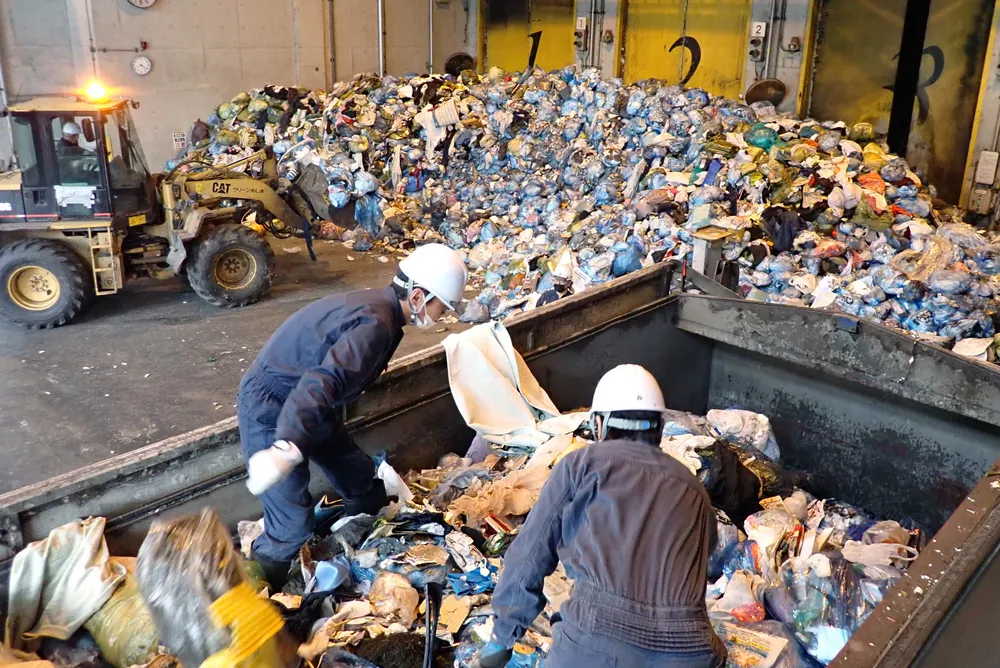
Until rebuilding wraps up, the plant cannot incinerate daily municipal intake. That leaves an immense operational deficit for one city and nine towns across Oshima, where trash continues to accumulate faster than alternative haulers can move it.
Oshima Subprefecture Waste Emergency and the Strain on Municipal Budgets
The prolonged shutdown has triggered an acute Oshima subprefecture waste crisis. With local incinerators offline, regional administrators secured combustible garbage disposal backup routes, contracting private haulers to truck hundreds of tons daily to Tomakomai alternative waste processing facilities. The logistics are brutal: shipping refuse hundreds of kilometers across Hokkaido demands thousands of round trips by heavy haulers.
Secondary strain hit the Hinode waste treatment plant in neighboring Hakodate. The Hinode facility was already operating under reduced capacity due to pre-scheduled, large-scale renovation work. Unable to absorb the regional surplus, more than 1,000 tons of municipal refuse sat stalled in transit hubs during peak summer months.
Financially, the emergency contracts carry a staggering 2.9 billion yen price tag. To absorb the blow without bankrupting utility accounts, regional mayors enacted sweeping municipal emergency budget cuts. Public park upgrades, non-essential road resurfacing, and municipal community center expansions have been shelved indefinitely across the district.
| Facility / Jurisdiction | Operational Status | Immediate Impact & Timeline |
|---|---|---|
| Clean Oshima (Hokuto City) | Completely shuttered post-fire | Offline until spring 2028; 1 city and 9 towns impacted |
| Tomakomai Municipal Facilities | Emergency external receiver | Handling outsourced burn capacity under a 2.9 billion yen diversion pact |
| Hinode Plant (Hakodate City) | Reduced processing capacity | Under renovation; backlog exceeded 1,000 tons of untreated refuse |
| Hokuto Municipal Budget | Fiscal redirection in effect | Capital works frozen to cover transportation and landfill tipping fees |

Securing Evacuation Routes and Community Relief Networks in Hokuto
Urban density along coastal Hokuto contrasts sharply with inland agricultural and forested pockets. A severe blaze, whether industrial or residential, requires distinct tactical decisions based on wind directions blowing off Uchiura Bay.
Residents in low-lying sectors near the Ono River basin should map two separate escape paths leading to elevated ground. Major civic shelters include the Hokuto City Sogo Sports Center (Hamawaki district) and designated public elementary school gymnasiums across Kamiiso and Ono. In the event of dense chemical smoke or industrial fire gases, staying indoors with sealed windows is often safer than evacuating directly through an active smoke corridor, unless municipal loudspeakers instruct an immediate sector clear.
Neighborhood mutual-aid associations (chonaikai) maintain rosters of elderly or mobility-impaired residents. Register vulnerable household members with your local neighborhood block captain ahead of winter conditions, when snowbanks narrow secondary access roads and slow down fire engines.
Frequently Asked Questions (FAQ)
Q1: Where can I check live fire alerts for Hokuto City without a Japanese radio?
A1: Access the Hokkaido Disaster Prevention Information portal online or register for Hokuto City’s official disaster mail service, which pushes real-time text updates directly to registered smartphones during active emergencies.
Q2: Has the Clean Oshima plant fire changed household trash collection rules in Hokuto?
A2: Yes. The city enforces strict volume limits on burnable waste and requests residents to minimize household volume. Bulky combustible disposals must be scheduled well in advance because external haulage to Tomakomai is running near peak load capacity.
Q3: What should I do if industrial smoke spreads into residential neighborhoods?
A3: Shut all windows, turn off central intake ventilation units, and tune into municipal disaster radio broadcasts. Evacuate only along routes running perpendicular to the wind direction, steering clear of narrow rural tracks that fire tankers need for staging.
Long-Term Resilience and Preparedness Across Southern Hokkaido
The destruction at the Clean Oshima facility serves as an enduring reminder that localized emergencies can trigger protracted structural crises across entire prefectures. Restoring full processing capacity will take years of coordinated engineering and disciplined municipal budgeting. For households in Hokuto City, real security rests on basic, proactive habits: verifying emergency dispatch alerts through validated public services, knowing secondary evacuation corridors, and respecting municipal waste restrictions designed to keep local services functioning under unprecedented strain.