Is the United Kingdom Collapsing? Inside the Joint Rebellion by Celtic Leaders
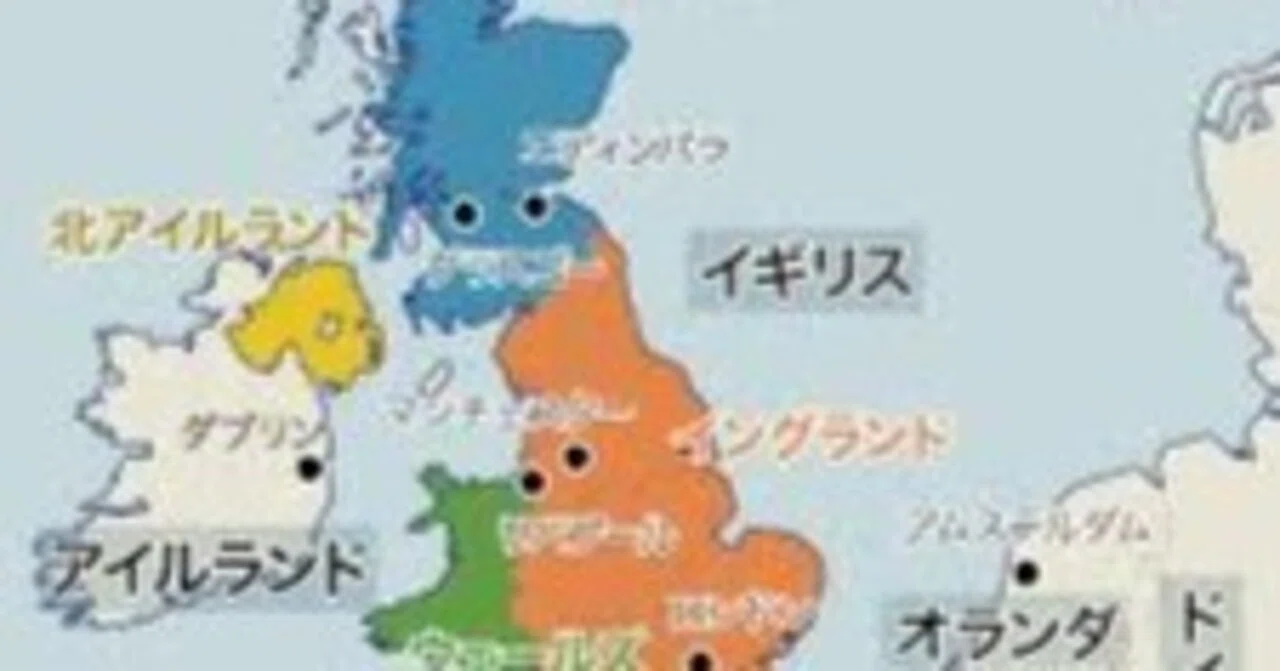
The constitutional architecture of the United Kingdom of Great Britain and Northern Ireland faced its most severe institutional crisis in modern history this autumn. In late September 2026, the heads of government for Scotland, Wales, and Northern Ireland bypassed London entirely, convening an extraordinary summit to coordinate political pressure against the central state. As detailed in an investigative dispatch from note Report, the tripartite coalition issued an uncompromising joint declaration: the era of unchecked, centralized command from the Westminster government is over.
For three centuries, the British union relied on unwritten conventions, parliamentary supremacy, and the tacit consent of its constituent nations. That consent has worn thin. Decades of friction over post-Brexit governance, unilateral legislative overrides by London, and widening regional economic disparities have forged common ground among Edinburgh, Cardiff, and Belfast. While their long-term constitutional ambitions vary, ranging from full independence to confederation or Irish reunification, their immediate tactical alignment presents Whitehall with an existential challenge.
📌 Key Takeaways:
- The Tripartite Pact: In September 2026, leaders from Scotland, Wales, and Northern Ireland issued a joint proclamation warning London that centralized rule without territorial consent cannot continue.
- The Structural Fracture: Repeated Westminster overrides of the Sewel Convention and post-Brexit trade arrangements eroded trust in the 1998 devolution settlement.
- The Road Ahead: Coordinated parliamentary inquiries, potential Supreme Court litigation, and escalating demands for a Northern Ireland border poll now threaten the integrity of the three-century-old union.
The Gathering Storm Across the Celtic Fringe
The shockwaves felt across London this month were years in the making. The modern British state has operated under an increasingly unstable contradiction since 1998, when Tony Blair’s administration established devolved legislatures in Scotland, Wales, and Northern Ireland. The premise was straightforward: decentralize day-to-day policy to satisfy regional identities while preserving the absolute legal sovereignty of the parliament in London.
That compromise worked while the UK remained inside the European single market and London pursued consensus politics. Brexit detonated that balance. When England and Wales voted to leave the European Union in 2016 while Scotland and Northern Ireland voted decisively to remain, the divergent political paths of the four nations became impossible to mask. In subsequent years, the UK Internal Market Act 2020 allowed Westminster to impose trade, environmental, and public procurement standards on devolved governments without their legislative consent, effectively neutralizing powers granted under the devolution statutes.
Frustration built quietly within the Holyrood parliament in Edinburgh and the Senedd in Cardiff. In Belfast, the Stormont executive wrestled with recurring political standoffs stemming from post-Brexit trade borders in the Irish Sea. By mid-2026, the perception that London treated the devolved administrations as subordinate regional councils rather than national partners catalyzed an unprecedented political counteroffensive.
The September 2026 Declaration: Westminster's Monopoly Shattered
The joint summit produced a document that constitutional scholars have called the most significant territorial confrontation since the signing of the Anglo-Irish Treaty in 1921. Meeting behind closed doors before facing an international press corps, the three leaders unveiled a mutual defense pact for devolved self-government.
The declaration targeted the absolute doctrine of parliamentary supremacy. It asserted that the United Kingdom is a voluntary union of nations whose sovereignty resides in their respective electorates, not within the walls of the Palace of Westminster. The text directly criticized London’s recurring habit of passing legislation impacting domestic policy without the formal legislative consent of devolved parliaments, a convention known as the Sewel Convention that London has increasingly treated as optional.
Public sentiment across the three territories has hardened in response. Community discussions and digital civic forums in Scotland and Wales reflected a striking consensus: whether citizens identify as committed nationalists or pragmatic moderates, centralized decision-making in London is widely viewed as unresponsive to local realities. By uniting their grievances, the three administrations deprived Downing Street of its standard strategy: isolating Edinburgh while placating Cardiff and managing Belfast through emergency interventions.
From the Acts of Union to the Modern Devolution Crisis
Understanding the current standoff requires examining the legal mechanics that bound these territories together. The modern constitutional crisis UK represents the latest chapter in a long history of centralized expansion, periodic resistance, and contested legal settlements.
| Constitutional Landmark | Year | Structural Impact on the Union |
|---|---|---|
| Acts of Union (Scotland & England) | 1707 | Dissolved the Scottish Parliament; merged political sovereignty into a single parliament at Westminster. |
| Act of Union (Ireland) | 1801 | Integrated Ireland into the UK; later fragmented by the 1921 partition and the 1949 declaration of the Republic. |
| The Devolution Settlement | 1998 | Created Holyrood, the Senedd, and Stormont; decentralized health, education, and justice while retaining fiscal supremacy in London. |
| UK Internal Market Act | 2020 | Curtailed devolved regulatory discretion, enabling London to enforce market rules across national boundaries. |
| Tripartite Celtic Accord | September 2026 | Unified the three devolved governments in formal opposition to Westminster’s centralized statutory powers. |
The historical record reveals a clear pattern. When economic conditions worsen and centralized authorities reject institutional reform, peripheral nations seek formal structural remedies. The loss of southern Ireland a century ago began with similar disputes over taxation, trade protections, and self-determination. By failing to construct a true federal model after 1998, Whitehall left the underlying machinery vulnerable to rapid dismantling.
Holyrood, the Senedd, and Stormont: Divergent Paths, Shared Friction
The leaders who stood together in September do not share identical goals. Their coordination is pragmatic, born of shared frustration with London rather than ideological uniformity.
In Scotland, the Scottish independence movement has spent years reassessing its strategy following the Supreme Court’s 2022 ruling that Holyrood cannot hold a consultative referendum without Westminster's permission. By linking arms with Wales and Northern Ireland, Scottish ministers gain leverage. They shift the debate from a bilateral dispute between Edinburgh and London into a broader crisis of the British state.
In Wales, where Welsh nationalism was once a minority impulse, the tone inside the Senedd has shifted dramatically. Plaid Cymru has pushed the debate toward greater fiscal autonomy, water rights control, and the devolution of the justice system. Even Welsh Labour figures have voiced alarm at London’s consolidation of regional infrastructure funds. The Cardiff government increasingly argues that the union cannot survive in its current form without moving to a quasi-federal commonwealth.
Northern Ireland operates under unique constitutional mechanics governed by the Good Friday Agreement. Cross-community power sharing at Stormont remains fragile, yet nationalist and cross-community leaders share a common grievance: London’s unilateral tinkering with customs rules frequently risks local stability. For Northern Ireland's First Minister, the joint pact reinforces the message that Belfast's interests will not be compromised to suit electoral calculations in the south of England.
Economic Realities and the Shadow of an Irish Border Poll
Constitutional theory alone does not dismantle states; economic pressures do. Across all three nations, the financial framework governing devolved spending, the decades-old Barnett Formula, is showing terminal signs of strain. The formula calculates devolved block grants based on changes in English public spending. As British public infrastructure and services face acute funding constraints, devolved budgets have experienced severe downstream cuts.
At the same time, trade alignments have fractured the domestic market:
- Northern Ireland’s Hybrid Status: Dual access to both the UK internal market and the EU single market under post-Brexit frameworks has redirected supply chains. North-South trade on the island of Ireland surged over 35% between 2021 and 2025, steadily binding Northern Ireland’s economic day-to-day realities closer to Dublin than London.
- Calls for a Border Poll: Demographic shifts and economic incentives have elevated polling for a border poll on Irish reunification. The Good Friday Agreement obligates the British Secretary of State to call a referendum if it appears likely that a majority would vote for a united Ireland. The tripartite alliance forces Westminster to confront this statutory trigger sooner than planned.
- The Industrial Clean-Energy Split: Scotland and Wales produce vast shares of the UK's renewable energy, particularly offshore wind and hydroelectric power. Both governments have expressed frustration that energy generation royalties and grid connections remain tightly controlled by national regulators based in London, while domestic consumer bills remain sky-high.
This fiscal friction has transformed dry constitutional disputes into dinner-table issues. When hospitals in Swansea, schools in Fife, and transit networks in Derry face budget shortfalls, regional politicians point directly to London’s fiscal grip.
Frequently Asked Questions (FAQ)
Does the September 2026 declaration mean the UK will break up immediately?
No. The joint declaration does not trigger immediate secession. Legally, constitutional matters, defense, and foreign affairs remain reserved to the UK Parliament at Westminster. The declaration is a political crisis that complicates London's ability to govern without regional consensus and sets the stage for protracted legal and legislative battles.
Can the Scottish Parliament hold an independence referendum on its own?
The UK Supreme Court confirmed in November 2022 that the Scottish Parliament lacks the unilateral power to legislate for an independence referendum without an order under Section 30 of the Scotland Act. The Scottish government’s current strategy focuses on building international pressure, forming domestic alliances with other devolved regions, and seeking a statutory mandate through general elections.
What legal conditions trigger a Northern Ireland border poll?
Under the Northern Ireland Act 1998, the Secretary of State for Northern Ireland must order a referendum if it appears likely to them that a majority of those voting would express a wish that Northern Ireland should cease to be part of the UK and form part of a united Ireland. Sustained polling majorities and shifting legislative majorities at Stormont are key indicators that could force London to act.
The Constitutional Horizon Beyond Centralized Rule
The myth of a docile Celtic fringe has been permanently broken. Whitehall’s long-standing playbook, offering piecemeal administrative concessions while asserting absolute sovereign power, no longer satisfies the political leadership in Edinburgh, Cardiff, and Belfast. The three administrations have demonstrated that they can coordinate their legislative resistance, share strategic resources, and present an organized diplomatic front to international partners.
London now faces a narrow set of choices. It can continue down the path of aggressive centralization, utilizing its technical parliamentary supremacy to override devolved laws, at the risk of turning regional political discontent into an uncontrollable push for full secession. Alternatively, it must fundamentally rebuild the British state along genuine federal lines, stripping Westminster of its absolute monopoly and codifying national consent into law. The joint declaration of September 2026 confirms that the status quo is finished; how London responds will determine whether the United Kingdom survives the decade intact.