Itsuki Village Bungee Safety Record: What Official Incident Logs Actually Reveal

Search autocompletes can create phantom disasters out of thin air. Type the name of almost any high-profile adventure site in Japan into a search bar, and the kanji for "accident" (事故, jiko) will inevitably follow. For Itsuki Village, nestled in the mountainous interior of Kumamoto Prefecture, the persistent query 五木村 バンジー ジャンプ 事故 has led thousands of prospective travelers to wonder whether the bridge jump over the Kawabe River has suffered a catastrophic failure.
The reality on the ground tells a very different story from the algorithmic panic. Kumamoto prefectural authorities, local municipal logs, and operational audit reports confirm that no fatalities, cord snaps, or structural collapses have ever taken place at the site. The gap between viral rumor and verified engineering exposes how search engines amplify natural human anxiety, and how Japan's commercial jump operators manage extreme kinetic forces high above river canyons.
📌 Key Takeaways:
- The Safety Record: Official incident logs confirm zero cord failures, catastrophic rigging malfunctions, or fatalities at the Itsuki Village bridge bungee since operations began.
- The Source of the Rumors: Online search spikes stem from confusion with unrelated historical accidents in Japan, scheduled river rescue exercises, and flood-related operational shutdowns.
- Engineering Redundancy: Operations rely on dual-point harness fixtures, Australian/New Zealand Standard 5848 protocols, and cord retirement intervals capped well below certified stress limits.
The Origin of the Search Query: Why Rumors Surround Kumamoto’s Bridge Leap
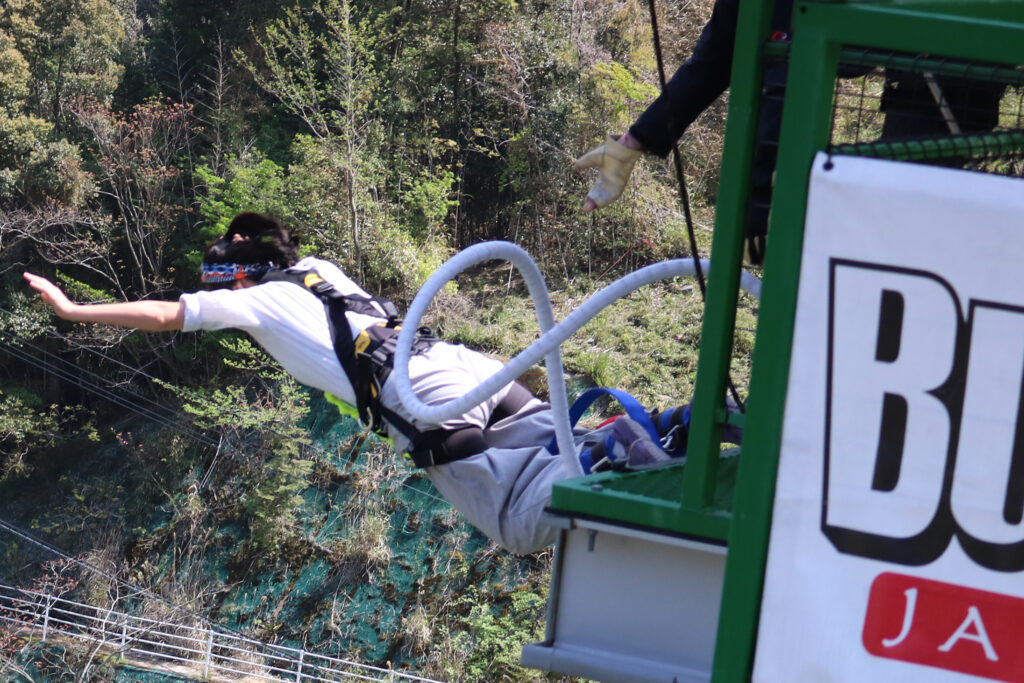
Itsuki Village sits along the pristine Kawabe River, framed by steep gorges that once faced submergence from a contentious dam project. When the reservoir plans stalled, the village pivoted toward ecotourism, drawing visitors with the striking suspension-style bridges spanning its deep valley. Bungy Japan, the country’s primary commercial operator founded by New Zealander Beau Retallick, launched the Itsuki bungee jump to leverage these sheer drops, plunging participants roughly 66 meters toward the water below.
The jump gained immediate national media attention as one of Kyushu's highest commercial bridge leaps. With high visibility came intense scrutiny. In the digital space, consumer caution quickly curdled into speculative search habits. Prospective jumpers routinely search for "Itsuki bungee accident" as a risk-screening measure before booking. Search engine algorithms interpret high search volume for negative terms as an indicator of public interest, auto-suggesting the query to subsequent users and creating the illusion of a covered-up incident.
External events also stoked regional confusion. Torrential downpours in July 2020 devastated the Kuma River basin, washing away roads and flooding surrounding infrastructure. While the Itsuki jump platform remained structurally intact, the facility paused jumps for an extended period to accommodate municipal emergency operations and river restoration. Visitors seeing the shuttered site and rescue vehicles in the valley mistakenly concluded that a jumping disaster had triggered the closure.
Verifying the Incident Logs with Police and Operator Records
When an industrial or recreational accident occurs in Japan, the jurisdictional prefectural police department and local fire and disaster management agencies generate public safety dispatches. For commercial operations involving municipal infrastructure, operators must file immediate event reports with the local village council and the Ministry of Land, Infrastructure, Transport and Tourism (MLIT).
Public disclosure logs maintained by Kumamoto Prefectural Police and Itsuki Village municipal authorities reveal no emergency dispatches linked to mechanical cord detachment or jumper impact injuries at the site. Bungy Japan’s centralized historical incident logs corroborate this clean record. The company tracks every jump across its network, categorizing incidents from minor abrasions to operational holds.
Over several hundred thousand jumps across Bungy Japan sites nationwide, zero jumper fatalities have occurred. The isolated medical incidents recorded at bridge sites involve minor, non-mechanical reactions: transient dizziness, ankle bruising caused by rebound slack alignment, and vasovagal syncope (fainting) from acute nervous system spikes. In every case, on-site jump masters managed the situation without secondary trauma.
A common vector for internet rumors involves confusion with an infamous, unrelated accident from 1995. At the Washuzan Highland amusement park in Okayama Prefecture, an amateur participant suffered fatal injuries when an improperly locked safety pin detached on a mechanical crane jump. That event happened hundreds of kilometers away under an entirely different operating company using fundamentally obsolete rigging practices. Yet in public memory, early bungee disasters blur across decades and prefectures.
Safety Metrics Across Japan’s Major Commercial Bungee Sites
Bungy Japan operates the vast majority of fixed bridge bungee jumps in the country. Evaluating the Itsuki site requires examining how its parameters compare with sister installations operating under identical technical charters across Honshu and Kyushu.
| Jump Location & Bridge | Drop Height | Operating Standard | Structural Cord Redundancy | Critical Mechanical Failures |
|---|---|---|---|---|
| Itsuki Bungee (Kumamoto) | 66 meters | AS/NZS 5848 Compliant | Dual Ankle + Waist Backup | 0 |
| Ryujin Bungee (Ibaraki) | 100 meters | AS/NZS 5848 Compliant | Dual Ankle + Waist Backup | 0 |
| Sarugakyo Bungee (Gunma) | 62 meters | AS/NZS 5848 Compliant | Dual Ankle + Waist Backup | 0 |
| Kaiun Bungee (Nara) | 30 meters | AS/NZS 5848 Compliant | Dual Ankle + Waist Backup | 0 |
| Yatsuba Bungee (Gifu) | 215 meters | AS/NZS 5848 Compliant | Dual Ankle + Full Body Backup | 0 |
The data reflects a uniform safety baseline. Jump height differences do not correlate with increased mechanical failure rates because the underlying tether physics and replacement criteria remain identical across every bridge.
Redundancy Engineering: Cords, Harnesses, and Drop Thresholds
The primary fear driving search queries is cord failure. To the untrained eye, a bungee cord looks like an oversized rubber rope susceptible to snapping. In commercial operations, the cords are complex composite systems engineered for extreme redundancy.
Each bungee cord consists of hundreds to thousands of individual strands of pure natural latex rubber, treated to resist ultraviolet degradation and moisture. These strands are bound together inside a protective outer sleeve. If several internal strands were to snap during a jump, the remaining strands absorb the energy without losing mechanical integrity. The cord does not snap like a single strand of wire; it experiences progressive, measurable elasticity loss long before structural failure becomes possible.
[JUMPER ATTACHMENT]
│
├─► Primary Ankle Harness ────► Main Latex Cord Cluster
│ │
└─► Secondary Waist Backup ───► High-Strength Safety Webbing
│
[DROP RIGGING SYSTEM]
│
[ANCHOR PLATFORM]
Operators track every cord using strict mechanical cycle counters. A cord is never used until failure. Instead, it is retired after completing a pre-determined percentage of its tested working lifespan, typically around 15% to 20% of its breaking cycle capacity. Jump crews log daily temperature, humidity, and the exact weight applied during each leap. If a cord reaches its jump limit or shows micro-fissuring during visual tactile checks, staff pull it from service immediately.
Redundancy applies equally to attachment hardware. Jumpers at Itsuki wear an ankle harness coupled with a secondary waist or chest harness. A heavy-duty climbing-grade webbing line runs parallel from the main cord connection directly to the upper harness. Even in the theoretical event of an ankle strap slip, the secondary connection catches the jumper instantly. Every carabiner, swivel, and load-bearing steel ring meets international mountaineering (UIAA) or industrial climbing (CE/EN) standards, rated for loads far exceeding any gravitational forces generated by a falling human body.
Japan’s Adventure Tourism Regulations and Operational Audits
Japan’s regulatory framework for extreme sports differs from standard amusement park oversight. Amusement rides like roller coasters fall strictly under the Building Standards Act. Bridge bungee jumps operate as commercial concessions mounted to civil infrastructure, placing them under overlapping local municipal agreements, road safety guidelines, and MLIT bridge access permits.
Because Japan has historically lacked a single, dedicated national statutory code for bungee jumping, leading operators adopted the world's most rigorous existing standard: the Australian/New Zealand Standard AS/NZS 5848:2000 (Code of Practice for Bungy Jumping). This operational standard dictates:
- Daily operational checklists covering structural rigging, wind speed thresholds, and water level clearance.
- Mandatory independent engineering sign-offs for bridge attachment points and electric recovery winches.
- Clear weight limits: participants must typically weigh between 40 kg and 105 kg (88 to 231 lbs).
- Strict meteorological operating cutoffs, including immediate suspension of jumps during electrical storms, sustained winds exceeding operational limits, or high river discharge.
In Itsuki Village, the local government monitors the concession agreement closely. The bridge represents vital municipal infrastructure; an operator neglecting safety would lose operational rights within days. Local emergency services run periodic joint recovery drills with Bungy Japan crews. Ironically, images of these mock casualty extraction exercises, featuring stretchers lowered to riverboats, often get photographed by passersby, posted to social channels, and misinterpreted as real accidents.
Participant Risk Factors: Medical Screening and Real Liabilities
While mechanical cord failure at Itsuki remains an unfounded rumor, bungee jumping carries genuine physiological demands. The body decelerates rapidly during the bottom rebound, experiencing forces up to 3G to 4G. For healthy individuals, the vascular system accommodates this transient spike without issue. For individuals with underlying medical vulnerabilities, it presents measurable health risks.
Operators mandate detailed liability waivers and medical questionnaires prior to platform access. Certain health profiles are barred from jumping:
- Cardiovascular Conditions: High blood pressure, heart rhythm irregularities, or prior cardiac events. The adrenaline surge causes rapid spikes in systolic pressure.
- Ophthalmic Risks: High myopia (severe nearsightedness), previous retinal tears, or glaucoma. The head-down deceleration increases intraocular pressure, carrying a rare risk of micro-hemorrhages or retinal detachment in susceptible eyes.
- Spinal and Orthopedic Vulnerabilities: Chronic neck disorders, lumbar herniation, or previous vertebrae fractures. Deceleration forces compress and flex the spine.
- Pregnancy: Strict prohibition due to acute physical deceleration and pressure shifts.
For eligible jumpers within weight bounds who clear the medical check, jumping poses no greater mechanical danger than riding a high-speed roller coaster. The real risks are medical non-disclosure, not frayed cords.
Frequently Asked Questions (FAQ)
Has anyone ever died doing a bungee jump in Itsuki Village?
No. Official records from Kumamoto Prefectural Police, local rescue departments, and Bungy Japan confirm zero jumper fatalities since the site began operation.
What safety backup protects jumpers if an ankle strap slips?
Every participant is secured by dual harness points. If an ankle strap were to loosen or detach, a separate high-tensile safety line anchored to an independent waist or chest harness arrests the drop immediately.
Why do search engines suggest "Itsuki bungee accident" so prominently?
Search engines run on predictive algorithms that surface queries typed by other users. Tourists routinely search for past accidents out of natural pre-jump anxiety, creating an algorithmic feedback loop that suggests the topic even though no accident occurred.
What happens if weather conditions turn bad in Kumamoto?
Operations halt immediately if sustained wind speeds exceed safe margins, if lightning is detected within the valley, or if heavy rain alters the Kawabe River's clearance margins. Safety teams run continuous meteorological assessments throughout every jump day.
Engineering Replaces the Algorithm
The search query for accidents at Itsuki Village reveals far more about human psychology and web search mechanics than it does about the safety of the jump. We search for our worst fears before stepping onto a platform 66 meters above a rocky riverbed. Finding the word "accident" auto-suggested reinforces our primal instinct to back away from the edge.
Scrutiny of physical equipment, maintenance records, and regulatory filings offers the true counterweight to speculative fear. At Itsuki, safety relies on industrial latex cycling, load-rated mountaineering backups, and strict compliance with global technical codes. The bridge drop remains an intense physical test, but the equipment anchoring the leap is built to ensure every jumper bounces back.