King Farm Cafe 10th Anniversary Marche Set for October: Complete Event Schedule and Specials
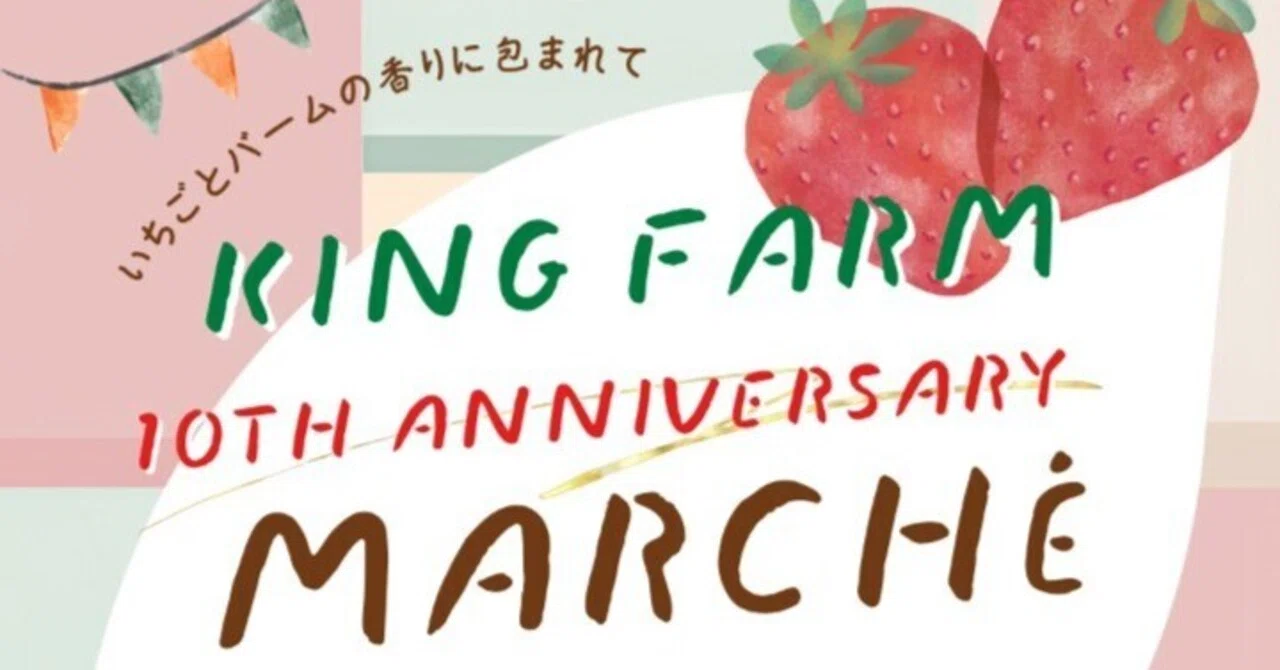
In Nishio City, an agricultural hub historically renowned for its shade-grown matcha, an independent berry grower turned culinary outpost is celebrating a milestone with an eye-catching pricing move. King Farm Cafe announced that it will serve its flagship ripe strawberry smoothie, regularly listed at 550 yen, for just **10 yen** during its upcoming autumn festival. As detailed in a [ライブドアニュース Report](https://news.livedoor.com/article/detail/32400653/), the promotion anchors the King Farm 10th Anniversary Marche scheduled for October 4, uniting regional growers and artisan food producers across Aichi Prefecture.
What began a decade ago as a modest greenhouse parcel has expanded into one of the Chubu region's premier agritourism destinations. The upcoming outdoor gathering celebrates ten continuous years of cultivation while showcasing an aggressive direct-to-consumer model that bypasses conventional wholesale distribution. For rural revitalization watchers and regional dessert enthusiasts alike, the event provides a clear look at how modern Japanese growers keep consumer interest alive through hyper-local branding.
📌 Quick Summary:
- The 10-Yen Promotion: King Farm Cafe drops the price of its top-selling strawberry smoothie from 550 yen to 10 yen on October 4, limited to one serving per customer while supplies last.
- A Decade of Cultivation: The celebration commemorates the farm's expansion from a modest Nishio City strawberry farm into an acclaimed Aichi farm-to-table cafe and picking venue.
- Community Gathering: The single-day outdoor marche features regional food trucks, craft vendors, and seasonal dessert collaborations with neighboring fruit orchards.
How a Nishio Strawberry Patch Became an Agritourism Anchor
Ten years ago, King Farm was an unassuming plot on the coastal flats of Nishio. Strawberries in Japan demand precise climate control, high labor inputs, and relentless attention to sugar content. Most regional farmers sell their winter harvest directly to agricultural cooperatives, absorbing wholesale price fluctuations and watching third-party retailers reap the retail markups. King Farm took a different route from day one.
The farm built its initial reputation on fresh strawberry picking excursions, inviting visitors into high-bench greenhouses during the December-to-May harvest window. Elevated benches allowed visitors of all ages to harvest fruit without bending over, while computerized drip irrigation ensured consistent sweetness. Once foot traffic took root, the farm constructed King Farm Cafe right beside the rows of fruit, turning day-trippers into repeat dessert customers.
By processing its own harvest into frozen purées, parfaits, and soft serve, the operation eliminated the seasonal revenue cliff that crushes typical berry operations during the sweltering summer months. Today, the cafe operates as a full-fledged Aichi farm-to-table cafe, drawing visitors from Nagoya, Okazaki, and Toyohashi who drive an hour or more specifically for estate-grown sweets.
The 10-Yen Smoothie Phenomenon and Marche Schedule
The centerpiece of the upcoming celebration is undeniably economic shock value. Selling a 550-yen blended beverage made from farm-grown fruit for a single 10-yen coin is a deliberate loss-leader strategy designed to flood the grounds with visitors. The offer applies strictly on October 4, limited to one cup per guest on a first-come, first-served basis.
According to event coordinators, preparation for the surge began weeks in advance, drawing on deep flash-frozen reserves of the farm's vine-ripened winter harvest. Blended without unnecessary fillers, the drink relies entirely on the natural balance of sweetness and acidity that defines high-grade Japanese greenhouse cultivars. The King Farm anniversary schedule pairs this drink special with an expansive lawn market featuring artisan coffee roasters, handmade craft stalls, and savory lunch trucks from surrounding Mikawa municipalities.
Anticipation across regional social channels suggests arrival times will matter. Crowds at previous seasonal rollouts often overwhelmed parking facilities by mid-morning, prompting the cafe to enforce standard limited quantity specials to prevent immediate stock exhaustion.
King Farm Evolution: A Decade of Menu Innovation and Metrics
Tracking King Farm's progression reveals how Japanese fruit growers must continuously adapt to maintain customer curiosity over a ten-year lifespan.
| Operating Era | Core Focus & Signature Offerings | Operational Footprint |
|---|---|---|
| Founding Phase (2016, 2019) | High-bench strawberry picking; raw berry gift packs; basic soft-serve cones. | Boutique greenhouse parcel; localized Nishio visitor base. |
| Cafe Expansion (2020, 2024) | Establishment of King Farm Cafe; estate strawberry parfaits; house-made baumkuchen; frozen smoothie line. | Dedicated retail building; year-round operations; regional Chubu visitors. |
| Collaborative Era (2025, 2026) | 10th Anniversary Marche; 10-yen strawberry smoothie; multi-orchard shaved ice; regional grower partnerships. | Regional agritourism anchor; inter-farm collaborative sourcing network. |
Beyond Strawberries: Seasonal Kakigori and Local Farm Fruit Collaborations
While greenhouse berries remain the operational anchor, King Farm Cafe established lasting market relevance through its aggressive midsummer menu pivots. In central Japan, high summer belongs to shave ice. The cafe mastered this demand by launching towering bowls of seasonal kakigori shaved ice that rival high-end specialty parlors in downtown Nagoya.
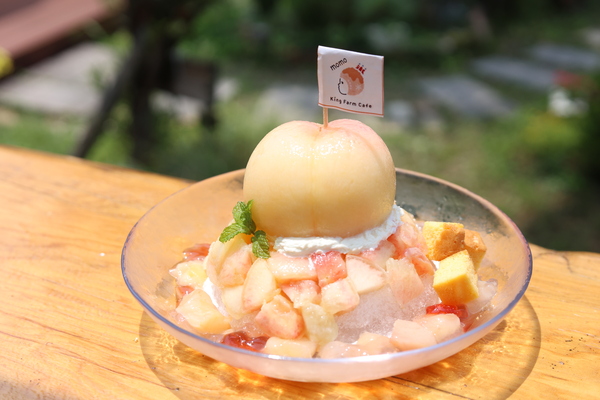
Their most talked-about warm-weather dish, the "Momo momo momo no kakigori," turned heads across regional culinary circles. The kitchen loads each bowl with three full Japanese white peaches, one presented whole right on top of the delicate shaved ice, flanked by two more sliced inside the bowl and swirled into fresh peach purée. That combination of visual abundance and genuine agricultural freshness turned the cafe into an annual summer destination.
The cafe also expands beyond its own property lines through deliberate local farm fruit collaboration projects. Late summer menu boards regularly feature specialty ice dishes built around ripe figs sourced directly from Ohkouchi Farm, alongside crisp, aromatic pears harvested at Kirari Farm. Instead of treating neighboring orchards as rivals, King Farm uses its high foot traffic to champion diverse Aichi gourmet sweets, cross-promoting the broader Mikawa growing region.
Navigating the Realities of Farm-to-Table Hospitality
Operating a working farm alongside an artisanal kitchen comes with distinct structural friction. Fruit quality depends entirely on weather, meaning flavor intensity and sugar levels shift between pickings. Unlike industrial bakeries that lean on shelf-stable flavorings and corn syrups, a farm cafe must adjust its recipes dynamically to match each harvest's natural acid-to-sugar ratio.
Waste management presents another constant challenge. Japanese consumers expect aesthetically flawless berries on store shelves, leaving irregularly shaped fruit at risk of being discarded. King Farm routes cosmetic outliers straight into smoothie batches, shaved ice syrups, and baked baumkuchen batters. That closed-loop processing turns potential agricultural loss into high-margin cafe menu items.
Staffing also strains operations during peak windows. Balancing weekend rushes of hundreds of dessert seekers while managing daily greenhouse maintenance requires careful scheduling. Visitors heading to the marche should anticipate lines and arrive early, as parking and seating fill rapidly during signature seasonal promotions.
Frequently Asked Questions (FAQ)
Q1: What are the exact details for the 10-yen smoothie offer?
The 10-yen strawberry smoothie promotion is offered as part of the 10th Anniversary Marche on October 4. Each guest is limited to one cup at the 10-yen price, and the special is valid only until the prepared daily batch runs out.
Q2: Where is King Farm Cafe located, and how do visitors reach it?
The cafe is situated in Nishio City, Aichi Prefecture. Most visitors arrive by car via the Meitetsu Gamagori Line area or regional highways connecting Okazaki and Toyohashi. On-site parking is provided, though spaces fill quickly during weekend festivals.
Q3: Does King Farm Cafe offer fruit picking throughout the entire year?
No. Strawberry picking runs seasonally, typically starting in mid-December and wrapping up in late May. Outside the picking window, the cafe and gift shop remain open year-round with seasonal shaved ice, baumkuchen, and fruit desserts.
Q4: Can visitors purchase whole fruit and baked goods to take home during the event?
Yes. The on-site retail market sells packaged farm sweets, house-baked baumkuchen, jams, and seasonal produce alongside visiting vendor stalls at the outdoor marche.
The Next Decade for Nishio Craft Agriculture
King Farm's decade mark illustrates a practical blueprint for small-scale Japanese agriculture facing an aging rural workforce and shifting retail realities. By treating fresh crops as the raw material for experiential dining rather than bulk wholesale goods, the farm carved out an enduring regional following. The upcoming October 4 gathering does more than offer a nearly free fruit drink; it proves that regional agricultural outposts can draw loyal crowds when they invest directly in their surrounding food community.