Before and After: What Spool Knitting with Budget Yarn Really Yields
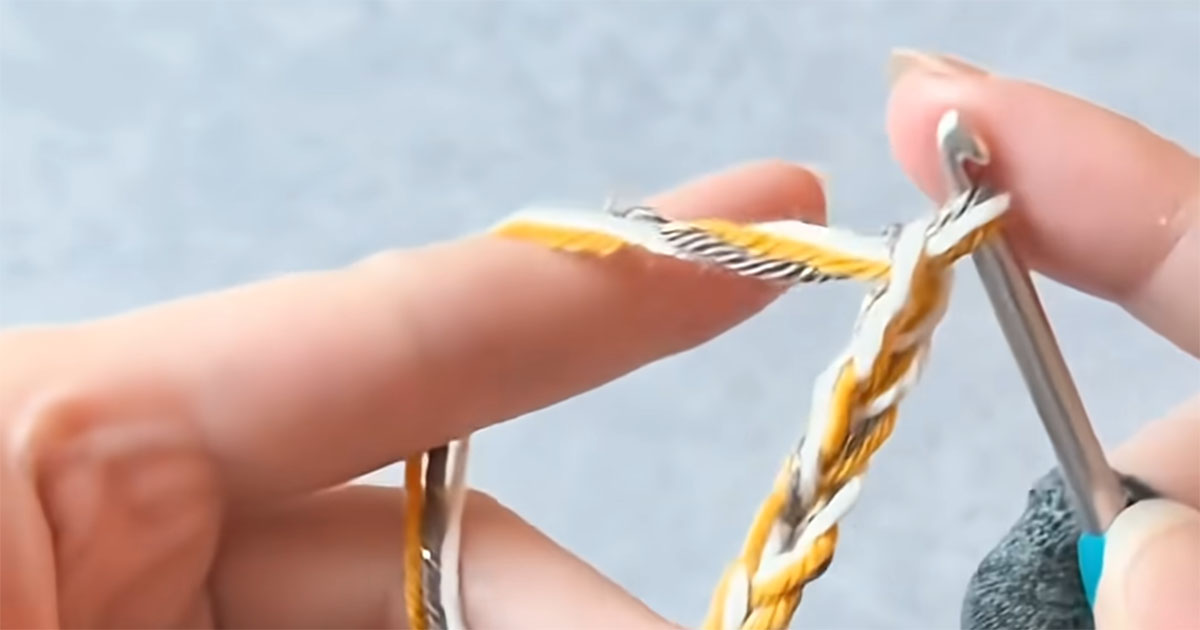
Micro-loom crafting has quietly abandoned its reputation as a nursery pastime. Across maker communities in Tokyo, Seoul, and London, fiber artists are repurposing the classic four-peg cord knitting tool, known historically as a Knitting Nancy, French knitting loom, or ririyan, to execute straight knit flat panels rather than hollow tubular cords. As highlighted in a recent ITmedia Report documenting viral multi-skein builds from budget retailers like Seria and Daiso, crafters are ditching expensive hand-dyed skeins to test whether dollar-store materials can produce boutique-quality textile structures.
The core attraction lies in accessible geometry. By reversing direction at the terminal pegs instead of working continuously in the round, a hand-held spool transforms into a miniature flat-bed knitting machine. Yet working at this compact scale reveals acute physical realities. Fiber tension behaves differently over a four-peg perimeter than it does across traditional 40-centimeter needles, and budget yarns expose every flaw in peg spacing and thread twist within half a dozen passes.
📌 Key Takeaways:
- The Mechanical Pivot: Reversing stroke trajectory across spool pegs produces flat ribbons and structural tape, bypassing the hollow tube constraint of traditional cord knitting.
- Fiber Dynamics: Recycled budget cotton delivers dimensional stability and crisp stitch definition, whereas standard acrylic generates substantial edge rolling that requires steam blocking.
- Tension Vulnerability: Over-tightening loop pickups on fixed-gauge pegs causes dense, stiff fabric and micro-warping along the selvedge edges.
From Tubular Cords to Flat Panels: The Micro-Loom Revival
For decades, spool knitting was restricted to producing yards of skinny, hollow rope. Children produced endless tails of acrylic cord that rarely graduated into functional textiles. That technical bottleneck broke when contemporary crafters began treating the circular spool head as a linear array. Instead of wrapping peg four back to peg one, the working yarn doubles back, running in an alternating serpentine path.
This straight knit technique converts a tool historically reserved for bag handles and novelty trims into a precision narrow-band loom. In workshops and viral design channels, makers now draft bookmarks, reinforced tote straps, structural ribbing, and interlocking patchwork tiles entirely on pocket-sized cylinders. The movement mirrors the larger minimalist crafting surge sweeping craft forums in 2026, where micro-tools remove the ergonomic strain of long aluminum needles while retaining tactile satisfaction.
The economic incentive is hard to overlook. A standard 110-yen ($0.75) skein of budget yarn contains between 25 and 40 meters of usable fiber. On a standard four-peg spool, that single purchase translates into roughly 1.2 meters of dense, five-centimeter-wide flat fabric. The barrier to entry has effectively collapsed.
The Straight Knit Technique: Mechanics on a Fixed Peg Gauge
Producing flat fabric on a circular peg arrangement requires a strict mechanical discipline. The maker casts on across three or four pegs using an e-wrap or backward-loop foundation. Rather than completing the circuit to peg one, the yarn carrier halts at the last selected peg, executes a slip or turn stitch, and travels counter to its original path.
Gauge consistency is determined entirely by the physical gap between the pegs and the shaft diameter of the spool. Because the distance between pins on a budget plastic French knitting loom remains fixed, typically between 8 and 12 millimeters, the maker cannot compensate for thin yarn by changing needle sizes. Fiber weight selection becomes the primary engineering lever.
Sport-weight and light DK-weight yarns balance cleanly across standard spool gaps. If the yarn is too thin, the straight panel becomes a loose, laddered fishnet with unstable selvedges. If the yarn is too thick, the loops bind against the peg heads, forcing the crafter to exert excessive pull that warps the entire piece.
Benchmarking Budget Yarns: Cotton Rigidity Against Acrylic Stretch
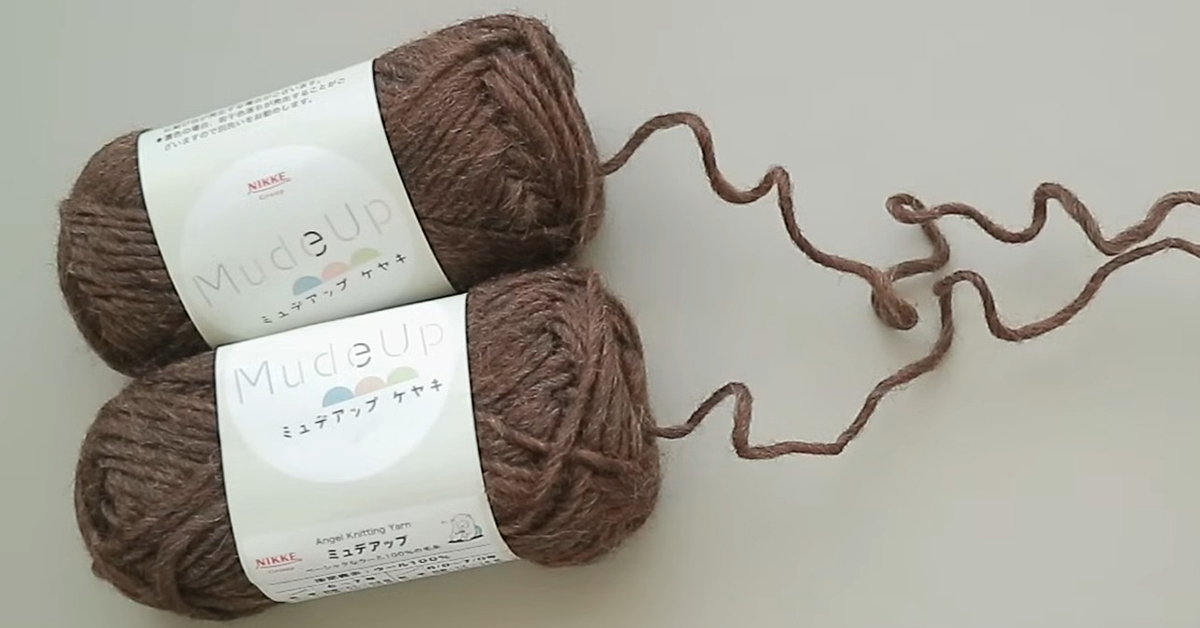
Material composition dictates structural performance on small-gauge tools. Daiso and Seria have expanded their craft aisles to include recycled cottons, brushed mohair blends, and high-bulk acrylics, each exhibiting distinct behavior when subjected to fixed-peg bending moments. To understand how these economical fibers perform under real tension, we evaluated the three most accessible yarn classes across identical straight-knit parameters.
| Yarn Classification | Unit Cost (USD / JPY) | Dimensional Stability | Edge Curl Tendency |
|---|---|---|---|
| Daiso Recycled Cotton (DK) | $0.75, $1.00 / ¥110 | High (under 2% drift) | Low (lays flat unblocked) |
| Seria Acrylic Fine Tweed | $0.75, $1.00 / ¥110 | Moderate (8, 12% stretch) | High (severe inwards roll) |
| Generic Craft Store Acrylic (Worsted) | $1.50, $2.20 / ¥230, ¥330 | Low (over-bulks peg heads) | Moderate (requires heat pin) |
The performance divergence between recycled cotton and acrylic is immediate. Recycled cotton features short, unmercerized plant fibers twisted tightly around a central core. It exhibits virtually zero longitudinal give. On a straight spool sequence, this lack of elasticity creates razor-sharp edge transitions and a flat, architectural profile that holds its width without steam setting.
Budget acrylic, by contrast, relies on crimped synthetic fibers designed to mimic wool loft. Under the constant manual tension of pick-and-lift knitting, acrylic stretches while on the loom and contracts violently once released from the pegs. The resulting strip suffers from aggressive rolling along both long margins, curling inward like a rolled parchment unless steam-blocked under iron pins.
Peg Tension Control and Defeating the Edge Curl Problem
Edge curl is the mechanical plague of straight stockinette knitwork. Because the front loop exerts tension inward while the reverse purl bumps push outward, an unanchored flat panel naturally rolls toward the knit face. On wide projects, knitters counter this by adding garter border stitches. On a four-peg spool, however, you do not have spare pegs to waste on protective borders.
The solution lies in selvedge tension management. When executing the return pass across the spool, the working yarn should never be pulled taut around the turnaround peg. Instead, leave approximately two millimeters of micro-slack at the outer loop. This extra yarn allows the edge stitch to relax, counteracting the natural torque of the stockinette structure.
For the cast-off method, the traditional loop-over-loop technique can bind the final edge so tightly that the panel splays outward into an unsightly trapezoid. Working a modified chain cast-off, using a standard 2.5 mm steel crochet hook to pull each remaining peg loop through its predecessor with loose wrist movements, guarantees that the top boundary matches the width and elasticity of the base foundation.
Scalable Builds: Assembly and Real-World Applications
A single straight-knitted strip from a four-peg spool tops out at roughly four to six centimeters in width. Practical utility depends on joinery. Modern makers treat these high-density strips as structural building units rather than finished artifacts.
Using a mattress stitch along the selvedge edges allows crafters to join individual strips seamlessly into larger textile sheets. Because spool-knitted strips maintain a consistent row count per unit length, joining five or six strips produces zero puckering. Japanese craft accounts frequently use this approach to produce structured bags, laptop sleeves, and durable coin purses from budget cotton yarn.
The technique also eliminates raw raw-edge fraying inherent to woven fabrics. When constructed with cotton yarn, the finished panels possess dense lateral stability that resists tearing under load. A two-skein wrist strap constructed via straight spool knitting can comfortably support heavy camera bodies without showing structural stretch over months of daily use.
Frequently Asked Questions (FAQ)
Q1: Can I use any standard children's spool loom for the straight knit technique?
A1: Yes. Any plastic, wood, or metal spool loom with three to six pegs works. Ensure the peg heads are smooth, as cheap plastic casting seams can snag budget single-ply yarn and shred fiber strands during lifting strokes.
Q2: Why does my straight-knitted piece look uneven along the sides?
A2: Inconsistent turnaround tension is the primary cause. When you reverse direction, pulling the yarn too tightly cinches the outer peg, while leaving too much slack causes protruding edge loops. Maintain a light, uniform drape across the turnaround pins.
Q3: How do I wash straight-knitted panels made from 100-yen budget yarn?
A3: Hand wash in cold water using a mild textile detergent, then lay flat to dry between clean cotton towels. Never tumble dry budget acrylic or recycled cotton strips, as mechanical agitation causes acrylic to pill instantly and cotton to lose dimensional balance.
Precision Crafting Without the Price Tag
Straight spool knitting cuts through the consumerist assumption that advanced textile work requires costly floor looms or premium wools. By mastering turnaround tension and pairing the right yarn composition to fixed-gauge pins, crafters can produce immaculate, durable flat panels using supplies purchased for loose pocket change. As the crafting landscape prioritizes portable, zero-waste methodologies throughout 2026, the humble Knitting Nancy proves that structural elegance depends on technique, not tool price.