Behind the 100-Yen Strategy: How Lawson Store 100 Slashes Grocery Bills Across Ibaraki

Across Ibaraki Prefecture, working households face relentless pressure at the cash register. National food prices have climbed steadily over the past two years, pushing lunch tabs and weekly grocery receipts to heights unseen in a generation. Yet along the suburban transit routes connecting Mito, Tsukuba, and Tsuchiura, one retail banner is moving aggressively in the opposite direction. Lawson Store 100 has launched a sustained counter-offensive against inflation, dropping shelf prices on staple foods and rolling out oversized portions to capture budget-weary shoppers.
The aggressive campaign has drawn widespread regional attention. While competitors across Kanto steadily push pre-packaged meals and snacks past the 200-yen mark, this hybrid discount chain is trimming prices on everyday items. According to local coverage from an 茨城新聞 Report, the chain's regional rollout combines steep price cuts on signature desserts with high-volume meal campaigns designed to ease household food budgets across eastern Japan.
📌 Key Takeaways:
- Direct Price Drops: Popular staples have seen unilateral price cuts, including dropping the flagship Twin Choux custard cream puff to 106 yen and introducing 100-yen onigiri rice balls tax-inclusive.
- Volume-First Promotions: The retailer deployed a two-week "Deka-mori Challenge," holding prices steady while bulking up portions on items like the Triple Menchi Katsu Sandwich.
- Everyday Regional Reach: By combining standard convenience hours with fresh produce and low-cost meal kits, the chain has emerged as a daily lifeline for suburban commuters and multi-generational homes throughout Ibaraki.
The Cost-of-Living Squeeze in Ibaraki's Suburban Corridor
Japanese food price inflation has reshaped routine consumer behavior. In central Tokyo, workers frequently absorb higher lunch prices out of sheer necessity. In regional hubs like Ibaraki, however, spending habits shift much faster. Households across coastal Hitachi, agricultural Hokota, and the southern commuter towns along the Joban Line maintain private vehicles and shop around to manage rising costs. When standard convenience stores pushed onigiri beyond 160 yen and standard bento lunches past 600 yen, local shoppers began looking for alternatives.
Supermarkets offer bulk discounts, but they lack round-the-clock convenience. Drugstores carry dry goods, yet their fresh selections remain thin. Lawson Store 100 fills that exact pocket. By operating as a hybrid between a discount convenience store and a neighborhood mini-grocer, the brand gives Ibaraki shoppers access to fresh vegetables, meat, and ready-to-eat meals within a compact footprint. For shift workers, university students in Tsukuba, and dual-income families, these neighborhood outlets have become dependable budget meal options across Ibaraki.
Slashing Dessert Prices and Restoring 100-Yen Rice Balls
Most retailers manage rising operational expenses through shrinkflation or direct price hikes. Lawson Store 100 took a radically different route in the spring of 2026. Effective May 6, the company dropped the tax-included price of its flagship Twin Choux custard and whipped cream puff from 138 yen down to 106 yen across its network of 565 stores. That represents an immediate cut of roughly 30 percent. On the same day, the chain rolled out a companion milk cream and whipped variety at 117 yen, establishing a dessert baseline well below prevailing convenience store norms.
This dessert price cut followed another consumer-focused move. In April 2026, the company restructured its rice ball lineup, introducing a dedicated tier of 100-yen onigiri rice balls (tax included). Food media reviews confirmed that despite the lower price, filling weights remained competitive with higher-priced convenience rivals. In a market where competitors pushed basic salmon and tuna mayo triangles past 170 yen, reviving the true 100-yen staple struck a powerful chord with budget-conscious buyers.
A Detailed Breakdown of the 2026 Value-Oriented Retail Strategy
Lawson Store 100's aggressive pricing is not an ad-hoc clearance exercise. It represents a structured, calendar-driven value-oriented retail strategy. The table below traces the chain's major promotional initiatives and pricing rollouts through 2026.
| Initiative / Product | Effective Date | Key Price Point | Core Operational Mechanic |
|---|---|---|---|
| 100-Yen Onigiri Revival | April 2026 | 100 yen (tax included) | Supply-chain consolidation across staple ingredients |
| Twin Choux Price Cut | May 6, 2026 | 106 yen & 117 yen | Permanent price reduction of ~30% across 565 outlets |
| Deka-mori Mega Portion Campaign | May 13, 26, 2026 | Unchanged base retail | Fixed-price volume increases, including triple cutlets |
| Summer Lunch Restructure | August 5, 2026 | 322 yen (tax included) | Launch of the value-focused "Mini Nori Bento" |
| Autumn 100-Yen Seasonal Oden | September 23, 2026 | 100 yen per piece/pack | 11 signature items (daikon, fishcakes) held flat at 100 yen |
Portion Sizing as a Deflationary Wedge: The Deka-Mori Push
Price drops alone do not always satisfy blue-collar workers or hungry students. To address broader appetite demands, Lawson Store 100 introduced its Deka-mori mega portion campaign from May 13 to May 26. The promotional strategy centered on a clear concept: maintain the existing price point while significantly enlarging the physical product.
The headline item was the Triple Menchi Katsu Sandwich, which added an entire extra breaded cutlet without an additional charge. Similar volume enhancements rolled out across baked goods and lunch trays. Rather than absorbing smaller portions for the same cost, a common grievance among Japanese consumers over the past two years, shoppers received noticeably heavier meals. For laborers working near industrial parks in Kashima or coastal factories around Hitachi, these short-window promotions delivered immediate value during peak workweeks.
Midday Convenience: The 322-Yen Mini Nori Bento and Autumn Oden
As summer vacation routines disrupted regular dining habits in August, the chain addressed midday dining with new meal options. On August 5, stores introduced the mini nori bento for 322 yen tax-inclusive. Traditional nori bento at standard convenience chains often exceeds 450 yen. By refining portion sizes to match modern snacking or light-lunch habits, the company created an entry-level meal that customers could easily pair with a hot beverage or piece of fresh fruit while keeping total spending under 500 yen.
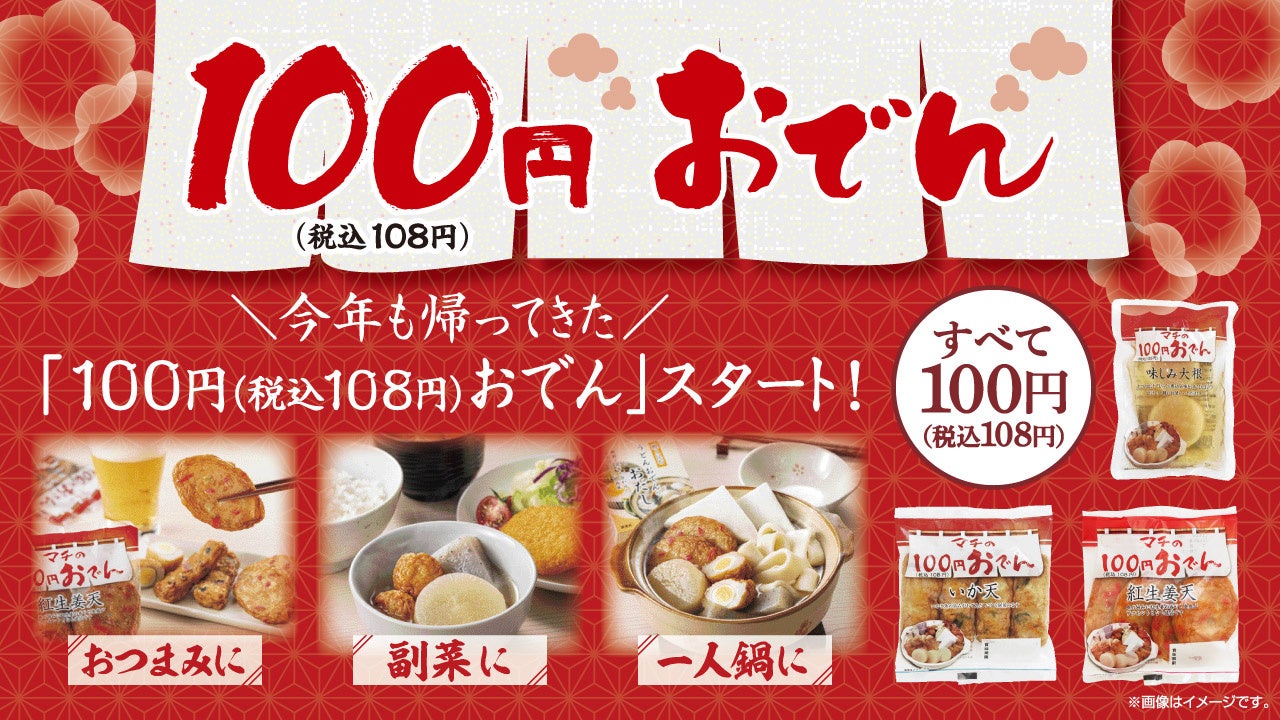
That low-price philosophy carried straight into the cooler months. Beginning September 23, Lawson Store 100 rolled out its annual 100-yen seasonal oden line across 473 stores. The 11-item collection featured simmered daikon radish, squid cakes, red ginger tempura, and burdock rolls, each priced individually at 100 yen. Traditional convenience chains have largely phased out counter oden due to rising labor overhead and food-warming costs. Lawson Store 100 preserved the tradition through packaged, pre-portioned formats that keep kitchen labor minimal and prices predictable.
The Operational Backbone of Fresh Produce Convenience Chains
Selling fresh food at low price points requires strict inventory controls. Standard convenience stores rely on premium margins to offset waste, while discount convenience chains depend on velocity and regional sourcing. Lawson Store 100 stores in Ibaraki benefit from their close proximity to local agricultural distribution networks. Ibaraki produces vast quantities of cabbage, spinach, and root vegetables for the Greater Tokyo area. This geographic advantage shortens transport times and cuts middle-tier freight expenses.
In-store displays reflect this focus on utility. The storefronts drop elaborate merchandising in favor of clear wooden crates and straightforward price tags. Bags of onions, carrots, and seasonal greens sit right beside bento cases and chilled drink coolers. Shoppers do not visit merely for an emergency bottle of water; they assemble evening stir-fries and breakfast plates. By serving as an accessible stop for Ibaraki grocery shopping, the chain builds repeat foot traffic that shields it from broader retail slumps.
Frequently Asked Questions (FAQ)
Q1: How does Lawson Store 100 keep prices around 100 yen while rivals increase theirs?
A1: The retailer controls costs through high-volume bulk ingredient purchases, simplified packaging, and streamlined logistics. By sharing supply chain resources with the wider Lawson network and using simplified in-store displays, it trims operational overhead and passes the savings directly to shelf prices.
Q2: Are the discounted products, like the 106-yen cream puff, permanent menu items?
A2: The price drop on the Twin Choux Custard & Whipped Cream puff (reduced from 138 yen to 106 yen) was implemented across all 565 stores as a permanent price adjustment starting May 6, 2026. Promotional events like the Deka-mori campaigns run for limited two-week windows.
Q3: How do Lawson Store 100 locations in Ibaraki differ from standard blue-sign Lawson outlets?
A3: Standard Lawson stores emphasize ready-to-eat convenience, seasonal novelty goods, and premium ticketing services. Lawson Store 100 operates with a green banner and functions as a mini-supermarket, stocking individual portions of fresh vegetables, chilled meat, baking ingredients, and standardized 100-yen household essentials.
Regional Retail Dynamics in 2026
Rising living costs have altered how regional Japanese consumers plan their weekly spending. As household budgets tighten, loyalty shifts toward retailers that protect baseline purchasing power. Lawson Store 100's presence across Ibaraki demonstrates that convenience stores do not have to default to luxury markups or gradual portion cuts. By committing to 106-yen sweets, 100-yen onigiri, and high-volume seasonal promotions, the chain has built a durable retail model that meets shoppers where their budgets actually stand.