Can You Wear Rikka Takanashi's Cut in Daily Life? Stylist Feasibility Review
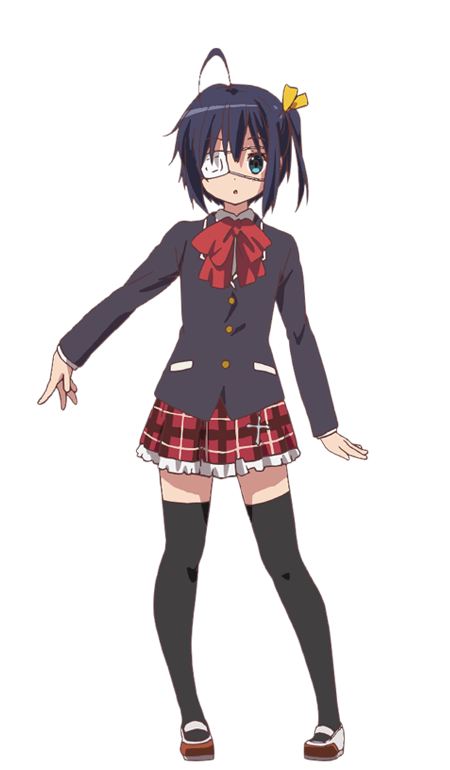
More than a decade after Kyoto Animation broadcast the first season of Love, Chunibyo & Other Delusions, character designer Kazumi Ikeda’s visual shorthand remains an enduring touchstone in subculture fashion. Across Tokyo’s Harajuku salons and international styling chairs alike, client consultations regularly feature screen captures of Rikka Takanashi. Her silhouette, a hybrid of an asymmetrical short bob, an exaggerated crown cowlick, and a delicate side ribbon, presents an immediate puzzle for hairstylists. Converting illustrated line art into living human hair usually risks collapsing into caricature or stiff cosplay imitation.
Achieving a genuine natural hair translation demands treating the anime design as an architectural blueprint rather than a literal template. When stripped of its 2D optical illusions, Rikka’s visual identity rests on a sophisticated Japanese layered bob with bangs. Wearers can take this cut straight to an office or university campus on Monday morning, then lean into its playful subcultural roots over the weekend. Success does not require heavy wigs or industrial hair lacquer; it depends entirely on how your stylist cuts weight from the back and balances disconnected perimeter lengths.
📌 Key Takeaways:
- Core Structure: The cut is fundamentally a short textured bob featuring disconnected face-framing layers and an eye-skimming, point-cut fringe.
- The Wearability Rule: The silhouette thrives in daily life when worn down as an asymmetrical bob; the signature ahoge and side ribbon function as optional, modular accents.
- Salon Strategy: Avoid asking for anime replication; instruct your stylist to cut an A-line graduated bob with heavy internal texturizing and cheekbone-length tendrils.
The Geometry Behind Kyoto Animation's Iconic Character Design
Kyoto Animation built its reputation on anatomical precision and physics-driven character motion. In the original 2012 production sketches for Chūnibyō demo Koi ga Shitai!, Kazumi Ikeda deliberately balanced Rikka’s eccentric personality against a sharp, grounded haircut. Unlike the gravity-defying spiky hair common in 1990s shonen titles, Rikka's hair obeys realistic drape and weight distribution, curving naturally around the jawline and nape.
The hair silhouette is anchored by a deep midnight-purple hue that reads as soft black under daylight. Ikeda gave the cut three distinct structural focal points:
- A soft, horizontal brow-skimming fringe that anchors the upper face.
- Symmetrical, elongated chin-length strands, known in Japanese salon parlance as bin-patsu or face-framing layers, that isolate the front profile from the shorter sides.
- A rounded weight line sitting right at the occipital bone, which prevents the back from looking flat.
These elements form an everyday anime hairstyle that borrows heavily from late-2000s Shibuya street fashion. The eccentricity does not stem from an impossible cut. It comes from how Rikka accessorizes and styles it.
Deconstructing the Silhouette: Base Bob, Side-Tail, and Crown Antenna
To make this design wearable in the real world, stylists must separate the permanent architectural cut from its impermanent styling elements. Human hair behaves under gravity and scalp oil, two variables hand-drawn animation rarely has to accommodate.
The base foundation is an angled, short textured bob. The back is cut short, stopping roughly one inch above the collarbone, while the front panels extend downward toward the lower jaw. This angle flatters round and oval face shapes by drawing the viewer's eye downward, slimming the cheeks.
The micro side-ponytail represents the first styling pivot. Rikka gathers a pencil-thin grouping of hair from the left temporal zone, binding it with a bright yellow satin ribbon. In daily life, wearing a thick ponytail here creates awkward asymmetry that pulls the eye off balance. Instead, modern street adaptations section out a micro-strand measuring no more than 0.5 inches wide, leaving the rest of the left bob intact to preserve the haircut's perimeter lines.
Then comes the ahoge, the lone, expressive cowlick springing from the crown. Hand-drawn animators treat this strand as an emotional barometer. On a human head, thick hair makes this strand drop flat in twenty minutes, while fine hair turns stringy. An effective real-world ahoge styling tutorial relies on internal hair architecture: isolating a half-inch vertex section, misting it with thermal shield, twisting it upward with a mini-flat iron at 320°F (160°C), and setting the root with a matte texturizing powder rather than sticky hairspray.
| Hair Feature | Kyoto Animation 2D Blueprint | Street-Wearable Translation (2026) | Convention / Cosplay Method |
|---|---|---|---|
| Base Layering | Uniform dark-navy fill with clean, knife-edge perimeter lines. | Point-cut graduated bob; thinned 20%, 30% internally for movement. | Synthetic heat-resistant wig cut blunt with crimped roots for volume. |
| Fringe & Framing | Solid brow-level bangs with isolated jaw-length side panels. | See-through or textured fringe paired with soft disconnected sidelocks. | Heavy, lacquered curtain bangs glued down along temples. |
| Side Ponytail | Distinct high tuft cinched by a flat yellow bow ribbon. | Concealed bobby-pin twist or micro-elastic hidden under top layers. | Clip-on hairpiece or high-density tie anchored to wig mesh. |
| Ahoge (Cowlick) | Self-supporting curved hair ribbon standing 3, 4 inches high. | Subtle, heat-styled lift, or flattened completely for casual wear. | Florist wire or clear craft glue embedded inside synthetic fibers. |
Salon Order Guide: Communicating with Your Stylist
Bringing an anime screen capture to a standard hair salon frequently leads to disappointment. Stylists without background knowledge of Japanese cutting techniques often interpret anime art literally, resulting in chunky, unblended shelves of hair. The key is translating character aesthetics into standard hairdressing terminology.
Book an appointment with a stylist experienced in Asian hair techniques or dry-cutting methods. When sitting in the chair, lay out these specific mechanical requests:
- The Perimeter and Silhouette: Ask for a chin-to-collarbone graduated bob with a slightly rounded weight line at the occipital region. Emphasize that you want the perimeter softened with point-cutting rather than cut across in a hard blunt line.
- Interior De-bulking: Request internal channel cutting or slide cutting to remove weight from the mid-lengths and ends. This creates the airy, floating movement seen in Kyoto Animation’s keyframes without sacrificing hair density at the crown.
- Specify an eyebrow-length fringe that is lightly feathered in the center and slopes slightly longer toward the temples. This creates a natural bridge into the face-framing layers.
- The Disconnected Sidelocks: Tell the stylist to leave two thin, intentional panels in front of the ears disconnected from the fringe. These strands should terminate precisely at the jawline, mimicking Rikka's signature face frame without feeling like an accidental mistake.
Salon pricing for this transformation typically tracks standard specialty cutting rates, running between $65 and $130 in metropolitan areas. Maintenance cycles require a fringe trim every 3 to 4 weeks and a perimeter reshape every 8 to 10 weeks.

Everyday Styling Techniques: Waxes, Clay, and Thermal Shaping
The haircut is only half the battle. Bringing anime hair into real life hinges on your daily styling ritual. A cut with this much interior movement will look flat and shapeless if left to air-dry without support.
Start on damp hair. Apply a pea-sized drop of lightweight heat-protectant mousse focused on the crown and crown roots. Blow-dry using a medium-sized ceramic round brush, pulling the hair upward and back at the crown to build lift, then rolling the ends forward toward your jawline.
For everyday street wear, skip the dramatic hairsprays. Modern hair wax styling techniques lean heavily toward workable matte pastes and dry clays. Emulsify a dime-sized amount of Japanese matte clay (such as Gatsby Moving Rubber or Milbon Prejume) between your palms until clear. Rake your hands through the mid-lengths, lifting upward from the roots before pinching the ends together. This creates the signature anime "clumping" effect, giving the bob defined, piece-y separation that catches the light.
If you are styling the side ponytail ribbon for an event or casual gathering, gather a slim section of hair right above the left ear. Secure it with a transparent silicone micro-band, then tie your ribbon over the band. Anchoring the ribbon to an elastic prevents it from sliding down silky hair over the course of an afternoon.
Who Should Wear This Cut, and Who Should Avoid It
Not every face shape or hair texture responds identically to a layered bob with bangs. Understanding your hair’s natural properties prevents costly salon regrets.
Ideal Candidates:
- Fine to Medium Hair Densities: This cut naturally builds volume around fine textures without weighing down the crown.
- Straight to Soft-Wavy Patterns (Type 1A, 2A): The clean drape of the bob and the defined sidelocks hold their shape with minimal daily heat intervention.
- Oval, Heart, and Diamond Face Shapes: The combination of an eyebrow-skimming fringe and jaw-length face-framing tendrils softens sharp chins and balances forehead height.
Profiles Requiring Adjustments or Caution:
- Coarse, Tightly Curled Hair (Type 3A, 4C): Replicating the smooth silhouette requires daily chemical or high-heat thermal straightening, which can cause heat damage over time. Curly interpretations look striking, but they read as a classic textured curly crop rather than an anime translation.
- Strong Forward Cowlicks at the Forehead: If your front hairline naturally parts in the middle or pushes upward, maintaining a straight, forward-falling fringe will require daily thermal manipulation and setting lotion.
- Extreme High-Density Hair: Thick, heavy hair will turn this cut into a pyramid shape unless your stylist aggressively de-bulks the interior with slide-cutting techniques.
Frequently Asked Questions (FAQ)
Q1: Can I rock the Rikka Takanashi haircut without the ahoge cowlick?
A: Absolutely. Without the ahoge, the cut functions as a polished, contemporary Japanese short textured bob. It looks sharp in professional environments while retaining an edgy, asymmetrical silhouette around the jawline.
Q2: How do I keep the ahoge standing without using industrial glue?
A: Avoid heavy glues. Instead, blow-dry the root section backward over a barrel brush, flat-iron the hair upward into an arch, and dust the base with a silica-based styling powder. Finish with a quick burst of fine-mist freeze spray at the root.
Q3: What should I bring to show my hairstylist?
A: Bring the anime reference, but pair it with two real-world photographs: one showing a Japanese textured bob with face-framing layers, and another showing an airy, point-cut fringe on a real person. This shows the stylist the intended real-world finish.
Q4: How long does daily styling take for this haircut?
A: For a casual street look, styling takes approximately 10 to 15 minutes using a blow dryer, round brush, and a dime-sized amount of matte clay. Adding the side ponytail and styling the ahoge extends the routine to roughly 20 minutes.
Evolving Anime Street Aesthetics
Anime-inspired hair has moved past the era of rigid wigs and costume parties. Modern J-fashion and subcultural streetwear treat animated silhouettes as legitimate design studies, mining classic series for compelling structural cuts.
Rikka Takanashi's haircut endures because its underlying architecture, the balance between a sculpted nape, framing jaw tendrils, and textured bangs, is sound hairdressing. Stripped of its dramatic cowlick and yellow ribbon, it remains a timeless, face-flattering short bob. Added back in, those styling elements allow wearers to express their niche subcultural identity on their own terms. When executed with proper technical cutting and realistic texture, the leap from the drawing board to daily life is not just possible; it produces one of the most distinctive, wearable cuts in contemporary street style.