Chaos at Boat Race Heiwajima: Why Top Seeds Are Crashing Out on the Brutal Turns
Inside the dimly lit concourse of the Heiwajima Theater betting venue in Tokyo’s Ota Ward, hundreds of eyes track the flickering monitors with white-knuckle intensity. On paper, hydroplane racing in Japan follows a mathematically predictable script: the number one boat on the inside pole wins more than 55 percent of the time nationwide. At Boat Race Heiwajima, however, that statistical certainty routinely evaporates into sea spray. As documented in a recent 日刊スポーツ Report on the venue's cutthroat qualifying rounds, even veteran frontrunners find their throttles betrayed by shifting currents, sudden wake traps, and aggressive outer-lane attacks.
The course sits squarely on an inlet connected to Tokyo Bay, turning every six-boat dash into an unpredictable mechanical wrestling match. Across recent premier events, from high-stakes Rookie brackets to the hard-fought Venus Series Heiwajima finals, top qualifiers carrying heavy betting public confidence have repeatedly washed wide at Turn One. For punters tracking odds inside the theater and seasoned drivers maneuvering 396cc two-stroke engines, Heiwajima has reinforced its reputation as the circuit's great equalizer.
📌 Key Takeaways:
- The Structural Anomaly: The lane 1 win rate at Heiwajima lingers near 43, 45%, vastly undercutting the Japanese hydroplane racing circuit national average of roughly 56%.
- Hydrodynamic Traps: Tokyo Bay tidal fluctuations alter water density and lift, while seawall bounce-backs create invisible backstretch wake hazards.
- Mechanical Variables: Motor draw performance ratings dictate acceleration profiles that outer lanes exploit through sudden makuri (sweep) maneuvers.
The Hydrodynamics of Tokyo Bay and Turn One Chaos
Heiwajima does not behave like the inland freshwater basins of Biwako or Lake Hamana. Its water is pure seawater channeled directly from the bay, meaning density changes hourly based on the ebb and flow of the ocean tide. High tide brings flotation lift and a slicker, sliding hull surface; low tide exposes boats to choppy surface chop and sharper resistance.
The real hazard lies in the physical geometry of the course. The distance from the starting line to the first turn marker narrows dramatically toward the spectator stands. Boats accelerating off the inside lane cannot simply carve an effortless radius. If an inside driver misjudges the current by mere inches, the boat drifts into "dead water", aerated, frothy wake left by the perimeter drift. The moment a propeller catches aerated froth, thrust drops instantly, opening a clean corridor for trailing boats to execute a razor-sharp makurizashi (sweep-and-slice).
High seawalls surrounding the concrete canal create an additional layer of turbulence. Shockwaves from six hydroplanes hammering the surface bounce off the concrete barriers and return to the track as irregular swells. Drivers refer to these invisible pulses as ghost waves, and they strike hardest right when an inside driver attempts to steady the hull for the backstretch sprint.
Inside the Venue: The Theater Experience and The Odds Disparity
Boat Race Theater Heiwajima, adjacent to the Big Fun retail complex, operates as one of the highest-volume off-track betting venues in the nation. With dozens of automated kiosks and floor-to-ceiling screens broadcasting action from all 24 courses across Japan, the theater functions as a nerve center for seasoned handicappers. Yet, whenever the local Heiwajima feed takes center screen, wagering patterns shift noticeably away from national chalk strategies.
Across most Japanese tracks, casual bettors default to "1-2" or "1-3" exactas without second thought. At Heiwajima, doing so is a fast track to an empty wallet. Savvy regulars monitor water levels at the drainage gates and wind velocity blowing off the mouth of the Keihin Canal. A headwind exceeding four meters per second almost invariably spells disaster for the inside boat, pushing down the nose, killing acceleration, and granting outside lanes carrying run-up momentum a massive kinetic advantage.
Anatomy of Shock Defeats: High-Profile 2026 Stumbles
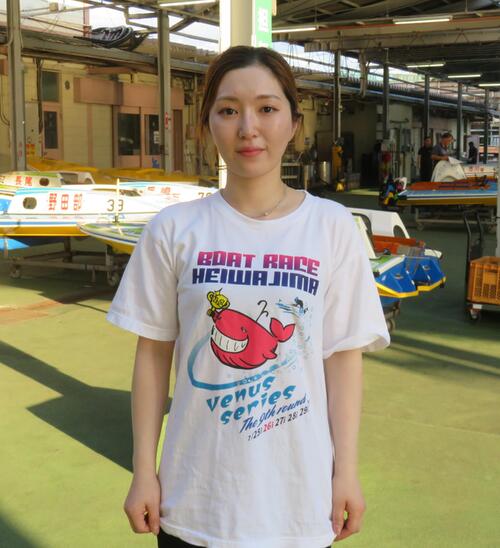
The volatility of Heiwajima is not theoretical; it leaves wreckage across championship leaderboards every season. In late July, the Venus Series Heiwajima finals delivered a masterclass in how swiftly the inside pole can unravel. In the semi-finals, Fukui branch standout Nishihashi Nami pulled off a stunning recovery turn at Turn Two after botching Turn One because her timing felt uncomfortably fast, narrowly securing the coveted White Cap (Lane 1) for the final round. The dramatic recovery highlighted how unforgiving the opening turn can be.
Twenty-four hours later, that lane 1 advantage collapsed. Local favorite Kuramochi Riri launched from Lane 2 with a blistering 0.08-second start timing, aggressively gripping the throttle to overtake Nishihashi at the first turn marker. The resulting Kuramochi Riri victory sealed her first local championship title while leaving heavily backed tickets torn on the venue floor.
A similar semifinal elimination pattern struck the Rookie Series in March. Top-ranked qualifier Ishimoto Hiromu entered the 12th race semifinal with overwhelming odds on Lane 1. Despite having motor output dialed into top form, Ishimoto was caught off-guard by Miyawaki Ryota’s aggressive three-wide run-up assault. Trarapped in the wash, Ishimoto plummeted to a fifth-place finish, completely missing the finals.
| Event & Date | Top Seed (Lane 1) | Race Result & Deciding Vector | Decisive Hydrodynamic Factor |
|---|---|---|---|
| Rookie Series (Mar 2026) | Ishimoto Hiromu | 5th place elimination; defeated by Miyawaki Ryota's outside blitz | Lost acceleration in low-tide surface chop |
| Venus Series SF (Jul 2026) | Nishihashi Nami | Drifted at Turn 1; salvaged qualification via brilliant Turn 2 recovery | Start timing error causing wide perimeter drift |
| Venus Series Final (Jul 2026) | Nishihashi Nami | 2nd place; overtaken by Kuramochi Riri's 0.08 launch from Lane 2 | First-turn wake trap suffocated inside boat's drive |
| Three Cities Clash (Sep 2026) | Yamada Jo (Lane 2 in SF) | Advanced to Final via Lane 4 positioning after mid-pack battle | Capitalized on inside wash at Turn 2 marker |

The Machine Lottery: Motor Draws and Wake Management
Individual pilot skill accounts for only half of the equation at Heiwajima. Every competitor draws an assigned motor by lottery prior to the race series, and the disparities between power units are unforgiving. A motor with top-tier elongation output allows an outside competitor to reach maximum cruising speed yards before hitting the entry buoys.
Consider the buzz during the 23rd Suntory Cup inspections in early September. Female driver Tsuchiya Misaki drew Motor #16, the very machine that Nagai Hyoya had driven to victory just days earlier in late August. A high-performing motor provides crucial torque required to counter hydrodynamic drag. When an underperforming motor sits on Lane 1, the pilot cannot lean on raw horsepower to muscle through choppy water. The moment the rudder angles into the turn, the hull bogs down, leaving the pilot defenseless against trailing boats surfing down the cleaner outside lines.
Tactical Profiles: Reading Heiwajima’s Unpredictable Board
Navigating Heiwajima's odds board requires abandoning the standard assumptions of the wider racing circuit. Bettors and analysts categorize competitors into stark operational profiles based on how they handle turbulent saltwater courses:
Favorable Betting Profiles:
- Aggressive Corner Carvers: Pilots who specialize in deep-lean turns from Lanes 2 and 3, capable of capitalizing when Lane 1 washes wide.
- High-Torque Motor Beneficiaries: Racers holding motors ranked in the top 10 percent for straightaway push, providing the thrust needed to clear backstretch wake hazards.
- Tokyo Bay Veterans: Drivers from the local Kanto branch who intuitively understand the daily ebb-and-flow timing of the tidal gates.
High-Risk Red Flags:
- Passive Inside Starters: Lane 1 drivers with conservative average start timings exceeding 0.16 seconds. At Heiwajima, hesitation on the white boat is fatal.
- Freshwater Specialists: Competitors whose lifetime win rates are concentrated on calm, artificial inland lakes. They consistently miscalculate hull drift on saltwater swells.
- Low-Rated Motor Traps: Heavily favored A1-rank pilots saddled with bottom-tier motors that lack the mid-range punch to recover after hitting another boat's wake.
Frequently Asked Questions (FAQ)
Q1: Why is the Lane 1 win rate so much lower at Boat Race Heiwajima compared to other tracks?
A1: The physical track configuration features a narrow opening gap between the start line and the first turn marker, forcing Lane 1 to make an unnatural, sharp turn angle. Combined with Tokyo Bay tidal shifts, headwind gusts, and seawall wave reflections, inside boats frequently lose steering control and get swallowed by aerated surface water.
Q2: What is the relationship between Boat Race Heiwajima and Heiwajima Theater?
A2: Heiwajima Theater is a massive off-track betting complex located right alongside the racecourse within the Big Fun Heiwajima commercial facility. It allows punters to watch and wager on races occurring simultaneously at Heiwajima and other tracks across Japan on dozens of large-format screens.
Q3: How much do Tokyo Bay tides influence individual race outcomes?
A3: Substantially. High tide softens boat handling and causes outside boats to slide, slightly helping inside seeds who maintain solid positioning. Low tide creates aggressive, choppy water where high-revving motors and outside sweeping tactics (makuri) succeed at much higher frequencies.
Reading the Tides: Strategic Realities for 2026
The persistent chaos at Boat Race Heiwajima is not an operational flaw; it is the track's defining feature. today modern boat design and standardized propeller tuning have made racing across many domestic circuits increasingly predictable, this saltwater arena in Ota Ward continues to reward pure adaptability over statistical hierarchy.
For racers entering the turn markers, surviving Heiwajima requires supreme physical bravery, precise micro-adjustments on the steering bar, and an innate respect for the shifting water underneath. For the crowds analyzing telemetry screens inside the theater, the lesson remains constant: never bet blindly on the inside white cap when Tokyo Bay’s tides decide to turn.