Complete 2026 Guide to NHK FM: How to Find, Stream, and Listen to New Shows
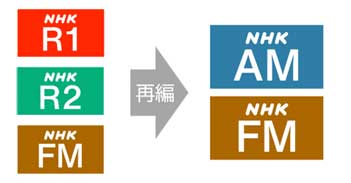
Japan’s public broadcaster has executed its most consequential distribution shift in nearly a century. On March 29, 2026, NHK officially pulled the plug on Radio 2, retiring a dedicated educational service that had run continuously since 1931. The following morning marked the operational debut of a streamlined two-tier network: the former Radio 1 transitioned to "NHK AM," while the existing high-fidelity frequency retained its identity as "NHK FM."
The operational pivot, documented in detail by an AV Watch Report, reallocates programming that millions of domestic listeners and expatriates rely on daily. While traditional receiver dials remain anchored to their historic megahertz allocations, the daily grid looks starkly different. Finding classical concerts, tracking language education shifts, or pulling on-demand broadcasts through Radiru Radiru now requires understanding how NHK consolidated its airwaves.
📌 Key Takeaways:
- The Structural Pivot: NHK retired Radio 2 after 95 years, consolidating three broadcast bands into two operational channels, NHK AM and NHK FM, effective March 30, 2026.
- Frequency Continuity: Terrestrial frequencies remain unchanged nationwide (including Tokyo FM 82.5 MHz and AM 594 kHz), requiring zero adjustments to physical radio hardware.
- Content Distribution: The daily schedule on FM retains its audiophile music foundation while absorbing select educational and cultural properties, with archival access anchored by the NHK Chronicle database.
The 2026 Radio Realignment: Why NHK Slashed Its Waves to Two
The push to consolidate Japan's public broadcast footprint did not happen in a vacuum. Facing legislative pressure to trim administrative overhead and an undeniable shift toward smartphone streaming, NHK formulated a plan to sunset its legacy medium-wave infrastructure. Maintaining two parallel AM transmission networks across hundreds of rural repeater stations became financially unsustainable as energy costs climbed and audience figures migrated to mobile interfaces.
The solution, finalized for the 2026 fiscal rollout, was clean on paper but complex in execution. NHK AM assumed the responsibility of breaking news, emergency disaster bulletins, and general current affairs. NHK FM kept its mission as the broadcaster’s acoustic flagship, delivering high-bitrate stereophonic sound for music, radio drama, and specialized culture. The challenge lay in redistributing the dense catalog of daily lessons, foreign-language news, and niche curricula previously housed on Radio 2.
For listeners who relied on clock radios to deliver daily morning English lessons or stock market updates, March 30 felt jarring. Decades of ingrained habit disappeared overnight. However, the transmission towers themselves never changed power ratings or broadcast coordinates. If your tuner pulled in NHK FM at clear stereo quality in mid-March, that exact signal remains operational today.
Reading the New NHK FM Schedule: Music Hubs and Relocated Blocks
The Tokyo master schedule reflects NHK FM's commitment to uninterrupted acoustic fidelity. The channel has avoided becoming a chaotic clearance house for displaced AM talk. Instead, programming directors preserved the backbone that classical enthusiasts, jazz aficionados, and pop collectors expect throughout the workweek.
Mornings still belong to curated classical programming, anchored by long-running franchises that showcase international orchestral recordings, chamber recitals, and regional Japanese symphony performances. Midday blocks continue to offer deep dives into traditional Japanese performing arts (Hogaku), world music, and theater recordings that leverage stereo separation. The evening drive and late-night windows emphasize live studio sessions, author interviews, and experimental audio projects.
Where listeners will notice adjustments is in the transitional dayparts. Select high-prestige cultural modules and specialty language education programs have been inserted into late-evening and weekend slots where they complement rather than interrupt the acoustic flow. Reviewing the updated NHK FM daily program guide reveals shorter musical interludes between major feature programs, eliminating dead air and tightening overall production tempo.
Where Did the Classes Go? Language Education Shifts and Streaming Migration
For decades, Radio 2 served as Japan’s primary classroom. Millions learned conversational English, business German, Chinese, or introductory Spanish solely through cheap transistor radios. The Radio 2 programming migration sparked intense debate among educators when NHK announced its closure.
The broadcaster resolved the dilemma through a hybrid delivery strategy. Introductory and intermediate language programs shifted to split allocations: core flagship modules secured limited morning and late-night airtime on NHK AM and NHK FM, while the vast majority of specialized tracks transitioned exclusively to digital distribution. The shift acknowledges current learning habits, where students prefer skipping linear broadcasts in favor of repeatable digital audio files.
Listeners who demand linear broadcasts must check the revised schedule carefully. A language lesson that aired at 7:00 AM on AM radio for twenty years may now air at 10:30 PM on FM, or exist purely inside an app ecosystem. Missing a linear lesson is no longer a crisis, however, as every lesson cycle automatically feeds the broadcaster's digital platforms the moment transmission concludes.
Terrestrial Dialing vs. Digital Waves: Transmission Framework
Navigating the post-consolidation environment requires matching your reception hardware with the correct delivery pipeline. Terrestrial transmission remains essential during natural disasters when cellular grids collapse, but daily lifestyle listening increasingly leans on digital relays.
| Channel Brand | Terrestrial Band / Frequencies | Primary Content Scope | Primary Digital Pipeline |
|---|---|---|---|
| NHK FM | VHF FM (Tokyo: 82.5 MHz; Osaka: 88.1 MHz; Nagoya: 82.5 MHz) | Classical, jazz, theater, specialty arts, selective culture | Radiru Radiru (Live/Catch-up), Radiko |
| NHK AM | Medium Wave (Tokyo: 594 kHz; Osaka: 666 kHz; Nagoya: 729 kHz) | Breaking news, disaster lifeline, sports, core language | Radiru Radiru (Live/Catch-up), Radiko |
| Radio 2 (Retired) | Defunct (Ceased transmission March 29, 2026) | Archived historical educational broadcasts | NHK Gogaku App, NHK Chronicle (Text Records) |
Listeners inside high-rise concrete apartments who struggle with terrestrial VHF reception can bypass static entirely. Both NHK AM and NHK FM stream nationally across Radiru Radiru and Radiko without subscription charges. The IP simulcasts maintain exact parity with terrestrial transmissions, matching second-for-second programming except during regional emergency breaks.
Unlocking Archives and Timetables with Radiru Radiru and NHK Chronicle
Tracking what is playing right now, or what aired three decades ago, demands familiarity with NHK’s two primary online databases. The everyday listener needs the Radiru Radiru streaming timetable. Updated continuously, the platform presents a clean eight-day matrix showing upcoming live streams alongside on-demand availability tags (Nogashi Haishin).
Most musical performances and language lessons remain available on-demand for seven days following their initial broadcast. Licensing restrictions occasionally black out select international commercial pop tracks on catch-up services, but full orchestral programs and in-house productions remain intact. The Radiru Radiru application also permits custom push notifications keyed to specific program titles, ensuring you never miss a weekly installment.
For historical research, musicologists turn to NHK Chronicle. This public database functions as the definitive record of Japanese broadcasting history. If you heard an obscure chamber quartet performance on FM last week and missed the attribution, Chronicle catalogs every confirmed playlist, conductor name, recording venue, and broadcast timestamp once daily logs are finalized. It also houses documentation for every program transmitted across the 95-year history of the retired Radio 2 network.
Matching Your Listening Habits to the New Dial
The consolidated broadcast structure rewards certain listening habits while demanding adjustments from others. Understanding your audio priorities determines how you should configure your listening routine.
Who benefits from the restructured lineup:
- Audiophiles and Music Collectors: High-bitrate classical, jazz, and traditional audio productions have been ring-fenced on FM, protected from emergency news cut-ins that stay contained on NHK AM.
- Digital-First Learners: Language students gain on-demand flexibility via mobile platforms, freeing them from rigid early-morning linear broadcast schedules.
- Commuters and Remote Workers: Clean integration into Radiko and Radiru Radiru makes desktop and smartphone streaming frictionless throughout Japan.
Who faces friction under the new system:
- Elderly Linear Listeners: Seniors accustomed to tracking language or specialized educational tracks via cheap AM tuners must either re-tune to FM frequencies or adopt mobile applications.
- International Streamers Without Local IP Access: Overseas listeners must navigate strict digital rights geoblocks, as official live streams on Radiko and Radiru Radiru restrict access outside Japan due to intellectual property licensing.
Frequently Asked Questions (FAQ)
Q1: Did my local NHK FM frequency change after the March 30 restructuring?
A1: No. Terrestrial transmission frequencies remain identical nationwide. Tokyo broadcasts at 82.5 MHz, Osaka at 88.1 MHz, and Nagoya at 82.5 MHz. Only the channel designations and master daily schedules changed.
Q2: How can I access language courses that used to air on Radio 2?
A2: Flagship language programs have moved to select time slots on NHK AM and NHK FM. The full suite of language lessons is hosted on the NHK Gogaku portal and Radiru Radiru on-demand service for seven days after initial release.
Q3: Can I stream NHK FM from outside Japan?
A3: Direct domestic streaming on Radiru Radiru and Radiko is geoblocked to Japanese IP addresses due to music rights management. Overseas listeners can access NHK World-Japan's multi-language audio service, but domestic FM entertainment and classical lineups require local domestic connections.
Navigating the Airwaves in Japan’s Modern Broadcast Era
The retirement of Radio 2 marks the end of an era for Japanese public radio, but the preservation of NHK FM secures an essential acoustic space. By consolidating educational burdens and news bulletins onto dedicated AM and digital pipelines, the public broadcaster protected the high-fidelity music, arts, and theatrical performances that define FM transmission.
Mastering the modern schedule comes down to establishing reliable habits. Bookmark the Radiru Radiru timetable for live tracking, preset your terrestrial tuners to your regional frequency for disaster preparedness, and rely on the NHK Chronicle archive when hunting down elusive setlists. Japan's radio dial is smaller now, but for intentional listeners, it remains remarkably clear.