Complete Kenmin Yaki Beifun Guide: 5 Official Variations and Cooking Hacks
Every Japanese supermarket stockroom carries a dependable staple that quietly defies instant noodle conventions: a square, dehydrated nest of seasoned rice noodles packaged under the Kenmin banner. Founded in Kobe, Hyogo Prefecture, Kenmin Shokuhin Co. holds an estimated 60% of Japan's commercial beifun market. While overseas consumers often associate instant noodles with sodium-dense soup powder packets, Kenmin's flagship product relies on pre-seasoned strands that self-sauce as they absorb steam in a covered skillet. The product recently sparked renewed culinary interest across domestic media after broadcaster Jane Su examined its home-kitchen resurgence on TBS Radio, as detailed in an [Excite エキサイト Report](https://www.excite.co.jp/news/article/TBSRadio_76597/) analyzing why the brand's proprietary noodle formulas remain a pantry anchor.
📌 Key Takeaways:
- The Composition Standard: Under Japan Beifun Association industry benchmarks, commercial beifun must contain at least 50% rice flour, with Kenmin blending rice and starches to withstand vigorous steam-frying without breaking.
- The One-Pan Physics: The classic preparation depends on a precise 190 ml to 200 ml water absorption ratio, utilizing layered pork belly and shredded cabbage to lock moisture inside a lidded frying pan.
- Modern Adaptations: Beyond traditional stove-top stir-fries, Kenmin has officially endorsed microwave dorm preparations and restaurant-grade seafood variations featuring Hokkaido sea scallops at its flagship Kenmin Dining venue.
The Rice Flour Standard and Pre-Seasoned Food Engineering
The culinary identity of Japanese yaki beifun separates itself from Chinese rice vermicelli and Vietnamese bun through rigorous domestic manufacturing standards. According to voluntary criteria established by the Japan Beifun Association, authentic beifun must utilize a minimum 50% rice flour base processed into noodle strands. To prevent the delicate rice threads from disintegrating when exposed to high heat, manufacturers frequently blend high-amylose rice with tailored potato or corn starches. This combination creates a resilient tensile snap capable of holding up to moisture, fat, and direct flame.
Kenmin's enduring commercial success traces back to its patented seasoned rice noodles. Unlike standard instant vermicelli noodles that require separate flavor packets, Kenmin infuses a proprietary blend of soy sauce, chicken broth, pork extract, and spices directly into the dough before dehydration. In July 2026, Japanese comedian Sunshine Ikezaki demonstrated the noodle block's convenience on his digital cooking series, referencing the brand's historic television slogan from the 1970s, "Don't put green peppers in it!", which playfully acknowledged childhood vegetable pickiness while demonstrating the noodle's versatility across multiple produce pairings.
The Classic Pork Belly and Cabbage Steam-Fry Method
Executing an authentic Japanese yaki beifun recipe does not require culinary acrobatics, but it demands strict respect for the one-pan steam frying technique. The process requires no separate boiling water or colander. The entire dish comes together inside a 26-centimeter skillet through precise thermal layering.
The foundation begins with fat placement. Home cooks sear 80 grams of thinly sliced pork belly directly against the ungreased skillet surface over medium-high heat. Once the rendered fat coats the metal, the cook cuts the burner and drops the seasoned noodle block directly on top of the sizzling pork. Shredded green cabbage, julienned carrots, and slivered onions are piled over the noodles, creating a domed thermal blanket. Pouring exactly 190 milliliters of room-temperature water around the edges, the cook secures a tight-fitting lid and returns the flame to medium-high for exactly 3 minutes.
During these 180 seconds, trapped steam dissolves the surface seasonings into the surrounding broth. The rehydrating noodles absorb this seasoned liquid from below while vegetable aromatics seep down from above. Removing the lid reveals swollen, glossy noodles and softened greens. The final step requires two minutes of brisk, lidless tossing over high heat until all residual liquid evaporates, leaving the pork crisp and the noodles lightly browned.
Cooking Techniques, Water Ratios, and Noodle Textures Compared
Different kitchen settings require distinct moisture and heat distributions. Adjusting the liquid ratio shifts the noodle from a springy, dry stir-fry to a soft, stewed comfort dish.
| Method & Style | Water Ratio | Cook Time | Resulting Noodle Texture |
|---|---|---|---|
| Classic Skillet Steam-Fry | 190, 200 ml | 5 minutes total | Firm, chewy core with toasted exterior |
| No-Flame Microwave Bowl | 170, 180 ml | 6 minutes (600W) | Uniformly tender, tender-soft bite |
| Kenmin Dining Seafood Pan | 210 ml (stock-based) | 6 minutes total | Silky, rich, seafood-infused gloss |
| Izakaya Tonpeiyaki Wrap | 180 ml | 7 minutes total | Dense, sauce-coated, omelet-cushioned |
Heat-Free Microwave Tactics for Rapid Student Meals
Recognizing changing household habits and intense summer heat waves, Kenmin Shokuhin published standardized guidelines targeting quick no-cook lunch options for students and busy remote workers. The microwave cooking method eliminates open flames while keeping kitchen cleanup confined to a single bowl.
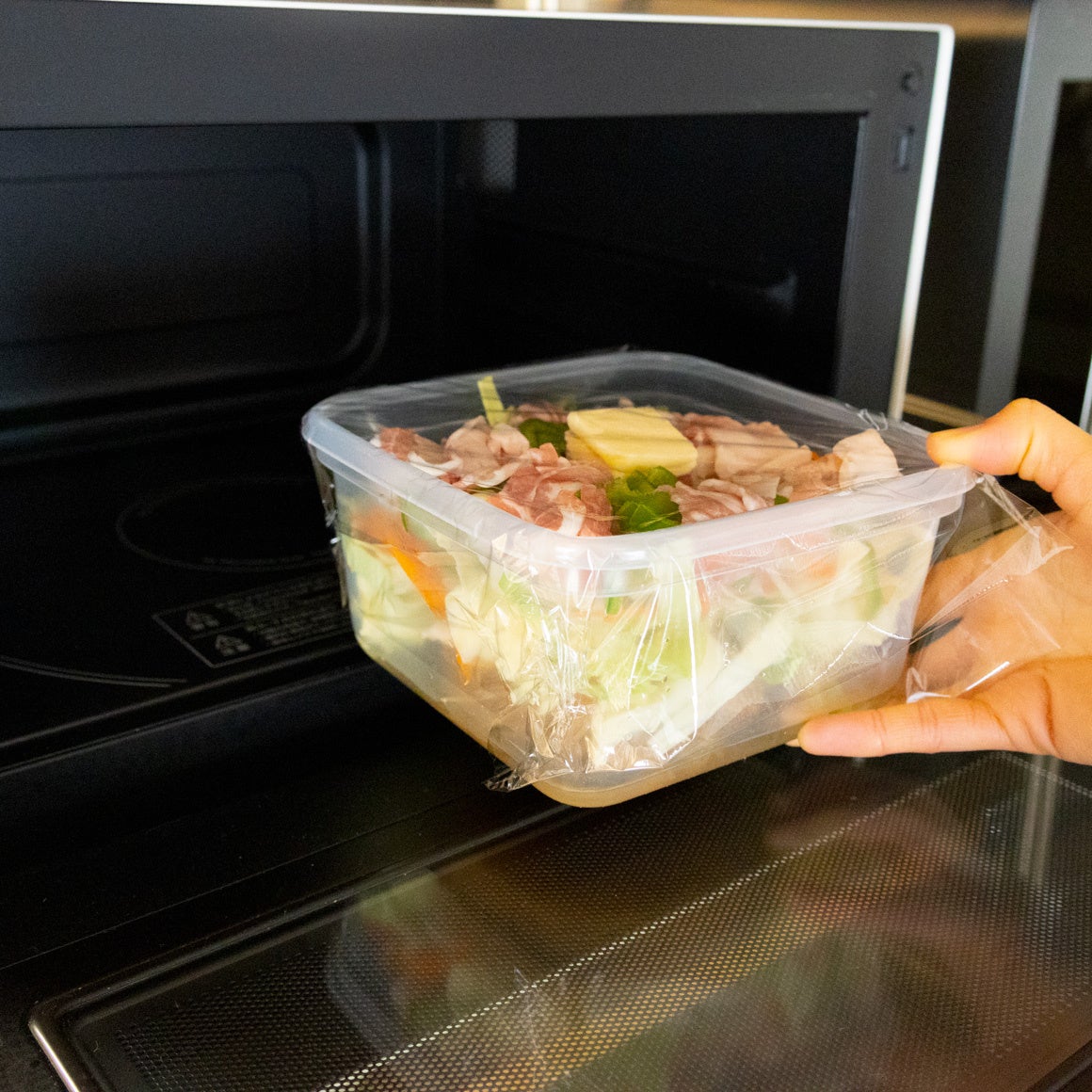
The microwave assembly reverses the skillet sequence. Cooks place 100 grams of pre-cut cabbage or bean sprouts in the base of a deep, heat-resistant ceramic dish. The dried noodle block sits on top of the greens, followed by wafer-thin pork or cocktail sausage slices. Adding 170 ml of water provides sufficient moisture without turning the starches to paste. The dish is sealed with microwave-safe plastic wrap, leaving a slight corner vent, and heated at 600 watts for 5 to 6 minutes.
Residual steam trapped under the wrap finishes hydrating the noodle core. After resting for 60 seconds post-cooking, a brisk stir disperses the dissolved seasoning evenly throughout the greens. Finishing with a half-teaspoon of roasted sesame oil restores the glossy mouthfeel typically provided by pan searing.
Commercial Restaurant Variations: From Kobe Dining to Izakaya Hacks
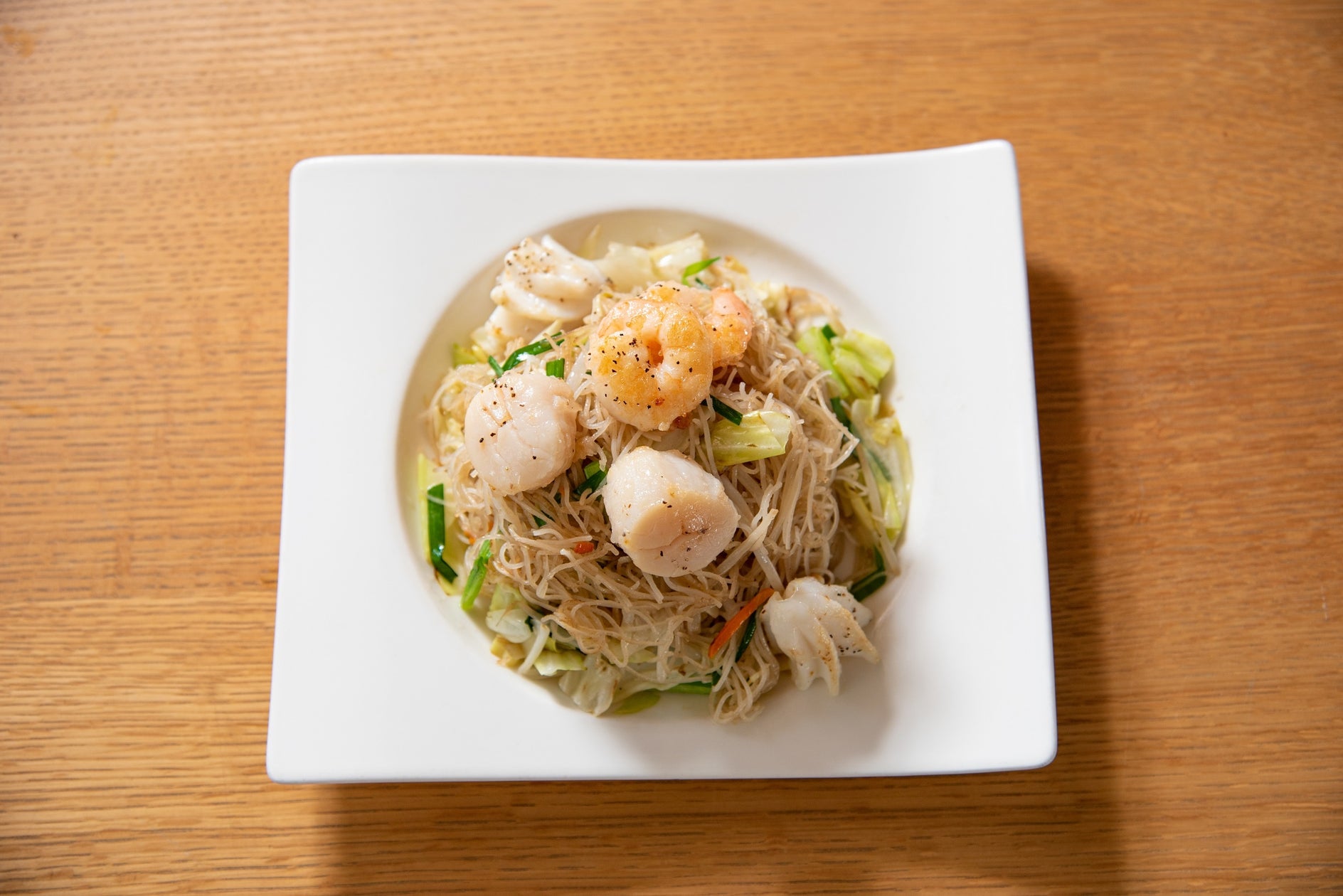
While packaged beifun remains a supermarket staple, Kenmin Shokuhin tests culinary boundaries through its flagship restaurant, Kenmin Dining, situated near the company's Kobe headquarters. The upscale casual restaurant serves as a testing ground for regional ingredient pairings, recently spotlighting a seafood scallop beifun variation that pairs flash-seared Hokkaido sea scallops with umami-rich shellfish broth. In this professional rendition, chefs sear scallops over high wok heat, extract the juices into the steaming water, and finish the noodles with julienned leeks and seasonal greens.
Home cooks and street-food stalls, meanwhile, have repurposed the packaged noodle into the tonpeiyaki noodle hack. Traditional Kansai tonpeiyaki consists of grilled pork belly folded into a sheet of fried egg, topped with savory brown sauce, Japanese kewpie mayonnaise, and bonito flakes. By incorporating half a portion of cooked Kenmin yaki beifun into the egg fold, izakaya operators create a hearty drinking snack that absorbs residual beer and highball accompaniments. The springy rice vermicelli adds unexpected structural chew, stabilizing the runny egg wrapper.
Frequently Asked Questions (FAQ)
Q1: Why doesn't Kenmin Yaki Beifun require extra soy sauce, salt, or stock?
A1: Kenmin manufactures its dried noodle cakes with concentrated chicken extract, pork bouillon, soy sauce, and spice extracts pre-infused into the noodle strands. Adding external salt or soy sauce before tasting usually results in an excessively salty dish.
Q2: Can I substitute chicken or tofu for pork belly?
A2: Yes, though you must adjust cooking oil. Pork belly supplies natural rendered fat to prevent the starch from sticking to the pan. When using lean chicken breast, shrimp, or firm tofu, add one tablespoon of neutral cooking oil or sesame oil to the skillet before layering the noodles.
Q3: Why did my noodles end up mushy rather than springy?
A3: Mushy beifun is almost always caused by excess water or failing to cook off remaining liquid with the lid off. Stick strictly to 190 ml of liquid per 65g pack, keep the heat on medium-high during the covered steam phase, and ensure you toss the noodles uncovered for the final 60 to 90 seconds until the pan surface is completely dry.
The Lasting Cultural Footprint of Kobe's Instant Rice Noodle
Kenmin's enduring presence on Japanese grocery shelves highlights a quiet triumph of functional food engineering. By embedding the seasoning sauce directly into the starch matrix of a rice-flour noodle, the Kobe company solved the chronic challenge of uneven flavor distribution that plagues homemade rice vermicelli. Whether executed as a minimalist student lunch inside a microwave dish, layered with crisp pork belly on a weekday stovetop, or elevated with butter-basted Hokkaido scallops in a high-end dining room, the humble noodle block balances convenience with classic kitchen fundamentals.