Complete 'Shoki no Uta' Guitar Guide: Chords, Lyrics, and Performance Techniques
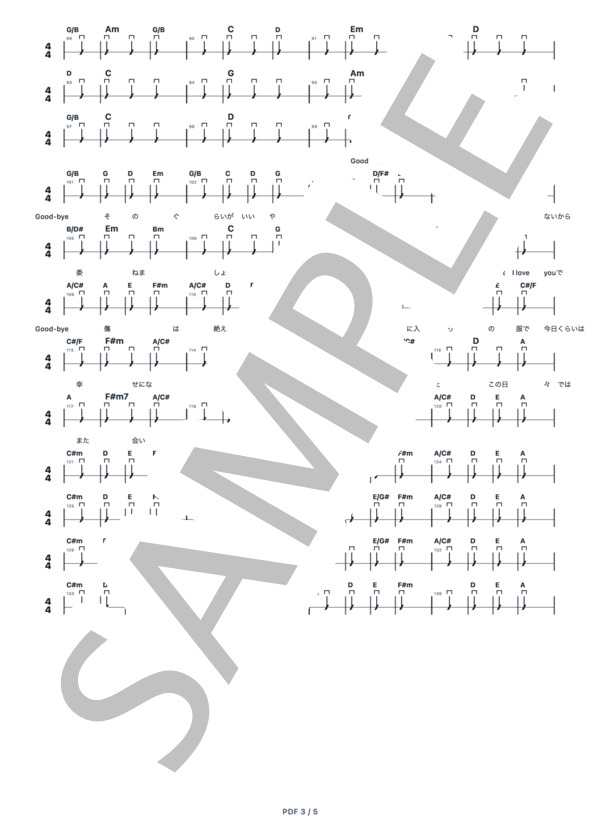
When Mrs. GREEN APPLE released "Shoki no Uta" (庶幾の唄) as the ending theme for the baseball anime Oblivion Battery, the track immediately caught fire among J-rock players and bedroom fingerstyle guitarists. With Motoki Ohmori’s signature dynamic vocal leaps and the band's rich harmonic palette, the song balances breezy acoustic strums with deceptive chord complexity. Musicians searching for guitar sheets quickly discover that capturing the record's buoyant energy requires more than cycling through open chords.
📌 Key Takeaways:
- Tuning and Setup: Playing with a standard capo placement on the 1st fret transposes the track's original concert key of D-flat major into accessible C major open-chord shapes.
- Rhythmic Engine: The track relies on a sixteenth-note swing feel at approximately 124 BPM, demanding crisp percussive palm muting rather than continuous strumming.
- Harmonic Curve: Navigating the intricate bridge chord transition separates casual campfire strummers from polished stage performances.
The Sonic Signature of Mrs. GREEN APPLE's Oblivion Battery Theme
Released during the broadcast of MAPPA's adaptation of Oblivion Battery, "Shoki no Uta" struck an immediate chord with listeners. Motoki Ohmori composed the track with an intentional balance of youthfulness and emotional ache, mirroring the narrative arc of high schoolers rediscovering their passion on the pitcher's mound. On streaming platforms, the song crossed tens of millions of plays within months, fueling an influx of guitarists searching for an authentic Shoki no Uta guitar tab.
The song avoids traditional punk drive or arena rock wall-of-sound production. Instead, Ohmori crafts a nuanced acoustic chord progression underpinned by tight syncopation. To recreate the authentic studio vibe, guitarists must balance crisp acoustic strumming rhythm patterns with rhythmic string slaps on beats two and four. The interplay between piano comping and acoustic guitar drives the entire arrangement, meaning your right hand does the heavy lifting of maintaining groove while the fretting hand navigates rapid color-chord changes.
Capo Placement, Tuning, and Harmonic Structure
Analyzing the track begins with understanding its tempo and key signature. "Shoki no Uta" plays in D-flat major (D♭) at a tempo of roughly 124 beats per minute in standard 4/4 time. Strumming D-flat major in standard tuning requires wrestling with continuous barre shapes across the neck, which exhausts hand stamina and robs the song of open-string resonance.
The definitive capo placement guide for this piece puts your capo on the 1st fret. By clamping the first fret, you can read the score in the key of C major, unlocking open G, C, Am7, and Fmaj7 fingerings. For advanced instrumentalists arranging a standalone fingerstyle guitar arrangement, placing the capo on fret 1 allows high open strings (sounding as E-flat and B-flat) to ring freely as natural pedal tones beneath the melody.
| Song Section | Key Chords (Capo 1 Shapes) | Primary Strumming & Dynamics |
|---|---|---|
| Intro & Verse A | C, G/B, Am7, Em7, Fmaj7, C/E, Dm7, G7 | Muted sixteenth-note downstrokes, light dynamics |
| Pre-Chorus (Build) | Dm7, Em7, F, F#dim7, Gsus4, G | Ascending bass walk-up, crescendo into chorus |
| Chorus | Fmaj7, G, Em7, Am7, Dm7, G, C, C7 | Open, wide-sweeping Royal Road (王道) progression |
| Bridge Transition | Ab, Bb, C, Fm7, Bb7, Ebmaj7, G7sus4 | Syncopated stops, modal interchange accents |
Decoding the Rhythm and Strumming Patterns
The song lives and dies by its groove. If you play straight eighth notes, the arrangement immediately drags. Mrs. GREEN APPLE relies on an upbeat bounce driven by accented backbeats.
For the verses, keep your strumming compact. Rest the heel of your picking palm lightly against the bridge saddle to execute muted sixteenth patterns: Down - (mute) - Down - Up - (slap) - Down. Keep your wrist loose. Squeezing your pick too tightly kills the swing, creating a mechanical, flat pulse.
When entering the chorus, open up your strumming radius. Switch to a dynamic pattern: Down ... Down-Up ... Up-Down-Up. Accentuate the off-beats (the "and" of beats 2 and 4). That syncopation matches Ohmori's syllabic delivery in the Japanese lyrics, ensuring your acoustic backing breathes in step with the vocal phrasing.

Simplifying Barre Chords for Beginners
New players often hit a wall during the pre-chorus and chorus transitions, specifically around the standard F major and secondary dominants like E7 or F#dim7. You do not need to grip painful six-string barres across every measure to make this piece sound full. Using smart barre chord shortcuts keeps your performance fluid and prevents hand fatigue.
Substitute the traditional first-fret barre F with an Fmaj7 (xx3210) or a wrapped-thumb Fmaj7/C (x33210). This substitution preserves rich harmonic overtones and allows seamless transitions to G and Am7 without freezing your index finger. For the transitional F#dim7 leading up to the chorus climax, use an open-string alternative shape: xx1212 or simply walk the bass note from F (1st fret, low E) up to F# before resolving to G.
A beginner friendly chord chart should prioritize fluid finger movement over textbook voicings. Keeping your third and fourth fingers anchored around the 1st and 2nd strings during G, Cadd9, and Em7 passages creates a cohesive chime while cutting chord transition latency by half.
Navigating the Bridge Modulation and Vocal Harmony
The most demanding compositional moment arrives during the bridge chord transition. Here, Ohmori steps away from standard diatonic territory into borrowed chords from parallel minor modes (such as A-flat major and B-flat major relative to the capo). These chord changes introduce dramatic color before resolving back to the final chorus.
During the bridge, the harmonic progression briefly pivots:
<pre>
[Bridge]
Ab Bb C
Konna hi ni negau no wa...
Fm7 Bb7 Ebmaj7 G7sus4 G7
Bokura ga egaita asu no yukue
</pre>
If you are coordinating with a singer or building a vocal harmony lead sheet, this bridge demands careful pitch control. Ohmori pushes high into his chest-dominant mix register, frequently hitting B-flat 4 and C5. If performing solo, guitarists can support those high vocal tensions by voicing the G7sus4 cleanly, letting the suspended fourth ring out before snapping cleanly onto the G natural leading tone immediately preceding the key drop into the final chorus hook.
Performance Tips for Stage and Social Media Covers
Acoustic arrangements shared across social channels often stumble on dynamic flatlining: playing every section at maximum volume. To make your cover stand out, create distinct sonic textures across each movement of the song.
Strip the first verse down to sparse, single downstrokes on beat one of each measure. Let the vocal melody lead. Introduce your light percussive chucks on the second half of Verse 1. When the chorus arrives, unlock the full frequency range of your dreadnought or auditorium acoustic.
If you perform without a percussionist, use your thumb edge to tap the lower soundboard above the low E string on beats 2 and 4. This simple acoustic body-percussion technique supplies the missing snare snap, driving the high-tempo bounce that made this anime theme so memorable.
Frequently Asked Questions (FAQ)
Q1: What is the exact capo position to play Shoki no Uta easily?
A1: Place your capo on the 1st fret and use standard key-of-C chord shapes (C, Am, F, G). This matches the studio recording's actual pitch of D-flat major without demanding constant barre chords.
Q2: Can I play this song without a capo in standard tuning?
A2: Yes, but you must play directly in D-flat major. That approach requires voicings like D♭, B♭m, G♭, and A♭ throughout the entire track, which is considerably more demanding on the fretting hand.
Q3: How do I handle the fast chord transitions in the chorus?
A3: Anchor your pivot fingers. When shifting between Fmaj7, G, and Em7, keep your index finger hovering close to the B string. Avoid lifting your entire hand off the fretboard between beats.
Refining Your Playthrough
Mrs. GREEN APPLE's catalog stands out for its blend of infectious pop hooks and technical musicianship, and "Shoki no Uta" exemplifies that balance. By clamping your capo on fret 1, mastering the sixteenth-note swing pattern, and smoothing out the bridge chord transition, you capture both the technical polish and expressive spirit of the track. Lock in your timing with a metronome at 124 BPM, ease your fretting pressure on the open extensions, and let the buoyant rhythm carry your performance.