Conquering the 'Umeda Dungeon': The Essential Survival Guide to Osaka's Mega-Core
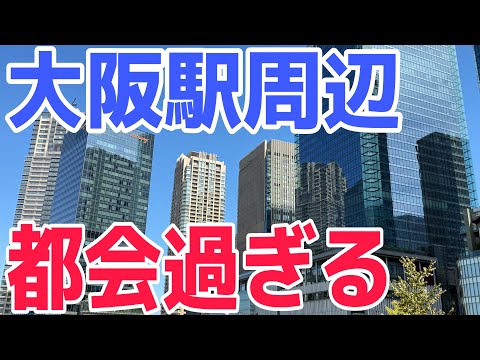
Every week, Japanese social media threads erupt with the exact same phrase: Umeda tokai sugi warota, loosely translated as "Umeda is absurdly metropolitan, lol." For domestic travelers arriving from regional prefectures and international tourists stepping off bullet trains alike, stepping into Osaka Station City produces genuine sensory shock. The sheer verticality of the surrounding skyscraper canyon, paired with a multi-layered transit web handling 2.4 million daily passengers, defies Osaka's reputation as merely a laid-back food capital. As highlighted in a recent walking study by the YouTube (Rail Six 街ブラチャンネル) Report, walking through the district's newly expanded perimeters leaves visitors astounded by an urban density that rivals central Tokyo.
The viral reaction captures a major physical shift in the city. Over the past decade, successive phases of the Umekita redevelopment have replaced sprawling former rail yards with architectural monoliths like Grand Front Osaka and the newly debuted Grand Green Osaka. Beneath these shiny glass towers lies a more intimidating beast: the legendary "Umeda Dungeon," an underground labyrinth spanning dozens of interconnected basements, department stores, and rail concourses where GPS signals reliably fail and paper maps offer little comfort.
📌 Key Takeaways:
- The Viral Shock: The phrase captures genuine disorientation as regional visitors encounter a hyper-dense, multi-tiered transit complex rivaling Tokyo's densest hubs.
- Subterranean Scale: The Umeda Dungeon links six distinct railway operators across more than 1,200 retail storefronts, creating Japan's most complex pedestrian basement network.
- North vs. South Divide: While Minami (Namba) preserves Osaka's neon street-food culture, Kita (Umeda) drives the commercial, architectural, and corporate engine of Western Japan.
The Meme That Built a Myth: Why Osaka Station City Shocks First-Time Visitors
First-time visitors often land in Kansai expecting historic temples, narrow alleys, and the neon grit of Dotonbori. Instead, exiting Osaka Station plunges them directly into a wall of reflective glass and steel. Japanese megacity urban planning rarely showcases itself as dramatically as it does here. The central station's soaring glass atrium, known as Toki no Hiroba (Time and Space Plaza), suspends pedestrians directly above active train platforms, framing dramatic views of flanking towers.
The phenomenon behind "Umeda tokai sugi warota" stems from the stark contrast between street-level expectation and structural reality. Unlike Tokyo, where density disperses across distinct anchors like Shibuya, Shinjuku, Marunouchi, and Ikebukuro, Kansai concentrates its corporate muscle into this single district. The result is an overwhelming concentration of high-end department stores, Hankyu, Hanshin, and Daimaru, competing side by side within a 500-meter radius. The sheer visual weight of double-decker walkways, elevated sky-bridges, and high-speed pedestrian rivers catches unprepared travelers off guard.
Surviving the Umeda Dungeon: Deciphering the Underground Labyrinth
If the surface looks hyper-modern, the subterranean network beneath operates like an unforgiving role-playing game. Dubbed the "Umeda Dungeon" (梅田ダンジョン) by Japanese commuters, this sprawling underground complex links seven distinct train stations operated by JR West, Hankyu Railway, Hanshin Electric Railway, and three separate Osaka Metro lines (Midosuji, Tanimachi, and Yotsubashi). Missing a single wall marking can add twenty minutes to what should be a three-minute platform transfer.
The confusion is structural. Rather than a unified master plan, the underground grew organically over seven decades through ad-hoc expansions by rival private rail companies. Subterranean shopping arcades such as Whity Umeda, Diamor Osaka, and the sprawling basements of the Hankyu and Hanshin department stores knit these lines together at slightly offset elevations. Steps appear without warning. Slopes deceive depth perception. Smartphone compasses spin erratically against structural steel reinforcement.
Conquering the maze requires watching overhead directional signage rather than map apps. Color-coded routes correspond strictly to transit lines: red for the Midosuji Line, purple for the Tanimachi Line, and blue for the Yotsubashi Line. If you lose visual contact with high-ceiling concourses, navigate toward the central sunken plaza of Whity Umeda or step up to street level to re-anchor your physical bearings against the towers above.
Kita Versus Minami: Comparing Osaka's Two Mega-Districts
Osaka functions as a tale of two distinct urban cores. Kita ("North"), anchored by Umeda, commands corporate headquarters, luxury flagship boutiques, and international hospitality chains. Minami ("South"), centered around Namba and Shinsaibashi, thrives on entertainment, nightlife, street cuisine, and counterculture. Travelers routinely debate which district warrants their limited lodging and transit time.
| Feature | Kita (Umeda Core) | Minami (Namba Core) |
|---|---|---|
| Urban Atmosphere | Gleaming skyscrapers, corporate luxury, structured retail | Bustling covered arcades, neon signage, vibrant nightlife |
| Transit Connectivity | Direct rail to Kyoto (29 min), Kobe (21 min), Kanazawa | Direct access to Kansai Airport (Nankai Rapi:t), Nara, Wakayama |
| Dining Focus | Basement depachika gourmet food halls, high-end dining | Casual street dining: takoyaki, okonomiyaki, kushikatsu |
| Average Hotel Rates (2025, 2026) | $180, $420 per night (Midscale to Ultra-Luxury) | $95, $230 per night (Boutique, Business, Budget) |
Choosing between them comes down to travel intent. Kita serves as an unbeatable regional basecamp. A commuter can board a special rapid train at Osaka Station and reach central Kyoto in under thirty minutes, or pivot west to Kobe in twenty. Minami caters to nocturnal wanderers who want immediate access to late-night izakayas and vibrant club districts without worrying about last train departures.

The Umekita Mega-Project: How Grand Green Osaka Reshaped the Skyscraper Canyon
The ongoing Umekita redevelopment stands out as one of the most ambitious engineering efforts in East Asia. Decades ago, this prime land sat locked away as an industrial freight terminal. Phase one delivered Grand Front Osaka in 2013, introducing four towering interconnected office, hotel, and retail blocks that pulled pedestrian gravity north of JR Osaka Station.
The second phase, branded as Grand Green Osaka, introduced a 45,000-square-meter urban park framed by twin skyscraper clusters. This deliberate insertion of vast green lawns, reflecting pools, and open-air event pavilions right into the heart of a high-density concrete hub represents an intentional shift in Japanese urban philosophy. The district now balances dense commercial towers with breathable public commons, drawing families and remote workers who previously avoided the transit core during daylight hours.
Osaka Versus Shinjuku: Analyzing Japanese Megacity Transit Density
Online arguments frequently pit Umeda against Tokyo's Shinjuku Station, the Guinness World Record holder for passenger throughput. Shinjuku handles roughly 3.5 million daily commuters compared to Umeda’s collective 2.4 million. However, the physical experience of Umeda’s density often strikes visitors as more intense due to architectural containment.
Shinjuku splits distinctly between its gritty East Exit and the sterile administrative towers of its West Exit. Umeda, by contrast, packs its infrastructure tight. The Hankyu Umeda terminal alone operates as a colossal engineering showpiece: a ten-track, nine-platform private rail headhouse elevated above the street, where multiple express trains depart simultaneously in parallel precision every ten minutes during peak rush. The spatial compression of rail lines running parallel, perpendicular, and subterranean creates a dense, kinetic urban canyon unmatched anywhere else in Western Japan.
The Best Observation Decks: Viewing Osaka's Skyline from Above
Appreciating the architectural scale of Umeda requires gaining elevation. The district features three premier vantage points, each presenting a distinct perspective on the Kansai basin.
The Umeda Sky Building’s Kuchu Teien Observatory remains an architectural icon. Rising 173 meters into the sky, its two towers connect via an open-air circular bridge reached by a glass-encased escalator spanning mid-air. The 360-degree open-air deck offers unobstructed sunset views over Osaka Bay and the Yodo River, though evening queues regularly back up during peak tourist seasons.
For a free, easily accessible vantage, the open terrace at Toki no Hiroba inside Osaka Station City overlooks the active rail throat where Haruka airport expresses and commuter fleets weave across steel points. Higher up in the South Gate Building, the 15th-floor Taiyo no Hiroba (Sun Plaza) provides an intimate look at the Hanshin department store facade and southern high-rises. Meanwhile, the upper viewing lounges inside the newly completed towers of Grand Green Osaka present a direct overhead perspective of the newly integrated urban park juxtaposed against the glittering commercial corridor.
Frequently Asked Questions (FAQ)
Q1: Why do Japanese commuters call Umeda an underground "dungeon"?
The term originated in Japanese gaming forums due to the dizzying complexity of Umeda’s subterranean passages. Over seven decades, multiple rail operators built separate basement networks that eventually merged without a uniform floor numbering system, creating blind corners, mismatched elevations, and disorienting corridors where GPS signals cut out.
Q2: Is it better to stay in Umeda or Namba for sightseeing?
Stay in Umeda if your itinerary includes regional day trips to Kyoto, Kobe, Himeji, or Hiroshima, as JR Osaka Station provides immediate express connections. Choose Namba if your focus centers on nightlife, casual dining, shopping arcades, and direct transit access to Nara or Mount Koya.
Q3: How do I avoid getting lost when transferring trains in Umeda?
Ignore smartphone navigation apps while underground. Instead, follow color-coded ceiling signage directly toward your target train operator name (JR, Hankyu, Hanshin, or Osaka Metro). If you lose your path, head upward to street level or step into the central concourse of Whity Umeda to re-orient yourself.
The Future of Kansai's Transit Epicenter
The massive transformation of Umeda shows no signs of slowing down. With the new underground platforms of Osaka Station now handling the Kansai-Airport Express Haruka, transit times to Kansai International Airport sit at just 47 minutes. Construction continues on the underground Naniwasuji Line, which will create a high-speed north-south transit spine directly connecting Umeda to Namba and the airport by 2031.
The district has successfully outgrown its historical reputation as a confusing transit interchange. By merging vast urban parklands with staggering transit connectivity, Umeda has cemented its position as Japan's most dynamic regional powerhouse. The next time the phrase "都会すぎワロタ" trends across social feeds, it won't just be an ironic internet joke, it will be an accurate observation of a metropolis continuing to redefine its own boundaries.