Daiso's Craft Aisle Expansion: How Budget Tools Reignited the Slime Craze
Walk down the stationery aisles of any Tokyo or regional outpost of Daiso, and the shelves no longer simply carry plain masking tape or office staples. A quiet, calculated overhaul of the retailer’s craft section reached full speed by mid-2024, reshaping how hobbyists produce tactile crafts at home. As detailed in an investigative dispatch from the Excite エキサイト Report, regular shoppers began noticing specialized tools once restricted to boutique art shops, specifically Daiso’s dedicated clay scale tool (粘土用スケール), stacked alongside vibrant blocks of air-dry polymer. Priced at just ¥110 (or $1.75 across US franchises), this single discovery removed the high financial barrier to precision crafting, driving an international resurgence of homemade sensory projects.
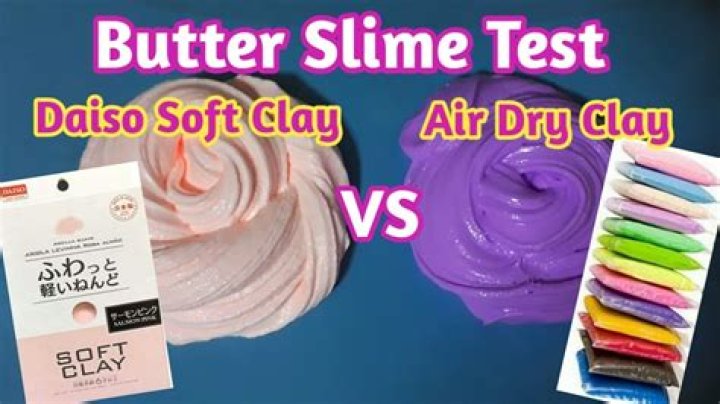
What followed was an explosion of digital creators refining the quintessential butter slime recipe. By combining Daiso soft clay with dialed-in polymer emulsions, amateur makers discovered they could replicate high-end sensory doughs sold online for $15 to $22 per jar. What began as a viral Japanese kitchen-table experiment quickly spread across international maker communities, establishing budget craft supplies as viable competitors to specialized hobby brands.
📌 Key Takeaways:
- The Hardware Breakthrough: Daiso miniaturized and mass-produced the clay scale tool, turning a ¥1,200 to ¥2,000 boutique art implement into a universal ¥110 staple.
- The Formulation Shift: Achieving ideal DIY slime consistency relies on an exact balance between air-dry clay texture and a controlled PVA glue ratio, avoiding the rubbery failure common in early experiments.
- Market Disruption: Low-cost Japanese retail networks created an accessible specialty craft alternative that permanently lowered production costs for indie sensory toy businesses.
From Specialty Art Boutiques to the 100-Yen Aisle
Professional polymer clay artists long relied on specialty measurement guides to replicate precise dye formulas. These tiered, multi-cavity plastic rulers allowed crafters to measure spheres of soft clay ranging from 1 millimeter to 15 millimeters in diameter, ensuring consistent color matching across complex sculptures. For decades, these scales sat in high-end craft storefronts like Tokyu Hands or specialized web outlets, carrying price tags between ¥1,500 and ¥2,800.
Daiso upended that dynamic. Recognizing that domestic consumers were increasingly shopping for budget-friendly creative activities, their product development teams designed an injected-molded color clay mixing guide for mass distribution. Crafters quickly discovered the tool on store shelves and posted their finds online. The availability of this mold-scale meant that anybody could reliably duplicate precise clay portions without a digital milligram scale. Slime crafters, who struggled for years with erratic, sticky formulations, immediately recognized the opportunity: if you can measure clay mass volumetrically down to the fraction of a milliliter, you can control the mechanical feel of the final product with laboratory repeatability.
The Chemistry Behind Fluffy Butter Slime
True butter slime gets its signature spreadability from micro-cellular air-dry clay rather than actual dairy fats. Standard slime relies purely on a cross-linked borate network: polyvinyl alcohol (PVA) chains bonded together via sodium tetraborate ions. While glossy and stretchy, pure PVA bases tear when subjected to shear force. They feel wet, cold, and slippery.
Incorporating Daiso soft clay disrupts that rigid cross-linked lattice. Daiso’s air-dry material contains microscopic polymer bubbles wrapped in lightweight binding agents, giving it an extraordinarily low bulk density. When kneaded into a semi-activated PVA base, the clay acts as a flexible buffer. The resulting fluffy butter slime spreads cleanly across a desk with a palette knife without tearing or sticking to skin. Getting that texture right demands careful formulation:
- The Base Foundation: Standard craft white PVA glue blended with water at a strict 3:1 ratio provides the initial tensile elasticity.
- The Activating Phase: A diluted slime activator (1 teaspoon sodium borate dissolved in 250 ml warm water), introduced gradually in 5 ml increments, prevents over-hardening.
- The Aeration Ratio: Exactly 1 part Daiso soft clay kneaded into 1.5 parts activated PVA base yields the velvety, dense spread crafters target.
Deviate from those proportions, and the mixture breaks. Adding too much clay turns the dough chalky and dense within two days. Too little clay leaves the compound runny, causing it to pool into a standard glossy mess under ambient heat.
Evolution of DIY Slime: Formulation Standards Across Ten Years
The home sensory craft scene evolved from unmetered school-glue experiments into a standardized discipline. The introduction of calibrated tools and engineered clays directly triggered this transition.
| Phase / Timeline | Core Chemical Base | Clay Additive & Technique | Batch Cost (USD) |
|---|---|---|---|
| Pioneer Era (2016, 2018) | Unmeasured liquid school glue & heavy borax laundry booster | Imported Japanese clay slabs; manual guesswork tear-off | $8.00, $14.00 |
| Transition Era (2019, 2022) | PVA glue blends mixed with shaving cream or cosmetic foam | Domestic commercial foam clays; unpredictable melting rates | $5.50, $9.00 |
| Precision Era (2023, 2026) | Concentrated PVA emulsions with precise water dilution | Daiso soft clay paired with 100-yen volumetric clay scale tools | $1.20, $2.50 |
Color Clay Mixing and the Role of the Clay Scale Tool
Before volumetric guides landed in neighborhood discount stores, color consistency was a recurring issue for crafters. Pigment-heavy food colorings frequently stained fingers, leached into packaging, or broke the emulsion entirely. The alternative, purchasing pre-colored clays, often led to muddy gray hues when combined haphazardly.
The Daiso clay scale resolved this challenge by introducing exact color recipes to the home workstation. Crafters press primary-colored clay into marked hemispherical slots on the plastic board (labeled from A through H, representing graduated volumetric steps). Combining two units of "Slot C" pastel yellow with half a unit of "Slot A" magenta produces a reliable, non-staining peach base every time.
Because the pigment is locked directly inside the clay’s polymer matrix rather than poured as a free liquid, it integrates into the PVA base without leaving grease marks on work surfaces. This streamlined mixing method transformed what was once a messy art project into a controlled, clean sensory craft tutorial suitable for home desks.
Economic Disruption in the Sensory Toy Market
The availability of these budget materials triggered unexpected ripple effects across the boutique sensory toy industry. Between 2020 and 2023, independent makers on Etsy and Shopify built lucrative small businesses selling custom, handcrafted butter slimes. However, their profit margins remained tight due to the high retail markup on domestic air-dry clays like Model Magic, which retailed for nearly four times the cost per gram compared to Japanese value-chain equivalents.
Once discount retailers proved that lightweight polymer compounds could be sold profitably for $1.25 to $1.75 per packet, the economics changed. Crafters no longer needed to treat specialized clays as precious, finite commodities. Instead, hobbyists began keeping dozens of packets in home storage bins, experimenting freely with hybrid textures. Mainstream toy conglomerates, which long charged premium rates for branded kits, found themselves competing with a well-informed audience that could manufacture superior sensory compounds in their kitchens for a fraction of the shelf price.
Frequently Asked Questions (FAQ)
Q1: Why is Daiso soft clay preferred over standard modeling clay for butter slime?
A1: Traditional modeling clays contain oil, wax, or heavy mineral bases that repel water and cause PVA glue to curdle. Daiso soft clay uses a hyper-lightweight, water-soluble air-dry formula that easily absorbs water and integrates smoothly into cross-linked slime polymers without leaving an oily residue.
Q2: How do you fix butter slime if it becomes sticky or melts over time?
A2: Slimes naturally soften as environmental bacteria, skin oils, and ambient heat break down the PVA chemical bonds. To restore structural integrity, mix half a teaspoon of baking soda into 30 ml of warm water and knead a few drops into the dough. If it needs additional structure, work a fresh 5-gram piece of air-dry clay into the center.
Q3: Does using a clay scale tool make a meaningful difference for beginners?
A3: Yes. Beginners often add too much clay, resulting in a stiff compound that crumbles after 24 hours. A clay scale establishes measurable volumetric benchmarks, allowing makers to repeat successful recipes without buying an expensive jeweler's scale.
Q4: How should homemade butter slime be stored to maximize shelf life?
A4: Store the slime in an airtight polypropylene container stored below 22°C (72°F). Because air-dry clay cures when exposed to oxygen, unsealed containers will form a dry outer crust within hours. Kept properly sealed, a balanced batch stays usable for three to six months.
The Lasting Imprint of Everyday Engineering
The ongoing craze around Daiso-formulated sensory doughs reveals how retail manufacturing shifts hobby culture. Craft crazes rarely survive on novelty alone; they persist when the barrier between an aspiring maker and the required technical tools disappears. By democratizing the clay scale tool and producing stable, lightweight clays at scale, Daiso turned a fragile, unpredictable internet trend into an accessible creative hobby. Everyday makers can now approach their craft with the confidence of an engineer, proving that high precision does not require a high-end price tag.