Demon Slayer Rui Spotlight: Why the Lower Moon Five Remains the Series' Most Tragic Villain
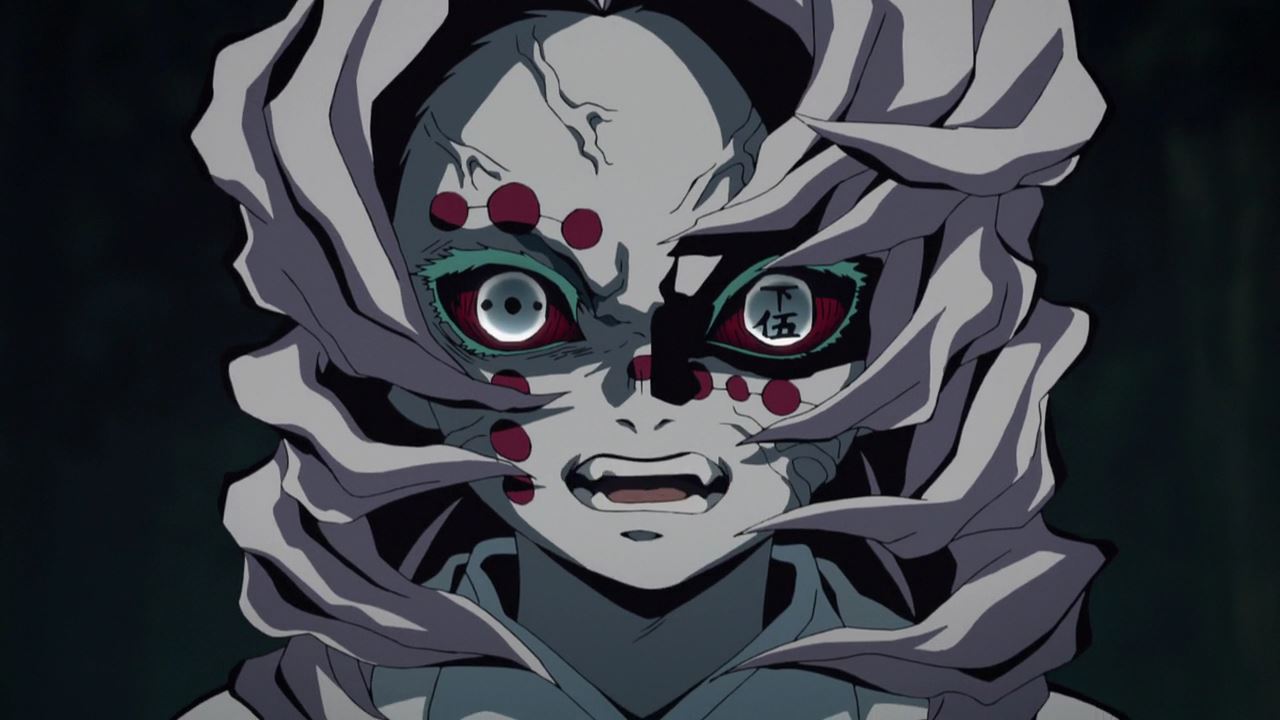
Years after the Mount Natagumo Arc redefined modern television animation, the pale silhouette of Rui still commands a distinct, haunting space across anime discourse. While later arcs in Koyoharu Gotouge’s dark fantasy saga unleashed cataclysmic battles against Upper Rank demons, the tragic terror of the Lower Moon Five remains the narrative linchpin of the entire series. A recent retrospective in a Collider Report highlighted how the franchise sustains its global appeal not merely through spectacle, but through raw, empathetic character writing that refuses to treat its monsters as disposable obstacles.
Rui stands as the gold standard of that storytelling philosophy. Beneath the razor-sharp threads and grotesque arachnid mutations lurked a sick child trapped in an endless, manufactured nightmare. Revisiting his arc clarifies why Rui was never just another boss to defeat, he was the tragic mirror through which Tanjiro Kamado cemented his defining purpose.
📌 Key Takeaways:
- The Structural Pivot: Rui’s defeat signaled the definitive end of early-stage demon encounters, forcing Tanjiro to awaken the Sun Breathing technique and exposing the vast skill gap between basic recruits and Hashira.
- The Psychology of Abuse: Unlike self-serving villains, Rui sought genuine family connection, but corrupted that yearning into a terror-enforced Spider Demon Family under Muzan Kibutsuji's toxic influence.
- The Lasting Benchmark: The climax of Episode 19 set a high watermark for television animation production values, combining musical score, emotional pacing, and fight choreography into a single unforgettable sequence.
The Fragile Monster of Mount Natagumo
Before Tanjiro set foot on the mountain, demon threats followed predictable patterns. Hand demons and temple lurkers operated on solitary predatory instincts, easily understood through basic revenge tropes. Rui shattered that simplicity. The Mount Natagumo Arc transformed the tone of the series from dark folklore into psychological horror.
Rui did not lurk in the shadows alone. He built an empire of puppets. When the Demon Slayer Corps sent wave after wave of swordsmen into the mist, the forest swallowed them whole. Demon slayers turned their swords against their own comrades, manipulated by invisible webbing attached to their limbs. The dread was pervasive, quiet, and deeply unsettling. Gotouge framed Rui not as an arrogant warmonger, but as a petulant, fragile child orchestrating an elaborate domestic stage play where mistakes were punished by flaying or decapitation.
Muzan Kibutsuji’s Poisonous Favor and the False Family
Rui occupied a unique position within the Twelve Kizuki. Muzan Kibutsuji, notorious for executing subordinates over the slightest failure, showed Rui surprising patience. Muzan saw an echo of his own fragile mortality in the boy. Born with a sickly body that left him bedridden from birth, Rui had lived without the ability to run or even breathe comfortably. Muzan appeared not as a savior, but as a predator offering false liberation, converting the child into a demon through blood transfusion.
That bargain exacted a devastating psychological toll. Once Rui murdered innocent humans to satisfy his predatory hunger, his human parents attempted a murder-suicide to spare him further damnation and save the village. Rui struck first, cutting down his mother and father in a blind surge of defensive rage. Only as his mother drew her dying breath, whispering apologies for failing to give him a healthy body, did Rui realize the truth: his parents intended to die alongside him out of pure love.
Muzan poisoned that realization immediately, telling the boy that his parents were simply selfish betrayers. Unable to bear the guilt of slaying those who loved him, Rui spent decades running from the memory. He gathered weaker demons, using his Blood Demon Art to reshape their facial structures and flesh to resemble spiders. He assigned them roles: "Father," "Mother," "Elder Sister," and "Brother." Yet this was never kinship. It was a hostage dynamic where love was demanded under threat of horrific violence.
The Combat Escalation: Threads, Fire, and the Limits of Steel
When Tanjiro and Nezuko confronted Rui, the disparity in raw power exposed the limits of standard combat training. Rui's Blood Demon Art transformed silk threads into tensile steel capable of snapping Nichirin swords with a flick of the wrist. Tanjiro’s standard Water Breathing techniques offered zero defensive purchase against Rui’s Cutting Thread Cage, a spatial trap designed to slice opponents into uniform ribbons.
| Phase | Combatants & Techniques | Narrative & Mechanical Impact |
|---|---|---|
| Phase 1: Forest Containment | Tanjiro vs. Mother Spider & Puppeteers | Reveals Rui’s hierarchical command structure; establishes the high mortality rate of low-tier demon slayers. |
| Phase 2: The Direct Confrontation | Tanjiro vs. Rui (Cutting Thread Cage) | Tanjiro’s sword breaks; reveals Lower Moon durability against standard Tenth Form Water Breathing. |
| Phase 3: The Awakening | Hinokami Kagura & Nezuko’s Exploding Blood | Episode 19 climax; unlocks the Kamado family ancestry; proves demon blood arts can amplify demon slayer strikes. |
| Phase 4: The Hashira Intervention | Giyu Tomioka (Eleventh Form: Dead Calm) | Rui decapitated effortlessly; illustrates the monumental gap between ordinary corps members and the Hashira rank. |
The turning point arrived during the legendary climax of Episode 19. Pushed to the brink of death, Tanjiro recalled his father performing the ceremonial Kagura dance in freezing winter snow. This memory triggered the initial awakening of the Hinokami Kagura, shifting his blade from defensive fluid motions to blazing offensive momentum. Combined with Nezuko’s first use of her Blood Demon Art, Exploding Blood, the siblings executed a synchronized strike that remains one of the most celebrated moments in television anime history.
Dead Calm: The Hashira Gap Revealed
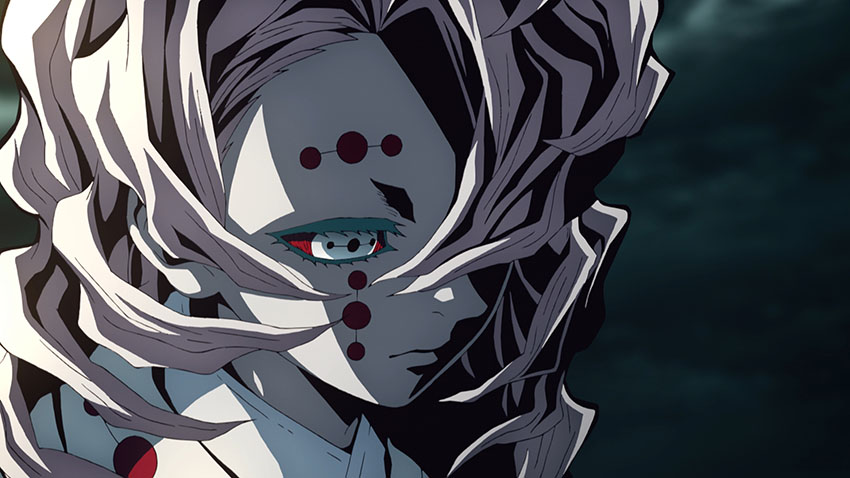
The brilliance of Rui’s battle lies in Gotouge's subversion of classic shonen triumphs. When Tanjiro severed Rui’s neck, audiences assumed the battle was won. It was not. Rui had severed his own neck with his threads moments before the burning blade struck, rendering the decapitation meaningless.
Just as Rui prepared to execute the exhausted Kamado siblings, Water Hashira Giyu Tomioka stepped onto the clearing. With a demeanor devoid of arrogance or hesitation, Giyu demonstrated the Eleventh Form: Dead Calm, a technique of his own creation. Rui unleashed his densest, most concentrated web barrage, yet every single thread evaporated before touching Giyu's haori. In a single stroke, Rui was truly decapitated.
This swift conclusion reframed the stakes for the rest of the franchise. It established that while Tanjiro possessed immense latent potential, he remained fundamentally outmatched by the upper tiers of combat. It also proved that Lower Moons, terrifying as they were to standard corps members, were mere practice targets for the elite Hashira.
Tragic Empathy: Tanjiro’s Defining Philosophy
The true heart of the Mount Natagumo Arc unfolds not during the clash of blades, but as Rui’s headless body collapses into ash. Giyu steps forward, stepping on the demon’s dissolving haori, treating the dead monster with the cold contempt typical of the Corps. Tanjiro intervenes, gently placing his hand on the remains.
Tanjiro refuses to forgive Rui’s crimes. The slaughters were real, and the cruelty Rui inflicted on his makeshift family was unforgivable. Yet Tanjiro distinguishes between punishment and cruelty. He smells the overwhelming sadness emanating from the dying demon. In his final seconds, Rui catches a glimpse of the afterlife, where the spirits of his parents wait for him not with vengeance, but with open arms, ready to share whatever hell awaits their son.
This encounter solidified Tanjiro’s moral philosophy among Demon Slayer tragic villains. Tanjiro does not fight out of blind hatred; he fights with profound sorrow. By acknowledging the human being trapped inside the monster, Tanjiro elevates the series above standard action narratives, anchoring every subsequent Upper Moon battle in genuine emotional weight.
Frequently Asked Questions (FAQ)
Q1: Why did Muzan Kibutsuji allow Rui to create the Spider Demon Family?
A1: Muzan rarely tolerates demons congregating because he fears rebellion or coordinated uprisings against him. However, he made a rare exception for Rui because he related to the boy's childhood frailty and physical suffering. Muzan granted Rui special permission to share his blood and divide his power among weaker demons, hoping it would stabilize the boy's psychological obsession with family bonds.
Q2: Was Rui actually the strongest among the Lower Moons?
A2: Officially, Rui held the rank of Lower Moon Five, but author notes confirm his true combat potential was closer to Lower Moon One or Two. Rui weakened himself intentionally by sharing his blood and abilities with multiple "family members." Had he kept all his power concentrated within his own body, defeating him would have required far greater effort from the Demon Slayer Corps.
Q3: What role did Rui's defeat play in Muzan’s Lower Moon purge?
A3: Rui’s death was the catalyst for Muzan’s infamous decision to slaughter the remaining Lower Moms. Rui was Muzan’s personal favorite among the Lower Ranks. When even Rui fell to a Hashira, Muzan concluded that the entire Lower Rank division was fundamentally useless, prompting the terrifying meeting inside the Infinity Castle where he executed Lower Ranks Two through Six.
The Enduring Narrative Shadow of Mount Natagumo
Rui remains a masterclass in antagonists who elevate an entire franchise. He pushed Tanjiro past his physical breaking point, forced the discovery of Sun Breathing, and exposed the fragile humanity lurking beneath monstrous exteriors. Even as the final arcs push animation technology and destructive scale to unprecedented heights, the tragic boy trapped in his own web remains the emotional touchstone that defined Demon Slayer's heart.