Did They Actually Happen? The Verified Truth Behind Leonardo DiCaprio's Iconic Movie Scams
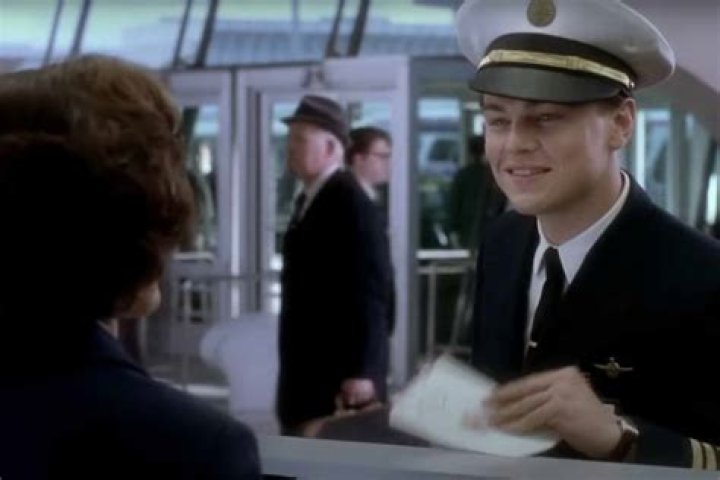
Hollywood loves a charming rogue. For over two decades, Leonardo DiCaprio has turned the cinematic swindler into an American art form. Long before cinema audiences watched him forge Pan American payroll slips or crash helicopters on Long Island lawns, the actor deliberately gravitated toward morally fractured figures. As detailed in a Yahoo!ニュース Report on his early career choices, veteran actors like John C. Reilly urged DiCaprio to bypass sanitized commercial stardom to chase raw, uncomfortable human stories. That instinct directly paved the way for his career-defining portraits of real-world scammers.
Two titles define this legacy: Steven Spielberg’s 2002 caper Catch Me If You Can and Martin Scorsese’s 2013 debauchery chronicle The Wolf of Wall Street. Both pictures earned critical acclaim, massive box office receipts, and enduring cultural cachet. They also cemented a dangerous pop-culture myth: that their real-world subjects, Frank Abagnale Jr. and Jordan Belfort, were renegade geniuses outsmarting a corrupt system. Archival documents, federal court dockets, and investigative journalists tell an entirely different story. The glamorous cinema conceals petty theft, fabricated legends, and thousands of ruined retail investors.
📌 Key Takeaways:
- The Fabricated Legend: Public records confirm Frank Abagnale Jr. never ran a multimillion-dollar check fraud operation across dozens of countries; his greatest con was duping book publishers and Steven Spielberg into believing he did.
- The Real Wall Street Carnage: Jordan Belfort did not target nameless Wall Street institutions; Stratton Oakmont methodically stripped life savings from middle-class retail investors through aggressive penny stock scams.
- Restitution Realities: While Hollywood glamorized their exploits, Belfort's victims saw only a tiny fraction of their court-ordered $110.4 million restitution paid back, even as film rights and speaking tours flourished.
The Total Fabrication of Frank Abagnale Jr.’s FBI Manhunt
Steven Spielberg presented Catch Me If You Can as an affectionate father-son fable wrapped in an international game of cat and mouse. DiCaprio played Frank Abagnale Jr. as a teenage savant who successfully posed as a Pan Am co-pilot, a chief resident pediatrician in Georgia, and a Louisiana assistant attorney general, cashing $2.5 million in fraudulent checks while evading an obsessed FBI agent named Carl Hanratty. Audiences loved the mid-century panache. The premise, however, was almost entirely fictional.
Extensive archival research conducted by journalist Alan Logan in his book The Greatest Hoax on Earth systematically dismantled Abagnale's timeline. Official prison records and state archives reveal that between the ages of 17 and 20, the exact window when Abagnale claimed to be crisscrossing the globe on Pan Am jump seats, he spent the vast majority of his time incarcerated in the Great Meadow Correctional Facility in Comstock, New York. He was not eluding federal task forces in Paris. He was serving time for petty auto theft and forging local family checks.
The FBI manhunt portrayed on screen never occurred. Carl Hanratty was an entirely fictional composite character, primarily based on retired FBI agent Joseph Shea. Shea did pursue Abagnale, but not for an international high-roller spree. Shea tracked him down for forging small personal checks while staying at cheap motels. Abagnale never passed the Louisiana bar exam, never worked as a hospital director, and never served on an elite FBI anti-fraud unit. His true stroke of genius happened in 1977, when he convinced talk-show host Johnny Carson and subsequent publishing executives that his fabrications were historical fact.
Stratton Oakmont and Jordan Belfort’s Penny Stock Engine
If Spielberg leaned into romantic nostalgia, Martin Scorsese doused Wall Street in adrenaline and Quaaludes. The Wolf of Wall Street leaned directly into Jordan Belfort’s 2007 memoir, depicting the brokerage firm Stratton Oakmont as a chaotic, hedonistic playground where brazen young men made fortunes trading over-the-counter securities. DiCaprio’s Belfort breaks the fourth wall, sneering that the precise mechanics of the financial instruments do not matter to the audience. In reality, those mechanics mattered immensely to the people holding the bills.
Stratton Oakmont was a boiler room operating classic pump-and-dump operations. Brokers targeted unsophisticated retail buyers across the United States, pushing worthless micro-cap penny stocks through scripted high-pressure cold calls. Once artificial demand drove the prices upward, Belfort and his inner circle dumped their own secret holdings, pocketing massive profits while the shares collapsed to zero. The victims were not hedge fund billionaires or predatory institutions. They were blue-collar workers, small business owners, and retirees whose accounts were systematically liquidated.
The Securities and Exchange Commission (SEC) and the National Association of Securities Dealers (NASD) pursued Belfort for years before the FBI built a criminal indictment. In 1999, Belfort pleaded guilty to securities fraud and money laundering. Federal prosecutors documented that Stratton Oakmont defrauded roughly 1,500 individual investors, generating investor losses exceeding $200 million. The cinematic portrayal focused heavily on backstage parties, pet chimpanzees, and sunken yachts, effectively relegating real economic devastation to background set dressing.
Hard Realities: Hollywood Portrayal Versus Public Records
Screen adaptations inevitably streamline history to serve dramatic momentum. In true crime cinema, that compression often inverts villains into misunderstood folk heroes. Below is the historical record juxtaposed against Hollywood's creative licenses:
| Film & Real Subject | Hollywood Narrative | Documented Historical Facts | Actual Legal & Financial Consequence |
|---|---|---|---|
| Catch Me If You Can(Frank Abagnale Jr.) | Globe-trotting prodigy cashes $2.5M in checks, evades international manhunts, then invents modern bank security for the FBI. | Spent ages 17, 20 in prison; petty check forgery totaled under $50,000; never practiced medicine or law; fabricated the entire narrative on 1970s talk shows. | Served roughly 4 years in federal/state facilities; lived primarily on paid corporate speaking circuits built around his fabricated identity. |
| The Wolf of Wall Street(Jordan Belfort) | Outlaw stock wizard takes on Wall Street elites in an unhinged, rock-and-roll financial playground with consenting wealthy clients. | Coordinated predatory pump-and-dump operations targeting modest retail accounts; manipulated IPOs via illegal nominee accounts (Steve Madden shoes). | Served 22 months in federal prison; ordered to pay $110.4M in victim restitution, of which only a small percentage has been recovered. |
The Distortion Machine: Directorial Tone and Charisma
Why do these fabrications take root so firmly in popular culture? DiCaprio’s screen presence is the primary engine. In both productions, the camera functions not as an impartial witness, but as an amplifier of personal charm. In Catch Me If You Can, Spielberg leans on John Williams’ jazz-infused score, soft lighting, and nostalgic 1960s production design. The audience views Abagnale’s crimes through the wide eyes of an abandoned child trying to buy back his parents’ happiness. Sympathy overrides scrutiny.
Scorsese took the opposite structural approach with The Wolf of Wall Street, yet achieved a similar social effect. The director intended the three-hour running time to serve as an exhausting indictment of American greed and hyper-capitalism. Every frame was meant to disgust. Instead, fraternity houses, finance TikTok creators, and aspiring day traders embraced Belfort as an aspirational archetype. By making Belfort’s perspective the sole filter through which the story is told, the movie stripped the real-world victims of any voice or presence.
The filmmaking industry benefits financially from this dynamic. True crime biopics consistently outperform fictional crime procedurals at the box office because the marketing relies heavily on the "True Story" banner. Producers license life rights directly from the perpetrators, creating a perverse commercial pipeline where the criminal acts themselves become the primary intellectual property feeding Hollywood studios.
Restitution Deficits and the Ethics of the Scammer Celebrity
The post-prison careers of both men illustrate the downstream consequences of cinematic canonization. After Belfort was released from federal custody in 2006, the Department of Justice mandated that 50 percent of his gross income go toward compensating the 1,513 victims named in his sentencing judgment. Federal prosecutors repeatedly filed motions throughout the 2010s arguing that Belfort was failing to meet his financial obligations, even as he commanded thousands of dollars per seat at international sales seminars.
When Red Granite Pictures financed The Wolf of Wall Street, real-world finance caught up with Hollywood in bizarre fashion. The production company itself was later swept up in the historic 1MDB Malaysian sovereign wealth fund scandal. The United States Department of Justice seized assets associated with the film after proving that millions used to finance DiCaprio’s portrayal of a financial fraudster were originally embezzled from Malaysian public coffers. Art did not merely imitate life; it ran on the same illicit rails.
Abagnale enjoyed an even cleaner commercial trajectory. For nearly four decades, major corporations, trade associations, and technology firms paid him up to $30,000 per lecture to advise executive boards on cybersecurity and fraud prevention. His entirely fictional credentials served as legitimate corporate currency. Until investigative reporting broke the myth wide open in 2020, Abagnale’s corporate empire rested purely on a narrative created out of thin air and validated by Hollywood film distribution.
Frequently Asked Questions (FAQ)
Q1: Did Frank Abagnale Jr. really assist the FBI for decades after his release?
A1: Official FBI records show no evidence that Abagnale was an official staff member or long-term operative for the bureau. Former agents have clarified that while he occasionally delivered unpaid or nominal guest lectures at the FBI Academy in Quantico, a courtesy extended to many former offenders, he was never an official agent, consultant, or architect of anti-fraud systems.
Q2: Did Jordan Belfort write his memoir while still serving time in prison?
A2: Yes. Belfort was incarcerated at the Taft Correctional Facility in California alongside comedian Tommy Chong. Chong encouraged Belfort to write down his boiler-room stories. Following his release, Belfort secured a reported $1 million advance for his memoirs, which subsequently became the basis for the film adaptation.
Q3: How much money did Jordan Belfort actually return to his fraud victims?
A3: Court filings indicate that Belfort has paid back approximately $10 million to $12 million of the court-ordered $110.4 million restitution judgment. A substantial portion of the funds collected came from the liquidation of assets seized by federal marshals during his initial arrest, rather than voluntary earnings generated from his speaking career and royalties.
The Enduring Myth of the Brilliant American Grifter
American culture holds a recurring blind spot for high-profile grifters. When a con artist operates with sufficient style, society often forgives the underlying exploitation, reframing calculated theft as an amusing rebellion against bureaucratic institutions. Leonardo DiCaprio’s cinematic portrayals tapped straight into this cultural impulse. He played these men not as predatory sociopaths, but as magnetic forces of nature who dared to test the limits of authority.
Cinema excels at mythmaking, but journalism lives in court archives and ledger sheets. Frank Abagnale Jr. was not an untouchable teenage pilot; he was a serial fabricator whose greatest con was convincing Hollywood to build a monument to his lies. Jordan Belfort was not an outlaw folk hero taking down Wall Street; he was a predatory stockbroker who systematically cleaned out ordinary accounts. Enjoying these films as top-tier cinema requires acknowledging their sharpest irony: the biggest scam was convincing the audience that the stories were true.