Direct Branches vs. Inspire Shops: Fact-Checking Jiro Origins and Variations
The Ramen Jiro Playbook: Direct Branches, Inspire Offshoots, and the Art of the Counter
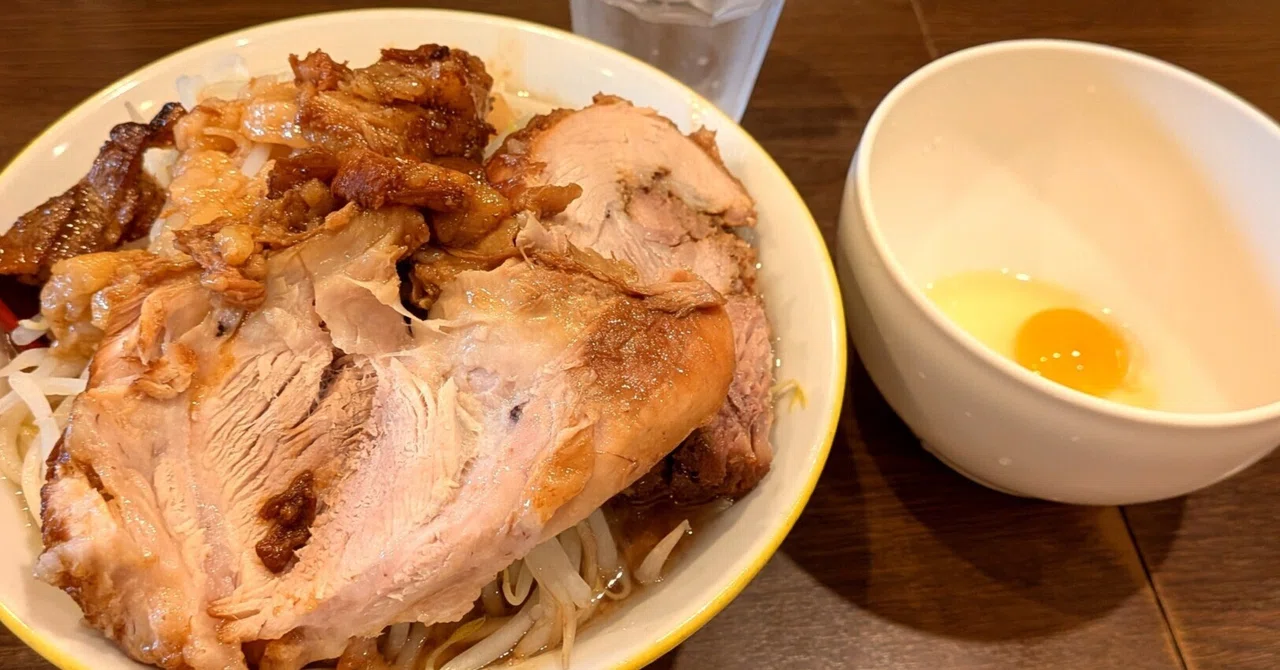
Steam hits your face the second the sliding door rattles open. Inside, a dozen patrons sit shoulder to shoulder along a red laminate counter, heads bowed over bowls piled high with boiled bean sprouts, braised pork slabs, and pungent minced garlic. Nobody talks. The only sounds are the rhythmic clatter of strainers against boiling vats and the heavy rumble of commercial exhaust fans. Tackling this subculture requires more than an empty stomach; it demands an understanding of counter etiquette developed over nearly six decades. As documented in a recent field account by a diner navigating Ramen Yellow in Okachimachi via a detailed note Report, conquering a standard bowl stacked with extra vegetables, rendered backfat, and a raw egg dip requires absolute familiarity with shop mechanics before your foot crosses the threshold.
What began as a low-cost, calorie-dense meal for Tokyo university students has evolved into one of global gastronomy's most idiosyncratic rituals. Between the strictly licensed direct branches and the nationwide wave of independent spin-offs, ordering rules vary substantially. Stepping in unprepared risks stalling the entire counter or receiving a portion far larger than any novice can reasonably consume.
📌 Key Takeaways:
- Lineage & Landscape: The scene divides strictly into 46 official direct branches derived from the Mita flagship and hundreds of independent inspire shops spanning traditional bowls, dry noodles, and pasta hybrids.
- The Ordering Sequence: Meal tickets are bought before or during the queue depending on street markings, while custom toppings like garlic and fat are requested only when asked right before serving.
- Counter Survival: Requesting smaller noodle portions early avoids wasting food, while table maneuvers like flipping the noodles protect the broth from losing heat.
The Accidental Empire Born Beneath Keio University's Shadow
The entire phenomenon traces back to 1968, when founder Takumi Yamada opened a modest Chinese eatery in Tokyo's Meguro district called Ramen Jiro. When municipal redevelopment forced a relocation to Mita near Keio University in the early 1970s, a sign painter's accidental misspelling changed the kanji from 次郎 to 二郎. Yamada never bothered to correct it. What mattered to his cash-strapped student regulars was not the sign, but the staggering volume of wheat, salt, and animal fat delivered at rock-bottom prices.
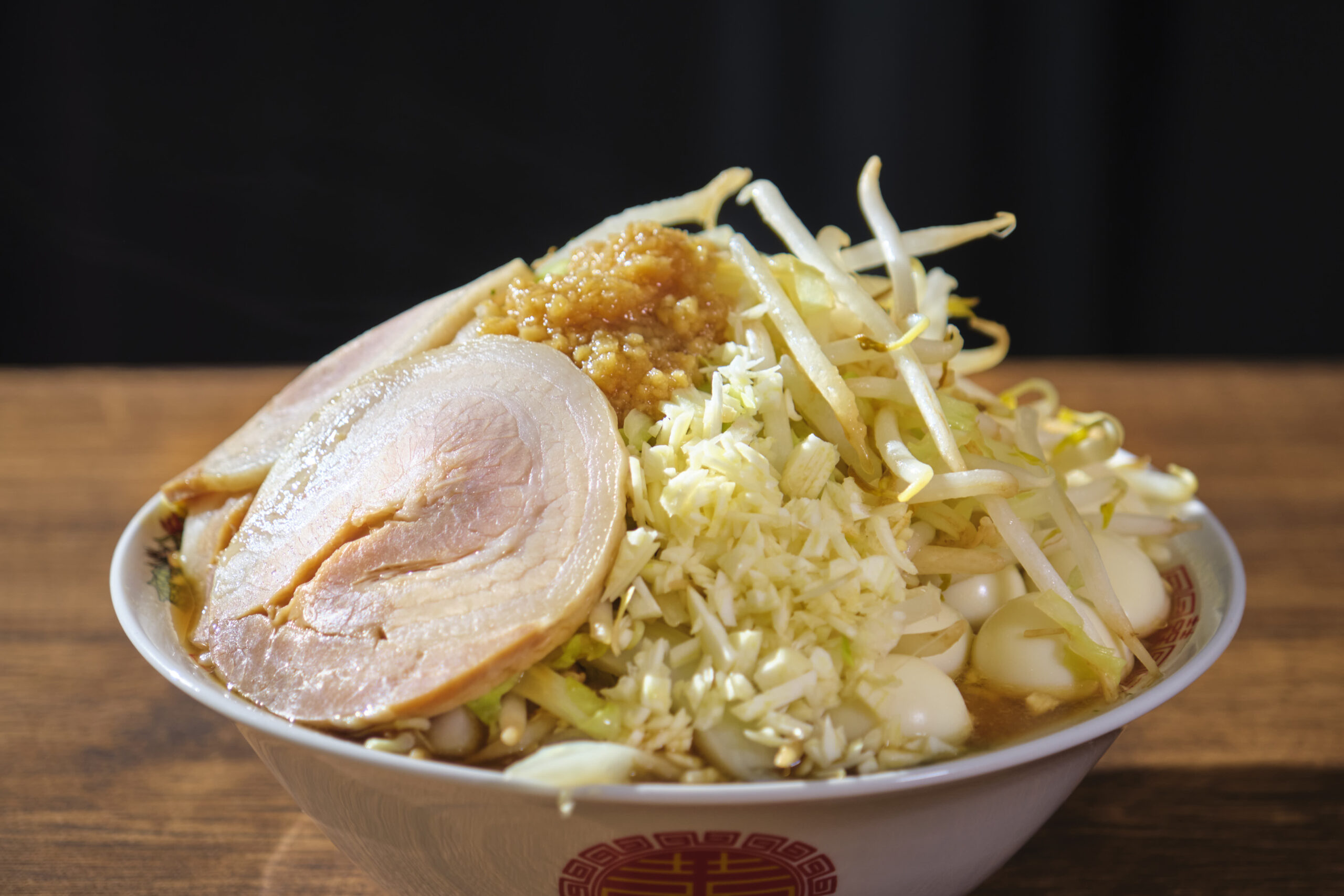
The Mita flagship established the architectural formula that defines the lineage today. Broth is brewed from mountains of pork bones, pork meat, cabbage, and unrefined soy sauce seasoned heavily with monosodium glutamate. Flat, thick noodles made from high-protein hard flour provide an intense, chewy bite. Above all, Yamada cultivated an apprentice network. Young men trained beside him for years, absorbing his recipes before being granted permission to carry the trademark banner into suburban Tokyo and beyond.
Direct Branches Versus Inspire Shops: Navigating the Lineage Divide
The modern ecosystem splits into two distinct camps: the official direct branches and the independent "inspire" operations. Knowing the difference between them shapes how you order, what you pay, and how much pressure you face at the counter.
Direct branches operate under Yamada's explicit blessing. Exactly 46 licensed locations make up this core network across Japan. These shops preserve an old-school, no-frills ethos. Counter space is tight, digital cash is largely rejected, and menu options remain bare-bones: regular, large, and extra pork. Direct shops expect customers to know the rhythm instinctively. Straying outside implicit social contracts can draw a blunt correction from the staff.
Inspire shops operate outside this trademark boundary. Some were launched by former apprentices who struck out independently, while others were built by creative chefs enamored with the genre's flavor profile. Veterans like the founder behind Junk Garage popularized soupless *mazesoba* across eastern Japan before establishing the landmark shop Jump in Kasukabe. Other regional innovators have pushed boundaries even further, including Nagoya's GURU, which serves massive platters of Jiro-style pasta doused in garlic and pork oil. Inspire shops frequently feature ticket machines accepting credit cards, offer milder broths, provide small-portion settings on clear menus, and welcome solo newcomers without counter hostility.
Ticket Machines and Entry Protocol
Surviving your first visit begins on the pavement outside. The cardinal rule of any Jiro-style shop is straightforward: understand the ticket sequence before taking a seat.
At high-traffic direct locations like Mita or Meguro, shops post strict instructions regarding when to purchase your meal ticket from the vending machine. At some locations, you buy your plastic token the moment you join the queue. At others, you only purchase when you reach the first five spots outside the door. Watch the two people ahead of you. If they step inside to tap the machine before returning to their spot in line, follow suit immediately.
Portion sizes shock first-time visitors. A standard "regular" bowl at a direct branch packs between 300 and 350 grams of dry noodles before boiling. In contrast, standard Tokyo ramen shops serve roughly 150 grams. If you lack competitive-eating capacity, speak up early. When the assistant cook peers out to gauge noodle counts or asks for your ticket while you wait, announce *men sukuname* (less noodles) or *men hanbun* (half noodles). Attempting this reduction later is impossible; Jiro cooks drop noodles into commercial cauldrons in large communal batches.
Direct Branches vs. Inspire Shops: Key Operational Benchmarks
Understanding where a shop sits on the operational spectrum prevents embarrassing procedural missteps at the counter.
| Operational Feature | Direct Branches (Chokkei) | Inspire Offshoots (Insupaia) |
|---|---|---|
| Apprenticeship Lineage | Trained directly at Mita Honten under Takumi Yamada or senior direct disciples | Independent operators, corporate culinary groups, or second-generation spin-offs |
| Base Noodle Weight (Dry) | 300, 350g standard; requires verbal reduction early | 200, 300g standard; often provides pre-set button options for mini or small |
| Customization Timing | Exclusively when prompted by the chef right before assembly (*call timing*) | Varies; often collected via pencil-marked order sheets or at ticket handoff |
| Atmosphere & Flexibility | Fast-paced, minimal conversation, high adherence to batch cooking rhythms | Welcoming to groups, varied toppings (curry, cheese), more forgiving dining pace |
Mastering the Call: Garlic, Fat, and the Dreaded Incantation
No element of Jiro culture provokes as much anxiety as "the call." When you take an open stool, place your plastic token on the elevated lip above the counter. Do not utter custom topping preferences yet. The chef is boiling your noodles and assembling the soy tare base. Saying your toppings now will only earn a flat, silent stare.
The call happens seconds before your bowl arrives. The head chef or assistant will look directly at your seat and say: *Ninniku iremasu ka?* (Do you want garlic?).
This is your cue. The default Jiro bowl arrives with vegetables and pork fat, but zero garlic. If you answer with a simple *hai* (yes), you receive a generous spoonful of raw garlic. If you want nothing added beyond the default build, reply clearly: *Sono mama de* (as is).
If you want to tailor the bowl, use four standard parameters:
- Ninniku (ニンニク): Minced raw garlic. Options range from *sukuname* (a small pinch) to *mashi* (extra) and *mashimashi* (double portion).
- Yasai (ヤサイ): Steamed bean sprouts and cabbage. Direct branches already pile this high; calling *yasai mashi* can double that mountain.
- Abura (アブラ): Sweet, soy-marinated pork backfat ladled over the summit.
- Karame (カラメ): Extra shoyu seasoning sauce splashed across the vegetables.
Stringing these words together forms what internet fans dub the "incantation." A diner wanting reduced garlic with extra vegetables and fat simply says: *Yasai mashi, abura, ninniku sukuname*. Speak in a clear, audible tone. Hesitation creates friction in a kitchen moving at breakneck speed.
Counter Mechanics: The Tenchi Gaeshi and Battle Against the Clock
Once the bowl drops onto the counter, your internal timer begins ticking. Direct branches cook in batches of five to six bowls, a production unit known as a *lot*. If the four diners served alongside you finish within 10 minutes while you sit half-finished after 20, you disrupt the batch cycle. This faux pas forces the chef to hold boiling noodles without counter space for the next wave of guests.
To avoid this, execute the maneuver known as *tenchi gaeshi* (the heaven-and-earth flip). A dense mound of wet bean sprouts cools the broth and waterlogs your meal if left alone. Drive your chopsticks deep beneath the vegetable core down to the bowl's floor. Grip the dense nest of thick noodles, lift them upward, and rotate them over the top, submerging the sprouts beneath the scalding soup. This move achieves two things immediately: it marinates the bland vegetables in rich pork broth while exposing the noodles to air so they stop over-steaming.
Pacing is everything. Eat steadily and avoid checking your phone between mouthfuls. If the relentless wall of pork fat and salt begins overwhelming your palate, deploy flavor-shifting side dishes. Many shops offer raw eggs (*nama tamago*). Beat the egg in its separate side bowl, pull piping-hot noodles directly from the main broth, and dip them into the raw egg sukiyaki-style. The cool egg yolk tempers the saltiness and coats the heavy starch, granting a vital second wind.
If your stomach reaches its absolute limit, do not torture yourself. Leaving half a bowl is a miscalculation, but forcing yourself to the point of illness is worse. Lay your chopsticks flat across the bowl, set your empty water cup down, wipe your immediate counter space with the provided cloth, lift your bowl up onto the high ledge, and say a sincere *Gochisousama deshita* to the kitchen as you exit. Humility and cleanliness make up for an unfinished bowl every single time.
Frequently Asked Questions (FAQ)
Q1: Is it considered rude to order less noodles on your first visit?
Not at all. In fact, veteran staff prefer it. Demanding a standard portion and abandoning half of it wastes food and slows counter rotation. Announcing *men sukuname* (less noodles) or *men hanbun* (half noodles) when your ticket is inspected signals self-awareness and counter etiquette.
Q2: What is the difference between asking for "Mashi" and "Mashimashi"?
*Mashi* indicates a standard generous upgrade of an ingredient, whereas *mashimashi* asks the kitchen to pile that ingredient to its absolute structural limit. Many direct branches disregard *mashimashi* entirely or cap it due to vegetable waste, while inspire shops enthusiastically stack towering portions.
Q3: Can groups of two or three sit together at direct Jiro shops?
Rarely during peak hours. Seats are filled strictly in arrival order as individual counter stools open up. If you arrive as a pair, staff will usually split you across separate seats rather than leave counter stools empty. Inspire shops are far more accommodating of groups and families.
Strategic Takeaways for Modern Counter Culture
Entering the Jiro universe does not require intimidation once you strip away internet lore and examine the underlying mechanics. The rules governing counter conduct exist for practical reasons: keeping fresh noodles from turning to mush, maintaining fair wait times on the street, and balancing dense kitchen prep with low menu prices.
Approach your initial outing pragmatically. Choose an approachable inspire shop or select an off-peak afternoon hour at a direct branch. Order a modest noodle size, keep your topping call concise, execute the noodle flip cleanly, and focus on the bowl in front of you. Handled with respect, that towering mound of wheat, pork, and garlic shifts from a daunting counter test into an authentic staple of Tokyo dining.