Everything to Know About 'Ninja Re Bang Bang': Lyrics, Remixes, and Gaming Tie-Ins

When Kyary Pamyu Pamyu released "Ninja Re Bang Bang" (にんじゃりばんばん) in the spring of 2013, critics outside Tokyo viewed her Harajuku aesthetic as an eccentric, localized flash in the pan. They were wrong. Produced by electronic music maestro Yasutaka Nakata under Warner Music Japan, the track discarded standard pop conventions in favor of hyperactive synth stabs, shamisen motifs, and playful folklore. It immediately topped the Billboard Japan Hot 100, established ASOBISYSTEM as an international export engine, and demonstrated how regional sounds could command global digital real estate.
The single refused to fade quietly into musical archives. Instead, it experienced an aggressive second wave when American producer Steve Aoki retooled the track as the signature anthem for GungHo Online Entertainment's Nintendo Switch title Ninjala. According to an official アソビシステム株式会社 Report, Aoki's festival-ready reboot quickly found its way onto premier global streaming playlists across North America, Europe, and Asia. More than a decade after its initial drop, the composition remains a definitive study in how viral Japanese pop culture crosses digital borders.
📌 Key Takeaways:
- Sonic Blueprint: Yasutaka Nakata hybridized traditional Japanese pentatonic structures with aggressive French-electro basslines, inventing an accessible sonic bridge between traditional folklore and modern dance music.
- The Gaming Rebirth: A 2020 partnership with GungHo's Ninjala on Nintendo Switch introduced the track to millions of younger Western gamers, supported by Steve Aoki's festival remix.
- Streaming Endurance: Editorial placement across international streaming platforms keeps the song active on global charts, proving J-Pop's viability without full English localization.
The Studio Chemistry of Kyary Pamyu Pamyu and Yasutaka Nakata
Kyary Pamyu Pamyu did not stumble into international recognition by accident. Behind her visual shock tactics sat the rigorous pop architecture of Yasutaka Nakata, the mastermind behind electronic duo Capsule and synth-pop royalty Perfume. Nakata wrote, arranged, and produced "Ninja Re Bang Bang" with an acute focus on tension and release. Instead of mimicking Western pop structures, he leaned hard into Japanese musical history.
He built the song's primary hook around the yo scale, a pentatonic sequence historically tied to traditional Japanese folk music and Shinto festival celebrations. Layered beneath those classic intervals were abrasive synthesizers, syncopated 8-bit chip tunes, and compressed handclaps. The contrast was startling. Nakata forced centuries-old traditional phrasing through the meat grinder of modern club production. The track sounded ancient and futuristic at the same instant.
At the center was Kyary's deadpan vocal delivery. She did not belt or oversaturate the track with emotional vibrato. Her delivery remained cool, precise, and rhythmically mechanical. That detached charm let Nakata treat her voice like an auxiliary synth lead, making the phonetic cadence of "Ninjari Ban Ban" instantly infectious to listeners who did not speak a word of Japanese.
Deconstructing the Lyrics: Ninja Stealth as Romantic Subtext
Foreign audiences often mistook the single for a novelty song about cartoon assassins. In reality, the lyricism operates on an elegant double meaning. The song adopts traditional ninja imagery, smoke screens, shuriken stars, rooftops at midnight, and stealth techniques, to dramatize the secrecy of unconfessed young love.
The opening verse establishes the mood through atmospheric wordplay: blooming cherry blossoms (sakura), glowing fireflies, and vanishing footprints. Nakata uses onomatopoeia to pace the narrative. The phrase "Ban Ban" operates as an explosive realization, mimicking the sudden burst of a smoke grenade when feelings can no longer stay hidden. Kyary sings about walking across thin wires and flying through night skies, transforming schoolyard infatuation into high-stakes espionage.
Crucially, the song did not need an English translation to convey its message. The track succeeds internationally because its vocal rhythms mimic physical percussion. The phrasing relies on tight syllables that punch through the stereo mix like snare hits. When Western audiences chanted along, they were reacting to rhythmic architecture rather than lexical meaning.
The Evolution from Harajuku Single to Digital Weapon
The lifespan of "Ninja Re Bang Bang" charts the broader transformation of J-Pop, moving from domestic CD shipments to international game engines and festival mainstages.
| Release Window | Milestone Event | Primary Commercial Channel |
|---|---|---|
| March 2013 | Original single debuts at #1 on Billboard Japan Hot 100; music video surpasses 10M views in weeks. | Physical CD, RecoChoku downloads, Au mobile network ad campaign. |
| 2014, 2016 | Nanda Collection world tour sells out stops across North America and Europe. | Live touring, early YouTube algorithm recommendation spikes. |
| June 2020 | Official collaboration with Nintendo Switch title Ninjala; Steve Aoki drops official EDM remix. | Nintendo eShop, in-game radio, Spotify dance playlists. |
| 2022, 2026 | Track catalog revival driven by overseas algorithmic playlist curation and social short-form video reuse. | Global streaming platforms (Apple Music, Spotify), TikTok, Instagram Reels. |
The Steve Aoki Remix and the Ninjala Crossover
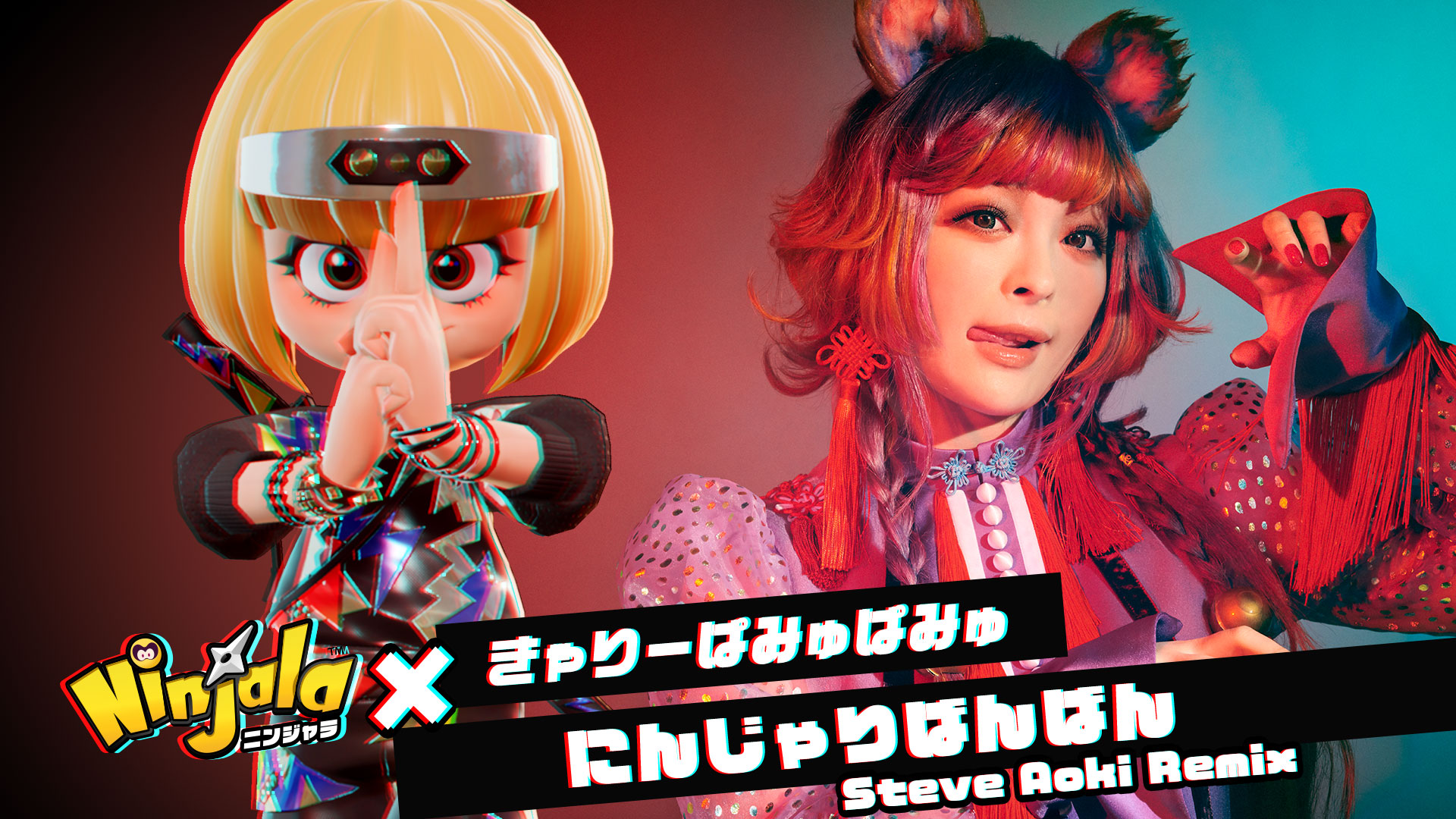
In mid-2020, GungHo Online Entertainment launched Ninjala, a free-to-play multiplayer action title on Nintendo Switch centered around bubblegum-chewing urban ninjas. The thematic match was unmistakable. Rather than licensing the seven-year-old original track as simple background music, ASOBISYSTEM and Warner Music Japan brokered a bold international remix with electro-house titan Steve Aoki.
Aoki did not merely boost the kick drum. He stripped Nakata's original stems, preserved Kyary's signature vocal hook, and transplanted the structure onto an aggressive four-on-the-floor big-room template. He accelerated the tempo to fit modern festival builds, dropping heavy sawtooth bass synths right under the chorus. The hybrid was jarring for J-Pop purists, yet it achieved exactly what the labels intended: it broke the track into mainstream dance playlists where traditional Japanese pop rarely travels.
The promotion blurred lines between digital video games and pop marketing. Ninjala players could equip the track as their in-game battle victory theme, dress their avatars in Kyary's signature stage outfits, and trigger custom dance emotes. By the time the game surpassed 8 million downloads worldwide, an entire generation of Western players recognized the song through gaming headsets before ever hearing it on radio.
Why the Track Survived the Short-Form Video Transition
Music in the streaming age suffers from ruthless turnover. Songs rise on algorithmic novelty, peak over two weekends, and disappear. "Ninja Re Bang Bang" avoided that trap by offering exceptional structural economy. There is no wasted time. Nakata introduces the primary motif within five seconds of the opening bar.
This efficiency made the track an accidental powerhouse for short-form video creators a decade after its creation. When TikTok and YouTube Shorts exploded into dominant cultural discovery tools, creators needed audio clips with rapid BPM, distinct tonal shifts, and instant identity. The syncopated clapping break in "Ninja Re Bang Bang" provided an ideal pacing bed for dance challenges, cosplay transitions, and gaming highlight reels.
The song also benefited from Western curiosity surrounding early 2010s Harajuku culture. As nostalgia cycles shortened, young internet users revisited Kyary's golden era not as campy novelties, but as masterclasses in art direction and hyper-pop production. Fans discovered that underneath the surrealist music video visuals lay some of the cleanest analog-digital synthesis ever recorded in Tokyo.
Frequently Asked Questions (FAQ)
Q1: What do the words "Ninja Re Bang Bang" actually mean?
A1: The phrase is an inventive Japanese pun combining "ninja" with dynamic sound effects. While "ninja" references the classic stealth warrior, "Re" serves as a connective vocal hook, and "Bang Bang" (ばんばん) works as onomatopoeia for sudden explosions or uninhibited action. The lyrics use ninja secrecy as a metaphor for hiding romantic feelings until they finally burst out into the open.
Q2: How did the song get featured in Nintendo Switch's Ninjala?
A2: Publisher GungHo Online Entertainment partnered with Kyary Pamyu Pamyu's management agency, ASOBISYSTEM, to make the track the official anthem for the game's launch in June 2020. To appeal to global gaming audiences, they brought in American DJ Steve Aoki to produce a high-energy electro remix, which was distributed through in-game events and international music platforms.
Q3: Who wrote and composed the original track?
A3: The entire track was written, arranged, and produced by Yasutaka Nakata. He handled all instrumental sound design, mixing, and lyric composition at his private studio under Warner Music Japan's unborde label, continuing his long-running creative partnership with Kyary Pamyu Pamyu.
The Lasting Cultural Footprint of Nakata's Masterwork
Music industry executives often argue that non-English music must be watered down with Western songwriting tropes to achieve enduring international success. "Ninja Re Bang Bang" thoroughly disproves that assumption. It succeeded precisely because it doubled down on distinct local textures: traditional scales, playful Japanese wordplay, and Harajuku fashion sensibilities.
Yasutaka Nakata built an earworm capable of mutating across multiple platforms, whether drifting through Tokyo convenience stores in 2013, blasting through arena sound systems via Steve Aoki, or soundtracking Nintendo Switch brawls. The track stands as an essential reference point for the hyperpop movement and a high-water mark for Japanese musical exports. It remains living proof that bold sonic identity will always cut through global noise.