Fact Check: The Truth Behind Grilling with Foil and Dangerous Flare-Ups

Every home cook seeks the holy grail of effortless cooking: tender, perfectly flaky fish without skin fused to the metal grate or grease baked onto the drip tray. A viral culinary technique promises exactly that. As detailed in a widely read Yahoo!ニュース Report, compressing heavy-duty foil into a wrinkled bed, the crumpled aluminum foil trick, elevates delicate fish like horse mackerel or capelin above pooled oils, letting hot air circulate while keeping delicate skin intact. Millions of home cooks swear by it.
Fire marshals and appliance manufacturers see a very different reality. Search trends for "グリル アルミ ホイル 燃える" (grill aluminum foil catching fire) spike during national cooking holidays for a sobering reason: domestic kitchens regularly erupt in flames when foil traps fat directly beside open heat sources. Between viral convenience and catastrophic grease combustion lies a critical gap in consumer awareness.
📌 Key Takeaways:
- The Core Hazard: Aluminum foil itself does not ignite at standard cooking temperatures; instead, trapped, rendered animal fat pools on the foil surface until it hits its autoignition threshold.
- The Structural Risk: Lining drip trays or burner shields with foil blocks engineered airflow, reflects intense infrared heat back into appliance electronics, and converts controlled burners into uncontrolled grease infernos.
- Actionable Safety: Never let foil contact heating elements or accumulate liquid fat, and always keep an appliance door closed if fat catches fire.
The Science of Combustion: Aluminum vs. Boiling Fat
A stubborn misconception persists across home cooking forums: people believe the foil itself is burning. Chemically, standard household aluminum foil possesses a melting point around 660°C (1,220°F), and pure aluminum requires temperatures well past 2,000°C to combust in air. Your residential kitchen grill or compact slide-out fish broiler operates between 200°C and 300°C. The foil is not fueling the fire.
The culprit is dripping fat combustion. When cooking fatty fish like salmon, mackerel, or sanma, rendered lipids drip downward at high rates. Fish oil and animal lard have smoke points starting around 190°C, 220°C (375°F, 428°F) and autoignition temperatures between 315°C and 370°C (600°F, 700°F). Under normal grill operations, these fats drip directly past the heat zone into a water-filled tray or angled catchment basin. When a cook inserts a flat sheet of foil, that security system collapses. The foil holds the rendered oil directly within the radiant heat zone. Within minutes, the oil reaches its flashpoint, ignites, and produces an aggressive aluminum foil grease fire.
Why Appliance Engineers Forbid Foil Linings
Open the user manual of any major kitchen appliance brand, whether a built-in Japanese range maker like Rinnai or Paloma, or global outdoor grill manufacturers like Weber and Char-Broil, and you will find explicit warnings against gas grill foil lining and bottom tray modifications. These warnings are safety imperatives based on thermal engineering.
First, compact broiler drawers rely on strict airflow patterns. When consumers spread foil across the bottom tray to avoid washing grease, the metal blocks combustion intake vents. The burner starves for oxygen, produces dangerous carbon monoxide, and creates unstable yellow flames that lick outward. Second, foil acts as a thermal mirror. Instead of allowing radiant heat to dissipate through venting channels, it reflects high-intensity energy back onto burner valves, internal ignition wiring, and temperature sensors. In extreme cases, accumulated grease ignition occurs beneath the broiler grate, warping the drawer chassis and melting electrical control harnesses.
Evaluating Surface Methods: Risk vs. Performance
Understanding which setups mitigate direct heat fire risk requires comparing common surface preparation methods against operational cooking metrics.
| Method / Accessory | Max Safe Temp | Ignition Risk Level | Primary Failure Mechanism |
|---|---|---|---|
| Flat Foil on Drip Pan | N/A (Prohibited) | Severe | Traps liquid fat in proximity to burner; blocks oxygen intake. |
| Crumpled Foil on Upper Rack | 250°C, 300°C | Moderate | Edges curl upward into gas flames; valleys fill with unchanneled oil. |
| Perforated Grill Foil Sheet | 300°C | Low to Moderate | Grease drips through holes; can flare up if bottom pan is uncleaned. |
| Non-Stick PTFE Grill Sheets | 260°C (Strict) | High above limit | Releases toxic fluorochemical vapors if exposed to direct flames. |
| Engineered Water Tray + Clean Grate | Design Standard | Minimal | Requires manual scrubbing; fish may stick if unseasoned. |
Outdoor Backyard Hazards: Charcoal Flare-Ups and Covered Burners
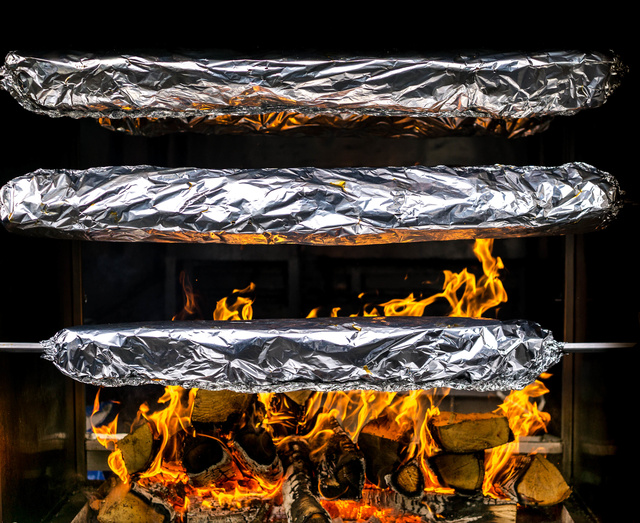
The fish grill safety hazard is not restricted to compact indoor ranges. Backyard grillers run into identical disasters when attempting grill flare-up prevention using makeshift foil shields over charcoal or gas bars.
On charcoal grills, cooks frequently spread foil over a portion of the grate to create an indirect zone. As sausage drippings or marinated pork fat collect on the foil, a slight breeze or charcoal pop can bridge the gap between coal and grease. Charcoal grill flare-ups fueled by pooled grease burn significantly hotter than dry wood or briquettes, often reaching temperatures in excess of 500°C within seconds. This rapid heat melts standard barbecue lid thermometers and singes eyebrows. The safest strategy is zoning coals to one side rather than introducing metal pans that trap flammable oils directly over white-hot embers.
Emergency Response: What to Do When Grease Catches Fire
When fat on foil ignites inside a fish broiler or covered grill, human instinct often causes severe burns. The most dangerous reaction is pulling the broiler drawer open. Opening the door feeds fresh oxygen to the combustion chamber, transforming a smoldering flare-up into an erupting fireball that scorches faces, melts range hoods, and ignites overhead cabinets.
Adhere strictly to basic kitchen fire safety precautions:
1. Cut the fuel supply immediately. Turn off the gas knob or flip the electric breaker feeding the appliance.
2. Keep the drawer or grill lid closed. Starve the flames of oxygen. A closed broiler cavity limits airflow and will typically extinguish an oil flame within 60 to 90 seconds.
3. Never throw water on a grease fire. Water sinks beneath burning oil, instantly vaporizes into steam, and violently expands, throwing aerosolized flaming grease across the room.
4. Deploy baking soda or a Class B fire extinguisher. If flames escape the edges of the drawer, smother the perimeter with sodium bicarbonate (baking soda) or discharge a rated dry-chemical extinguisher at the base of the fire.
Smarter Alternatives for Perfect Fish Without the Blaze
The culinary objective behind the crumpled foil trend remains entirely valid: preventing food from tearing and sparing cooks from scrubbing carbonized residue. You do not need to choose between ruined food and a home fire.
Dedicated non-stick grill sheets alternative products designed specifically for fish cooking offer a safer middle ground, provided they are kept away from direct open flames. Better yet, embrace high-heat prep fundamentals. Brushing your fish skin lightly with neutral high-smoke-point oil (such as avocado or refined rice bran oil) and thoroughly preheating the bare metal grate for 3 to 5 minutes causes fish proteins to instantly sear and release rather than bind. For indoor broilers designed with water pans, ensure the reservoir is filled to the designated line before turning on the flame; the water cools dripping grease on contact, preventing it from ever reaching ignition temperature.
Frequently Asked Questions (FAQ)
Q1: Can aluminum foil burn by itself on a kitchen gas burner?
A1: No. Standard aluminum foil melts around 660°C and does not combust under typical kitchen heat. What burns is the accumulated fish oil, meat fat, or cooking spray that pools on top of the foil.
Q2: Why do Japanese home cooks recommend the crumpled foil trick if it poses fire risks?
A2: Wrinkling foil creates tiny ridges that hold delicate fish above the pan, preventing sticky skin from tearing. While highly effective culinarily, it becomes a severe fire hazard if grease pools too deep, if the foil edges curl upward into open flames, or if used in narrow drawers with high heat.
Q3: Is it safe to line the bottom drip pan of my oven or fish grill with foil to save cleanup time?
A3: No. Appliance manufacturers strictly advise against this practice. Lining the catch basin blocks critical combustion ventilation, reflects destructive heat back into gas valves, and accumulates hot oils that can ignite unexpectedly.
A Balanced Approach to Heat, Fat, and Metal
Convenience hacks will always circulate online, promising shortcuts around kitchen chores. But managing heat and animal fat requires respecting thermodynamics. Aluminum foil remains an exceptional cooking tool when wrapping potatoes, resting roasted meats, or tenting turkeys. When introduced directly over high-heat gas flames or underneath dripping fats, it ceases to be a shortcut and becomes a hazard. By replacing foil catch-alls with proper preheating, clean grates, and water pans, cooks protect both their dinner and their homes.