Fact-Checking Pest Sound Devices: Why Entomologists Warn Against Ultrasonic Gimmicks
Fall swarms of brown marmorated stink bugs send millions of homeowners scrambling for immediate relief, often driving high-volume sales for plug-in acoustic emitters promising silent, chemical-free eviction. The reality playing out on the ground looks far messier. Firsthand accounts of modern apartment living, such as an observation published in a note Report, describe sudden rustling sounds along residential corridors as swarms congregate on exterior walls, drawing urban crows into violent feeding frenzies just outside doorway thresholds. Television entomologist Dr. Shu Makita has repeatedly highlighted how record summer heat waves and bright artificial night lights trigger these extreme population spikes, leaving residents desperate for solutions.
Retailers routinely market electronic sound boxes claiming high-frequency decibels will drive true bugs out of interior walls. Entomological research presents an entirely different picture of insect sensory biology, debunking the myth that airborne sound frequencies can solve an autumn infestation.
📌 Key Takeaways:
- Acoustic Limitations: True bugs lack tympanic ears capable of hearing high-frequency airborne ultrasound, rendering standard plug-in emitters completely inert against infestations.
- Substrate Communication: Stink bugs communicate through plant stems using low-frequency substrate vibrations rather than airborne sound, meaning wall-socket speakers broadcast across the wrong sensory medium.
- Field-Proven Defense: Physical exclusion sealing entry points under 3 millimeters and modifying exterior lighting remain the only reliable defenses verified by university entomology trials.
How Hemiptera Process Sound and Why Ultrasonic Waves Fail
Understanding why ultrasonic frequencies fail against stink bugs requires a direct look at stink bug auditory perception. Unlike crickets, grasshoppers, or nocturnal moths, members of the suborder Heteroptera, including the brown marmorated stink bug (Halyomorpha halys), possess no tympanal membranes. They cannot hear airborne ultrasound.
Instead, true bugs rely on vibrational communication in hemiptera transmitted directly through physical surfaces. Research from agricultural stations confirms that these insects send mating calls and territorial alerts by oscillating their abdomens to send low-frequency vibrations through leaves, branches, and stems. These signals typically register below 500 Hz and travel strictly across solid substrate. Specialized insect sensory organs known as chordotonal sensilla, located inside the joints of their legs, pick up these mechanical tremors.
Commercial ultrasonic pest repeller units broadcast airborne pressure waves between 20,000 Hz and 65,000 Hz. Because stink bugs completely lack biological hardware to register airborne vibrations at those acoustic thresholds, an ultrasonic emitter operating in a living room creates no sensory response. To the insect, the device produces absolute silence.
The Federal Trade Commission Crackdown on Acoustic Insect Deterrents
The commercial market for pest repellent sound devices has faced regulatory condemnation for decades. Independent entomology pest control studies conducted across major agricultural universities have systematically tested acoustic insect deterrents against crawling and flying arthropods, consistently failing to demonstrate repellency.
Back in 2001, the Federal Trade Commission (FTC) issued formal warnings to more than 60 manufacturers and retailers of ultrasonic pest devices, demanding scientific substantiation for claims that high-frequency audio drives insects or rodents from dwellings. Regulators found that product claims relied on unscientific internal tests or anecdotal user testimonials rather than double-blind, peer-reviewed bioassays.
Decades later, identical products flood global online platforms under rotated brand names. University trials evaluating brown marmorated stink bug prevention demonstrate that even high-output directional acoustic horns placed within inches of adult bugs trigger neither avoidance behaviors nor elevated dispersal rates. The insects walk directly across active speaker grilles without exhibiting flight reactions or erratic gait changes.
Evaluating Tested Intervention Methods for Severe Infestations
Managing seasonal insect swarms requires separating laboratory-backed physical interventions from electronic novelty items. The table below details real-world efficacy, typical homeowner expenses, and verified failure rates across common management tactics.
| Control Method | Scientific Mechanism | Installed Cost Range | Documented Field Efficacy |
|---|---|---|---|
| Plug-In Ultrasonic Repellers | Airborne high-frequency acoustics (20, 65 kHz) | $15, $50 per unit | 0% (No statistical deterrence) |
| Mechanical Pest Exclusion | Silicone caulk, weatherstripping, copper mesh | $30, $120 (DIY supplies) | 85, 95% reduction in home entries |
| Exterior Lighting Modification | Warm sodium/amber LED conversion (590 nm) | $20, $60 per home | 40, 60% reduction in wall attraction |
| Interior Light-Water Trapping | Phototactic attraction to illuminated soapy pan | $5, $15 per room | 70, 80% capture of active indoor bugs |
Light Attraction and Seasonal Swarming Dynamics
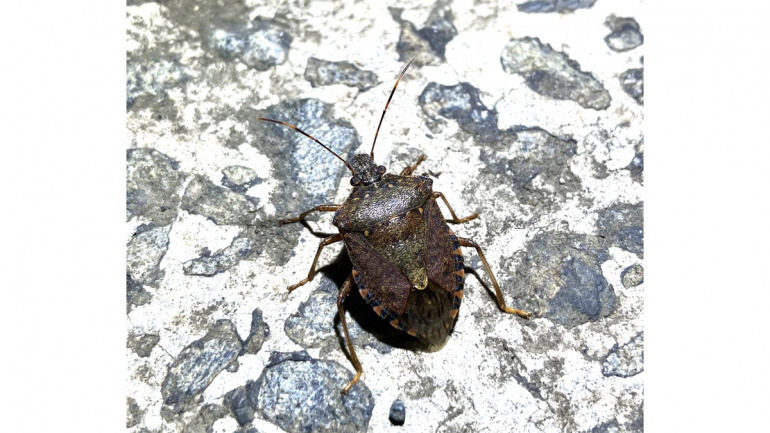
Understanding stink bug infestation causes requires looking at environmental triggers rather than indoor noise conditions. As autumn daylight hours shorten, adult stink bugs enter diapause, a dormant physiological state. They seek dry, vertical shelters like tree bark crevices or cliff sides to survive winter freezing temperatures. To an adult insect, a multi-story vinyl home or apartment facade mimics an ideal overwintering rock face.
Architectural lighting accelerates this gathering behavior. Research conducted by agricultural entomologists highlights that stink bugs possess strong positive phototaxis toward shorter wavelengths of light, specifically blue and ultraviolet rays emitted by standard cool-white LEDs and halogen floodlights. Bright entryway fixtures illuminate reflective exterior siding, converting residences into high-intensity attractants during warm late-afternoon periods in September and October. Switching porch bulbs to long-wavelength yellow or amber fixtures dramatically cuts the number of insects landing around doorways before dusk.
Practical Mechanical Exclusion Tactics That Work
With ultrasonic frequency efficacy disproven by academic trials, structural defense provides the only reliable barrier against autumn swarms. Adult stink bugs flatten their bodies to squeeze through structural openings measuring a mere 3 millimeters wide.
Effective prevention centers on physical exclusion work completed before seasonal temperatures drop:
- Install high-density foam weatherstripping along door sweeps. Inspect window screens for tear diameters larger than 1.5 millimeters, patching frayed corners with wire mesh patches.
- Seal holes where electrical conduits, cable feeds, natural gas pipes, and HVAC refrigerant lines enter external masonry using expanding polyurethane foam or exterior-grade silicone caulk.
- Attic and Foundation Vents: Cover soffit vents, ridge vents, and crawl space openings with 1/6-inch heavy-gauge wire hardware cloth. Fine steel wool or copper mesh provides a durable backing around pipe collars where rodents or insects exploit gaps.
- Remove window-mounted units before late September or build fitted exterior vinyl covers sealed tightly with industrial hook-and-loop fasteners to block intake louvers.
Safe Indoor Removal Without Triggering Defensive Odors
When insects breach perimeter defenses, swatting or vacuuming directly with a standard upright vacuum causes problems. The insect’s abdominal glands release trans-2-decenal and trans-2-octenal, chemical compounds containing pungent aldehydes that smell like harsh cilantro and skunk spray. An upright vacuum transfers these oils straight onto motor fans, permanently scenting home air filters and carpets.
Field entomologists recommend constructing a low-cost suction trap using a utility wet-dry vacuum:
- Slide the foot end of a clean nylon knee-high stocking inside the vacuum hose nozzle.
- Fold the open elastic top back over the plastic rim of the wand attachment.
- Secure the cuff tightly around the outside wand pipe using a rubber band.
- Vacuum resting insects off curtains, ceilings, and trim work. The bugs collect safely inside the nylon pocket without reaching the central canister or impellers.
- Remove the stocking, knot the top tightly, and submerge it in a bucket filled with warm water mixed with two tablespoons of liquid dish soap.
The surfactant breaks the water surface tension, preventing flotation and humanely drowning the bugs within 45 seconds without releasing distress secretions.
Frequently Asked Questions (FAQ)
Q1: Why do some homeowners report that ultrasonic repellers cleared their stink bugs?
A1: These reports stem almost entirely from coincidental seasonal timing. Stink bug aggregations on exterior walls peak during late September and naturally vanish into wall voids or die off outside as overnight temperatures drop below freezing in late October, regardless of whether a sound device was plugged in.
Q2: Can stink bugs hear any sounds made by humans or domestic pets?
A2: No. Stink bugs possess no tympanic organs to decode airborne voice registers, music, dog barking, or equipment noise. Loud shouting or clapping produces zero flight reaction unless accompanied by an air draft or physical vibration of the surface on which they are perched.
Q3: Do chemical foggers or bug bombs effectively clear stink bugs out of attics?
A3: Total-release aerosol foggers fail against overwintering stink bugs tucked deep inside wall cavities and insulation layers. Chemical exposure kills only exposed surface insects while leaving thousands hidden inside floor joists, often triggering secondary infestations of carpet beetles that feed on the dead bug carcasses.
Science-Backed Prevention for Future Swarm Seasons
Pest control requires aligning prevention tactics with insect biology rather than retail marketing claims. Acoustic pest deterrents fail because they target an auditory structure that hemipterans do not possess. Spending household budgets on consumer electronics will not stop autumn aggregations.
Homeowners facing annual invasions achieve measurable protection by sealing structural gaps before late August, replacing blue-spectrum exterior lights with amber LED bulbs, and utilizing simple soap-trap extractions indoors. Focusing resources on verified mechanical exclusion stops insects at the building envelope, protecting living spaces safely without chemical sprays or worthless sound gadgets.