Fact-Checking the Legends of Menuma Shodenzan: Saito Sanemori to Modern Reverence

North of Tokyo, where the Tone River slices through northern Saitama, stands a sacred complex that challenges long-held assumptions about regional Buddhist sanctuaries. As documented by cultural travel investigations such as this livedoor ニュース Report, Menuma Shodenzan Kangi-in draws sustained devotion not simply through its role as a regional pilgrimage stop, but through its astonishing architectural craft. Frequently overshadowed by the massive tourist draw of Tochigi's Nikko Toshogu, this Kumagaya sanctuary preserves eight centuries of martial history, esoteric Buddhist devotion, and woodcarving artistry that redefined Japanese restoration standards.
The temple breaks the standard template of tranquil, austere Buddhist architecture. Instead, it offers an explosion of vibrant color, poly-chromatic sculpture, and mythological tableaus carved deep into Japanese cypress. Behind the brilliant facades sits a rich paper trail running from a celebrated 12th-century military commander to a modern community fighting to preserve its cultural identity.
📌 Key Takeaways:
- The Historical Anchor: Legendary Heian-period warrior Saito Sanemori founded the temple in 1179 as a personal protective shrine for his clan along the Tone River basin.
- The Architectural Feat: Rebuilt over a 25-year span ending in 1760 through community donations, the Shodendo main hall earned official National Treasure status in 2012 for its Edo-period carvings.
- The Modern Cultural Pulse: Beyond its architectural status, the complex remains an active center for esoteric Buddhist matchmaking blessings and ancestral community rituals like the Chigo Gyoretsu procession.
The Martial Origins: Saito Sanemori and the 1179 Heian Sanctuary
The origins of Menuma Shodenzan Kangi-in tie directly to the brutal political upheavals of the late Heian period. In 1179, local military commander Saito Sanemori established the sanctuary to enshrine Daisho Kangiten, an esoteric Buddhist deity he carried as a personal protector. Sanemori remains an indelible figure in classical Japanese literature, famously depicted in The Tale of the Heike and immortalized in Noh theater as the aging warrior who dyed his white hair black before his final battle so enemies would not dismiss him as an old man.
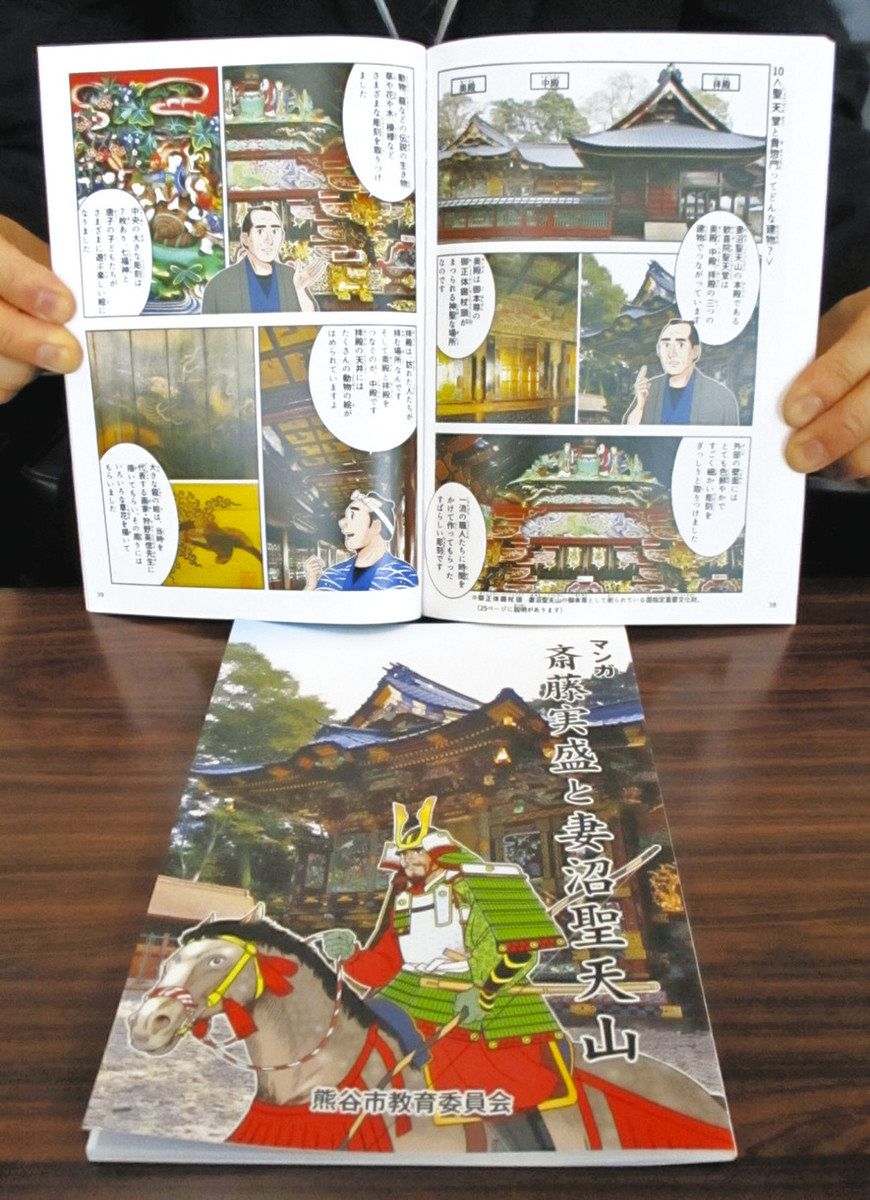
Sanemori governed the northern Musashi province with a focus on civil engineering and flood control along the volatile Tone River. To anchor communal morale and secure spiritual protection for his territory, he erected the first sacred hall on the grounds. In May 2025, the Kumagaya City Board of Education released an educational historical project charting Sanemori's regional governance, illustrating how his original sanctuary served as both a defensive community redoubt and an administrative focal point long before regional urban centers existed.
While the original Heian-era timber structures burned during subsequent civil wars, the sacred icon survived. The local populace preserved the shrine through centuries of political reshuffling, transforming a clan-specific warrior sanctuary into one of the most resilient Kumagaya Buddhist temples.
Decoding the Shodendo: Crafting 'Saitama’s Nikko Toshogu'
Stand before the Shodendo, the inner sanctum of Menuma Shodenzan, and the immediate visual parallel is undeniable. Observers have long branded the complex "Saitama's Nikko Toshogu," referencing the lavishly ornamented mausoleum of Tokugawa Ieyasu. Yet treating Menuma simply as an imitation ignores its distinct architectural pedigree.
Master carpenter Hayashi Masakiyo directed the reconstruction between 1735 and 1760, drawing on regional artisan guilds across Musashi and Kozuke provinces. Rather than relying entirely on shogunate tax coffers, the project survived on thousands of micro-donations from local merchants, farmers, and boatmen plying Tone River pilgrimage sites. This grassroots funding model allowed local artisans extraordinary creative liberty.
The structure’s Edo period architectural carvings do not merely depict formal Buddhist orthodox motifs. Alongside celestial maidens and guardian dragons, the relief panels reveal scenes of everyday town life: children playing traditional games, monkeys parodying human vices, and commoners engaging in street festivals. The timber panels utilize high-relief sukashibori techniques, where master carvers hollowed out multiple layers within single blocks of wood to create astonishing three-dimensional depth.
A comprehensive eight-year restoration concluded in 2011, costing over 1.35 billion yen. Craftsmen stripped centuries of grime and stabilized fading mineral pigments, restoring vermilion, malachite green, and gold leaf back to their mid-18th-century appearance. In July 2012, Japan's Ministry of Education, Culture, Sports, Science and Technology formally designated the Shodendo as a National Treasure, marking the first time a structure in Saitama Prefecture received the honor.
Milestones in the Evolution of Menuma Shodenzan
The structural evolution of Kangi-in spans distinct architectural eras, surviving regional river floods, military clashes, and natural weathering across eight centuries.
| Era & Year | Historical Milestone | Structural & Cultural Impact |
|---|---|---|
| 1179 | Foundation by Saito Sanemori | Esoteric Daisho Kangiten icon enshrined to guard the northern Musashi border. |
| 1670 | Great Fire of Menuma | Destruction of medieval halls; spurs community mobilization for a new complex. |
| 1735, 1760 | Master Rebuild by Hayashi Masakiyo | Construction of the current Shodendo featuring intricate high-relief wood carvings. |
| 2003, 2011 | Heisei Color Restoration Project | Scientific cleaning and repainting using Edo-era natural mineral pigments. |
| 2012 | Official National Treasure Designation | Elevated to state-level architectural priority, putting Kumagaya on global heritage maps. |
Esoteric Rituals and the Power of Daisho Kangiten
Beyond its woodwork, Kangi-in commands attention through its primary deity, Daisho Kangiten. Rooted in esoteric Shingon Buddhism, this deity derives from the Hindu god Ganesha. Depicted traditionally as two elephant-headed figures embracing, the deity represents the union of opposites, harmony, and unshakeable reconciliation.
Because esoteric traditions view Kangiten as immensely powerful and spiritually sensitive, the central image remains a strictly concealed holy icon (hibutsu), barred from public viewing. Priests conduct rigorous private rites to direct the deity's energy toward community protection and individual petitions.
Over centuries, this symbolism evolved into renowned enmusubi matchmaking blessings. Pilgrims do not visit exclusively for romantic unions. Petitions cover business partnerships, family harmony, agricultural fertility, and professional connections. Daisho Kangiten’s dual form acts as a spiritual conduit for clearing obstacles that prevent human paths from intersecting productively.
Festivals, Processions, and Pilgrimage Commerce
Menuma Shodenzan remains deeply tied to living civic life rather than operating as an isolated historical relic. Every spring, the Kangi-in Spring Grand Festival fills the temple grounds with thousands of regional devotees. A central fixture of the proceedings is the historic Chigo Gyoretsu festival procession.
Local families dress young children in elaborate Heian-style court robes, decorative golden crowns, and ceremonial makeup. The children parade slowly from the administrative quarters across the courtyards to the Shodendo. This public walk petitions the temple's protective spirits for health, longevity, and scholastic growth, binding succeeding generations of Kumagaya residents directly to their local landmark.
Surrounding the temple gates, the vibrant culinary economy along the approach preserves long-standing pilgrimage trade. The Menuma sando local gourmet scene centers around a historic specialty: Menuma Inari-zushi. Characterized by unusually long, thin rolls of seasoned fried tofu stuffed with vinegared rice, this regional staple sustained travelers walking the historic Tone River paths. Shops operating along the main approach for more than a century still produce the specialty by hand daily, illustrating how sacred preservation and regional culinary commerce reinforce each other.
Frequently Asked Questions (FAQ)
Q1: Why is Menuma Shodenzan Kangi-in compared so frequently to Nikko Toshogu?
A1: The comparison stems from the Shodendo's mid-18th-century decorative style, which utilizes dense polychromatic woodcarvings, gold leaf accents, and intricate ceiling beams similar to those at Nikko. However, while Nikko was funded directly by the Tokugawa shogunate, Menuma's construction was financed almost entirely through grassroots donations from regional commoners.
Q2: Can visitors view the central deity inside the National Treasure Shodendo?
A2: No. The statue of Daisho Kangiten is classified as a hibutsu (secret Buddha). Under esoteric Buddhist doctrine, it remains permanently concealed inside the inner sanctuary to protect its sacred energy. Visitors can, however, view the extraordinary exterior narrative carvings of the Shodendo up close via dedicated viewing walkways.
Q3: What is the best season to experience the temple’s cultural traditions?
A3: Mid-April is ideal due to the Kangi-in Spring Grand Festival and the Chigo Gyoretsu children's procession. Early autumn is another exceptional time, offering comfortable temperatures for exploring the historical sando avenue and admiring the surrounding Japanese gardens.
Preserving Northern Saitama’s Living Architectural Heritage
Menuma Shodenzan Kangi-in stands apart because it rejects the quiet museumification that claims so many rural cultural sites. Its survival through military conflicts, Edo-era fires, and modern urban drift reflects unbroken community stewardship. The intricate panels of the Shodendo capture both high esoteric philosophy and the playful warmth of the commoners who funded its construction penny by penny.
As northern Saitama adapts to changing demographic realities, the temple complex serves as an enduring anchor for Kumagaya. Between the vibrant ceremonial march of the Chigo Gyoretsu, the scent of seasoned cypress, and the quiet petitions whispered before ancient altars, Menuma Shodenzan proves that genuine historical preservation is not an exercise in nostalgia, it is a continuous, living practice.