Floor Plans and Living Environments: A First Look at Human Life Care's Saitama Group Home
Navigating dementia care along the southern Saitama commuter corridor has long meant choosing between sterile multi-bed wards and prohibitive private buy-ins. Families balancing work in Tokyo with elder care across Kawaguchi and Midori-ku routinely encounter multi-month waitlists for specialized memory care. That dynamic faces a concrete shift with the latest expansion from Shinjuku-based Human Life Care Co., Ltd., led by Representative Director Shinya Setoguchi.
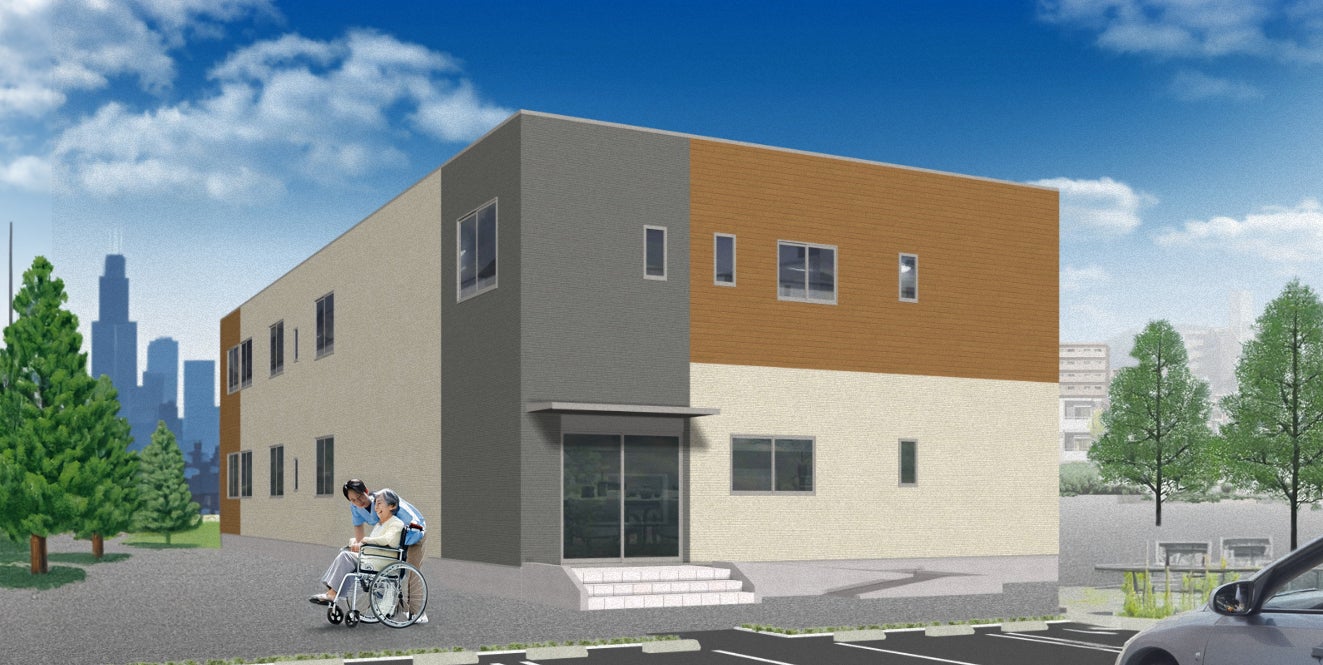
As detailed in an official PR TIMES Report, the provider confirmed the opening of the Higashi-Urawa Group Home scheduled for April 1, 2026. Designed specifically for residential dementia assistance, the facility occupies a strategic point near the border separating Saitama City and Kawaguchi. It introduces an architectural approach built around micro-communities, barrier-free private suites, and localized care infrastructure that challenges standard institutional layouts.
📌 Quick Summary:
- The Opening: Human Life Care Higashi-Urawa Group Home launches on April 1, 2026, bringing dedicated dementia units to the Kawaguchi-Saitama border.
- Architectural Focus: Floor plans feature private suites clustered around shared domestic kitchens, designed to reduce cognitive disorientation while preserving autonomy.
- Regulatory Framework: Operating under Japan's long-term care insurance system, the site restricts intake primarily to local municipal residents through community-based integrated care guidelines.
The Growing Memory Care Deficit Across Southern Saitama
Saitama Prefecture has aged at one of the fastest rates in the greater metropolitan region. While central Tokyo absorbs younger workers, commuter hubs like Kawaguchi and the southern fringes of Saitama City house aging populations who settled there during late-twentieth-century infrastructure booms. Kawaguchi nursing facilities consistently report near-capacity occupancy for specialized memory care.
Traditional care facilities frequently struggle with behavioral symptoms of dementia, such as wandering, restlessness, and spatial disorientation. Large-scale nursing homes, while cost-effective, often introduce sensory overload. Long corridors and loud public address systems exacerbate confusion.
Human Life Care Co., Ltd. has scaled its residential network by leaning into small-group dementia care homes (ninchisho taiogata kyodo seikatsu kaigo). These environments cap occupancy at small clusters of nine residents per living unit. By capping density, the model attempts to recreate the predictability of a private residence.
Architectural Layout: Deconstructing the Unit-Care Floor Plans
The Higashi-Urawa group home adopts a two-unit floor plan, housing a total of 18 residents across separate, self-contained living wings. This layout isolates sensory inputs and establishes clear sightlines between private rooms and communal dining areas.
Each private suite measures approximately 10 to 11 square meters, adhering to national standards while omitting unnecessary alcoves where residents might lose spatial awareness. Doors utilize soft-close, wide-clearance sliding mechanisms rather than traditional swinging handles, allowing unassisted movement for wheelchair users. Floors are finished in continuous, non-glare, shock-absorbent vinyl composite that reduces slip hazards without resembling hospital flooring.
+-------------------------------------------------------------+
+-------------------------------------------------------------+
Sightlines remain the primary design feature. From the open kitchen, staff maintain unobstructed visual contact with room entrances and shared lounges. Residents leaving their bedrooms step directly into a common domestic setting rather than an intimidating corridor. This direct transition reduces anxiety and curbs elopement attempts.
Cost Structure and Long-Term Care Insurance Realities
Financing memory care in Japan requires balancing public entitlements against out-of-pocket room-and-board charges. Dementia group homes operate under Japan's Long-Term Care Insurance (Kaigo Hoken), meaning care services receive 70% to 90% government subsidies, depending on the resident's personal income history.
The non-subsidized portion comprises rent, utilities, food ingredients, and daily living supplies. Standard market rates across southern Saitama place total monthly outlays between ¥150,000 and ¥210,000, positioning group homes between subsidized public facilities and high-end private residences.
| Facility Type | Monthly Fees (Out-of-Pocket) | Dementia Specialization | Waitlist Duration |
|---|---|---|---|
| Human Life Care Group Home | ¥160,000, ¥205,000 | High (Dedicated 9-person units) | 1, 3 months |
| Public Special Nursing Home (Tokuyo) | ¥90,000, ¥140,000 | Moderate to Low (General elder care) | 6, 18 months |
| Private Paid Nursing Home (Kaigo Tsuki) | ¥240,000, ¥450,000+ | Varies (Mixed cognitive care) | Immediate to 1 month |
Initial admission deposits at municipal group homes are notably modest, typically ranging from zero to ¥200,000 as a security bond. This structure shields families from the multi-million-yen entrance fees common in luxury private facilities in downtown Tokyo or Omiya.
Safety Engineering and Daily Living Support
Safety inside the Higashi-Urawa property relies on passive environmental cues rather than mechanical restraints or locked-down isolation. Cognitive support specialists emphasize preserving functional capabilities. Residents participate in meal preparation, laundry folding, and table setting under steady supervision.
Subtle architectural choices assist everyday function:
- Bathrooms integrate recessed threshold transitions, eliminating trip hazards without relying on contrasting ramps that visually appear as drop-offs to individuals with altered depth perception.
- Wall fixtures feature matte, natural-toned finishes to eliminate harsh shadows that often cause visual hallucinations.
- Environmental sensors placed along baseboards detect sudden changes in movement patterns or nighttime falls, notifying caregivers without intrusive overhead camera monitoring.
- Shared kitchens include induction cooktops equipped with auto-shutoff timers, allowing residents to chop vegetables or wash dishes safely.
Maintaining daily household rhythms prevents rapid cognitive decline. Residents keep active roles rather than becoming passive recipients of nursing tasks.
Municipal Residency Restrictions and Integration Rules
A critical regulatory detail often catches families off guard: group homes are classified under Japan's Community-Based Services (Chiiki Mitchaku-gata Service) framework.
Under these statutory guidelines, an applicant must hold official certificate residency within the municipality where the home operates. For the Higashi-Urawa site located in Saitama City's Midori-ku, primary enrollment privileges belong to individuals registered on the Saitama City resident ledger (Juminhyo). Families living across the border in Kawaguchi must verify municipal border agreements or coordinate through their local Comprehensive Community Support Center (Chiiki Houkatsu Shien Center).
This restriction exists intentionally. The national welfare strategy aims to keep individuals within their familiar social environment. Moving an elder miles away from their lifelong neighborhood breaks social ties, accelerating disorientation. By anchoring operations inside Midori-ku near the Kawaguchi line, the facility maintains close links with local clinics, emergency services, and community centers.
Frequently Asked Questions (FAQ)
Q1: Can residents from Kawaguchi apply directly to the Higashi-Urawa Group Home?
A1: Priority admission belongs to certified residents of Saitama City due to Community-Based Service regulations. Families living in Kawaguchi who wish to move an aging parent into the facility generally must establish Saitama City residency or verify cross-municipality service agreements through their municipal elder welfare division.
Q2: What level of dementia care is required for admission?
A2: Applicants must hold a certified care level of Care Level 1 (*Yo-Kaigo 1*) or higher and carry an official medical diagnosis of dementia from a licensed physician. Individuals requiring continuous, invasive medical procedures (such as central venous nutrition or ventilator support) require individual clinical review.
Q3: Are the suites fully private, and can personal furniture be brought in?
A3: Yes. All suites are private rooms designed for single occupancy. Operators actively encourage families to bring familiar personal furniture, family photographs, and preferred bedding to maintain emotional continuity and reduce relocation trauma.
Evaluating Memory Care Options in Southern Saitama
Selecting a memory care facility requires evaluating physical safety measures alongside an operator's care philosophy. The small-unit floor plan planned for the Higashi-Urawa facility represents a practical alternative to expansive, hospital-style institutions. For families balancing urban careers with elder care along the Kawaguchi-Saitama transit corridors, verifying municipal boundaries, floor plans, and out-of-pocket fees well ahead of the April 1, 2026 launch will ensure a stable transition into specialized residential care.