Forgotten Dance Crazes That Ruled Pop Culture: Why Yesterday's Moves Are Overtaking TikTok
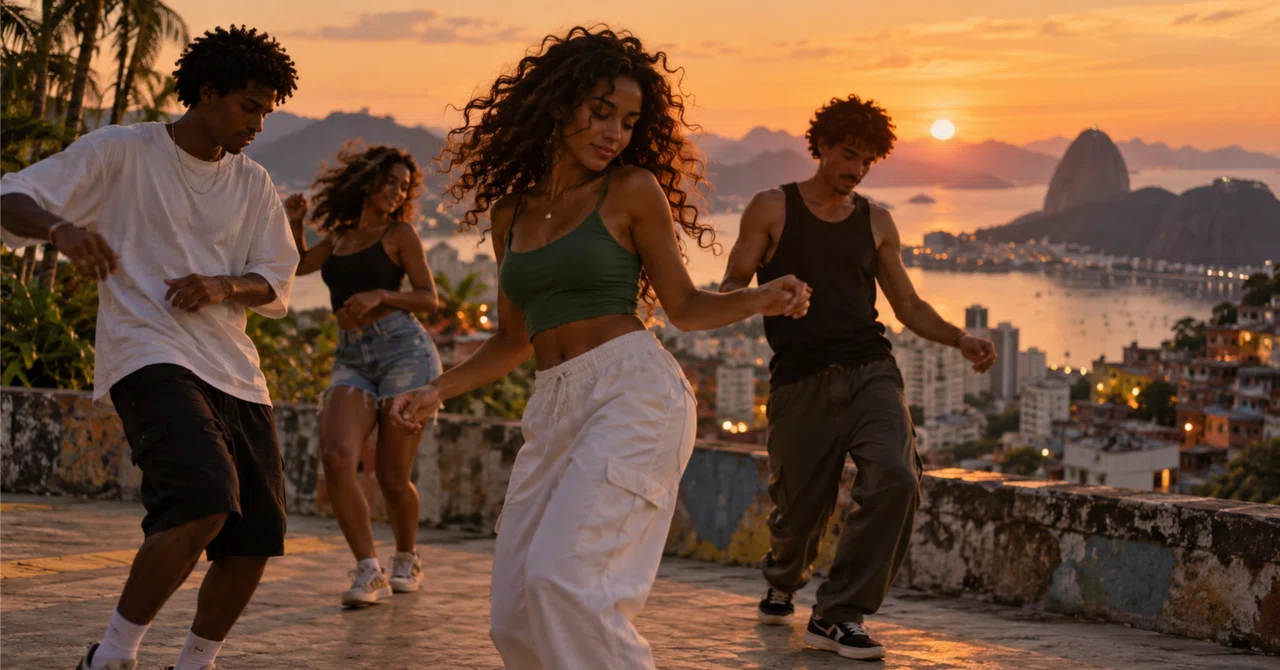
Every few weeks, an unfamiliar syncopation seizes the vertical video feed. In late September 2026, social feeds across Tokyo, London, and São Paulo saw millions of young creators mirroring the same rapid, hypnotic pattern: feet shifting laterally in tight micro-steps while arms counter-rotate in sharp precision. It was Brazilian funk dance footwork, circulating thousands of miles from its origin. Just months prior, global dance floors and feed algorithms spiked when pop icon Rihanna released her first single in three years, leaning entirely into syncopated African polyrhythms, as detailed in an EDM MAXX Report tracking her return to high-energy rhythm tracks.
The pattern is unmistakable. While social video spent years prioritizing waist-up hand gestures and lip-sync routines, algorithms are now rewarding full-body kinetic energy pulled straight from television history. From nineties line routines to the hyperactive footwork of Y2K music videos, retro dance trends are no longer nostalgic museum pieces. They are functioning as high-performance algorithmic currency.
📌 Key Takeaways:
- The Algorithmic Pivot: Platform distribution systems now heavily favor watch-time completion on complex physical choreography over static lifestyle clips or upper-body hand movements.
- The Nostalgia Mechanics: Proven television-era routines like the 1996 Macarena craze and 2000s MTV hip-hop tracks carry built-in generational recognition that stops mid-feed doomscrolling.
- Global Rhythms Dominate: The resurgence combines vintage line routines with polyrhythmic global styles, specifically Afrobeats steps and Brazilian funk footwork driving late 2026 virality.
From MTV Living Rooms to Algorithmic Feeds
Pop culture dance crazes were once engineered around communal television screens. In the mid-nineties, Los Del Río’s Spanish pop track birthed the Macarena craze, a routine that spent 14 consecutive weeks at number one on the Billboard Hot 100 in 1996. The choreography required little improvisation. It offered sixteen distinct, rigid beats that anyone at a wedding, ballpark, or school assembly could execute in unison.
Broadcast networks and cable music video blocks served as the central distributors. MTV’s Total Request Live dictated physical trends throughout the late 1990s and early 2000s. Viewers stood in front of CRT monitors trying to dissect the sliding footwork of early 2000s dance moves in videos by artists like Usher, Britney Spears, and Missy Elliott. Learning the choreography took weeks of rewind-and-pause discipline on VHS or DVD players.
That barrier vanished with broadband video. In 2013, the Harlem Shake phenomenon decentralized dance distribution entirely. Users no longer needed to learn technical steps from professional dancers. Thirty seconds of chaotic, masked flailing inside dorm rooms and corporate offices generated over 1 billion views on YouTube within a single month. It stripped away traditional musicality in favor of visual punchlines.
The Kinetic Mechanics That Keep Vertical Feeds Hooked
Why do older dance routines perform so well against modern recommendation engines? The answer lies in audience retention metrics. Modern vertical video algorithms calculate distribution based on completion rate, loop frequency, and user interaction within the first 2.5 seconds of playback.
Classic choreographies possess built-in structural hooks. Unlike freeform modern dancing, routines from the nineties dance craze revival rely on clear physical checkpoints. A viewer’s eye naturally locks onto the body’s silhouette to anticipate the next movement. When an experienced creator executes the syncopated steps of the Cha Cha Slide or Soulja Boy’s Crank That, audiences watch the clip multiple times simply to track the coordination.
Short-form video platforms spent their early boom years inundated with finger tutting and stationary chest pumps. Those micro-movements exhausted viewers by 2023. By contrast, full-body routines require visible spatial command. When dancers shift their balance across camera frames, they introduce dynamic visual motion that tricks the human brain into staying engaged through the video's end.
Three Decades of Dance Phenomena: 1995 to 2026
Dance trends reflect the physical spaces and media technology of their eras. The past thirty years highlight how distribution formats shifted the way people move their bodies.
| Era & Window | Signature Movement | Primary Distributor | Core Transmission Driver |
|---|---|---|---|
| 1995, 1999 | The Macarena & Line Dances | Terrestrial Radio, Cable TV | Mass physical gatherings and collective social mimicry |
| 2000, 2009 | Y2K Hip-Hop Steps & Crank That | MTV TRL, Early YouTube | Instructional video clips and peer-to-peer web sharing |
| 2010, 2019 | Harlem Shake, Whip/Nae Nae | YouTube Virality, Vine | Decentralized comedic parody and structured audio drops |
| 2020, 2024 | Bedroom Challenges & Renegade | Early TikTok, Instagram Reels | Upper-body isolation designed for narrow smartphone lenses |
| 2025, 2026 | Brazilian Funk Footwork & Afrobeats | Algorithmic Feed Recommendations | Complex polyrhythmic footwork, catalog revival trends |

Global Rhythms Overtake Domestic Bedroom Trends
The current viral cycle breaks away from western pop formulas. Over the past 18 months, cross-border choreography has outpaced traditional English-language dance challenges. The Afrobeats dance resurgence, anchored by intricate ankle footwork and grounded shoulder drops, transformed social feeds from static selfie showcases into dynamic dance studios.
This dynamic accelerated when major recording acts recognized the shift. When Rihanna re-entered the musical arena with an Afrobeats-centered dance track in May 2025, she tapped into movement cultures that originated across Lagos and Accra. These dances require musical timing that cannot be faked with simple video jump-cuts.
Similarly, the worldwide wave of Brazilian funk dance in 2026 demonstrates how hyper-local movements achieve global ubiquity. Known locally as the Passinho or specific street-funk foot movements, the style relies on split-second weight transfers and syncopated heel taps. Young creators in Asia and Europe, previously accustomed to simple gesture loops, now practice for hours to master Brazilian street choreography, proving that technical difficulty increases watch time.
Ownership, Royalties, and the Business of Dance IP
Behind the nostalgic aesthetics sits a massive commercial engine. For decades, choreographers were treated as disposable background talent. Record labels owned the masters, artists collected performance royalties, and the creators who invented the era's signature steps walked away with minimal compensation.
That dynamic shifted when choreographers began filing for copyright protections. Pioneering figures like JaQuel Knight, who copyrighted the routines behind massive mid-2000s music videos, proved that physical movement sequences could qualify as intellectual property. By 2025, digital choreography licensing agencies were brokering five- and six-figure deals between legacy dance creators and tech platforms seeking to gamify classic routines.
Legacy record catalogs benefit directly from this revival. When a 20-year-old Y2K hip-hop track goes viral due to a retro footwork challenge, catalog streaming numbers frequently spike by 300% to 700% across major streaming platforms. Record companies are no longer treating old choreography as historical trivia. They actively pitch archive routines to dance influencers to monetize forgotten publishing assets.
Frequently Asked Questions (FAQ)
Q1: Why are vintage dance trends gaining more views than newly invented routines?
A1: Classic choreography benefits from cross-generational appeal. Older viewers stop scrolling due to nostalgic recognition, while younger viewers interact because television-era routines generally feature higher physical complexity than quick mobile-native trends.
Q2: How do algorithms measure whether a dance video is worth distributing?
A2: Video delivery algorithms prioritize completion rates, loops, and saves. Videos that display intricate body movement or rapid footwork encourage viewers to pause, rewind, and rewatch the clip to study the technique, which triggers higher ranking signals.
Q3: Can choreographers legally copyright retro social media dance moves?
A3: Individual dance steps or brief social gestures cannot be copyrighted under intellectual property law. However, cohesive, original choreographic works with defined narrative sequences can be registered with copyright offices, establishing licensing frameworks for digital media.
The Endless Loop of Pop Choreography
Physical pop culture runs in continuous circles. The physical routines that filled dance studios and living rooms thirty years ago are finding new life on mobile displays. By trading easy finger gestures for complex polyrhythmic footwork, today’s creators have turned retro physical choreography into the internet’s most effective visual magnet. The platform distribution rails have completely evolved, but the human impulse remains identical: see a compelling beat, learn the physical steps, and join the collective rhythm.