Fresh Port Oysters in Landlocked Tochigi? The Real Story Behind Tonarie Utsunomiya's New Shack
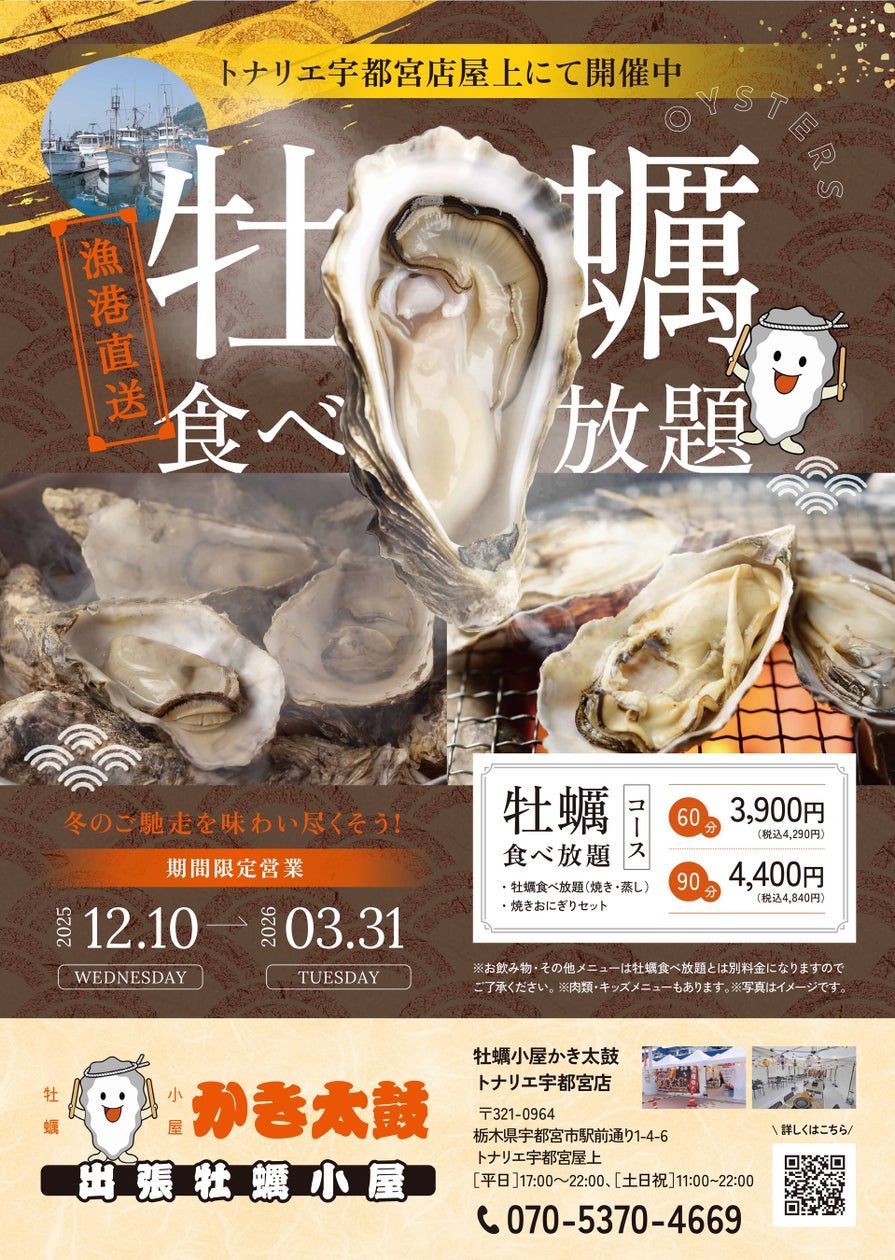
Utsunomiya built its culinary reputation on pork and garlic. As the undisputed gyoza capital of Japan, this inland city surrounded by cedar forests and riverbeds rarely features on the itineraries of seafood purists. Yet walking out of the west exit of JR Utsunomiya Station this winter, the sharp scent of sea brine and smoldering charcoal cuts through the mountain air. A coastal seafood market has planted roots directly on the pavement of the Tonarie commercial complex, challenging the city's landlocked dining identity.
The arrival centers on the seasonal opening of Kakidaiko (かき太鼓), a traveling oyster shack that launched on December 10, according to official dispatch notices documented in a PR TIMES report. Positioned just a 60-second walk from the transit turnstiles, the pop-up turns industrial steel tables into charcoal grilling pits. For Tochigi diners who routinely drive two hours down to Ibaraki's coast or Tokyo's Toyosu Market for coastal shellfish, the prospect of piling unlimited bivalves onto tabletop wire grates has triggered steady queues and heated discussions across regional food forums.
📌 Key Takeaways:
- The Arrival: Traveling oyster pop-up Kakidaiko opened at Tonarie Utsunomiya, serving port-direct shellfish directly outside the station's west exit.
- The Dining Model: Tabletop charcoal grills support both bucket-sized orders and high-volume winter oyster feasts, contrasting with the city's traditional izakaya formats.
- The Operational Window: The winter pop-up operates through early spring 2026, targeting cold-weather shellfish peaks before seasonal operations pack up.
How a Coastal Seafood Shack Landed in Japan's Gyoza Capital
Tochigi Prefecture possesses no coastline. For generations, local seafood consumption relied on dried goods, freshwater ayu from the Kinugawa River, or wholesale shipments passing through regional distribution hubs. Dining out in downtown Utsunomiya typically meant choosing between competing dumpling chains or yakitori basements. Winter changes that equation. Mobile oyster huts, traditionally known along the Seto Inland Sea as kakigoya, have expanded outward from regional fishing ports into urban centers across Honshu.
Kakidaiko functions on an aggressive pop-up timeline. By utilizing temporary heavy-duty tents, vinyl windbreakers, and modular exhaust hoods, the operators build an authentic coastal fishing village atmosphere in an urban plaza. The sensory contrast is immediate. Instead of the polished glass and quiet climate control inside Tonarie's retail floors, guests step into a drafty, crackling pavilion where grease guards and canvas work gloves sit alongside heavy shucking knives. Shells pop under sudden steam bursts. The setup mirrors ports in Miyagi and Hiroshima, transported wholesale to a commuter hub.
The All-You-Can-Eat Formula: What Kaki Daiko Delivers to Diners
Navigating an oyster feast in an inland city requires understanding how pricing and supply actually operate. True unlimited dining (tabehoudai) for whole shellfish is a high-risk operational proposition for restaurants due to strict wholesale purification standards. Most traveling shacks balance their menus between timed all-you-can-eat runs and bulk weight-based metal buckets.
At Tonarie Utsunomiya, diners sit before a sunken charcoal trough. Staff deliver heaping trays of raw, in-shell oysters sourced directly from coastal partner ports. Diners place the shells flat-side down on the grate, wait for the seawater inside to boil, flip them with tongs, and pry the shells open once the hinge yields. The result is sweet, intensely briny meat cooked in its own natural liquor. Alongside standard grill platters, seasonal promotions frequently highlight raw oyster flights, seafood skewers, fried oyster cutlets (kaki furai), and clam chowder, catering to commuter groups looking for quick after-work gatherings.
Comparing Utsunomiya's Oyster Dining Options in 2026
Diners seeking high-volume shellfish in Utsunomiya face different structural options depending on whether they prioritize outdoor market atmosphere, seated course menus, or all-you-can-eat deals. The market breaks down into distinct tiers across the station district.
| Dining Style | Average Cost per Person | Key Advantages | Operational Trade-offs |
|---|---|---|---|
| Station Pop-Up (Kakidaiko) | ¥3,000, ¥5,500 | Direct charcoal grilling, authentic port vibe, 1-min walk from JR gates | Semi-outdoor seating, table charcoal fee, seasonal pop-up duration |
| Downtown Raw Oyster Bars | ¥5,000, ¥8,000 | Single-origin raw varieties, wine pairings, heated indoor environment | Premium pricing per piece, rarely offer unlimited eating formats |
| Standard Seafood Izakaya | ¥3,500, ¥4,500 | Diverse non-seafood menu options, nomihoudai (open bar) packages | Frozen inventory common, lack of live tabletop charcoal cooking |
Logistics and Safety Behind Port-Direct Shellfish in Tochigi
Transporting live bivalves into an inland prefecture requires a cold chain that leaves no room for temperature drift. Oysters are filter feeders. Without rigorous testing and rapid transit, raw and lightly grilled shellfish present clear health risks. Kakidaiko relies on centralized coastal packing houses that subject harvest batches to UV-sterilized seawater tanks for 24 to 48 hours before packing.
This purification process purges bacteria and silt from the digestive tracts of the oysters. Packed under continuous ice slurries, shipments travel down express highways, arriving at Utsunomiya Station within 18 hours of clearance. When shells hit the charcoal, internal temperatures must reach at least 85°C (185°F) for over 90 seconds to neutralize potential pathogens, particularly norovirus. The pop-up supplies diners with kitchen timers and step-by-step cooking diagrams on every table, making self-grilling both accessible and structurally sound for casual diners.
Diner Realities: Community Buzz and Hidden Costs at the Grill
Social media channels across Tochigi filled with tabletop sizzle videos within 48 hours of the Tonarie opening. Local office workers and university students praise the accessibility, noting that finding fresh grilled seafood platters usually meant organizing weekend trips to the Pacific coast. However, user reviews also note key practical realities that first-time visitors must plan around.
First, charcoal grilling generates smoke and steam. The pop-up provides plastic bags to protect winter coats and personal luggage, but smell retention is unavoidable. Second, billing includes ancillary fees typical of outdoor food stalls: a baseline seating or charcoal fee (often ¥300, ¥500 per person) is added alongside shellfish orders. Condiments like butter, ponzu, lemon wedges, and cheese may carry small add-on charges. Those aiming for an economical evening should track side items carefully, as casual grazing quickly accumulates on the final tab.
Frequently Asked Questions (FAQ)
Q1: Does Kakidaiko at Tonarie Utsunomiya require advance reservations?
A1: Walk-ins are welcomed, but weekend evening slots frequently fill up quickly. Arriving right at lunch opening or during late afternoon off-peak hours avoids the longest waiting lines.
Q2: Can diners eat oysters raw at this outdoor pop-up?
A2: Grilling is the primary method at table stations. Specific batches certified strictly for raw consumption are occasionally featured as specialty plates, but all standard bucket selections must be thoroughly grilled over charcoal before eating.
Q3: How long will the oyster shack stay in Utsunomiya?
A3: Traveling oyster shacks operate seasonally through the cold months, typically wrapping up between late February and late March as regional harvest cycles end. Check local Tonarie facility notices for exact closing dates.
Navigating Utsunomiya's Evolving Winter Food Culture
The success of an open-air seafood pavilion at Tonarie underscores an appetite for experiential dining in regional transit hubs. Modern diners no longer look exclusively for standardized indoor chain restaurants when commuting through JR stations. They seek tactile, communal meals that break regional stereotypes.
While Utsunomiya will never surrender its title as Japan's premier dumpling destination, the winter arrival of Kakidaiko proves that inland cities can successfully tap coastal traditions. For commuters and travelers passing through Tochigi before spring arrives, pulling on a pair of work gloves and shucking steaming bivalves over live coals provides a rare taste of the sea hundreds of meters above sea level.