From Childhood to Son of Ogre: The Complete Evolution of Baki Hanma's Hair Over 30 Years
When Keisuke Itagaki launched Grappler Baki in Weekly Shonen Champion back in 1991, few anticipated that the protagonist's jagged mop would become an enduring silhouette in martial arts fiction. Across three decades of continuous serialization, the visual identity of Baki Hanma shifted alongside the manga’s anatomical distortions. What began as a boxy late-Showa schoolboy haircut morphed into the textured, gravity-defying fringe that dominates modern fitness feeds and barber request queues worldwide.
The spike in real-world interest peaked noticeably between 2024 and 2026. Fuelled by TikTok gym transformations and Netflix’s multi-season run of Baki Hanma: Son of Ogre, millions of young men began taking screenshots of animated brawlers to their local barbershops. Recreating the look in real life reveals a deliberate storytelling choice by Itagaki: Baki’s hair is not just an aesthetic flourish, but an evolving visual barometer of his psychological estrangement from his monstrous father.
📌 Key Takeaways:
- The Design Arc: Baki's hair transformed from a standard 1990s delinquent taper into a disconnected, razor-textured mullet hybrid engineered to highlight cranial trauma and kinetic motion.
- The Barbershop Reality: Translating the fictional silhouette to real hair requires an undercut textured layers technique with heavy point-cutting, disconnected temple tapers, and high-hold matte styling pastes.
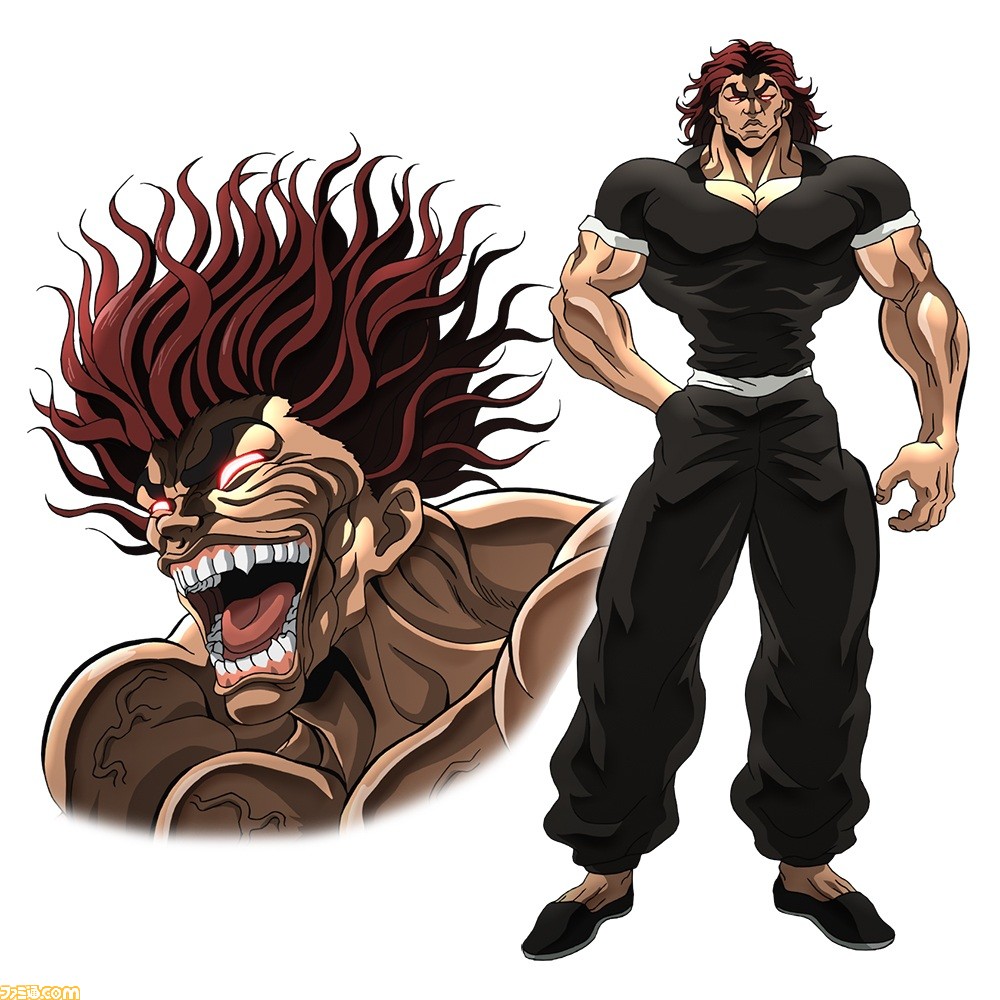
- The Thematic Mirror: Unlike Yujiro Hanma’s untamed, predatory mane of cascading curls, Baki’s controlled, forward-falling spiky fringe visually reinforces his rejection of brute apex predation in favor of calculated counter-fighting.
From 1991 Delinquent to Modern Combat Silhouette
Keisuke Itagaki began drawing Baki Hanma during the golden era of juvenile delinquent manga. Early chapters of Grappler Baki show a 13-to-17-year-old fighter sporting thick, blocky sideburns and a relatively uniform crown. The original Grappler Baki hair design owed an obvious debt to classic boxing manga like Ashita no Joe, emphasizing youth, stubby volume, and rounder cranial silhouettes.
That visual innocence evaporated as the narrative entered the Maximum Tournament arc. Itagaki’s linework turned hyper-muscular and jagged. To match the deepening scar tissue across Baki's back and torso, the illustrator radically changed the character's crown. The top length separated into individual blade-like clumps, while the nape lengthened into a combat mullet. This specific shift allowed Itagaki to draw dynamic head movement: whenever Baki absorbs a hook or ducks under a spinning back kick, the whipped hair strands track the vector of the impact across the page.
By the time serialization transitioned into Baki: Son of Ogre and the prehistoric battles against Pickle, the haircut reached its definitive shape. It became a disconnected hybrid: tight tapers around the temporal bones, extreme interior thinning, and heavily razored exterior locks that cascade forward over the brow while maintaining volume down the neck.
Deconstructing the Silhouette: Line Art Meets Barber Mechanics
Replicating the messy layered anime cut in a salon chair requires unpicking comic-book physics. In the manga panels, Baki’s locks defy gravity without appearing greasy or rigidly frozen in place. Translating this requires an experienced hand with texturizing shears rather than basic clippers.
A functional Baki real life haircut relies on an undercut textured layers foundation. The sides must be cut down with a low-to-mid taper fade around the ear line, keeping enough density at the parietal ridge to anchor the overhang. The crown demands scissor-over-comb work with aggressive channel cutting. Barbers must remove significant weight from the interior while leaving the outer shell between 3.5 and 5 inches long. This gives the hair enough lightness to lift from the root while maintaining deep, jagged clumps across the forehead.
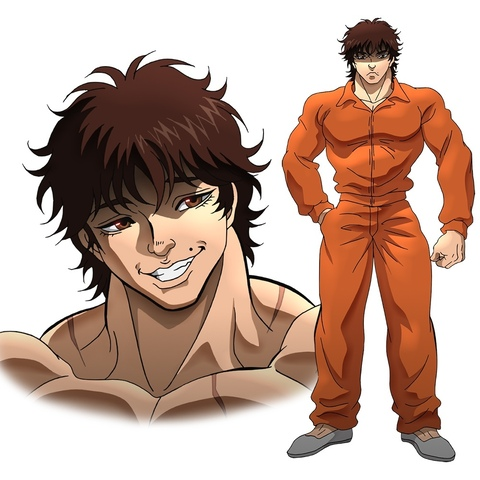
The fringe separates this cut from conventional modern crops. Rather than a blunt French crop or a sweeping curtain, Baki sports an uneven, point-cut textured spiky fringe. The center strands hang lower, grazing the bridge of the nose, while the perimeter pieces taper upward toward the temples to expose the brow. The result mimics an anime mullet taper fade without ballooning into excessive fullness at the back.
Three Decades of Stylistic Redesigns: Manga Arcs vs. Screen Adaptations
The visual overhaul of Baki Hanma across thirty years tracks across distinct production milestones, differing studio budgets, and Itagaki's own shifting art style.
| Manga Arc / Adaptation Era | Core Hair Characteristics | Artistic Function & Physical Form |
|---|---|---|
| Childhood Arc (1991, 1994) | Dense, rounded bowl-cut hybrid with blocky side locks | Reflects innocence, youth, and standard early-90s delinquent conventions. |
| Maximum Tournament (1995, 1999) | Pointed, separated clump spikes with mid-length nape | Sharp line vectors highlight head movement, whiplash, and brutal ring impacts. |
| Group TAC Anime (2001) | Solid reddish-brown geometric blocks, flatter profile | Simplified cell animation constraints; muted highlights and rigid movement. |
| Son of Ogre / TMS Anime (2018, 2023) | Multi-layered, high-contrast digital gloss with razor ends | Modernized Son of Ogre anime aesthetic; defined locks animate independently. |
| Baki Dou & Rahen (2018, 2026) | Thicker, wilder, wind-swept crown with broader base | Signals physical maturity and parity with ancient warriors like Musashi and Sukune. |
Yujiro vs. Baki: The Visual Anatomy of Parental Opposition
In character design, hair functions as psychological subtext. Nowhere is this clearer than in the Yujiro Hanma hair comparison. The father, crowned "The Strongest Creature on Earth," wears a mane that operates outside human social order. Yujiro's hair is massive, fiery, and deeply curled, fanning backward like a roaring fire or a male lion’s ruff. It demands space, broadcasting absolute dominance and predatory freedom. His forehead is perpetually bare, exposing an intimidating furrowed brow that never flinches.
Baki stands in stark visual resistance. His hair falls downward and forward, guarding his forehead like athletic headgear. Where Yujiro’s silhouette expands into external space, Baki’s locks frame his jaw, drawing the viewer's eye inward to his stoic expression and scarred skin. The son’s textured spiky fringe implies discipline, restraint, and calculated patience. It proves that despite sharing the demonic Hanma bloodline, Baki remains grounded in human empathy and mortal struggle rather than mythic apex predation.
The Real-World Craze: Haircut Tutorial and Styling Protocols
Achieving this look on human hair requires strict texture management. Straight Asian, Hispanic, or thick Caucasian hair holds the cut easiest. Men with ultra-fine, pin-straight strands or tight curl patterns will struggle without pre-treatment.
When entering a barbershop for a Baki Hanma haircut tutorial execution, skip showing a 2D anime illustration. Instead, present three concrete instructions to your stylist:
First, ask for a low disconnected scissor taper on the temples while preserving moderate fullness at the occipital bone and base of the neck. Second, demand deep point-cutting and slithering throughout the top to remove interior mass while preserving 4 inches of length on top. Third, ask for an uneven, piecey fringe cut with razor techniques rather than shears to prevent any solid, heavy lines.
Daily styling requires a two-step process. Apply sea salt spray or texturizing liquid to damp roots, blow-drying with head tilted forward while finger-scrunching to build volume. Once bone-dry, work a nickel-sized amount of high-hold, zero-shine matte clay or styling paste between your palms until warm. Rake the product from the back forward, twisting individual locks between thumb and forefinger over the forehead to establish those signature dagger-like separations.
For community builders crafting a Baki Hanma cosplay wig, the rules differ. Standard heat-resistant synthetic fiber caps require extensive thinning shears to strip roughly 40% of the fiber bulk. Crimping the roots with a micro-iron provides structural foundation, after which artists carve the jagged perimeter using thinned craft glue or hair cement rather than wax, ensuring the distinct points survive heat and movement on convention floors.
Frequently Asked Questions (FAQ)
Q1: What exact hair length is needed to pull off the real-life Baki cut?
A1: You need a minimum of 4 inches of hair on top and in the fringe zone before visiting a barber. If your hair is shorter than 3 inches, the fringe will stick straight out like an urchin rather than draping downward into jagged, forehead-framing clumps.
Q2: Does this haircut work for naturally curly or coily hair?
A2: Yes, but the resulting silhouette differs from the anime. Natural wave patterns create a textured taper mullet with rounded clump definition rather than razor-sharp anime points. To achieve the exact pin-point spikes shown on screen, natural curls require chemical straightening or ceramic flat-iron prep before styling.
Q3: How often does the haircut require maintenance to retain its shape?
A3: Every 2 to 3 weeks for the neckline and temple taper. Because the visual weight relies heavily on the high contrast between close-cut sides and long, piecey top layers, even half an inch of temple regrowth softens the combat aesthetic into an unkempt bowl cut.
The Enduring Legacy of Keisuke Itagaki's Character Styling
The cultural persistence of Baki Hanma’s hair demonstrates the power of character design grounded in functional anatomy. Keisuke Itagaki never drew hair as a decorative accessory sitting atop a skull. Instead, he treated the follicles as an extension of the fighter's kinetic energy, twisting and parting them around impact points, blood splatters, and muscle flexes.
As the Baki universe continues into modern sagas, the aesthetic balance of the messy layered anime cut remains fundamentally unchanged. It stands as a visual marker of grit: a haircut born in the underground fighting rings of 1990s Tokyo that continues to influence gym culture, cosplay artistry, and contemporary street styling across the globe.