From Fan Art to Interactive Roleplay: The Evolution of Demon Slayer OCs Through 2026
Every long-running Shonen phenomenon spawns its own subculture of fan-made tributes, but Koyoharu Gotouge’s Taisho-era epic triggered an uncommonly precise creative movement. Across Japanese forums and international fan communities, the search term 鬼滅の刃 オリキャラ (Demon Slayer original characters) evolved from modest sketchbook doodles into an intricate ecosystem of worldbuilding, custom combat physics, and interactive software. Fan enthusiasm rarely settles for passive consumption. In the franchise's early peak, an Anime News Network Report spotlighted an elementary school student recreating the Dimensional Infinity Fortress in Blender, signaling how technically ambitious this audience could be. By 2026, that same technical impulse powers fighting game modifications and large language model roleplay bots.
The global surge in original characters reflects the franchise’s rigorous in-universe logic. Gotouge left behind clear structural rules: a fixed corporate hierarchy, distinct sensory combat styles, and tragic supernatural costs. Those guardrails gave creators a plug-and-play sandbox that felt authentic rather than chaotic.
📌 Key Takeaways:
- The Structural Engine: Clear canon constraints, such as five core breath derivations and fixed corps ranks, provide the structural backbone that keeps fan creations grounded.
- The Medium Shift: Fandom migrated systematically from static 2D illustrations on Pixiv to interactive Discord roleplay, dedicated web generators, and real-time AI agents.
- Interactive Combat: Modern community efforts focus heavily on complex battle staging, modifying 3D arena fighters, and simulating sprawling Infinity Castle skirmishes.
The Taisho Framework That Sparked Fan Fiction Worldbuilding
Most anime fan fiction struggles with power inflation. Creators invent overpowered protagonists who instantly outclass the source material, destroying narrative tension. Gotouge's universe resisted this breakdown because its power ceiling was already established and unforgiving. Sun Breathing sat at the apex. Every other style represented an adaptation, an accommodation for human physical limits.
This biological bottleneck shaped early fan fiction worldbuilding. Writers and illustrators did not need to invent an entirely new cosmological system. Instead, they built branches off Water, Flame, Wind, Stone, and Thunder. If a creator wanted a character focused on defensive redirection, they designed Breath of the Mirror as an offshoot of Water. A character using brutal concussive strikes became a derivative of Stone. The rigid hierarchy of Demon Slayer Corps ranks, from the humble Mizunoto foot soldier to the elite Pillar, gave writers an authentic progression track. Characters had to earn their survival through grueling Final Selection exams, broken bones, and psychological scars.
Engineering Custom Breathing Styles and Demonic Arts
Designing an original character within this community requires strict mechanical consistency. The subculture developed standardized OC character sheet templates circulating across Reddit, Twitter, and specialized wikis. These sheets function like tabletop roleplaying dossiers, demanding specific tactical explanations rather than vague power statements.
Nichirin sword customization sits at the center of any slayer profile. Enthusiasts obsess over blade geometry, tsuba engravings, and mineral coloration. A dual-wielding swordsman using Breath of Frost might sport pale cyan steel, while a practitioner of Breath of Ash carries a serrated, soot-black blade designed to shred demon flesh rather than slice it clean. The Demon Slayer community lore holds that Nichirin blades reflect their owner's personality and breath affinity, turning weapon design into visual shorthand for psychological depth.
The demonic counterpart demands equal discipline. Crafting Blood Demon Art concepts requires balancing reality-warping abilities with concrete physical vulnerabilities. High-ranking fan creations avoid omnipotence. A demon might manipulate spatial acoustics or crystallize human blood into barbed projectiles, but the power always carries a tactical counter: a sensory blind spot, a recovery delay, or an intense metabolic demand for human flesh. This attention to systemic balance makes fan-made Hashira and Upper Rank demons feel like authentic, lost chapters of the official manga.
A Decade of Technical Iteration: From Pixiv Threads to Modern Engines
The tools fans use to build and share their characters have shifted drastically over the past ten years. What began as solitary line art shared on Japanese art boards evolved into collaborative software engineering.
| Phase | Primary Creative Medium | Core Technical Characteristics |
|---|---|---|
| 2016, 2019 | Pixiv & DeviantArt 2D illustrations | Hand-drawn character sheets, static color palettes, basic lineage flowcharts. |
| 2020, 2023 | Discord roleplay servers & Picrew generators | Text-based dice combat, modular demon slayer OC maker tools, collaborative lore bibles. |
| 2024, 2026 | Neural roleplay engines & PC arena fighter mods | Context-aware prompt matrices, imported 3D rigging, procedural battle staging. |
The introduction of modular web generators simplified visual entry barriers. Users without digital illustration skills began combining haori patterns, scars, uniform modifications, and blade hilts via layered canvas tools. From there, written roleplay communities organized multi-tiered campaigns on private platforms, establishing dedicated game-master systems to adjudicate limb loss, poison accumulation, and stamina depletion.

The Shift Toward Interactive AI Roleplay and Game Modifications
The modern era of Kimetsu no Yaiba roleplay relies on real-time computational interaction. Static text bios on forums no longer dominate the landscape. Instead, creators feed structured lore documents into specialized neural character engines, programming conversational agents that emulate the specific linguistic quirks, moral dilemmas, and combat styles of their creations.
A well-prompted fan-made Hashira bot does not simply answer questions. It acts according to internal emotional parameters: fear of the dark, survivor's guilt from the Final Selection, or contempt for weaker slayers. Users stage grueling sparring sessions where the engine calculates whether a Fourth Form slash deflects incoming subterranean spikes. The tactile feedback loop keeps writers engaged for weeks, testing their original lore against simulated adversaries.
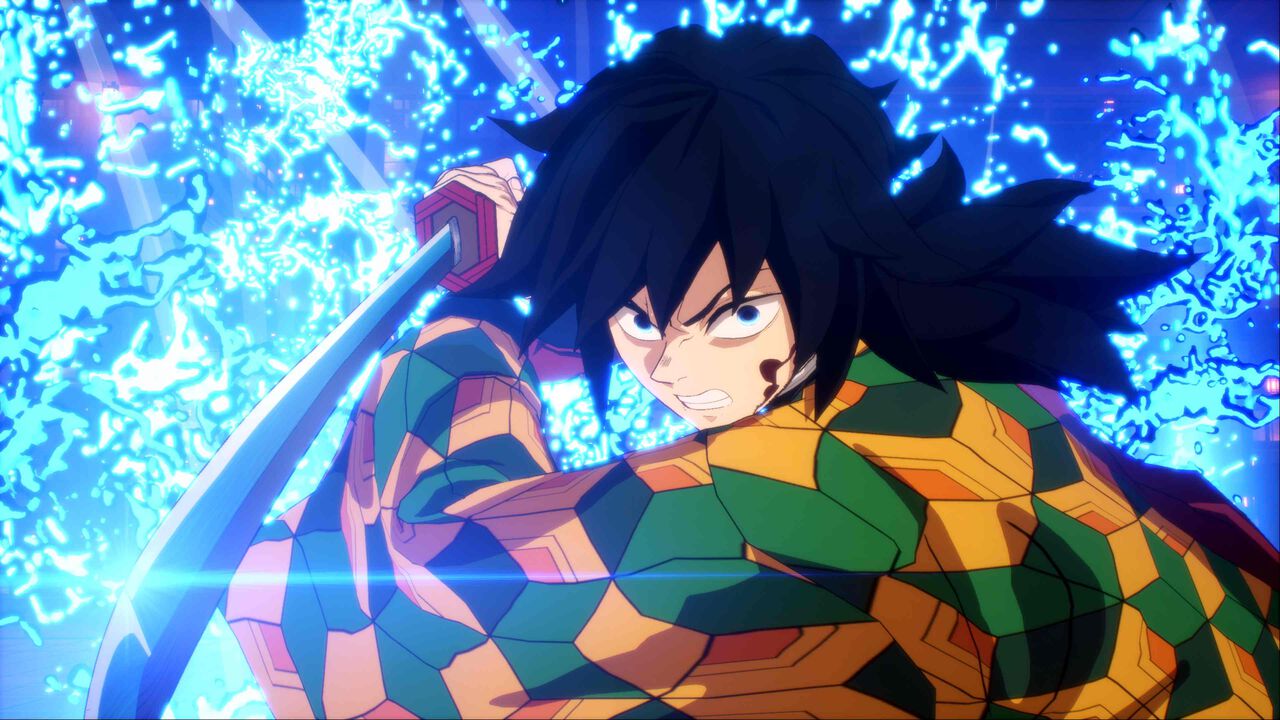
Simultaneously, PC gaming communities turned their attention to commercial fighting games like CyberConnect2's The Hinokami Chronicles. Talented modders swap character models, rewrite particle emitter scripts, and map custom Nichirin sword strikes onto existing character skeletons. A fan who spent three years illustrating a custom Shadow Breathing practitioner can now watch that character execute high-speed combos in a fully rendered 3D space, bridging the gap between amateur fiction and commercial production quality.
Infinity Castle Battle Concepts and Community Storytelling
The narrative climax of Gotouge's manga redefined how fans approach collective storytelling. The shifting wooden architecture of Nakime’s fortress became the gold standard for high-stakes fan campaigns. Infinity Castle battle concepts allow writers to isolate their characters in shifting, gravity-defying rooms, forcing high-mortality confrontations without disrupting the main canon storyline.
In these multi-creator story arcs, plot armor disappears. Writers intentionally subject their beloved creations to gruesome consequences. Swords shatter, Nichirin blades are dropped across bottomless chasms, and slayers sacrifice limbs to pin an Upper Rank demon until dawn. This willingness to embrace tragedy mirrors Gotouge's original editorial voice. The subculture recognizes that an original character gains weight not through effortless victory, but through meaningful, agonizing sacrifice.
Frequently Asked Questions (FAQ)
Q1: What prevents a Demon Slayer original character from feeling overpowered?
A1: Ground the character in physical limitations. Authentic slayers must adhere to human biology: they cannot regenerate severed limbs, their lungs rupture under prolonged breathing overuse, and their blades only cut demons if forged from genuine Nichirin ore. For demons, ensure their Blood Demon Art has a clear cost or sensory blind spot that slayers can exploit.
Q2: How do writers successfully branch a custom Breathing Style off the core five elements?
A2: Trace the physical lineage directly to Water, Flame, Wind, Stone, or Thunder. For instance, an agile, multi-strike form like "Breath of Locusts" logically descends from Wind, borrowing its aggressive velocity while trading wide area-of-effect damage for rapid precision stabs.
Q3: What are the primary platforms for Kimetsu no Yaiba roleplay in 2026?
A3: Writers congregate on dedicated community Discord hubs utilizing custom combat dice bots, specialized character engines like Character.ai and Janitor AI for solo sparring, and 3D modding forums dedicated to modifying arena fighter assets on PC.
The Enduring Cultural Footprint of Kimetsu Fan Creation
Fan-created characters are often dismissed as fleeting digital daydreams, yet the scale of original creation surrounding Gotouge’s work proves otherwise. By providing a clean structural grammar of swords, breathing techniques, and demonic curses, the franchise gave a generation of writers and digital artists an accessible vocabulary for their own storytelling.
Whether realized as a rough pencil sketch on social media, an interactive dialogue model running on local hardware, or an elaborate 3D arena mod, these original creations reflect a genuine passion for the source material. As the cinematic adaptations complete their run, the universe survives not solely through licensed retail merchandise, but through the hundreds of custom Hashira standing guard in the digital corners of the community.