From Fan to Center Stage: The Journey Behind the Viral Niconico Chokaigi Rin Cosplay
When the doors opened at Makuhari Messe for Niconico Chokaigi, thousands of fans flooded the exhibition halls to celebrate peer-driven internet culture. Amid the sea of elaborate character recreations, one particular tribute captured immediate, widespread attention across social media feeds: a remarkably faithful Kagamine Rin presentation brought to life by Japanese cosplayer Hyakukoshi Rai (known online as Momokoshi Rai). As highlighted in an in-depth profile by the Excite エキサイト Report, Rai fulfilled a lifelong childhood dream as an admitted "Vocalo-chu" (obsessive Vocaloid fan), transforming decades of subcultural passion into an obsessive, stitch-by-stitch recreation of Crypton Future Media's legendary virtual singer.
The viral reaction to Rai’s Kagamine Rin costume was not merely an accident of event photography. It marked a distinct inflection point in Japanese anime convention culture, where mass-manufactured, off-the-rack garments are increasingly challenged by museum-grade artisan fabrication. Recreating Kagamine Rin, first introduced alongside her counterpart Kagamine Len in December 2007, demands far more than a standard school uniform build. It requires solving intricate textile geometry, lightweight headpiece engineering, and color calibration that survives harsh convention lighting.
📌 Key Takeaways:
- The Viral Breakthrough: Lifelong Vocaloid devotee Hyakukoshi Rai dominated social feeds at Niconico Chokaigi by presenting an obsessively accurate, custom-tailored Kagamine Rin.
- Artisan Craftsmanship: The project succeeded due to custom sailor collar detailing, thermoformed headset fabrication, and micro-calibrated wig styling techniques rather than generic factory presets.
- Cultural Significance: The viral response underscores how classic 2000s Crypton Future Media vocal synthesizer icons retain enduring creative authority in contemporary convention spaces.
The Subcultural Roots of a Lifelong Vocaloid Passion
For Hyakukoshi Rai, stepping onto the convention floor as Kagamine Rin was deeply personal. Growing up during the golden age of Niconico Douga, Rai spent her formative years immersed in producer-driven music videos, community derivative art, and early Vocaloid culture. Long before high-budget stage spectacles and holographic concerts became international industry standards, Vocaloid was an open-source creative movement powered entirely by grassroots animators and bedroom composers.
Rai openly described herself as a long-standing fan whose ambition had always been to represent Rin at Japan’s premier internet culture festival. Taking on an avatar recognized by millions carries substantial creative pressure. Rin's original visual identity, conceived by illustrator KEI, blends stylized mid-2000s digital aesthetics with retro Japanese school uniform silhouettes. When translating two-dimensional computer illustrations into physical reality, poorly considered materials often look flat, synthetic, or garish. Rai approached the project with the discipline of a character archivist, determining that capturing the character’s youthful stage energy meant rejecting mass-produced fast-fashion cosplay sets entirely.
Deconstructing the Kagamine Rin Silhouette: Sailor Collar Detailing and Fabric Choice
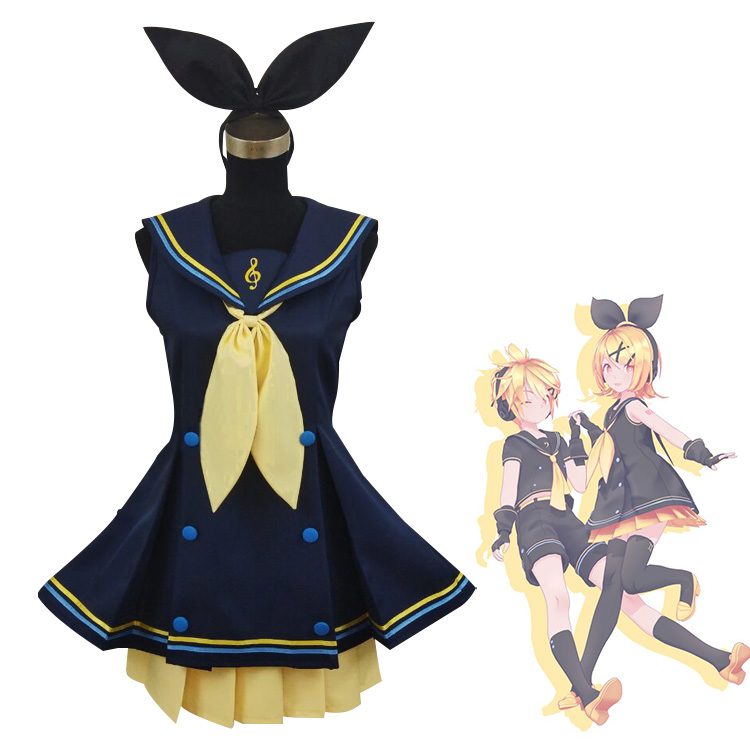
The core challenge of any authentic Kagamine Rin cosplay costume rests in balancing structural stiffness with stage mobility. Rin’s outfit consists of a cropped white sailor shirt, charcoal shorts, detached sleeves, and dramatic leg warmers reminiscent of mid-2000s subculture fashion. Mass-produced commercial versions frequently use single-ply polyester or thin nylon, causing the signature sailor collar to droop and the sleeve flares to collapse under their own weight.
Rai systematically re-engineered these core components. She selected a high-density, matte-finish cotton twill for the shirt body, giving the torso a crisp silhouette while preventing unwanted fabric sheer under convention flashbulbs. The oversized sailor collar detailing received dual-layer fusible interfacing to hold its horizontal wing structure independently across Rai’s shoulders. The bright yellow accents, the character's definitive sonic color, were matched precisely against official Crypton Future Media Pantone keys rather than neon fluorescent alternatives. This avoided the synthetic digital bleed that often ruins convention photos taken under high-output indoor sodium fixtures.
The flared detached leg warmers presented another mechanical hurdle. In standard stage performance costume design, oversized bell bottoms tend to twist or drag along exhibition floors. Rai integrated hidden interior elastic garter stays and sculpted vertical boning along the interior seams. This ensured the flares retained their exaggerated, bell-shaped drape while allowing fluid walking and dynamic stage posing without constant manual adjustment.
Fabrication Metrics: Artisan Tailoring Versus Commercial Production
Understanding the gap between viral convention builds and standard consumer costumes requires analyzing the materials, construction labor, and financial investment. The following data breakdown illustrates the key technical differences seen in top-tier exhibition pieces like Rai’s versus standard factory-direct purchases.
| Costume Component | Off-the-Rack Commercial Set | Artisan Exhibition Build (Rai-Spec) |
|---|---|---|
| Collar & Shirt Structure | Single-ply thin polyester, unlined collar | Interfaced heavy cotton-twill, structured drape |
| Headset Fabrication | Hollow blow-molded PVC, generic wire boom | High-density EVA foam, acrylic inserts, custom mic |
| Wig Construction | Unstyled synthetic, fixed high-gloss finish | Multi-tonal fiber blending, crimped roots, hairspray-set |
| Assembly Labor | 0 hours (mass manufactured) | 45, 80 hours tailoring, testing, and prop finishing |
| Estimated Build Cost | $45, $85 USD | $250, $450 USD (raw materials & hardware) |
Precision Engineering: Headset Fabrication and Wig Styling Techniques
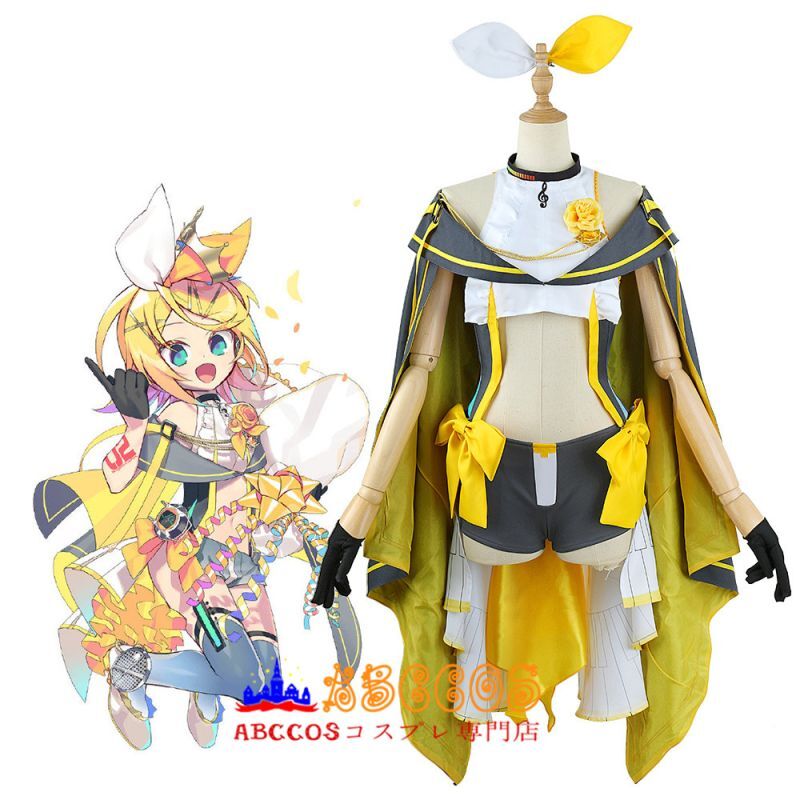
Vocaloid cosplay stands or falls on two critical accessories: the cybernetic communication headset and the character's hairstyle. Rin's hair design features a short, choppy yellow bob topped by an oversized white bow that mimics rabbit ears. In anime space, this looks natural; in three dimensions, it frequently tilts backwards or flattens under movement.
Rai tackled the headpiece by combining traditional wig styling techniques with modern cosplay prop crafting. She selected heat-resistant synthetic fiber wefts featuring three complementary blonde tones: a rich base gold, a pale lemon highlight, and an apricot under-layer to simulate natural hair depth. Using an industrial crimping iron at low heat, she textured the root layer beneath the crown. This hidden step provided structural volume without needing excessive wet products. The iconic outer spikes were then set using water-soluble styling paste and micro-misting sprays, ensuring the points stayed rigid throughout an eight-hour convention day.
The oversized white hair bow received an inner frame of lightweight buckram mesh, preventing it from drooping while allowing air circulation. For the headset, Rai avoided brittle 3D prints that require heavy sanding. Instead, she fabricated the earpieces from beveled high-density EVA foam sealed with flexible rubberized primer. The boom microphone was shaped from malleable aluminum wire housed inside matte heat-shrink tubing, enabling micro-adjustments so the mic hovered cleanly near her cheek without rubbing off performance makeup.
The Creative Influence of Crypton Future Media at Niconico Chokaigi
Niconico Chokaigi remains a singular cultural venue. Unlike standard retail trade shows, Chokaigi exists as a physical materialization of internet subcultures. In this environment, Vocaloid characters are not corporate mascots; they are community-owned creative engines. When Rai stepped onto the floor at Chokaigi, her presence resonated because she embodied the original collaborative ethos that propelled Kagamine Rin and Len into the cultural mainstream alongside Hatsune Miku nearly two decades ago.
The viral reaction to Rai’s post on X demonstrated that audiences still yearn for meticulous personal interpretation over algorithmic content. Fans and veteran cosplayers praised her precise facial characterization, the proportioned balance of her arm warmers, and the authenticity of her stage presence. By treating the character with historical reverence rather than treating the outfit as disposable festival attire, Rai tapped into the collective nostalgia of the global Vocaloid community.
Frequently Asked Questions (FAQ)
Q1: Who is Hyakukoshi Rai (Momokoshi Rai)?
A1: Hyakukoshi Rai is a prominent Japanese cosplayer and dedicated Vocaloid fan who achieved widespread social media acclaim following her custom Kagamine Rin appearance at Niconico Chokaigi, where her craftsmanship and accurate characterization caught national subcultural media coverage.
Q2: Why is the Kagamine Rin costume difficult to recreate accurately?
A2: Rin’s costume features contrasting silhouettes, including a rigid sailor collar, oversized detached arm warmers, and wide leg flares that collapse without interior reinforcement. Translating the flat 2007 digital illustration into wearable clothing requires complex interfacing, balanced proportions, and careful color grading.
Q3: How do cosplayers keep the oversized Kagamine Rin bow upright?
A3: Veteran prop makers use lightweight internal support materials such as millinery buckram, thin craft foam, or flexible plastic boning sewn into the interior seams of the white fabric rather than relying on soft stuffing, keeping the bow crisp without weighing down the wig.
Q4: Can beginners make a high-tier Vocaloid cosplay on a limited budget?
A4: Yes. Beginners often start with a mid-tier commercial base and upgrade critical elements manually. Replacing plastic headsets with hand-carved EVA foam, altering the collar with fusible interfacing, and custom crimping an entry-level wig dramatically improves overall presentation without requiring custom fabric tailoring from scratch.
The Evolution of Vocaloid Craftsmanship
The viral success of Hyakukoshi Rai’s Kagamine Rin demonstrates how digital subcultures mature over time. Characters that originated as software cover art in 2007 have achieved the status of modern performance folklore. In convention halls, success is no longer measured solely by who can buy the newest franchise merchandise. It belongs to makers who can bridge the physical and virtual worlds through technical patience, precise tailoring, and genuine personal devotion to character history.