Hamazushi Voice Actor Timeline: Megumi Ogata's Viral Revelation and Campaign Rollouts
Walk into a Hamazushi restaurant across Tokyo or Osaka today, and the chime of a touchscreen tablet sounds less like a generic point-of-sale terminal and more like a broadcast from Tokyo MX. Over the past several years, parent company Zensho Holdings turned a routine fixture of modern restaurant operations, the table-side ordering terminal, into an interactive theater, swapping generic synthesized alerts for Japan's most recognizable voice actors. As an Anime News Network Report detailed during the rollout of selectable audio options featuring Natsuki Hanae and Sho Hayami, conveyor belt sushi is no longer just competing on fish freshness; it is competing on acoustics.
The intersection of budget dining and voice acting culture (seiyuu) has created an unexpected commercial engine. What started as a handful of playful television spots has transformed into an aggressive, rotating talent pipeline that drives real-world foot traffic and sets social media trends.
📌 Key Takeaways:
- The Commercial Engine: Zensho Holdings turned routine in-store order voice guidance into a headline feature by contracting premier anime seiyuu for rotating broadcast and tabletop duties.
- The Viral Catalyst: Megumi Ogata’s spontaneous social media account of hearing her own voice prompt dining orders pushed the phenomenon into mainstream cultural conversation.
- The Platform Shift: Touchscreen terminals now let diners actively switch voice tracks, transforming passive automated kiosks into personalized audio experiences.
The Megumi Ogata Post That Ignited Kaitenzushi Social Feeds
Megumi Ogata, revered as the voice of Shinji Ikari in Neon Genesis Evangelion and Kurama in YuYu Hakusho, did not expect her lunch order to turn into an impromptu voice session. When she walked into a Hamazushi location and heard her own pre-recorded voice announce menu prompts from the table screen, she shared the moment on social media platform X. The post racked up tens of thousands of reposts within hours.
Fans flooded the thread with disbelief, sharing clips of their own orders of fatty tuna and salmon while Ogata's distinctive cadence confirmed the selections. The moment stripped away the sterile feeling of corporate automation. Instead of feeling like a cost-cutting replacement for human waitstaff, the terminal became an attraction. That single viral post crystallized a marketing shift that had been building quietly inside Zensho Holdings: voice actors were not merely background announcers for television spots; they were the primary emotional touchpoint for diners sitting in booths.
From Masako Nozawa to Natsuki Hanae: The Voice Actor Roster
Hamazushi's audio branding did not happen overnight. The company spent years experimenting with seasonal campaigns, pairing major seafood promotions with distinct vocal identities. Early efforts drew on legacy talent before shifting toward the biggest contemporary stars in Japanese entertainment.
| Era | Featured Voice Talent | Primary Placement | Operational Goal |
|---|---|---|---|
| 2017, 2019 | Masako Nozawa, Hiroshi Kamiya | TV Narrations, Select In-Store Promos | Establishing family brand awareness through nostalgic, iconic voices. |
| 2020, 2023 | Natsuki Hanae, Megumi Ogata, Rie Takahashi | Full In-Store Tablet Integration & Campaign CMs | Capturing younger demographics following the Demon Slayer boom. |
| 2024, 2026 | Natsuki Hanae, Sho Hayami, Rotating Cast | Multi-Track Selectable Tablet UI & Cross-Media Ads | Driving repeat booth visits through personalized audio customization. |
The progression reveals a clear strategic trajectory. When Masako Nozawa (famed for Son Goku in Dragon Ball) voiced initial announcements, the target was multi-generational households. By the time Natsuki Hanae, the voice of Tanjiro Kamado in Demon Slayer, became a brand staple, Hamazushi had tied its corporate identity directly to modern anime culture. Adding veteran baritone Sho Hayami expanded the appeal further, providing an authoritative, theatrical edge that contrasted sharply with Hanae's bright, boyish delivery.
Haruna Kawaguchi and the Dual-Layer Ad Strategy
Television commercials for sushi chains in Japan face brutal competition. Competitors like Sushiro and Kura Sushi fight over identical 15-second commercial slots during prime-time hours. Hamazushi solved this by splitting its advertising identity into two complementary halves: visual star power and vocal authority.
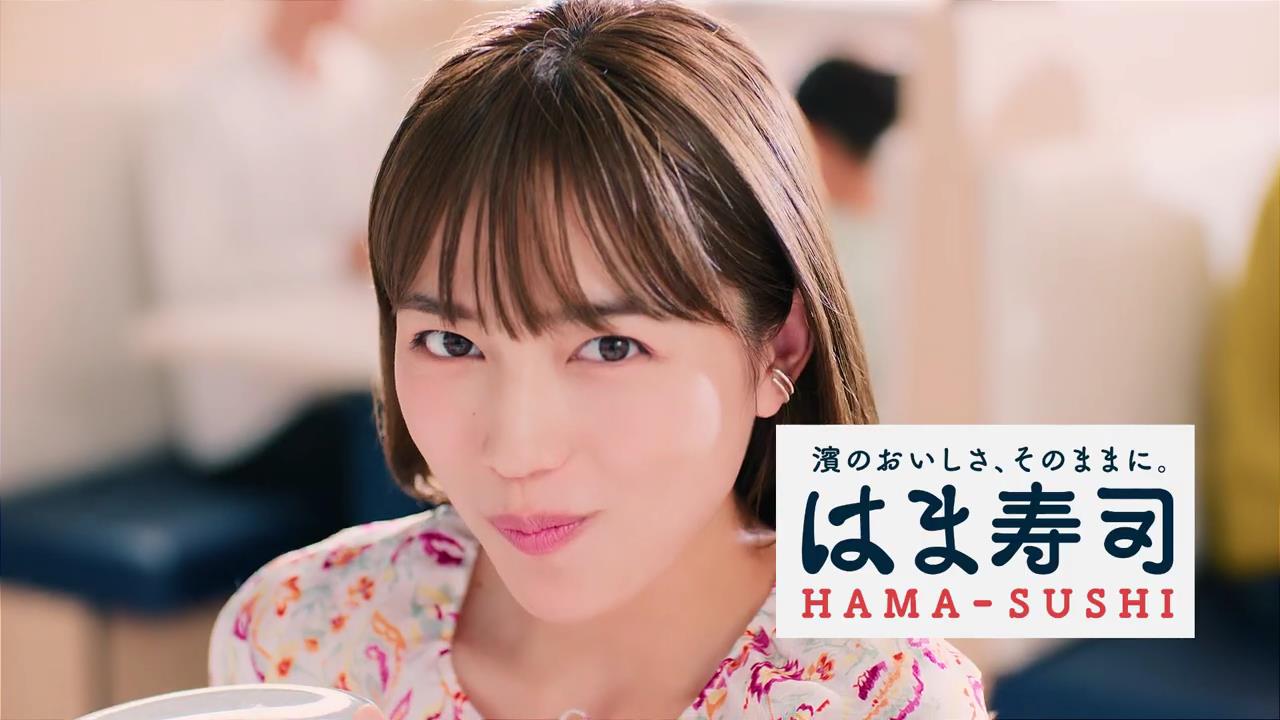
On screen, mainstream actress Haruna Kawaguchi serves as the human anchor. Her commercials emphasize pure indulgence: biting into seasonal cuts, reacting with unvarnished delight, and delivering casual catchphrases. Beneath her visual presence, however, the commercial narration is handled by elite anime voice actors. The result is a dual-layer hook. Casual viewers see a reliable television personality enjoying dinner, while voice-culture enthusiasts immediately recognize the voiceover artist reciting the seasonal menu.
This structure bridges the gap between mass-market consumers and dedicated pop-culture fans. It avoids alienating older demographics who may not follow anime voice actors, while giving younger, highly engaged consumers a distinct reason to choose Hamazushi over rival chains down the street.

Touchscreen Audio Settings as an In-Store Magnet
In October 2024, Hamazushi altered its terminal software across hundreds of nationwide outlets. Diners were no longer restricted to a single preset narrator. The chain introduced selectable audio profiles, letting customers choose whether their meal would be guided by Natsuki Hanae or Sho Hayami.
Selecting Hanae fills the booth with energetic, friendly affirmations: "Thank you for your order! It will arrive shortly!" Choosing Hayami transforms the booth into an ominous, baritone dining session straight out of a high-stakes anime drama: "Your selection has been registered. Await its arrival."
This subtle feature changes customer behavior in measurable ways:
- Increased Dwell Time and Orders: Diners frequently tap extra side items or drinks just to trigger alternative voice lines across different order stages.
- Organic Social Posting: Videos comparing the contrast between Hanae’s cheerful prompts and Hayami’s villainous declarations routinely generate millions of impressions on TikTok and YouTube Shorts.
- Repeat Visits: Limited-time voice packages create urgency, prompting fans to visit during specific promotional windows before the audio rosters rotate.
Why Zensho Holdings Bets on Voice Talent Over Generic Sound
Japanese food retail faces persistent structural pressures: rising seafood import costs, intense competition, and an industry-wide push toward automated dining rooms. Touchscreen ordering and automated conveyor delivery belts cut operational overhead, but they risk turning dining out into an impersonal, transactional chore.
Zensho Holdings bypassed that trap by using character voice acting to humanize the hardware. The marginal cost of licensing a voice actor for a software update is minimal compared to redesigning a store interior or running continuous price promotions. Yet the perceived value to the diner is substantial.
By treating audio prompts as collectible, shareable experiences, the brand turned an efficiency tool into a destination feature. Customers do not visit just for cheap nigiri; they visit for the entertainment baked into the ordering process itself.
Frequently Asked Questions (FAQ)
Q1: How do diners change the order screen voice at Hamazushi?
A1: On the initial touch panel home screen, look for the audio settings icon (often marked with a speaker or talent profile photo). Tapping this opens a selection menu where diners can switch between the active voice actor profiles before placing an order.
Q2: Are the voice actor collaborations permanent fixtures?
A2: No. While voice functionality is built into the ordering software permanently, specific actors rotate based on seasonal marketing campaigns and licensing agreements with talent agencies. Core talents like Natsuki Hanae return frequently, while guest stars appear during special promotional windows.
Q3: Is the special voice guidance available in languages other than Japanese?
A3: The celebrity voice tracks are recorded exclusively in Japanese. If you switch the tablet language to English, Chinese, or Korean, the interface reverts to standard, automated synthesized audio instructions.
The Acoustic Shift in Modern Dining
The success of Hamazushi’s voice talent campaigns illustrates a wider evolution in how restaurants design their environments. As kiosks, conveyer belts, and smartphone ordering strip direct human interaction out of fast-casual dining, sound design is filling the void. By turning routine automated notices into miniature anime performances, Hamazushi proved that a touchscreen does not have to be cold and clinical, it can be the main reason customers walk through the door.