Hidden Behind an Intercom: Shibuya’s Secret Book Cafe Where You Can Eat Classic Literature
One minute from the chaotic neon tide of Shibuya's Hachiko exit, an unremarkable elevator ascends to the eighth floor of a nondescript commercial building. There is no storefront, no glowing marquee, and no barista calling out drink orders. Visitors face a plain wall and an intercom buzzer. Press it, wait for the click, and push open a deceptive section of wall disguised as bookshelves. Inside lies Mori no Toshoshitsu, Tokyo’s celebrated "Forest Library", a sanctuary of dark wood, low-slung reading lamps, and more than 10,000 curated books. As highlighted in a detailed livedoor ニュース Report, this quiet hideaway has redefined Tokyo’s solo cafe culture by serving something rare: real, edible recreations of iconic meals pulled directly from the pages of famous literature.
Originally opened in 2014 following a record-breaking crowdfunding campaign and relocated to its current address in 2021, the venue balances two worlds. By day, it functions as an intensely focused co-working retreat and solo reading nook. By night, it shifts seamlessly into an atmospheric night library bar where patrons sip novel-inspired cocktails while thumbing through worn paperbacks. For literary travelers and food enthusiasts seeking an antidote to Tokyo's sensory overload, the kitchen offers a singular culinary thrill: tasting the exact dishes authors spent chapters describing.
📌 Quick Summary:
- The Conceit: A hidden eighth-floor retreat behind an intercom doorway in Shibuya, offering full access to thousands of books alongside dishes cooked straight from classic fiction.
- The Menu: Authentic recipe reconstructions ranging from picture-book sponge cakes to the melancholic comfort food of Haruki Murakami and the hearty tavern plates of classic mystery novels.
- The System: A straightforward cover charge system granting unlimited soft drinks or alcohol, high-speed Wi-Fi, and a strictly enforced peaceful reading atmosphere.
Ringing the Buzzer on the Eighth Floor Above Shibuya
The journey begins with intentional friction. Most Shibuya cafes push their branding onto the street, competing aggressively for foot traffic with vivid sidewalk signs. Mori no Toshoshitsu takes the opposite approach. Finding the building requires navigating a narrow side street just steps from Shibuya Station's Hachiko exit. Riding the elevator up to the eighth floor yields no traditional lobby. Instead, visitors stand before a locked door flanked by an intercom unit.
Pressing the buzzer prompts staff to unlock the door. What appears to be an ordinary decorative bookcase swings inward, revealing a cavernous interior lined with timber shelves stretching from floor to ceiling. The scent of aged paper and roasted coffee grounds immediately replaces the humid, exhaust-heavy air of the city below. Soft jazz hums quietly in the background, set at a volume low enough that the turning of a page remains audible across the room.
Seating options reflect the venue's dual identity. Deep leather armchairs cater to solitary visitors looking to read for three unbroken hours. Wide communal wooden tables host remote writers working under warm desk lamps. Small booth settings accommodate quiet pairs speaking in hushed murmurs. Unlike conventional Tokyo themed cafes, which rely heavily on garish character cutouts and branded merchandise, Mori no Toshoshitsu lets the literature drive the aesthetic. The design feels less like a commercial business and more like the private study of an eccentric archivist.
The Classic Literature Menu: Fiction Brought to the Plate
The defining draw of Mori no Toshoshitsu is its kitchen catalog. Menus in traditional cafes describe ingredients; here, menu items cite titles, authors, and specific chapter passages. The kitchen staff treats these literary recreations with exacting care, studying descriptions down to texture, temperature, and historic context.
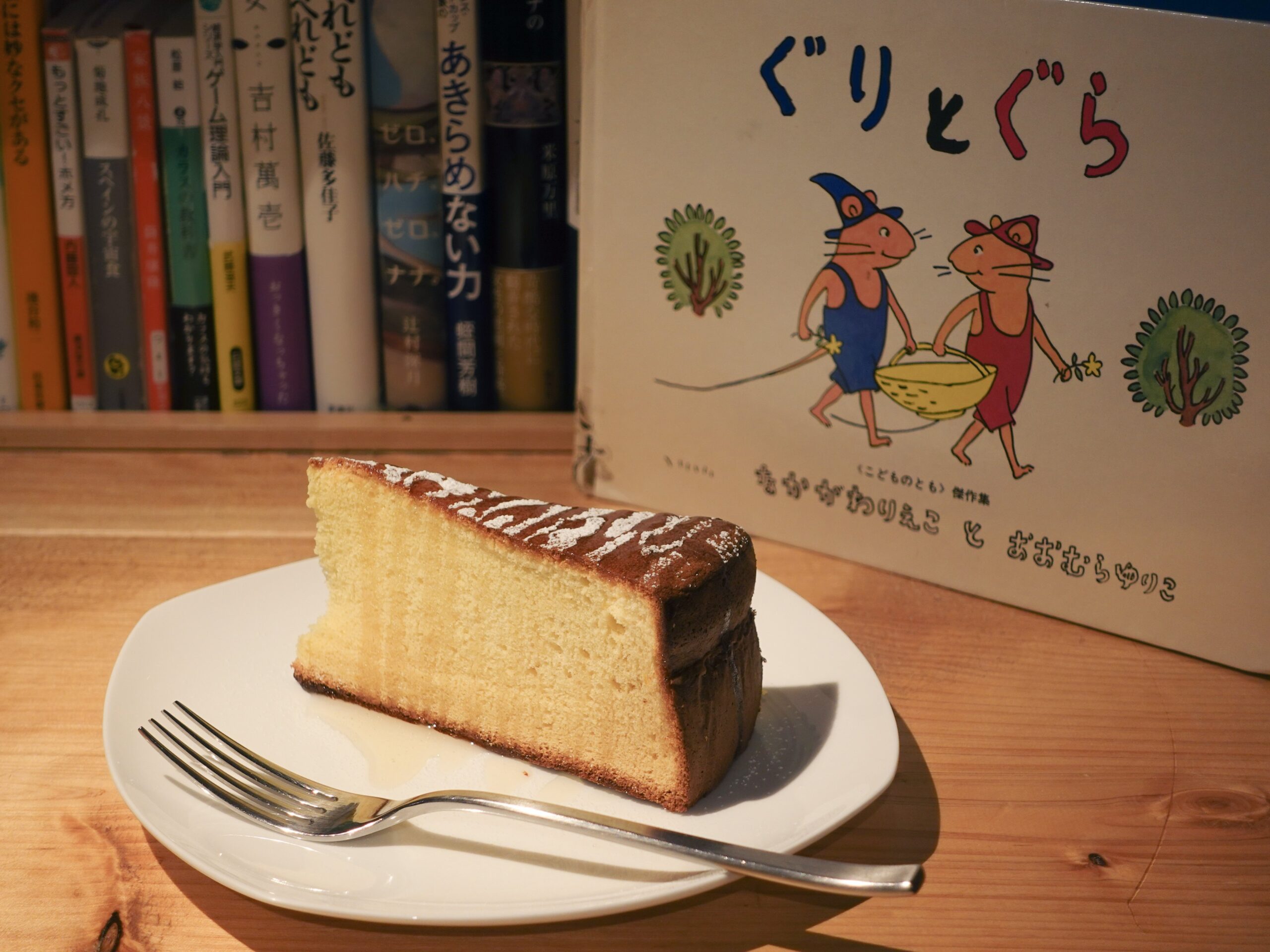
Consider the golden, castella-style sponge cake inspired by Rieko Nakagawa’s beloved 1963 children's book Guri and Gura. In the story, two woodland mice discover a giant egg and bake a towering pancake in an oversized skillet for their animal neighbors. Mori no Toshoshitsu bakes the cake to order inside an individual cast-iron pan, delivering a puffed, golden crumb with steam curling from the crust, served with a pat of melting butter and maple syrup. It bridges childhood nostalgia with genuine pastry craft.
For savory dining, the kitchen turns to contemporary giants and cinematic adaptations:
- Haruki Murakami's Comfort Bites: Fans of Murakami know food anchors his surrealist worlds. The kitchen recreates the classic cucumber and cheese sandwiches paired with draft lager from Hard-Boiled Wonderland and the End of the World, alongside simple, comforting spaghetti plates reminiscent of The Wind-Up Bird Chronicle.
- The Thieves' Feast from The Castle of Cagliostro: A direct homage to Hayao Miyazaki’s iconic animated caper, this heaping plate features long spaghetti noodles tossed in a rich, slow-simmered tomato sauce, topped with jumbo seasoned meatballs designed to look exactly like the mountain of pasta shared by Lupin and Jigen.
- The Mystery Lover's Roast and Stew: Hearty beef stews simmered with red wine and root vegetables evoke rainy London evenings in Arthur Conan Doyle’s Sherlock Holmes adventures. Rich broth and tender braised beef arrive in rustic ceramic bowls beside crusty bread.
- Whimsical Dessert Confections: Sweets inspired by Roald Dahl’s confectionery landscapes sit alongside fruit pies that channel the rustic cottage kitchens of classic European folk tales.
Drink menus follow the same narrative rigor. Bartenders mix book-themed cocktails based on the personality profiles of legendary protagonists or specific drinks consumed in plot points, from crisp gin rickeys that evoke F. Scott Fitzgerald’s Jazz Age to smokey whiskey blends tailored to Osamu Dazai’s post-war introspections.
Operating Structure and the Cover Charge Model
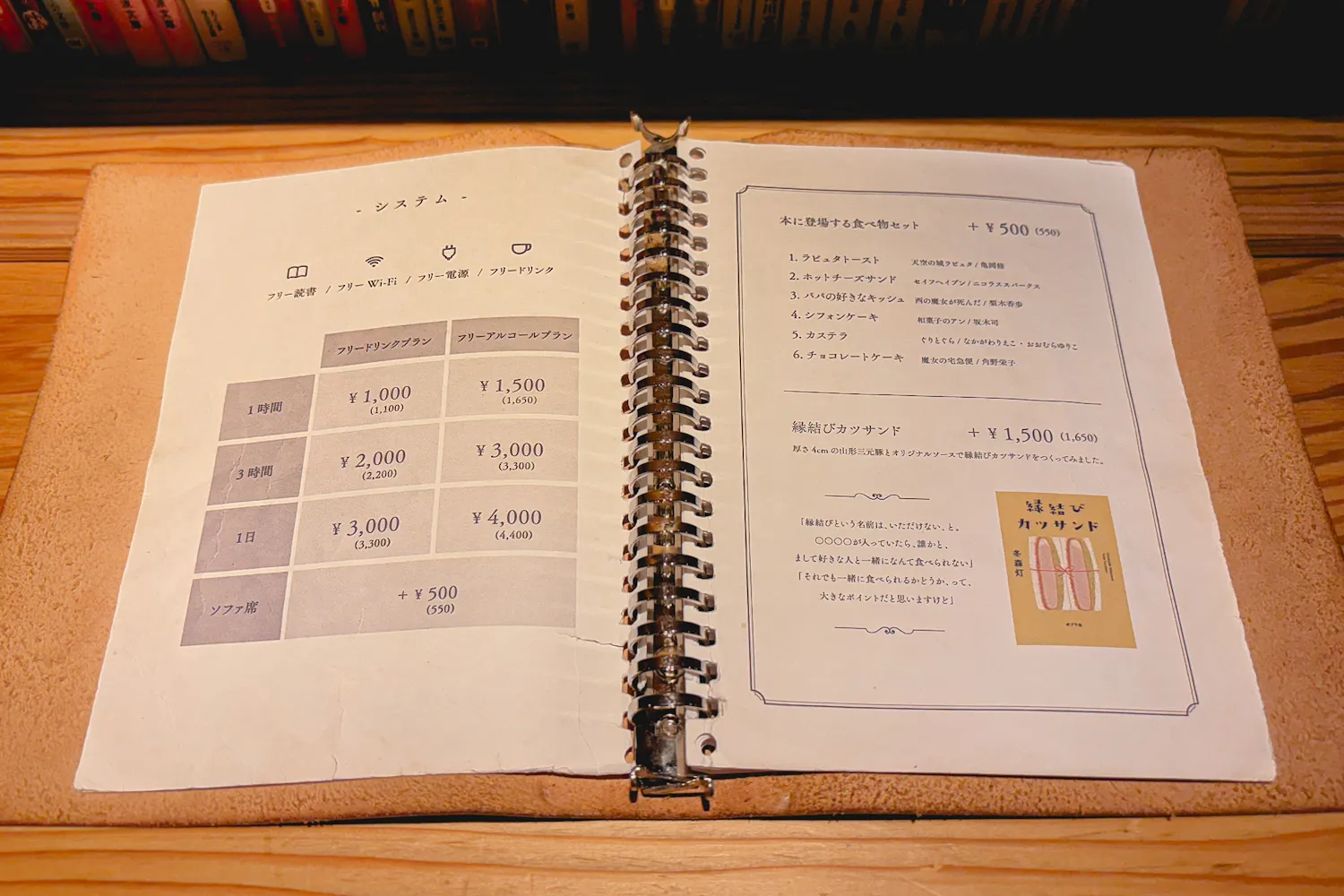
Navigating Mori no Toshoshitsu requires understanding Tokyo's time-share hospitality mechanics. Rather than paying purely per item, guests purchase time blocks. This pricing model protects the environment from becoming an overcrowded, laptop-clogged transit hub. Patrons pay a fixed cover charge that includes unlimited beverages throughout their stay, with food plates ordered à la carte.
The system operates smoothly across daytime and evening hours, shifting pricing based on whether patrons opt for non-alcoholic drinks or the open-bar menu:
| Visit Option | Pricing Baseline | Included Perks & Privileges | Food Add-On Range |
|---|---|---|---|
| Daytime Soft Drink Plan (Per Hour) | ¥1,000, ¥1,200 | Free-flow coffee, artisanal teas, soft drinks, power outlets, Wi-Fi | ¥600, ¥1,500 per literary dish |
| All-You-Can-Drink Alcohol Plan (Per Hour) | ¥1,500, ¥2,000 | Full bar access: draft beer, highballs, book-themed cocktails, wine | ¥600, ¥1,500 per literary dish |
| Free-Time Unlimited Pass (Select Weekdays) | ¥3,500, ¥4,500 | Full daytime or evening access with no hourly timer running | Ordered separately as desired |
| Annual Membership Card (Optional) | ¥10,000 one-time fee | Waived entry fees for life, book checkout privileges (up to 3 books) | Standard menu rates apply |
The time-based pricing fundamentally changes guest behavior. Nobody hurries. Waitstaff never drop checks on tables to turn seats over for waiting queues. Readers spread notebooks across broad timber surfaces, order another pot of tea, and remain immersed in an anthology for half an afternoon without guilt.
Tokyo Solo Culture and the Demand for Quiet Sanctuaries
Mori no Toshoshitsu sits at the intersection of two distinct sociological forces shaping modern Tokyo: the expansion of ohitorisama (the culture of unapologetic solo living) and a cultural hunger for "third places" devoid of performative social pressure. In a metropolitan area home to 14 million residents, true silence is a luxury good.
Standard cafes across Shibuya, Shinjuku, and Roppongi battle high rents by maximizing turnover. Seats are small, power outlets are increasingly sealed, and ninety-minute table limits are rigorously enforced. For urban singles living in compact studio apartments, finding a spacious environment to unwind without interaction can be challenging. Japanese social forums and dining communities frequently point to Mori no Toshoshitsu as the benchmark for respectful isolation. Patrons enter without having to explain why they are dining alone; eighty percent of the room is doing the exact same thing.
The venue's book selection actively encourages spontaneous exploration. Staff members and regulars leave handwritten review tags, known as obi, tucked inside jacket covers, explaining why a particular volume altered their worldview or made them weep on a train. A visitor might reach for a collection of short essays simply because the patron who sat in that chair the week prior left a note praising chapter three. This analog human connection, mediated purely through text, creates a community without requiring conversation.
Visitor Logistics: Location, Etiquette, and Practical Tips
Experiencing Mori no Toshoshitsu without friction requires keeping a few ground rules in mind. While welcoming to domestic visitors and international travelers alike, the library maintains strict policies to protect its atmosphere.
Keep these practical steps handy when planning an afternoon or evening stop:
- Navigation: Walk past the Shibuya crossing toward the Dogenzaka/Inokashira direction, keeping within one minute of the Hachiko statue. The building entrance sits beside standard retail storefronts. Take the elevator straight to the 8th floor.
- The Intercom Ritual: Do not rattle the doorknob. Locate the intercom panel immediately to the side of the entrance, press the call button, and wait. Staff will release the latch or open the concealed shelving door personally.
- Volume and Conduct: Keep voices to a library whisper. Phone calls are strictly prohibited inside the main reading room. Guests must step out into the elevator vestibule to handle incoming calls.
- Language Accessibility: While the vast majority of the 10,000 books are printed in Japanese, the library stocks an impressive assortment of international art monographs, photography anthologies, and English classics. Digital translation apps handle menu selections easily, and staff members are accustomed to assisting non-Japanese speakers with check-in.
- Peak Hours: Weekend afternoons (2:00 PM to 6:00 PM) fill quickly. To secure an uninterrupted reading booth, visit on a weekday morning or late on a Tuesday or Wednesday evening after 8:00 PM, when the night bar ambience reaches its peak.
Frequently Asked Questions (FAQ)
Q1: Do I need an advance reservation to visit Mori no Toshoshitsu?
Reservations are not mandatory. Walk-ins are welcomed on a first-come, first-served basis. If the space reaches full capacity during busy weekend afternoons, staff will register your name and contact details, letting you browse nearby Shibuya shops until a seat opens.
Q2: Can international tourists borrow books and take them out of the cafe?
Only registered annual members with a Japanese residential address can check out books to take home. However, any paying guest has unrestricted access to read every volume in the collection on-site for the duration of their visit.
Q3: Is the food menu substantial enough for a full dinner?
Yes. While desserts like the Guri and Gura skillet sponge cake are popular for tea time, the savory lineup, such as the meatball pasta, beef stews, and hot sandwiches, serves as a hearty evening meal, especially when paired with the unlimited alcohol plan.
The Enduring Appeal of the Printed Page
In a district defined by algorithmic video screens, rapid transit, and fast-paced commercial trends, Mori no Toshoshitsu operates on a different rhythm. It proves that physical spaces dedicated to quiet contemplation remain vital in modern Tokyo. By grounding literature in sensory, edible realities, turning sentences on a page into butter, sauce, and warm bread, the hidden cafe offers something screen-based entertainment cannot replicate. Visitors push back the bookshelf door, descend the elevator, and step back onto the concrete streets of Shibuya, carrying the lingering warmth of a story they didn't just read, but actually tasted.