Hokkaido Ramen Rankings Crown Asahikawa Giants: Aoba's Enduring Market Surge
Travelers navigating Hokkaido's culinary capitals often find themselves directed toward Sapporo's rich butter-corn miso bowls or Hakodate's clear, delicate salt broths. In the latest culinary audits and regional dining surveys, a legacy storefront in northern Hokkaido has upended contemporary trends. Asahikawa Ramen Aoba Honten, operating continuously since 1947, has claimed the top spot across multiple independent dining lists, proving that mid-century technique consistently outperforms modern culinary shortcuts.
The resurgence of this central Hokkaido staple reflects a broader shift among domestic and global diners seeking culinary authenticity. A dedicated field review by the local [asatan Report](https://asatan.com/articles/2166) underscores an open secret among northern residents: while suburban tourist food courts draw tour buses, longtime Asahikawa citizens preserve fierce loyalties to downtown independent counters where original post-war recipes endure. At Aoba's 18-seat flagship, that loyalty translates into lines wrapping around the 2-chome block through sub-zero blizzards.
📌 Key Takeaways:
- Historic Dominance: Asahikawa Ramen Aoba Honten has topped regional Hokkaido ramen rankings, propelled by its untouched 1947 post-war formulation.
- Thermal Architecture: The signature shoyu bowl relies on an unyielding traditional lard oil layer that seals beneath it a double soup broth of pork bones and northern seafood.
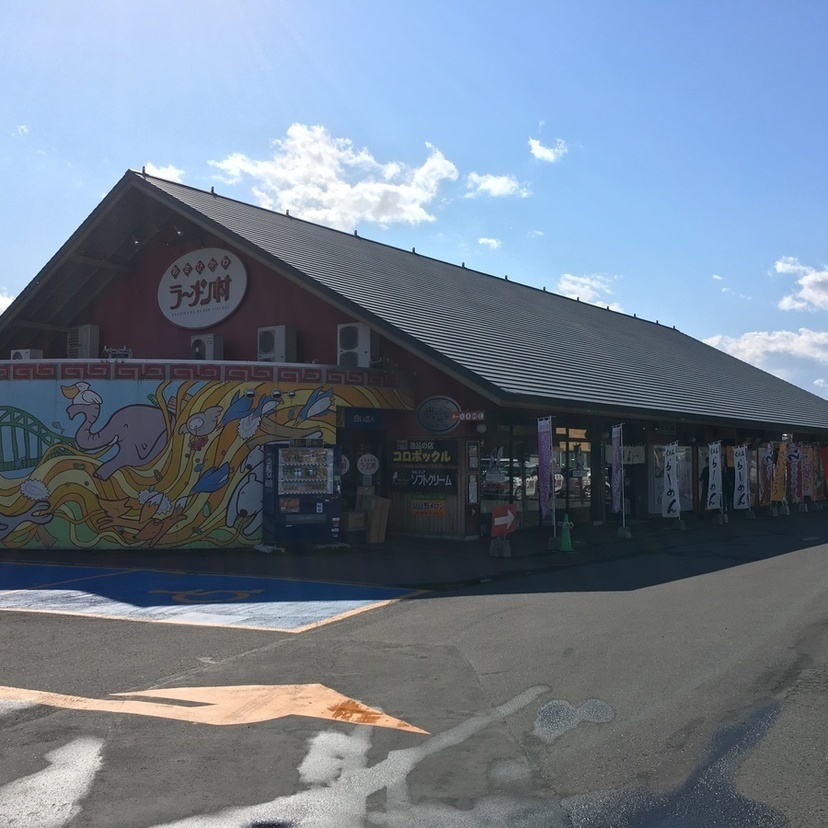
- The Local Divergence: Downtown flagship counters maintain distinct culinary superiority and artisan pacing compared to high-volume commercial centers like Asahikawa Ramen Village.
- Logistical Realities: Counter capacity remains capped at 18 seats, creating regular winter queue times exceeding 45 to 75 minutes during peak service.
Postwar Street Carts and the Birth of Northern Shoyu
Asahikawa sits inside an inland basin flanked by the Daisetsuzan mountain range. Winter temperatures routinely fall below -20°C. In the desolate aftermath of 1947, founder Kichimi Murayama wheeled a modest wooden food cart through the frozen, unpaved streets surrounding Asahikawa Station. Fuel was scarce, and pork bones discarded by nearby meat processors offered high caloric value if boiled down slowly.
Murayama faced a fundamental structural obstacle. Boiling pure pork bone broth generated heavy steam that dissipated heat within seconds in open-air winter markets. A purely porcine broth also grew unpalatably pungent under long boiling cycles. Murayama's breakthrough was twofold: blending heavy terrestrial bones with dried ocean seafood, and floating a clarified layer of molten lard atop the finished bowl. That single innovation established the archetype for Asahikawa food culture.
The cart quickly transitioned into a permanent downtown location near 2-chome 8-ban. Today, third-generation master Keiji Murayama runs the wooden counter alongside his family. The interior remains compact and weathered. Wooden plaques bearing handwritten messages from travelers and cultural figures line the walls. Hand-inked guestbooks dating back decades sit stacked behind the register, recording testimonials from three generations of diners who find the 1947 base broth entirely unchanged.
The Physics of the Double Soup and Lard Barrier
The culinary backbone of Aoba's kitchen is its double soup broth pork and seafood stock. Rather than boiling ingredients down into an emulsified, milky tonkotsu slurry, Aoba extracts its base across distinct stages. Premium pork marrow bones (genkotsu), whole stewing chickens, and select aromatic vegetables simmer for hours at a low temperature to extract amino acids without breaking down the heavy marrow into an unmanageable cloud.
Simultaneously, cooks introduce Pacific kelp (kombu), dried bonito flakes (katsuo), and dried sardine (niboshi) at tightly regulated intervals. Pulling the seafood too early leaves the stock flat; boiling it too vigorously introduces harsh tannins. The result is a golden-amber broth balancing deep land umami against sharp ocean salinity, unified by a house-aged soy sauce tare brewed in wooden casks.
The thermal barrier remains Aoba's definitive visual and physical trademark. Before ladle meets bowl, the cooks skim hot, refined pork lard across the surface. This fat layer seals in heat like thermal insulation. When a customer receives their bowl, no visible steam escapes. The surface appears calm, almost deceptive. The moment chopsticks pierce that clear barrier, blistering steam rushes upward. Even during prolonged winter meals, the soup at the bottom of the ceramic bowl stays scorching until the final sip.
To match this heavy, hot broth, Aoba rejects the slick, yellow, high-moisture noodles favored in Sapporo. Instead, the shop partners with local mills to produce curled low-hydration noodles. Made with minimal water, these pale, crimped strands function like a dense sponge, actively pulling the savory shoyu and lard inside their core rather than letting it slide off the surface.
Downtown Honten Versus the Commercial Food Complexes
Modern visitors to Asahikawa frequently face a choice: make the trek out to the Nagayama district to visit the curated Asahikawa Ramen Village, or stand on the sidewalk outside the historic downtown flagship. The experiences diverge sharply in operational philosophy, craft control, and atmospheric texture.
| Operational Metric | Aoba Honten (Downtown Main Branch) | Asahikawa Ramen Village Outposts |
|---|---|---|
| Seating Capacity | 18 seats (intimate wooden counter and small tables) | 30, 50 seats per storefront within commercial complex |
| Average Wait Time | 45, 80 minutes during peak midday and weekend hours | 15, 30 minutes, supported by rapid customer turnover |
| Broth Batch Scale | Small artisanal batches overseen directly by the Murayama family | Higher-volume production scaled for mass tourist throughput |
| Core Customer Profile | Multi-generational local families, food purists, culinary travelers | Tour bus groups, suburban shoppers, travelers with tight schedules |
| Signature Bowl Price Range | ¥900, ¥1,250 (cash-only transactions at counter) | ¥950, ¥1,350 (electronic payment and ticketing machines) |
The comparative data highlights why purists avoid the retail center. While the Ramen Village provides efficient access to eight distinct brands under one roof, it trades the tactile intimacy of historic Asahikawa ramen stalls for standardized logistics. At the Honten, every portion of tare is metered by hand, noodles are lifted from boiling pots via manual strainers with rhythmic precision, and the steam levels inside the small room create an atmosphere impossible to replicate in a shopping center.
Dissecting the Signature Shoyu Chashu Bowl
The gold standard order across the wooden counter is the signature shoyu chashu ramen. The dish serves as a masterclass in balance, dispensing with the theatrical, towering garnishes common among modern TikTok-driven ramen bars.
The pork belly slices undergo a three-hour braise inside the same aged soy reduction that seasons the daily broth. The chashu retains structural integrity when lifted with bamboo chopsticks, yet yields instantly on the palate without turning greasy. The fat dissolves into the surrounding soup, adding sweet collagen notes to the sharp tare.
Supporting elements adhere to strict historical standards. Crisp fermented bamboo shoots (menma) provide an earthy, acidic snap that cuts through the lard ceiling. Freshly chopped Hokkaido scallions add sulfurous bite. The centerpiece garnishing touch is a single sheet of dried seaweed (nori) printed with blue food-safe ink depicting the shop's retro sea-and-mountain logo alongside the historic motto: "The soup is life."
Navigating the Lines: An Asahikawa Food Culture Guide
Visiting Aoba Honten requires deliberate preparation, particularly during the harsh winter months when Hokkaido's interior temperatures drop sharply. The shop sits roughly five minutes on foot from JR Asahikawa Station, positioned along an unassuming side avenue.
Aoba main branch queue times follow predictable patterns. The shop operates split shifts, opening from 09:30 AM to 14:00 PM for the morning-lunch service, and reopening from 15:30 PM to 19:30 PM for dinner. The morning window between 09:30 and 10:15 represents the strategic sweet spot; arrival during this window typically ensures seating within the first two waves.
Arriving at 12:15 PM guarantees a 60-minute wait outside on an unsheltered sidewalk. Unlike corporate chains, Aoba utilizes no digital ticketing apps, QR codes, or pager systems. Patrons wait in a physical queue along the brick facade. Staff members periodically step outside to count heads, manage spacing, and verify orders before parties cross the threshold. Cash payment remains mandatory; foreign credit cards and modern smartphone payment apps are not accepted.
Frequently Asked Questions (FAQ)
Q1: What makes Asahikawa shoyu ramen distinct from Tokyo-style shoyu ramen?
Tokyo shoyu relies primarily on clear chicken, dashi, and vegetable broths with a light sheen of oil and straight, springy noodles. Asahikawa shoyu utilizes a heavy "double soup" combining pork marrow bones and dried seafood, finished with a dense, insulating layer of heated lard and low-hydration, crinkled noodles that actively soak up the broth.
Q2: Is Asahikawa Ramen Aoba Honten suitable for vegetarian or vegan diners?
No. The foundational broth contains heavy concentrations of pork bones, chicken, and dried fish products across all menu offerings, including the shio (salt) and miso variations. The kitchen uses no separate preparation lines for plant-based alternatives.
Q3: How do the lines at Aoba compare between summer and winter?
Total queue times remain consistent throughout the year (averaging 45 to 75 minutes at lunch), but winter conditions make the wait physically demanding. Cold winds channel down the 2-chome corridor, requiring heavy down coats, insulated thermal footwear, and headwear for any visits between late November and late March.
Q4: Why does Aoba maintain an 18-seat limit instead of expanding?
The Murayama family has intentionally refused commercial expansion offers for their flagship to retain absolute oversight over stock simmer times, noodle cooking accuracy, and direct host interaction. Limiting counter capacity guarantees that every bowl is served within seconds of being ladled.
The Future of Historic Counter Craft
Industrial ramen chains across Japan increasingly automate soup production through centralized off-site factories, vacuum-sealed stock concentrates, and automated noodle boilers. These operations deliver consistency and speed, yet they strip the dining experience of its human core.
Asahikawa Ramen Aoba Honten persists because it rejects rapid expansion. Keiji Murayama and his family continue to rise before dawn, inspecting the quality of raw pork bones, adjusting ocean kelp ratios to counter humidity, and skimming bubbling fats by hand. Aoba's commanding lead in recent Hokkaido dining rankings proves that modern consumers crave character over convenience. Inside that 18-seat shop, beneath a fog of steam and the faint aroma of roasted soy, the 1947 cart remains alive, serving warmth against the northern cold one bowl at a time.