How 100-Yen Balloon Decor Evolved: From Simple Latex Packs to Full Party Architecture

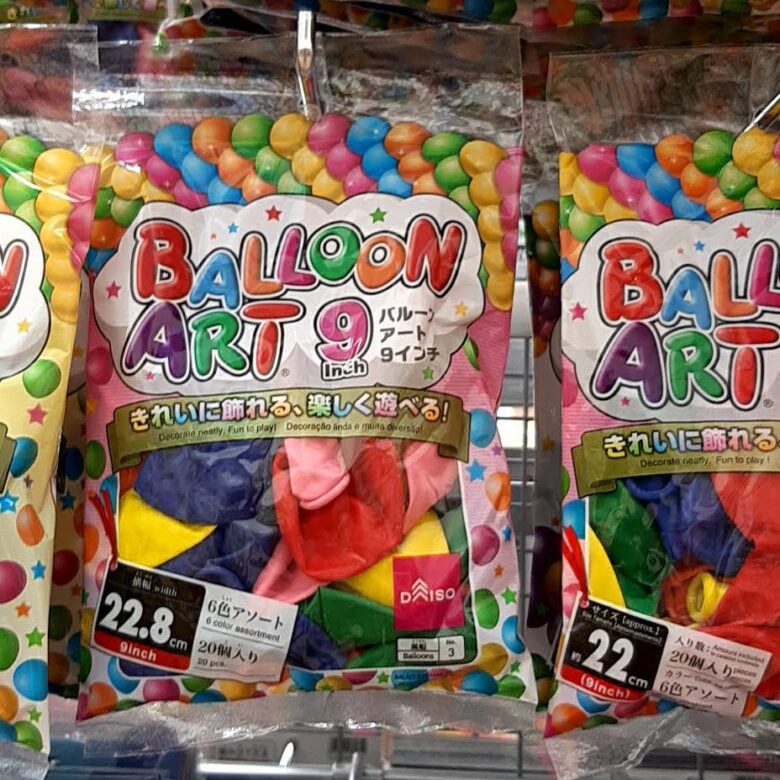
Walk down the celebration aisle of any Japanese discount chain today, and the humble bag of 20 unvarnished rubber balloons is practically hidden behind acrylic display stands, metallic number foils, and precision counterweights. Over the past several years, Japanese 100-yen chains transformed what used to be a disposable, children's novelty into an accessible domestic design system. When domestic media first documented this transition in an early retail survey, captured in this livedoor ニュース Report, shoppers were just beginning to experiment with clear latex shells stuffed with foam beads. Today, the ambition is vastly different: ordinary shoppers are building architectural balloon arches and weighted table installations that once required professional event planners.
The quiet driver behind this aesthetic upgrade is not the balloons themselves. It is the engineering that keeps them in place. As helium prices skyrocketed globally, consumers and manufacturers had to solve a fundamental physics problem: how to create the impression of floating, buoyant luxury without expensive lighter-than-air gas. The answer emerged across the aisles of Daiso, Seria, and Can Do in the form of modular stands, clever tape strips, and specialized balloon anchors.
📌 Key Takeaways:
- The Structural Pivot: Soaring helium costs prompted 100-yen retailers to replace floating gas concepts with rigid table stands, decorative balloon clips, and modular ground frames.
- The Weight Problem: Holding home installations steady turned everyday craft items, from water-filled latex skins to glass marbles, into an essential DIY anchoring culture.
- Cross-Category Crafting: Social media creators expanded balloon materials far beyond birthday parties, using them as temporary molds for textured paper lampshades and ambient domestic lighting.
From Fragile Latex Bags to Specialized Party Engineering
Ten years ago, buying party supplies at a 100-yen shop meant picking up a flimsy pack of neon latex teardrops and blowing them up by lung power until your cheeks ached. They ended up scattered across tatami mats or taped awkwardly to wallpaper with adhesive that peeled off the paint.
Retail buyers at Daiso party supplies and Seria recognized that customer expectations were shifting. Influenced by visual platforms like Instagram and Pinterest, Japanese parents and apartment renters wanted cohesive, photogenic party scenes. But Japanese urban living creates specific constraints: rooms are compact, wall hooks are often banned by landlords, and party spaces must be assembled and broken down in hours without leaving marks.
The retail response was rapid. Chains began stocking heavy foil balloon stabilizers, matte pastel color palettes, and translucent "bobos" that mimic high-end florist arrangements. Instead of random assortments of primary colors, shelves filled with coordinated sets: muted sage greens, dusty blush pinks, and metallic chrome finishes. The party aisle stopped being a corner of the toy department and became an extension of home interior styling.
The Helium Crunch and the Rise of Structural Anchors
Helium has become an industrial luxury. Medical applications like MRI cooling and semiconductor manufacturing have pulled liquid helium supplies away from party retailers, driving consumer cylinder prices beyond reasonable household budgets. That resource reality reshaped the Japanese party market.
Without affordable helium, standard floating balloon ribbon ties lost their utility. If a balloon cannot float on its own, tying it to a light plastic clip on the floor does nothing; it simply rolls over. To maintain the illusion of airiness, 100-yen suppliers engineered a mechanical workaround: the upright table centerpiece anchor.
These kits consist of a flat, circular plastic base slotted with transparent acrylic or plastic straw-like rods of varying heights. By attaching seven or ten air-filled balloons to small cup adapters at the top of these rods, users construct a rigid, freestanding spray. The arrangement mimics the natural dispersal of a floating bouquet without a single cubic centimeter of helium. The entire contraption rests securely on dining tables or sideboards, anchored by its own wide footprint or weighed down with small water sacs concealed inside decorative fabric sleeves.
The Retail Evolution: Comparing Budget Decor Eras
The transition from crude novelties to architectural party staples unfolded across three distinct retail phases:
| Phase & Timeline | Primary Product Focus | Anchoring & Display Mechanics |
|---|---|---|
| The Novelty Era(2014, 2019) | Standard multi-color latex packs, styrofoam bead inserts, basic foil numbers. | Direct wall tape, curled curling ribbon, loose floor scatter. |
| The Pandemic Pivot(2020, 2023) | Muted matte tones, oversized foil animals, DIY garland plastic tape rolls. | Double-sided removable dots, tension poles, makeshift sand and water weights. |
| The Modular Era(2024, 2026) | Arch kits, multi-tier centerpiece towers, custom textures, craft cross-overs. | Snap-together weighted bases, concealed ballast clips, reusable stand systems. |
Daiso, Seria, and the Science of DIY Counterweights
Despite the rise of pre-formed plastic stands, large-scale creations like balloon garlands demand dynamic stabilization. A dramatic organic arch framing a doorway can weigh several kilograms once dozens of inflated spheres are bundled together. One gust of wind from an open balcony or an energetic child can send the structure crashing down.
Here, Japanese home-party enthusiasts turned to cheap party decor hacks that draw directly from neighboring retail aisles. The most popular method involves "water balloon anchors." A single heavy latex balloon is stretched over a faucet, filled with roughly 200 to 400 milliliters of tap water, tied off, and concealed inside an identical dry balloon to prevent catastrophic punctures. This creates a soft, self-leveling weight that sits invisibly at the foot of an arch, secured to the main garland with simple balloon craft accessories.
Seria party section items lean heavily toward aesthetic minimalism. Shoppers routinely pair organza gift pouches with decorative landscaping glass or river pebbles from the gardening section. These small sacks serve as 100-yen balloon anchors that look intentional rather than utilitarian, sitting gracefully on banquet tablecloths to tether ribbons without drawing the eye away from the main arrangement.
Creative Repurposing: From Party Props to Domestic Crafting
The balloon's functional journey in Japanese domestic craft has expanded beyond celebration displays into semi-permanent home decor. Because inflated latex provides a mathematically predictable, smooth spherical curve, lifestyle creators treat it as an ephemeral mold rather than a final product.
A prominent viral design movement demonstrated this crossover when craft accounts, such as creator @yuukurashi, began pairing 100-yen balloons with traditional Japanese calligraphy paper (hanshi) and wood glue to construct textured, washi-style pendant light covers. By painting torn sheets of paper over an inflated balloon, allowing the adhesive to cure into a rigid shell, and deliberately popping the inner core, creators produce tactile spherical lanterns for hallways and entryways at a tiny fraction of boutique homeware prices.
This DIY ethos reflects a broader shift: the consumer views items from the party aisle as versatile raw materials. A 110-yen foil ring, a pack of latex skins, or a set of modular clips are no longer single-use novelties meant for the trash bin twelve hours later. They are modular building components for personal spaces.
Frequently Asked Questions (FAQ)
Q1: Do 100-yen balloon stands fully eliminate the need for helium?
A1: For tabletop centerpieces and photo backdrops, yes. Plastic stand kits hold air-inflated balloons rigid on upright rods, reproducing the silhouette of floating clusters without expensive gas. However, if you want an unbound single balloon hovering independently in mid-air, helium remains the only physical solution.
Q2: How do you build an effective helium balloon weight DIY using dollar store items?
A2: Fill a small latex balloon with water or dry rice, tie it off, and slip it inside an attractive fabric favor bag from the gift-wrapping aisle. Alternatively, tie your ribbon around small ceramic trinkets, metal keyrings, or heavy decorative paperweights sold in the stationery section.
Q3: Are 100-yen balloon garland base weights sufficient for outdoor events?
A3: Standard lightweight plastic stands and water-balloon weights are designed for indoor stability with zero breeze. For outdoor parks or balconies, anchor your garland lines to heavy patio umbrellas, concrete planters, or fill two-liter plastic bottles with water and tuck them into the base of the garland structure.
Engineering Domestic Celebrations on a Micro-Budget
The ongoing sophistication of 100-yen party aisles reveals something meaningful about modern consumer habits. It is no longer enough for budget products to merely function as cheap alternatives; they must deliver visual dignity. By offering sophisticated color palettes, modular stand systems, and practical counterweight workarounds, Japanese dollar chains removed the financial barrier to event-grade party design. The spectacle that once required professional balloon artists now requires only a small hand pump, two plastic stand kits, and twenty minutes on an apartment living room floor.