How Japanese Pager Culture Evolved into Modern 'Kawaii' 2-Digit Number Puns

Walk through the streets of Harajuku or scroll through Japanese social profiles today, and you will spot two-digit figures quietly tucked into screen names, phone cases, and social status lines. Numbers like 25, 39, and 87 appear across Instagram bios, Discord handles, and digital accessories. What looks like random numerical noise to outside observers is actually goroawase, a deeply rooted tradition of phonetic number matching that turns mathematical digits into playful language. The current wave of cute username numbers and aesthetic pin codes is directly linked to early telecommunications history, bridging late-twentieth-century hardware limitations with contemporary youth aesthetics.
The cultural mechanics powering these combinations date back decades. According to a recent retrospective analysis in an MSN Report, pocket bell pagers first surfaced in Japan in 1968, but the defining explosion of numeric messaging occurred after 1987, when devices gained small LCD screens capable of displaying numeric digits. Lacking the ability to render Japanese kanji or kana script, high schoolers engineered an entire dialect of Japanese texting shorthand using phonetic readouts. Today, that utilitarian scrambler code has resurfaced, shedding its purely functional origins to become an expressive visual language embraced by Gen Z and Alpha internet users.
📌 Key Takeaways:
- The Origin: Pocket bell pager codes originally emerged in 1987 as an emergency workaround for hardware that could only display Arabic numerals.
- The Linguistic Engine: Kana number homophones allow every digit from 0 to 9 to carry between two and five distinct syllables based on Sino-Japanese and native readings.
- The Modern Revival: Fuelled by Heisei retro trends, minimalist two-digit number puns have transformed from pragmatic communication shortcuts into curated, kawaii numeric slang.
From Pocket Bell Screens to Modern Social Feeds
The resurgence of numeric puns is anchored in late Showa and early Heisei era nostalgia. Between 1992 and 1996, Japanese teenagers lined up at public payphones between classes to punch numeric sequences into friends' pagers. A string like 0840 translated directly to ohayou (good morning), while 724106 meant nani shiteru (what are you doing?). It was fast, secretive, and required shared linguistic literacy.
Modern smartphones removed technical limits long ago. Full Unicode support, custom sticker packs, and instant voice notes made number substitution unnecessary for practical communication. Yet, simplicity has its own appeal. Rather than disappearing, numeric wordplay contracted from urgent four- to seven-digit phrases down to compact, lucky two-digit pairs.
Social media users today want uncluttered handles. Two-digit numbers offer a compact way to embed private jokes, emotional states, or personal declarations into character-limited bios. What began as a tool for speed has evolved into an emblem of retro-cool identity.
The Phonetic Mechanics Behind Kana Number Homophones
Japanese goroawase works because the language allows multiple readings for every single digit. Speakers draw interchangeably from native Japanese readings (kun'yomi), Sino-Japanese readings (on'yomi), and phonetic approximations borrowed from English.
Take the number 8. It can be read as hachi (Sino-Japanese), ya or yatsu (native Japanese), or simply ba through consonant shifting. The digit 3 yields san, mi, or sa. The digit 5 yields go or ko. Because syllables can be clipped to their first sound, two numbers side-by-side produce dozens of viable morphemic combinations.
When combined, these syllables form real words, affectionate nicknames, or onomatopoeic sounds. The system operates like a shared puzzle. Readers instantly convert visual digits into acoustic syllables, deciphering meaning through phonetic association rather than direct orthography.
The Generational Shift: Utilitarian Codes Versus Modern Aesthetic Symbols
Understanding how the practice shifted from telecommunications triage to an artistic subculture requires looking at the technological constraints of each decade.
| Era & Technology | Primary Format | Core Motivation | Representative Examples |
|---|---|---|---|
| Pager Peak (1987, 1996) | 4, 8 digit sentence strings | Technological necessity; no native text support | 0840 (Good morning)49106 (Hurry up) |
| Feature Phone Era (1999, 2009) | 3, 4 digit signature tags | Character counts on SMS; mail address customization | 4649 (Best regards)39 (Thank you) |
| Modern Social Era (2020, 2026) | 2-digit minimal pairs | Aesthetic styling, handle availability, subtle mood cues | 25 (Niko / Smile)87 (Hana / Flower) |
As the table shows, length correlates inversely with technical freedom. When users were restricted to numbers, messages grew long and complicated to convey basic actions. With today's unlimited bandwidth, numbers have shrunk into minimalist emblems.
Decoding the Cutest Two-Digit Number Pairs
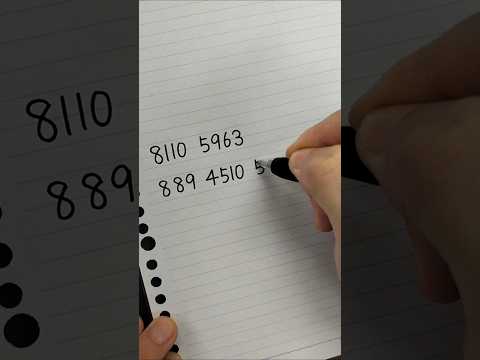
The appeal of two-digit wordplay lies in its gentleness. While longer historical strings often sounded commanding or logistical, modern short pairs focus almost entirely on affectionate imagery, polite greetings, and positive affirmations.
The pairing 25 is one of the most visible examples. Digit 2 can be read as ni, and 5 can be read as ko, spelling out niko. In Japanese, niko-niko is the mimetic word for an easy, peaceful smile. Young creators frequently append 25 to profile names to signal an approachable, warm personality.
Another staple is 87, which translates to hana (8 for ha, 7 for na). Meaning "flower," it gives screen handles an organic, delicate tone without using literal kanji. Similarly, 15 reads as ichigo (1 for ichi, 5 for go), translating directly to strawberry. Strawberries hold a central place in Harajuku's sweet, colorful design sensibilities, making 15 a prime choice for fashion accounts and lifestyle creators.
For expressions of gratitude, 39 dominates. Digit 3 is san, and 9 is kyuu, creating the phonetic English loanword "Thank you." Pop culture expanded this further through virtual singer Hatsune Miku, whose name also puns on 3-9 (mi-ku), turning the number into a dual symbol of gratitude and vocaloid fandom.
Pairs can also express quiet affection. The combination 28 reads as tsuba (short for tsubasa, wings), while 83 reads as yasumi, signalling rest or taking things slow. The flexibility of the system lets users convey nuanced feelings using numbers that look completely neutral to anyone outside the loop.
Digital Fandoms and the Psychology of Private Shorthand
The resurgence of these numeric tags is also tied to idol culture and online anonymity. In contemporary Japanese fan communities (oshi-katsu), users track birthdays, debut dates, and name puns with forensic precision.
Instead of writing out an idol's full name, which can attract search scrapers, anti-fans, or unwanted algorithm exposure, fans use two-digit phonetic reductions. It serves as an in-group handshake. If you know that 73 stands for Nami or 45 represents Shingo, you belong to the circle.
Using numbers also solves a practical registration headache. Most common names and handles were taken years ago on global platforms like Instagram, X, and TikTok. Rather than adding arbitrary dates or awkward underscores, Japanese users append a two-digit goroawase pair that carries personal meaning. Adding 25 or 87 preserves the aesthetic balance of the handle while making it unique.
This habit extends into physical personalization. Teens print custom stickers featuring these numbers for clear smartphone cases, design beaded phone charms based on numeric homophones, and use them as aesthetic PIN codes for lock screens. The digits function as modern amulets, blending utility with subtle personal narrative.
Frequently Asked Questions (FAQ)
Q1: Are two-digit Japanese number puns considered lucky numbers?
A1: While traditional Japanese numerology considers numbers like 7 or 8 inherently auspicious, two-digit goroawase pairs depend entirely on their phonetic spelling. A pair like 25 (*niko*, smile) is culturally positive and favored, whereas a combination that spells an unlucky term, such as 42 (*shi-ni*, meaning toward death), is actively avoided in usernames, hospital rooms, and license plates.
Q2: Can non-Japanese speakers use these numbers in usernames without causing cultural misunderstandings?
A2: Yes. The numbers are widely recognized across international anime, gaming, and lifestyle communities. Popular tags like 39 (Thank you / Miku) and 25 (Smile) are universally understood within East Asian online spaces and carry lighthearted, positive connotations.
Q3: How do you know whether to read a number using English or Japanese phonetics?
A3: It depends on context and convention. The system freely mixes languages based on whatever makes the smoothest pun. For example, in 39 (*san-kyuu*), the 3 uses Japanese (*san*) while the 9 uses an English phonetic loan (*kyuu* for 'you'). Native speakers instinctively recognize the pun that produces a sensible, common phrase.
The Enduring Appeal of Japanese Numeric Wordplay
The persistence of numeric puns demonstrates how playful language adapts around changing technology. What began as a workaround for limited screens in the late 1980s has become an established visual tradition.
As digital spaces grow crowded, concise personal expression becomes harder to maintain. Two-digit numeric puns manage to solve a modern design problem using vintage tools. They are compact, visually balanced, and easily customized. Behind two simple numbers lies a forty-year history of people finding creative ways to send warm, playful messages through cold hardware.