Imanotsurugi Returns in Tsukiyo Ichiru: Inside Toumyu's Road to the 2027 Grand Finale
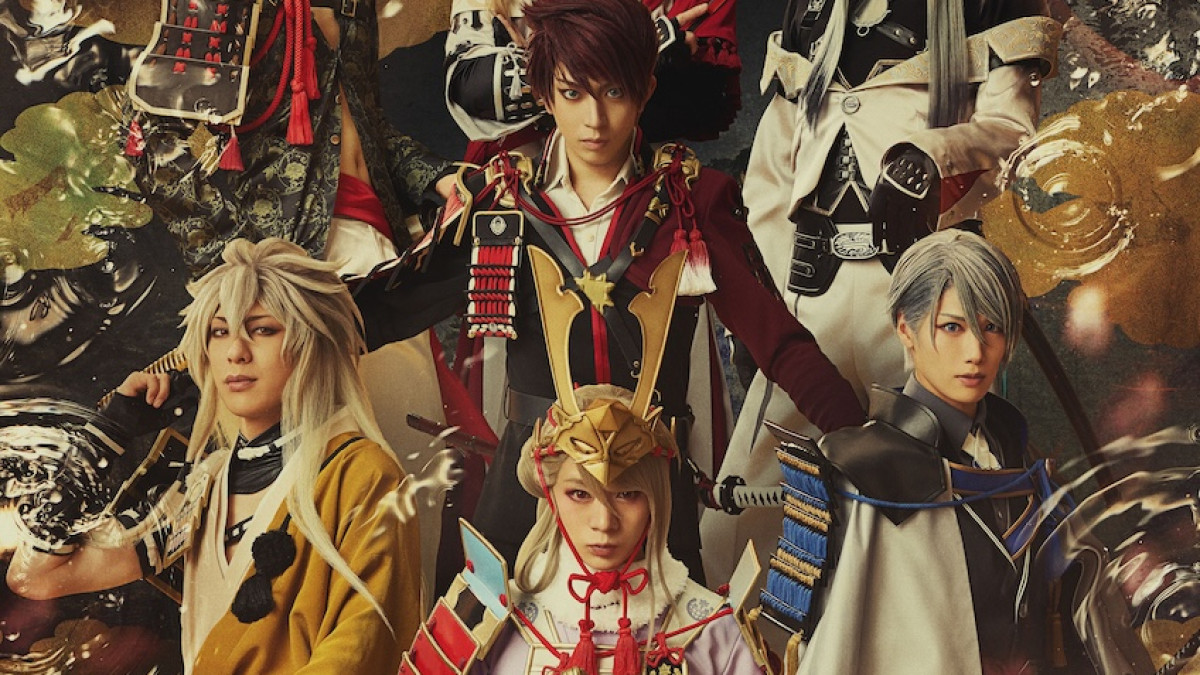
The lights dropped inside Tokyo's theater hall on September 7, 2026, marking a pivotal moment for Japan's 2.5D theatre ecosystem. When Shunya Ohira vaulted onto the stage as Imanotsurugi, his agile footwork in elevated single-tooth geta felt like both a homecoming and an opening volley. Musical Touken Ranbu, widely known as Toumyu, officially launched its autumn production, Tsukiyo Ichiru, featuring a seven-sword formation led by franchise veterans. The performance arrived under heavy emotional freight. As documented in a detailed ナタリー Report on opening night, the stage production serves as a crucial milestone leading up to the franchise's definitive finale set for late 2027.
Every sword manifestation in this production carries heightened weight. Fans across the world are hyper-focused on every casting choice, line reading, and choreographic motif. Ohira's return as the innocent yet tragic dagger Imanotsurugi connects the present ensemble directly back to the franchise's origins, setting an urgent, introspective tone for this multi-city autumn run.
📌 Key Takeaways:
- The Lineup: Shunya Ohira reprises his founding role as Imanotsurugi alongside Ryo Kitazono as Kogitsunemaru, reuniting key Sanjo faction blades for the seven-sword deployment in Tsukiyo Ichiru.
- The Redemption Arc: Kitazono returns to the primary musical series for the first time since a sudden injury forced him to perform voice-only at the 2018 Paris production of Atsukashiyama Ibun.
- The Fixed Horizon: Following the official announcement in December 2025 that Musical Touken Ranbu will conclude permanently in December 2027, every production functions as a deliberate step toward an overarching final curtain.
The Original Sanjo Legacy Reconverges in Tsukiyo Ichiru
When the original cast staged Trial Performance in 2015 and followed it with Atsukashiyama Ibun in 2016, Shunya Ohira established Imanotsurugi as the emotional core of Toumyu. His character, the historical dagger associated with the tragic warlord Minamoto no Yoshitsune, grappled openly with the cruel logic of the Time Retrograde Army. Ohira balanced childlike gymnastics with the devastating realization that altering history to save his former master would erase his own existence.
Seeing Ohira step into those wooden geta in 2026 carries immediate narrative resonance. He is no longer an inexperienced performer learning the ropes of complex sword choreography. He is an industry veteran anchoring a seven-sword deployment that demands extreme technical precision. His interactions on stage demonstrate how deeply the character has developed across a decade of selective appearances, arena festivals, and solo sequences. The playful skipping masks a blade that carries centuries of sorrow, a contrast Ohira delivers with sharper dramatic maturity than ever before.
Kitazono’s Personal Redemption: Eight Years After Paris
Standing alongside Ohira is Ryo Kitazono, who portrays the elegant fox-sword Kogitsunemaru. Kitazono’s presence in Tsukiyo Ichiru carries intense personal meaning. During rehearsals for the international production of Atsukashiyama Ibun 2018 Paris, a severe eye injury sidelined him just before curtain call. The production preserved his role by playing his recorded voice lines while a surrogate performed the physical blocking on the Parisian stage. Kitazono was subsequently forced to sit out the entire Tokyo follow-up run.
Addressing the press on opening night, Kitazono spoke directly about the unresolved business he carried into rehearsals. He explained that his return to the main storyline offered an opportunity to deliver the physical performance he was denied eight years ago. On stage, his chemistry with Ohira reflects that shared history. Their joint blocking moves seamlessly from lighthearted bickering to coordinated sword strikes, giving the production an authentic layer of camaraderie forged through years of backstage adversity.
Tour Logistics and Global Broadcast Strategy
The production committee planned an intensive autumn circuit spanning three major cultural hubs: Tokyo, Osaka, and Aichi. To accommodate an international fanbase aware of the rapidly approaching series finale, the producers partnered with ABEMA PPV to broadcast live digital streams of key dates.
| Production Milestone | Key Cast & Character Focus | Audience Access & Broadcast |
|---|---|---|
| Atsukashiyama Ibun (2016) | Ohira (Imanotsurugi), Kitazono (Kogitsunemaru), Saeki, Kuroba | Domestic theater circuit, late-window DVD/Blu-ray |
| Atsukashiyama Ibun Paris (2018) | Kitazono sidelined by injury; voice-only appearance | Palais des Congrès de Paris live staging, delayed stream |
| Tsukiyo Ichiru (Autumn 2026) | 7-sword formation; Ohira and Kitazono lead veteran ensemble | ABEMA PPV: Sep 7 opening and Oct 25 senshuuraku streams |
| The Series Finale (December 2027) | Complete multi-generational cast across historical arcs | Nationwide arena venues with live worldwide streaming |
The digital distribution strategy marks a clear shift in how Toumyu handles real-time engagement. Viewers who purchased the September 7 opening stream received access to a multi-camera switching feed capturing close-ups of Ohira's expressions. For the October 25 tour finale (senshuuraku), ABEMA scheduled two distinct broadcasts: a static full-stage view during the 13:00 matinee to let viewers analyze ensemble formations, followed by an edited switching broadcast for the 18:30 evening sendoff.
Kayano Isamu Directs Against a Ticking Clock
The creative direction of Tsukiyo Ichiru rests once again with Isamu Kayano, the auteur who has guided Toumyu’s visual grammar from day one. Kayano’s signature staging, blending traditional theatrical dialogue in the first act with high-energy concert routines in the second, feels noticeably tauter in this work. His lighting design relies heavily on monochromatic silver and deep indigo washes, highlighting the moonlit motif promised in the show’s title.
Kayano faces an unusual structural challenge: directing a multi-part narrative knowing precisely when the entire project must end. When the production committee dropped an official announcement on December 1, 2025 confirming that Toumyu will conclude in December 2027, the fandom experienced genuine shock. Japanese theatre franchises often run indefinitely through rotating casts. By fixing an absolute deadline, Kayano has transformed each production into a building block for a structured, tragic conclusion. Imanotsurugi’s recurring questions about temporal impermanence now mirror the reality of the production itself.
The Cultural Evolution of 2.5D Adaptations
A decade ago, 2.5D theatre was frequently written off by mainstream critics as low-budget novelty fare aimed exclusively at anime fans. Toumyu changed that perception entirely. By pairing legitimate historical drama with rigorous vocal training, intricate fight choreography, and top-tier set engineering, the franchise built a commercial empire that regularly fills 50,000-seat sports domes for annual festival runs.
Ohira’s longevity as Imanotsurugi illustrates how the discipline has matured. In earlier decades, young Japanese actors treated manga and video game musicals as temporary stepping stones toward television dramas or conventional stage work. Today, inhabiting a single warrior blade over an eleven-year period requires the same technical stamina and character dedication expected in classical repertory theatre. The physical demands of performing high-impact martial arts while singing live without pitch correction have elevated industry standards across Tokyo's entire commercial theater district.
Frequently Asked Questions (FAQ)
Q1: What makes Shunya Ohira’s performance as Imanotsurugi unique in the Touken Ranbu franchise?
A1: Ohira was part of the original 2015 trial run and has maintained ownership of the role for more than a decade. His interpretation combines acrobatic physical comedy with deep psychological trauma surrounding the blade's association with Yoshitsune, creating one of the most recognizable characterizations in Japanese stage history.
Q2: How can international viewers watch the 2026 Tsukiyo Ichiru performances?
A2: The production partnered with ABEMA PPV to stream select dates live. The broadcasts include the September 7 Tokyo premiere (switching camera) as well as the October 25 final shows (both a full-stage wide angle at 13:00 and a director's cut switching angle at 18:30 JST), accompanied by time-limited archive replay windows.
Q3: Why is Musical Touken Ranbu ending in December 2027?
A3: The production committee announced in December 2025 that the series would reach its planned narrative conclusion in December 2027 to mark the culmination of a deliberate twelve-year story arc. Rather than continuing indefinitely with recast roles, the creative team elected to write toward a definitive grand finale.
The Road to Toumyu’s Final Horizon
The return of Imanotsurugi in Tsukiyo Ichiru is not a simple exercise in theatrical nostalgia. It is an intentional, calculated summoning of Toumyu's foundations. By bringing Shunya Ohira and Ryo Kitazono back to the center of the stage, director Isamu Kayano reminds the audience of where this ambitious experiment began just as the final timeline starts to contract.
With only fifteen months remaining before the December 2027 series conclusion, every battle scene, spoken monologue, and live stream carries an unmistakable finality. Ohira's leaps across the boards are as quick and sharp as they were in 2015, but they now carry the weight of a decade's worth of shared memories. For the fans watching in Tokyo, Osaka, Aichi, or through international streams, Tsukiyo Ichiru confirms that while the end of Toumyu is firmly in sight, the franchise intends to spend every remaining hour burning at full intensity.