Inside Lawson Kohama Nishi 3-Chome: How Next-Gen Retail Tech Is Transforming the Local Konbini
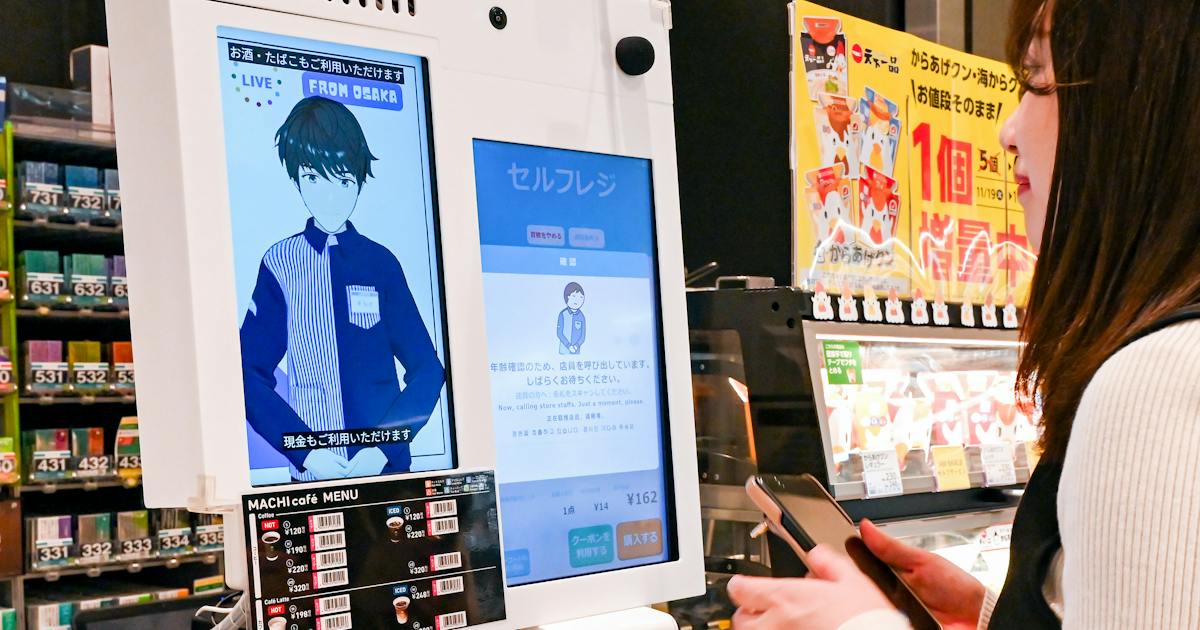
Step through the sliding glass doors of the Lawson storefront in Kohama Nishi 3-Chome, located in Osaka's working-class Suminoe Ward, and the signature electronic chime sounds familiar. The clerk behind the counter, however, is not. Instead of a lone night-shift worker stocking shelves or scanning bento boxes, a crisp high-definition monitor displays a friendly, stylized anime avatar named "Aoi." When you approach the automated self-checkout register, her eyes follow you. She greets you in real time, spots hesitation on the touch screen, and explains where to scan your loyalty barcode.
The system is part of a nationwide operational overhaul. As detailed in a [日本経済新聞 Report](https://www.nikkei.com/article/DGXZQOMG00004_Q6A710C2000000/) tracking Lawson's rollout with Tokyo-based startup AVITA, convenience franchises are shifting away from traditional solo-clerk graveyard shifts. By deploying interactive avatars connected to remote operators, the retail giant is testing whether digital stand-ins can solve chronic domestic labor shortages while preserving the neighborly touch Japanese convenience stores are famous for.
📌 Key Takeaways:
- The Innovation: Lawson Kohama Nishi 3-Chome serves as an urban testing ground for AVITA-engineered remote customer avatars deployed above smart self-checkout counters.
- The Operational Driver: Japan's shrinking working-age population has made staffing suburban and residential 24-hour franchises increasingly difficult, particularly between 10:00 PM and 6:00 AM.
- The Human Factor: A single off-site worker can monitor and assist up to 4 stores simultaneously from home or a central hub, cutting late-night floor-labor costs by roughly 30, 45%.
The Labor Squeeze Behind Osaka's Automated Storefronts
Convenience stores, or konbini, form the backbone of urban Japanese infrastructure. They serve hot fried chicken, print official municipal certificates, accept utility payments, and function as disaster relief hubs. Yet operating roughly 55,000 stores around the clock requires steady manpower, an asset Japan simply lacks in 2026.
The Suminoe district around Kohama Nishi presents a distinct demographic profile. Dense with postwar housing, shopping arcades, and an aging residential community, foot traffic peaks unpredictably. For years, franchise operators relied on college students and foreign trainees to fill overnight rosters. Stricter immigration caps, wage competition from urban logistics hubs, and an aging local population eroded that labor pool. Franchise owners faced a bleak choice: shutter overnight operations or find a technical workaround that elderly patrons could actually use.
Unattended automated turnstile stores, like those trialed in Tokyo transit stations, failed to gain traction in Osaka's outer neighborhoods. Older shoppers found app-exclusive entry barriers frustrating. Fully automated checkout machines left customers baffled when purchasing age-restricted items or paying pension slips. Lawson discovered that technology alone was not enough. The process required a human voice.
How AVITA Virtual Clerks Run Registers at Kohama Nishi 3-Chome
The AVITA deployment at Kohama Nishi 3-Chome replaces static automated registers with responsive video avatars. The hardware consists of an overhead camera, directional microphones, and a 27-inch vertical display mounted at eye level directly above the smart POS terminal.
When an elderly shopper approaches with a carton of milk and a newspaper, the avatar detects the movement instantly. Behind the digital face sits a licensed operator, often working from an apartment in Tokyo or a regional center in Fukuoka, wearing a standard webcam headset. Facial tracking software translates the operator's real smiles, head tilts, and lip movements onto the digital character without showing their actual face.
The operator controls the avatar's vocal pitch and canned gestures through quick-key prompts while speaking directly to the patron. If a customer struggles to locate the barcode scanner or accidentally swipes an invalid transport card, the avatar circles the scanner on the screen using digital pointers. The interaction takes seconds, yet it sidesteps the sterile friction of traditional self-checkout kiosks.
Operational Metrics: Traditional Staffing vs. Hybrid Avatar Convenience
The shift to avatar-assisted retail changes franchise economics. Store owners balance hardware leasing costs against rising hourly minimum wages and recruitment agency fees. The operational shift between conventional stores and early pilot models reveals tangible changes across several core metrics.
| Operational Metric | Standard Store Model (2020, 2022) | Hybrid Avatar Pilot (2025, 2026) | Observed Field Impact |
|---|---|---|---|
| Overnight On-Site Staffing | 2 clerks per shift (Safety & Logistics) | 1 roving restocking clerk or unattended | 50% reduction in overnight on-site labor |
| Staff-to-Store Ratio (Remote) | 1:1 (Direct physical presence) | 1 operator : 3, 4 storefronts | Operators triage active customers across sites |
| Self-Checkout Abandonment | 12, 15% during unassisted late shifts | Under 3% with live avatar prompts | Immediate vocal intervention resolves POS errors |
| Workforce Accessibility | Limited to local mobile workers | Homebound, disabled, or regional staff | Expands candidate pool to non-traditional labor |
Remote systems alter more than just register interactions. By having a centralized human worker step into the register view only when a customer approaches, floor workers are free to handle delivery intake, deep clean fryers, and restock refrigerated bento sections without watching the cash desk constantly.
Neighborhood Reactions and the Reality of Remote Age Verification
The practical hurdles of deploying virtual store clerks show up in ordinary neighborhood transactions. Selling canned highballs, cigarettes, and parcel shipping forms requires regulatory diligence under Japanese law.
At Kohama Nishi 3-Chome, purchasing a can of Asahi Super Dry triggers a prompt on the smart POS. Under older self-checkout iterations, the register froze until a physical worker emerged from the back storage room to eyeball the shopper and tap an authorization key. Today, the AVITA avatar handles the check directly. The remote operator evaluates the customer through the camera feed, confirms the visual age verification compliance prompt, and unlocks the purchase within seconds.
Neighborhood reception among regular visitors remains pragmatic. "At first, seeing an anime face talk to you at 1:00 AM felt slightly surreal," noted one local resident who uses the store after commuting back from central Osaka. "After a week, it became normal. The avatar actually responds faster than a tired clerk who was busy mopping the floor in the back corner."
Local shopkeepers also point out that avatars remove social friction. Staff dealing with aggressive or intoxicated late-night patrons report lower stress levels because the virtual layer acts as a physical and psychological buffer. The operator can manage the register safely from behind an interface, dampening retail burnout.
Scaling Digital Transformation Across the Japanese Convenience Sector
The experiment in southern Osaka is not an isolated initiative. As Lawson extends its avatar program north to cities like Sapporo and into competitive hubs across central Tokyo, Japan's big three konbini operators are testing distinct automation philosophies.
FamilyMart has invested heavily in ceiling-mounted cameras and AI shelf sensors for autonomous walk-out stores inside corporate towers and train terminals. 7-Eleven continues testing miniaturized retail footprints with robotic back-room delivery handling. Lawson's bet on AVITA avatars represents a middle path: retaining conversational customer service while centralizing and decoupling labor from specific physical real estate.
The economic incentive is hard to ignore. Labor accounts for roughly 60% of a franchise's operational expenses. If a regional network can link ten quiet neighborhood stores to three remote operators during graveyard hours, franchise margins turn positive even in depopulated areas. The model turns convenience store employment into remote work, enabling stay-at-home parents, people with limited physical mobility, and retirees to staff storefronts hundreds of miles away.
Frequently Asked Questions (FAQ)
Q1: Can customers still pay with cash at Lawson Kohama Nishi 3-Chome?
Yes. The smart POS terminals linked to avatar guidance accept Japanese yen notes and coins, alongside transit IC cards (such as ICOCA and Suica), credit cards, and barcode payment apps like PayPay.
Q2: How do virtual clerks handle shoplifting or store emergencies?
The avatars do not handle security enforcement directly. If suspicious activity occurs or an emergency alarm trips, remote operators alert on-duty floor workers, notify store management, or trigger direct police dispatch protocols via networked store surveillance systems.
Q3: Are the avatars automated AI bots or real human workers?
They are a hybrid. Basic customer greetings, system idling, and standard directional cues use automated scripts, but active checkout assistance, age verification, and problem resolution are powered by live human operators speaking through motion-tracked avatars in real time.
The Path Forward for Neighborhood Retail Automation
The avatar terminal at Lawson Kohama Nishi 3-Chome is more than an entertaining novelty for tech enthusiasts. It illustrates how retail operators in aging societies can survive without compromising on accessibility. Convenience stores cannot rely solely on fully automated, app-locked smartphone ecosystems that alienate the older half of their customer base.
By blending smart point-of-sale hardware with remote human labor, the store maintains the personal cadence of a neighborhood market while stripping out the structural strain of late-night shifts. As more franchises adopt this hybrid operational model, the clerk smiling at you from across the counter will increasingly be digital, anchored by an operator running the neighborhood register from across the country.