Inside Omura House: Photo Guide to Kyoto's Most Photogenic Omurice Creations

Step through the low doorway of Omura House in Demachiyanagi on any rainy Tuesday afternoon, and the first sensory hit is sizzled butter meeting sweet tomato glaze. Tucked into Kyoto’s academic left bank, this unassuming institution, known locally as おむらはうす, has spent decades perfecting one of Japan’s most technically demanding comfort foods. While social media algorithms routinely churn through high-speed clips of knife-split eggs in Tokyo tourist hubs, Omura House operates at a different, quieter tempo. Here, the pursuit of Japanese yoshoku dining centers on regional ingredients, staggering pan control, and plates built to nourish generations of hungry scholars.
Founded to provide generous, affordable meals to the surrounding student quarters, the restaurant grew from a discreet neighborhood secret into an essential stop on any serious Kyoto comfort food guide. Its dining rooms deliberately retain the unhurried warmth of a Showa-era kissaten, complete with dark-stained timber, brass accents, and the steady percussion of heavy iron skillets clattering over gas burners. To understand the appeal of Omura House is to examine how simple farm eggs, dashi, and seasoned rice transform into architectural wonders of edible comfort.
📌 Key Takeaways:
- The Core Tradition: Omura House anchors Kyoto yoshoku culture with over a dozen distinct sauce-and-rice pairings rather than relying on a single novelty gimmick.
- The Regional Signature: The yuba and tofu omurice reimagines Western-style egg rice through traditional Kyoto ingredients, bathed in clear dashi ankake and pungent wasabi.
- The Portion Reality: Standard servings dwarf standard Japanese cafe portions; ordering down to a "small" is often essential for first-time international visitors.
The Demachiyanagi Roots of Kyoto’s Yoshoku Institution
Long before foreign food itineraries cataloged the Kamogawa delta, Omura House established its flagship branch just north of Demachiyanagi Station. The location was tactical. Positioned within walking distance of Kyoto University, the kitchen answered a basic sociological reality: academic stipends were lean, winter drafts along the river were bitter, and young researchers required substantial caloric fuel. The kitchen team met this demand by anchoring its identity in yoshoku, the late-nineteenth-century culinary movement that adapted European techniques into domestic Japanese staples.
Rather than mimicking the upscale Ginza establishments that treated demi-glace like liquid gold, Omura House built an egalitarian counter. The cooks leaned into speed, scale, and uncompromising skillet heat. Regulars quickly established their own rituals, trading notes on whether the tomato rice base outmatched the butter-fried variations. The flagship became a hub where professors, undergraduate debate teams, and neighborhood elders sat shoulder-to-shoulder under warm pendant lighting, establishing the location as premier Kyoto University student eats.
Deconstructing the Skillets: From Hayashi Sauce to Yuba Ankake
The visual identity of Omura House hinges on precision egg work. Unlike the theatrically slit soft-boiled pillows popularized across western social platforms, the cooks here employ a hybrid approach. The exterior membrane stays intact and velvet-smooth, holding back a molten interior that blankets the rice without saturating it. In several specialty orders, the cooks sweep the setting curds with a rapid wrist snap, evoking the textured ripples of a fluffy tornade omelette rice while preserving structural density.
The menu diverges sharply from standard diners by curating bespoke rice profiles for distinct toppings. Order the hayashi sauce omurice, and you receive an umami-heavy, slow-simmered beef and onion reduction draped across delicate butter-seasoned grains. The rich, slightly acidic brown sauce cuts straight through the richness of farm-fresh egg curds. The plate balances deep savoriness against caramelized sweetness, retaining a glossy mirror finish that photographs brilliantly under soft cafe lamps.
The restaurant’s defining culinary breakthrough, however, abandons European sauces altogether. The yuba and tofu omurice pays explicit homage to Kyoto’s soy heritage. Fresh, delicately folded soy milk skin (yuba) and silky tofu sit atop a seasoned rice bed, encased within soft egg sheets and finished with a shimmering dashi-thickened ankake glaze. A dollop of freshly grated wasabi sits on the rim. The result tastes deeply savory, earthy, and clean, a masterclass in regional adaptation that sets Omura House apart from every omurice counter in Osaka or Tokyo.
Portion Economics, Plate Architecture, and Menu Pricing
First-time visitors routinely miscalculate the scale of an Omura House skillet. today modern cafes frequently shrink portion sizes to offset ingredient inflation, this kitchen maintains its legacy portions. A standard "Regular" order contains between three and four large eggs wrapping a mountain of rice weighing upward of 450 to 500 grams. For most casual diners, the "Small" (which carries a modest ¥50, ¥100 discount) matches what standard Tokyo dining rooms designate as a large.
| Signature Plate | Rice & Egg Architecture | Primary Sauce Profile | Typical Price (2026 Regular) |
|---|---|---|---|
| Kyoto Yuba & Tofu Omurice | Seasoned rice with layered tofu skin and soft egg folding | Clear dashi ankake with grated wasabi accent | ¥1,150, ¥1,300 |
| Classic Hayashi Sauce Omurice | Butter rice wrapped in a velvety, folded omelette cloak | Slow-cooked beef, onion demi-glace, and red wine reduction | ¥1,200, ¥1,350 |
| Seafood Cream Omurice | Pilaf-style spiced rice with firm egg structure | Rich white bechamel infused with squid, shrimp, and herbs | ¥1,250, ¥1,400 |
| Minced Beef Curry Omurice | Classic tomato-tinted chicken rice under molten eggs | Spicy Japanese curry gravy with slow-rendered minced beef | ¥1,100, ¥1,250 |
Every plate arrives alongside a crisp, shredded cabbage salad with house sesame dressing, balancing out the dense carbohydrates. The value proposition remains starkly customer-friendly. Despite climbing energy costs and egg wholesale spikes across Japan, Omura House holds its core offerings around the ¥1,100 to ¥1,400 threshold, cementing its enduring status as a sanctuary for value-conscious diners who refuse to compromise on technical execution.
Navigating Queues: Demachiyanagi vs. Omura House Kinkakuji
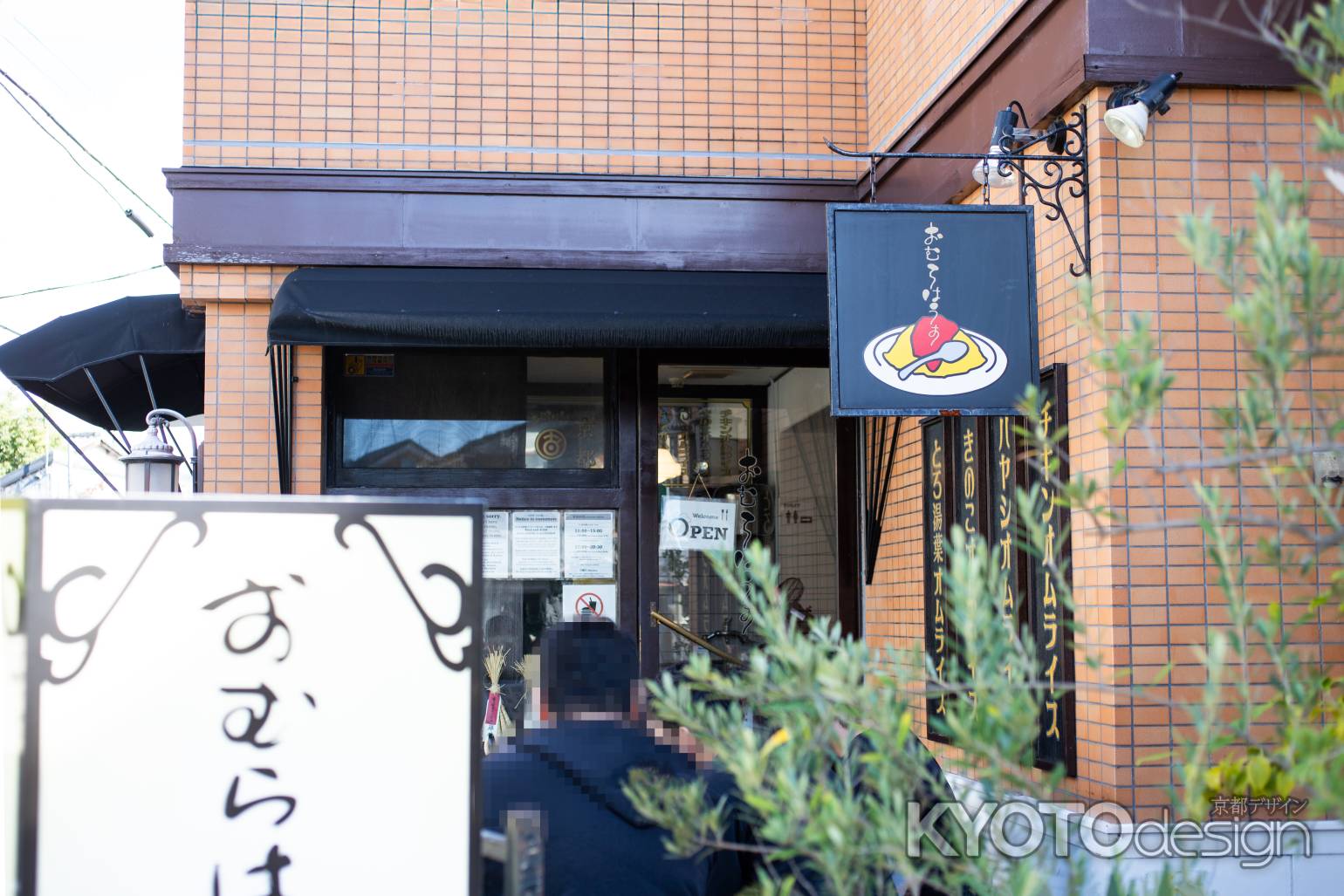
Succeeding at an Omura House excursion requires understanding branch logistics. The brand operates two distinct hubs, each catering to entirely different pedestrian flows. Omura House Demachiyanagi remains the spiritual home, tucked in an atmospheric residential grid. Seating here is limited, packing roughly 20 to 24 patrons into close-quarters tables and narrow counter spots. Lines materialize early. During peak weekend lunch hours (11:30 AM to 1:45 PM), queue times reliably hover between 35 and 60 minutes.
Conversely, Omura House Kinkakuji sits further west along the sightseeing corridor near the Golden Pavilion. This outpost handles heavier waves of international sightseers alongside domestic tour groups. The interior layout feels slightly more open, but midday congestion can spike unpredictably whenever tour buses unload nearby. Smart travelers aim for shoulder windows: arriving right at the 11:00 AM opening bell or sliding in after the lunch rush around 2:15 PM almost guarantees immediate seating at either location.
Dining Etiquette and Takeout Mechanics
Navigating the dining room requires observing basic local conventions. Like many classic Kyoto specialty restaurants, the business runs lean, frequently operated by a two-person front staff and two cooks on the line. Space inside the waiting vestibule is tight. If a line extends outside, diners wait along the exterior wall without blocking adjacent driveways or residential entryways.
Omura House provides a robust takeout service, a fixture originally designed for dorm-bound students during late-night exam prep. When ordering takeout at the counter, staff pack sauces into separate, heat-retaining compartments to avoid turning the delicate egg casing soggy on transit. For dine-in patrons, shared plates are discouraged during peak operational rushes unless accompanied by side orders. Each guest is expected to order an individual main dish. Cash remains widely favored, though modern contactless payment terminals and IC cards have progressively integrated into both counters.
Frequently Asked Questions (FAQ)
Q1: Which branch offers the better experience: Demachiyanagi or Kinkakuji?
A1: The Demachiyanagi branch delivers the authentic, nostalgic university cafe ambiance with lower tourist density. The Kinkakuji branch works better logistically if you are already touring northwestern Kyoto temples, though wait times fluctuate based on tourist traffic.
Q2: Should an average eater order the Regular or Small size?
A2: Order the Small size if you intend to eat anything else during your day in Kyoto. The Regular size uses an enormous portion of rice and multiple eggs, designed primarily for collegiate athletes and heavy eaters.
Q3: Can the kitchen accommodate strict vegetarian diners?
A3: True vegetarian dining is difficult here. Even vegetable-heavy dishes, like the yuba and tofu omurice, utilize authentic Japanese dashi broth containing bonito (skipjack tuna) extracts. Always ask the staff about dashi bases before ordering if you avoid fish products.
The Enduring Pull of Kyoto's Old-School Comfort Food
As social media trends drive dining culture toward fleeting visual spectacles, establishments like Omura House prove the value of disciplined consistency. The restaurant avoids gimmicks. The cooks focus entirely on the sound of butter melting in hot iron, the smooth fold of setting curds, and sauces prepared with generational care. For anyone navigating the streets of Kyoto, sitting down to one of these steaming skillets provides something far more enduring than a viral photo: an authentic, soul-warming connection to Japan’s living comfort food heritage.