Inside Snow Resort Romance no Kamisama: New Signs, Fresh Trails, and Visual Updates

Inside Snow Resort Romance no Kamisama: New Signs, Fresh Trails, and Visual Updates
When the local operators of Kita Shinshu Kijimadaira Ski Resort decided to overhaul their aging mountain property in northeastern Nagano, they bypassed conventional corporate restructurings and bet on 1990s pop culture nostalgia. As detailed in a primary investigation by Shinano Mainichi Shimbun Digital, the slopes on Mount Kosha discarded decades of municipal-style naming to formally rebrand as "Snow Resort Romance no Kamisama." The bold move directly licensed the iconic 1993 mega-hit single by Japanese singer-songwriter Kohmi Hirose, widely celebrated across Japan as the nation's undisputed "Winter Queen."
The transformation reaches far beyond neon pastels and nostalgic marketing. For decades, foreign powder chasers bypassed Kijimadaira Village on their way to crowded neighboring resorts in Nozawa Onsen, Hakuba, and Shiga Kogen. Now, fresh capital injections have modernized base operations, overhauled lift ticket gates with automated smart passes, and completely reimagined the resort's split identity: catering simultaneously to high-adrenalin freeriders hunting steep deeps and young families needing barrier-free snow recreation.
📌 Quick Summary:
- The Structural Pivot: Kita Shinshu Kijimadaira Ski Resort rebranded as Snow Resort Romance no Kamisama, integrating Kohmi Hirose's cultural legacy into its physical operations, theme songs, and hospitality hubs.
- On-Mountain Upgrades: A modernized trail layout preserves the infamously steep 45-degree Pioneer Course while dedicating sprawling lower meadows to an expanded, family-focused snow play zone.
- The Access Advantage: Located just 15 to 20 minutes from the Hokuriku Shinkansen line at Iiyama Station, the resort delivers direct access to uncrowded Nagano powder snow without the packed gondola queues of mega-resorts.
How Kijimadaira Adopted the Winter Queen's Anthem
Japanese ski culture peaked financially in 1993. That year, Kohmi Hirose released "Romance no Kamisama" (The God of Romance), an upbeat pop track featured in an iconic winter sports commercial campaign that sold millions of physical CD singles and became permanently linked with weekend ski excursions. By the 2010s, domestic participation had cratered, leaving regional ski hills throughout northern Nagano strapped for cash and saddled with aging Showa-era machinery.
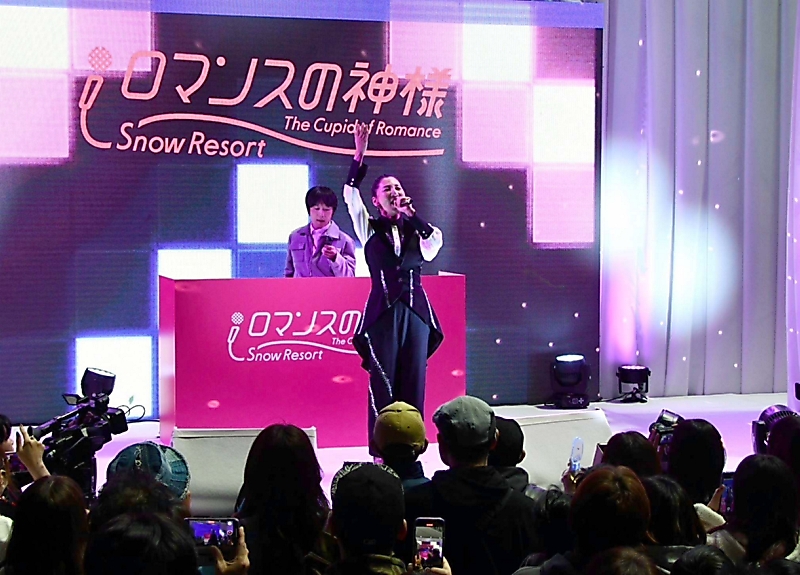
Rather than letting Kijimadaira quietly dissolve into an overlooked municipal asset, resort management partnered directly with Hirose's agency to complete a thorough brand overhaul. Hirose arranged an exclusive, reimagined version of the classic anthem as the resort's official theme song, which premiered during a live concert in Saitama before echoing across the slopes. The visual updates followed immediately: retro neon-pink and winter-blue accents replaced weathered wooden signage, fresh logos dressed the lift towers, and modern hospitality concepts took root in the base lodges.
On the Slopes: Pioneer Course Drops and Family Snow Parks
Beneath the cheerful pop branding lies serious alpine terrain. Mount Kosha drops steep pitches that collect dry, cold Nagano powder snow blowing directly across the Sea of Japan. The mountain's crown jewel remains the notorious Pioneer Course. Pitching downward at a harrowing maximum grade of 45 degrees, this ungroomed fall line stands among the steepest lift-accessed single pitches in Japan. Following heavy storm cycles, it turns into an open field of waist-deep snow punctuated by massive technical moguls, testing advanced skiers who previously dismissed Kijimadaira as a sleepy local hill.
Down at the mountain's base, the terrain flattens out into an unusually wide, gentle plateau. The redesign took advantage of this natural topography by walling off beginner traffic from aggressive drop-in zones. The expanded Family Snow Park features covered magic carpets, dedicated sledding lanes, snow-strider tracks, and enclosed beginner learning areas. This sharp geographical division keeps novice children completely isolated from speed-focused boarders carving the upper steeps, solving an operational safety headache that plagues older Japanese ski hills.
The Operational Shift: Infrastructure, Lifts, and Lift Ticket Gates
Rebranding without operational upgrades frequently fails. Kijimadaira's backers paired their cultural facelift with tangible mechanical improvements across the mountain's core infrastructure. The physical map has been streamlined to clearly delineate groomed carving avenues, ungroomed freeride bowls, and beginner teaching areas.
| Infrastructure Component | Traditional Era (1980s, 2022) | Romance no Kamisama Era (2023, 2026) |
|---|---|---|
| Mountain Identity & Branding | Kita Shinshu Kijimadaira Ski Resort; municipal, traditional alpine styling | Snow Resort Romance no Kamisama; pop-culture iconography, vibrant modern signage |
| Ticketing & Gate Systems | Paper vouchers, manual punch inspections at lift lines | Direct-to-lift digital passes, contactless RFID card gates |
| Base Amenities & Rental Hub | Fragmented lodge rentals, limited non-ski family facilities | Centralized equipment suites, indoor play hubs, covered magic carpets |
| Terrain Separation | Pioneer Course often bottlenecked near lower runouts | Distinct isolation between extreme upper slopes and dedicated family snow zones |
The updated RFID gates eliminate physical ticket checks, significantly cutting queue bottlenecks on peak holiday weekends. Meanwhile, base lodges have refreshed dining menus, swapping stale canteen fare for local culinary showcases featuring award-winning Kijimadaira Koshihikari rice, regional craft beer, and modernized rest spaces designed for remote workers spending extended winter stretches in the valley.
Transit Logistics: Escaping the Overcrowded Nozawa Orbit
Kijimadaira's strongest logistical asset is its direct proximity to primary high-speed rail. The resort sits just 8.5 kilometers from Iiyama Station, a direct stop on the JR Hokuriku Shinkansen line. Travelers boarding a bullet train at Tokyo Station pull into Iiyama in roughly 100 minutes. From there, local shuttle buses, hotel transfer vans, or short taxi rides reach the mountain base in under 20 minutes.
This rail connection provides a massive competitive advantage. While nearby resorts battle extreme traffic choke points and severe rental-van shortages, Kijimadaira functions smoothly for travelers without rental cars. International freeriders frequently use the area as a calm, uncrowded base camp: shredding Kijimadaira's north-facing tree lines on storm mornings, then taking short interconnecting shuttles to cross-mountain runs across Mount Kosha (including Yomase Onsen and X-JAM Takaiwa) when weather windows open.
Who Benefits Most and Who Should Skip Kijimadaira
The resort's bold updates make it an exceptional match for specific traveler profiles, while others might find the mountain's layout misaligned with their goals.
Ideal Travelers:
Families with young children benefit immediately from the massive, isolated base areas where little ones can sledge or ski without dodging fast traffic. Powder hounds on storm-chasing tours will relish untracked fresh snow on the Pioneer Course hours after nearby commercialized resorts have been carved clean. The mountain also appeals directly to travelers craving an authentic rural Nagano retreat anchored by traditional hot-spring ryokans and world-class rice agriculture.
Travelers Who Should Look Elsewhere:
Partiers seeking wild, late-night craft beer scenes and Western-style cocktail lounges will be disappointed; nightlife in Kijimadaira Village remains quiet, dispersed, and village-centric. Intermediate cruisers who demand hundreds of kilometers of interconnected groomed trails will exhaust the trail map within two full days unless they purchase multi-mountain Mount Kosha access passes.
Frequently Asked Questions (FAQ)
Q1: Did the mountain's physical terrain change with the new name?
A1: The physical mountain remains Mount Kosha, and the legendary 45-degree Pioneer Course remains fully intact. The updates focused on rebranded base lodges, streamlined trail demarcations, updated contactless lift systems, and expanded lower snow parks.
Q2: Can I access other ski resorts from Kijimadaira?
A2: Yes. Kijimadaira connects to the Mount Kosha collective pass network, which traditionally links adjacent ski areas like Yomase Onsen and X-JAM Takaiwa, depending on snow conditions and seasonal lift interlink schedules.
Q3: Is English support readily available around the resort?
A3: English signage, online booking portals, and multilingual ticket kiosks have expanded dramatically under the new management model, though the town retains a far more authentic Japanese atmosphere than internationalized hubs like Niseko or Hakuba.
Navigating the Future of Nagano's Winter Escapes
The reinvention of Kita Shinshu Kijimadaira into Snow Resort Romance no Kamisama demonstrates how Japan's independent regional ski destinations can reclaim relevance in an intensely competitive tourism market. Rather than masking its vintage character, the resort embraced its cultural ties, upgraded essential mountain hardware, and doubled down on its greatest structural strengths: steep, uncrowded powder drops and family-friendly base spaces. As travelers increasingly seek relief from overcrowded mega-resorts, Kijimadaira offers an appealing alternative where deep Nagano snow and genuine mountain warmth take center stage.