Inside the Cutest Viral Craze: Kids Nailing the Legendary Choo Choo TRAIN Roll Dance
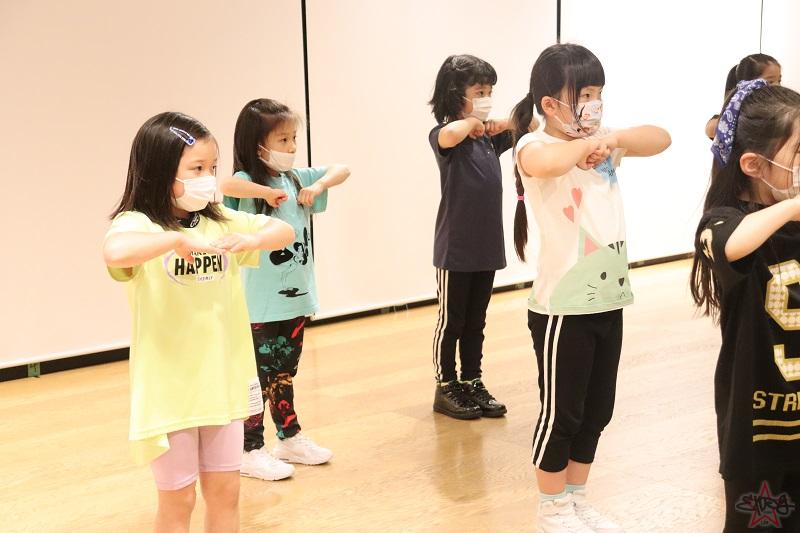
Seven five-year-olds stand in a dead-straight file on a gym floor in suburban Tokyo, hands pressed behind their backs, knees slightly bent. When the brass synthesizer riff kicks in, the child at the front dips right, rolls their shoulders counterclockwise, and snaps back upright. A fraction of a second later, the second child follows the exact same arc, followed by the third, the fourth, and the fifth. From the front, their bodies blur into a mechanical kaleidoscope, a spinning human gear turning to a 115-beat-per-minute groove.
The sequence is the iconic opening roll dance from "Choo Choo TRAIN," a song first recorded in 1991 by Japanese pop outfit ZOO and immortalized across Asia by dance-vocal juggernaut EXILE in 2003. Decades after its club-scene debut, this circular line dance routine has found an unexpected second life as a viral phenomenon across global video platforms. Videos tagged under Japanese terms for children's dance routines have racked up hundreds of millions of views, turning classroom recitals and sports festival performances into a shared international fascination with rhythm, coordination, and pure playground joy.
📌 Key Takeaways:
- The Viral Movement: Short-form video platforms have turned standard Japanese preschool routines into global viral trends, driven by the visual illusion of children executing complex sequential body rolls.
- The Pedagogical Roots: Japanese early childhood curricula incorporate the 1991 pop classic into annual undokai (sports day) events because its rigid 8-count structure accelerates gross motor development.
- The Technical Challenge: Flawless execution requires micro-second phase shifts between dancers, turning what looks like simple silliness into an intricate lesson in ensemble timing.
From 1991 Club Track to Tokyo Playground Tradition
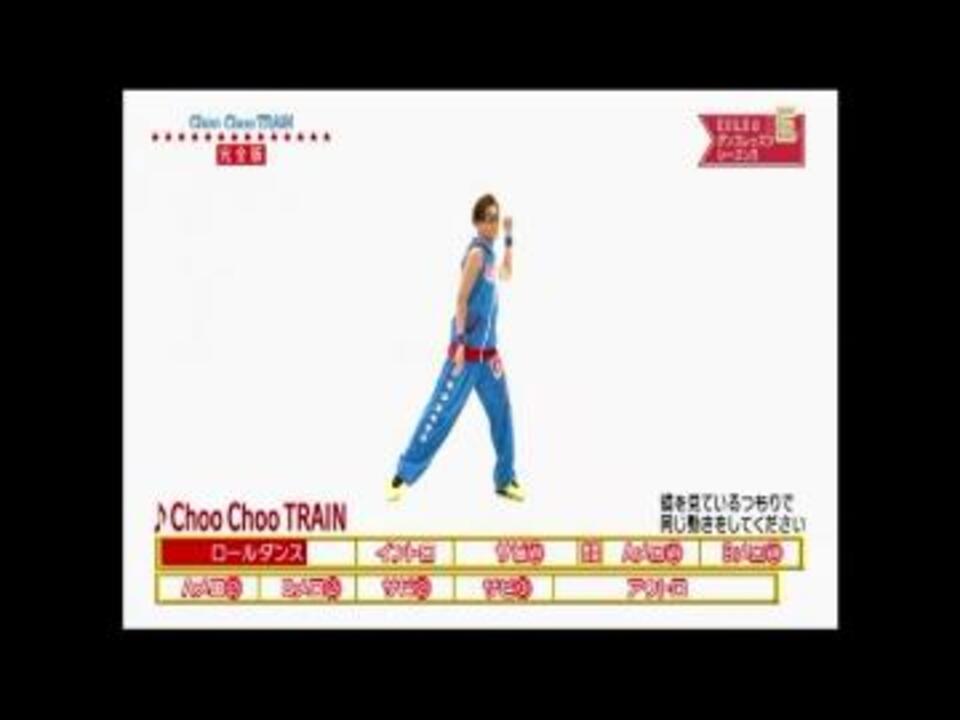
Before it became an elementary school rite of passage, "Choo Choo TRAIN" belonged to the late-night television sets of bubble-era Japan. Written by singer-songwriter Keizo Nakanishi and arranged for the hip-hop collective ZOO, the track paired an upbeat dance beat with synchronized street dance that felt revolutionary on national broadcast television. The signature intro, a line of dancers rotating their upper bodies in a sequential spiral, was designed to mimic the driving piston rods of a steam locomotive.
When EXILE re-recorded the track in October 2003, the song crossed into cultural permanence. Led by original ZOO member Hiro, EXILE polished the choreography into an unmistakable visual signature. Japan's Ministry of Education, Culture, Sports, Science, and Technology gradually updated physical education guidelines throughout the late 2000s and early 2010s to prioritize rhythm-based activities. Teachers looking for high-energy, accessible group choreography quickly seized on the track.
By the time EXILE’s junior groups and dance academies expanded nationwide, the roll dance was no longer just pop culture. It was an institutional fixture of the Japanese school calendar, rehearsed for months leading up to autumn sports festivals.
The Mechanics of the Spiral: Breaking Down the Intro Move
The visual impact of the roll dance hinges on a classic spatial illusion known in choreographic circles as a phase wave. The dancers do not move simultaneously. Instead, they execute the exact same upper-body rotation offset by specific beat fractions.
The movement looks deceptive on video. Executing it with five-year-olds requires breaking down complex biomechanics:
The lead dancer initiates the circular line dance routine on count one, dropping the torso to the lower right quadrant, rolling up through the left shoulder, and returning to center. Each dancer directly behind must delay their descent by precisely one eighth-note or quarter-note, depending on the arrangement. If dancer three moves too early, the heads bunch together, breaking the illusion of a continuous spinning funnel. If dancer four hesitates, the wave collapses into disjointed swaying.
Preschool instructors commonly use vocal cues rather than metronome counts to train younger children. Teachers replace numbers with rhythmic chants like "gurutto mawashite" (roll it all the way around) to help toddlers internalize the circle's apex before matching it to the song's opening drum fill.
Early Childhood Development Through Synchronized Movement
Early childhood educators view the choreography as a masterclass in motor skill development. Synchronized roll choreography forces children to integrate auditory tracking with peripheral spatial awareness. Unlike static dances where children mirror a teacher facing them, the roll dance forces each participant to rely almost entirely on acoustic timing, because they cannot see the dancer directly behind them.
The table below outlines how Japanese early childhood education programs scale the routine across age brackets:
| Age Bracket | Choreography Format | Developmental Focus |
|---|---|---|
| Ages 2, 3 (Nursery / Toddler) | Loose circular sways, simplified 2-count head dips | Gross motor balance, basic beat recognition |
| Ages 4, 5 (Kindergarten / Hoiku-en) | 5 to 8 dancer single-file lines, true 8-count rotations | Phase-shift timing, sequential rhythm coordination |
| Ages 6, 8 (Lower Elementary) | Full intro roll followed by verse footwork and crossovers | Spatial staging, complex group synchrony |
| Ages 9, 12 (Upper Elementary) | Multi-line interlocking wheels, exact EXILE-spec tempo | Precision isolation, polyrhythmic ensemble movement |
Data from school motor performance assessments shows that children engaged in structured ensemble routines demonstrate faster recovery in dynamic balance tests compared to those doing unstructured exercise. The rotational torque required to whip the torso around while keeping both sneakers glued to the floor strengthens core musculature that toddlers frequently struggle to engage.
Why Sports Day Performance Videos Exploded Globally
Every September and October, hundreds of thousands of Japanese schools host their annual undokai. Parents pack bleachers with high-definition cameras, capturing elaborate field performances that students have practiced since the start of the autumn term.
A typical clip starts innocently enough. You see matching colored bucket hats, oversized cotton track uniforms, and white sneakers tied with double-knots. Then the intro hits. What captures international audiences is the sharp contrast between how small the children are and how clean their synchronization looks.
Platforms like TikTok, Instagram Reels, and YouTube Shorts amplified these clips outside Japan starting in late 2023, with viewership surging through 2025 and 2026. The visual plays directly into short-form algorithms: an instantly recognizable musical hook, a clear setup within three seconds, and an immediate visual payoff. Viewers who have never heard of ZOO or EXILE still find themselves captivated by a file of six-year-olds moving like a finely tuned watch movement.
Western dance teachers have taken notice. Elementary dance studios in North America and Europe have started adopting the intro roll for end-of-year showcases, drawing inspiration from translated tutorial clips posted by Japanese creators.
Teaching the Sequence: Common Pitfalls and Studio Fixes
Achieving that clean circular visual is harder than it appears. Young dancers run into several predictable physical stumbling blocks during rehearsals:
The first trap is the shoulder drift. Young dancers tend to step sideways as their torso circles out, widening the file until the lead dancer can no longer hide the team behind them. Instructors fix this by laying colored masking tape rectangles on the floor, forcing each child to plant their heels inside designated boundaries.
The second challenge is speed distortion. Inexperienced dancers almost always spin too fast on the descent and stall at the top. The rotation must remain a steady, fluid circular sweep. Instructors often pair students with older dance partners or perform the counts in half-time until muscle memory locks in.
The result is worth the repetition. When an entire classroom pulls off the wave simultaneously, the psychological boost is palpable. The routine relies entirely on shared accountability; every child knows that if one link breaks, the entire chain visibly stops.
Frequently Asked Questions (FAQ)
Q1: What is the original song behind the viral kids' roll dance?
The routine is set to "Choo Choo TRAIN," initially released by Japanese group ZOO in 1991 and later turned into a massive chart-topping hit by EXILE in 2003. The iconic circular line dance routine is part of both groups' original stage choreography.
Q2: Why do Japanese kindergartens teach this specific dance routine?
The choreography fits directly into Japanese school sports day (undokai) programs because it teaches rhythm coordination, group timing, and body awareness without requiring dangerous acrobatics or expansive floor space.
Q3: How many dancers are needed to make the circular roll look correct?
The visual illusion requires a minimum of four dancers to produce a visible ripple effect. The ideal formation uses six to eight participants, allowing the circular motion to complete a full 360-degree rotation while the front dancer resets.
Q4: Can toddlers under age four learn the Choo Choo TRAIN intro moves?
Toddlers can participate in simplified variations focusing on two-beat sways rather than full continuous rotations. Full sequential circular rolls generally become feasible around age four or five as neck and core muscle control matures.
The Lasting Cultural Resonance of a Playground Favorite
The viral spread of these schoolyard performances illustrates how music and movement cross language boundaries without losing their original spirit. What began as a club track in early-90s Tokyo has become a timeless piece of childhood infrastructure, passing smoothly from professional dancers to primary school teachers to smartphone screens worldwide.
Long after the trending hashtags cycle out, the routine will remain a staple in Japanese school gymnasiums. Decades from now, another generation of four-year-olds will line up single file, wait for the opening percussion to drop, and lean together into the curve.