Is Daisougen Fukahi Slang Dead? Fact-Checking Its Status in Modern Japanese Net Culture

Anyone spending time in Japanese live stream chats or scrolling through social video commentary will eventually hit a wall of green kanji: 大草原不可避. Translated literally, it means "great prairie inevitable," but in practice, it operates as an intense marker of uncontrollable laughter slang. As documented by an ITmedia Report charting the etymology of Japanese netspeak, the phrase represents one of the most elaborate linguistic chain reactions in online history, evolving from basic typographical shorthand into an exaggerated internet idiom.
Yet internet culture shifts rapidly. What stood as peak netizen wit a decade ago now risks reading like outdated jargon from the early message board era. Across platforms like X, YouTube, and Twitch, younger Japanese users frequently debate whether writing out the full four-kanji phrase marks someone as culturally retired or playfully vintage. Tracking its journey reveals how text-board subcultures permanently transformed mainstream Japanese communication.
📌 Quick Summary:
- The Literal Meaning: Daisougen fukahi (大草原不可避) translates to "unavoidable great prairie," functioning as a Japanese LOL equivalent for uncontainable, explosive laughter.
- The Chain Reaction: The phrase grew out of the kanji warai (笑), shortened to "w", visually reinterpreted as grass (草, kusa), multiplied into a prairie (大草原), and paired with pseudo-formal vocabulary.
- Modern Social Reality: While Gen Z Japanese users lean toward faster, simplified reactions, the term survives primarily inside VTuber stream chat memes, gaming banter, and ironic nostalgic humor.
From Single Letter to Endless Prairie: The Linguistic Origin
To grasp the Daisougen Fukahi meaning, one must trace a three-decade chain reaction in Japanese internet slang. In the 1990s and early 2000s, PC users on dial-up connections typed the kanji 笑 (warai, meaning laugh) inside parentheses at the end of sentences. Gamers playing early online titles like Final Fantasy XI quickly stripped away the parentheses and keyboard-converted the word to its romaji initial: w. It was fast, efficient, and effortless to type during heated multiplayer battles.
Netizens soon realized that chaining multiple letters together, such as "wwwwww", resembled blades of grass sprouting along the text baseline. This visual pun triggered a brand-new verb: kusa haeru (草生える, literally "grass is growing"). If a joke proved moderately funny, users posted 草 (grass). If something provoked uncontrollable laughter, the grass expanded into a meadow (草原, sougen), and ultimately into a vast grassland (大草原, daisougen).
The final puzzle piece arrived from 2channel culture and its signature faux-bureaucratic phrasing. Anonymous forum posters loved attaching rigid Sino-Japanese compounds to absurd concepts. Appending fukahi (不可避, unavoidable or inevitable) turned a visual joke into mock-philosophical decree: the humor was so overwhelming that a massive prairie could not be prevented. By 2013, 2015, the phrase had conquered textboards across Japan.
The Age Question: Does Using the Phrase Make You Look Old?
In online spaces, slang ages in dog years. Writing out 大草原不可避 today carries a distinctly mid-2010s aroma. Data from youth culture agencies and mobile app consumer surveys consistently show that Japanese teenagers and university students rarely type four-character idioms into private LINE messages or casual Instagram comments. Instead, typing out all six syllables feels deliberately heavy, dramatic, and slightly archaic.
Mainstream Gen Z communication prioritizes speed. Modern mobile texters overwhelmingly rely on a single 草, shorthand like "草草草", or newer phonetic contractions. Dropping 大草原不可避 into a casual smartphone chat with someone born after 2005 can prompt the same eyebrow-raise that typing "ROFLCOPTER" or "Epic Fail" triggers in contemporary English spaces. It instantly signals that the writer spent formative years browsing 5channel text board memes or early video portals.
That does not make the expression completely dead, however. Context dictates reception. In competitive gaming circles and live streaming lobbies, users deploy the phrase with deliberate theatrical irony. It functions less as a sincere reaction and more as a performative comedic stamp, acknowledged by both sender and receiver as a vintage artifact of Japanese netizen humor.
Evolution of Japanese Netspeak: From Message Boards to Stream Overlays
The transition of Japanese textboard comedy into mainstream pop culture followed specific hardware and platform generational leaps. Over three decades, laughter shorthand shifted from mechanical efficiency to visual imagery, eventually settling into algorithmic meme culture.
| Era | Dominant Slang | Primary Platform | Cultural Context |
|---|---|---|---|
| Late 1990s, 2002 | (笑), (爆), (藁) | Early 2channel, Personal Blogs | Direct text abbreviations for physical laughter and explosive chuckles. |
| 2003, 2009 | w, wwwwwww | PC Online Games, 2channel Boards | Rapid keyboard input; repetition creates the visual "lawn" aesthetic. |
| 2010, 2017 | 草, 大草原不可避, 草生える | Niconico Douga, Twitter, 5channel | Golden age of floral metaphors; text scrolling horizontally over video. |
| 2018, 2026 | 草, www, Stamp Emotes | YouTube Live, Twitch, TikTok, LINE | Hyper-compressed expressions, ironized nostalgia, VTuber superchats. |
As the table demonstrates, Japanese netspeak continuously folds back onto itself. When users realized typing long kanji chains slowed response times during dynamic video events, the underlying vocabulary contracted back down to single characters, leaving the four-kanji format as an exaggerated punctuation mark.
The Screen-Scroller Effect: Niconico Douga and VTuber Broadcasts
The cultural longevity of this meme is directly tied to platform architecture, particularly Niconico Douga comment culture. Unlike Western video services where text stays corralled in a sidebar, Niconico displays viewer comments directly across the video playback pane at synchronized timestamps. When a creator suffered a hilarious in-game defeat or delivered an absurd punchline, thousands of viewers typed "wwww" simultaneously, flooding the screen with a literal green wall of characters.
Commenters christened this screen-filling spectacle sougen (prairie). The jump to "unavoidable prairie" became an organic reaction to moments where the screen was completely blanked out by laughing text. The physical act of obscuring the video footage reinforced the joke.
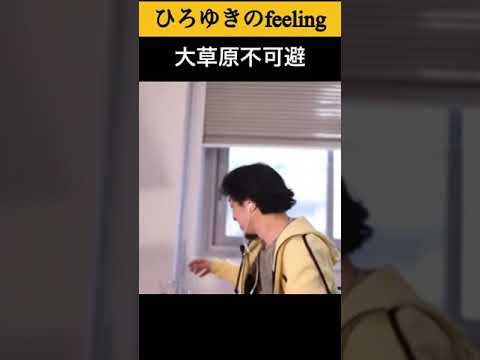
In modern streaming, that visual tradition persists through VTuber stream chat memes across agencies like Nijisanji and hololive. When digital entertainers collapse into unscripted giggles or trigger bizarre physics bugs in open-world titles, chats scroll at blistering speeds. Dedicated stream overlays and custom emojis frequently depict stylized lawns or lawnmowers. While viewers rarely type out the complete compound manually, automated stream bots and channel clip highlights frequently paste 大草原不可避 in large thumbnail fonts to signal peak comedic chaos.
Etiquette and Context: When to Use the Phrase
Navigating modern Japanese internet expressions requires acute awareness of audience and digital venue. Using text-board slang in the wrong environment can make you appear either tone-deaf or socially awkward.
Writing the phrase works naturally in high-energy streaming comments, comedic clip compilations, anonymous gaming Discords, and self-deprecating social media posts detailing personal blunders. In these settings, everyone understands the heightened dramatic posture. It signals that an event was not merely mildly funny, but an absolute trainwreck of comedic proportions.
Conversely, the phrase should never appear in business communication, semi-formal correspondence, or early interactions with professional acquaintances. Furthermore, deploying it in direct one-on-one text messages with casual acquaintances can feel unnecessarily stilted. Modern native speakers treat it like a caricature voice: amusing when delivered with full comic commitment, but jarring inside ordinary conversation.
Frequently Asked Questions (FAQ)
Q1: What does Daisougen Fukahi mean in direct English?
A1: It literally translates to "great prairie unavoidable" or "inescapable grassland." It serves as an exaggerated Japanese equivalent to "bursting into uncontrollable laughter" or "I cannot stop laughing."
Q2: Why is the kanji for grass associated with laughter in Japan?
A2: The initial letter for the word laugh (warai) is "w." Netizens typing chains like "wwwwww" noticed it looked like blades of grass. That observation spawned the slang term kusa (草), which later expanded into meadows and prairies.
Q3: Is typing 大草原不可避 considered cringe in modern Japan?
A3: Among Gen Z users in ordinary messaging apps, it feels dated and reminiscent of 2010s board culture. However, inside gaming streams, VTuber chats, and comedic YouTube video editing, it remains widely understood and accepted as playful hyperbole.
The Staying Power of Japan’s Prairie Meme
Internet slang rarely disappears entirely; instead, it settles into specific cultural registers. While 大草原不可避 has ceded its status as everyday front-line internet shorthand to faster single-character variants like 草, it occupies a permanent place in the lexicon of digital Japan. The expression stands as a classic case study in netizen linguistic engineering: taking a simple functional keystroke, turning it into a visual landscape, and wrapping it in dramatic classical syntax to celebrate an ordinary human laugh.