Judo or Karate for Self-Defense? Complete Comparison Guide for Beginners

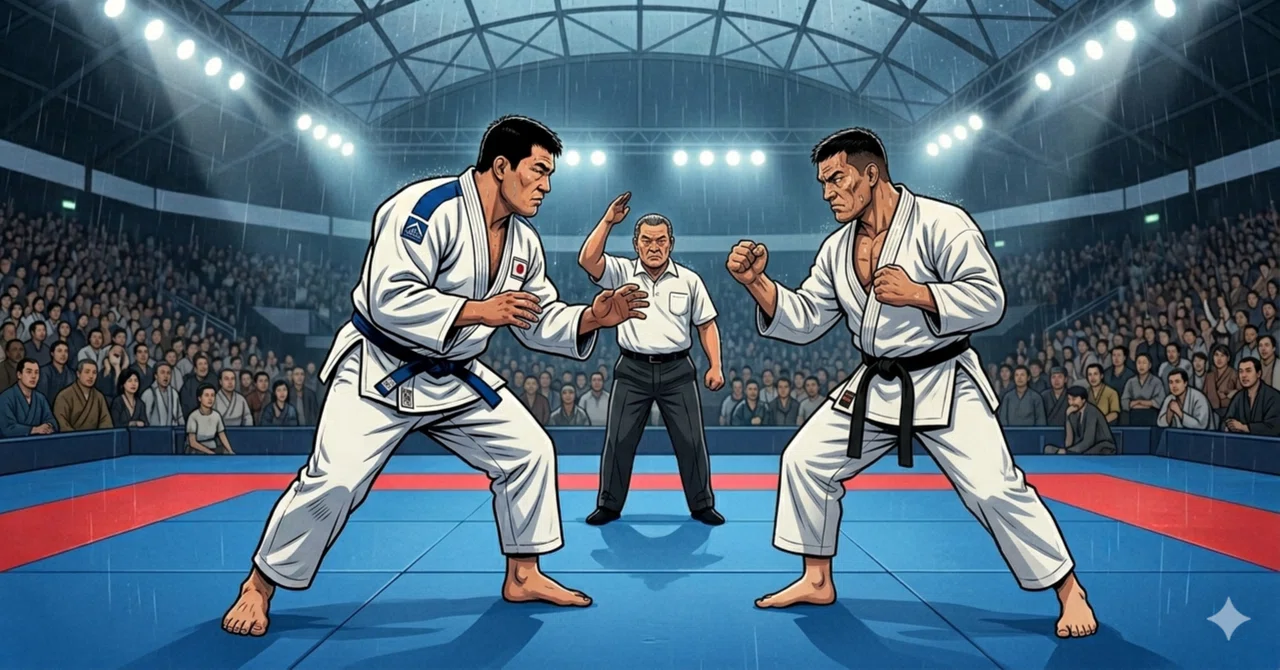
The argument over whether grappling or striking reigns supreme in a street confrontation remains one of martial arts' most heated debates. Walk into the Kodokan in Bunkyo, Tokyo, the global headquarters of Judo, and you immediately encounter a reverent silence that contrasts sharply with the violent physical physics executed on its tatami mats, a contradiction recently examined in a 産経新聞 Report analyzing the divergence between traditional martial philosophy and modern conflict. On the other side stands Karate, rooted in Okinawan civil defense, promising to neutralize aggression across distance with concussive linear and lateral strikes. For anyone stepping into an academy in 2026, the question is rarely academic: which discipline delivers superior survival tools when physical conflict turns unavoidable?
📌 Key Takeaways:
- The Direct Verdict: Judo holds a distinct tactical advantage in common one-on-one street fights due to live grappling mechanics and the catastrophic impact of hard-surface throws.
- Distance Dynamics: Traditional Karate excels at spatial awareness and striking before an opponent enters a clinch, proving far more adaptable against multiple opponents.
- The Live Sparring Factor: Judo's training model exposes students to 100% resistance through randori immediately, whereas Karate's street viability depends heavily on whether the school practices full-contact sparring or non-contact point kumite.
The Physics of Impact: Judo Throws Against Karate Strikes
Street confrontations rarely resemble choreographed movie brawls. They are chaotic, messy, and typically initiate inside conversational distance. This dynamic drastically alters the effectiveness of striking versus grappling. Karate relies on kinetic chains originating from the feet, rotating through the hips, and terminating at the fist or shin. Techniques like the reverse punch (gyaku-zuki) or low roundhouse kick (gedan-mawashi-geri) deliver devastating force when executed with proper distance management. However, generating that knockout force demands balance, clear vision, and clean lines of trajectory. In close quarters, sudden adrenaline dumps often cause striking mechanics to degrade into wild, ineffective haymakers.
Judo operates on opposite mechanics. Founded by Jigoro Kano from traditional Jujutsu, Kodokan Judo techniques leverage an aggressor's momentum against them using balance-breaking (kuzushi). When an untrained attacker charges forward or grabs a jacket collar, they inadvertently hand a Judoka the leverage needed for hip throws (O-goshi), shoulder throws (Seoi-nage), or foot sweeps (De-ashi-barai).
The environmental surface also reshapes this calculus. In a competitive dojo, tatami mats absorb energy. On concrete, asphalt, or packed gravel, a high-amplitude Judo throw instantly becomes a fight-ending, life-altering event. An opponent thrown onto stone often suffers broken clavicles, rib fractures, or concussive head trauma before the fight can proceed any further.
Sparring Realism: Why Randori Outpaces Point Kumite for Readiness
Technique on paper means little without instinctive delivery under acute physical stress. The defining difference between Judo and Karate lies in how each discipline trains against non-cooperative human resistance.
Judo centers its daily practice on randori (free sparring). From their first month, students attempt to throw, pin, and submit opponents who are fighting back with full strength and speed. Because the rules of Judo permit full-power throws onto safety mats, practitioners test their techniques against unyielding resistance without incurring routine concussions. This creates an unshakeable positional sense, an iron grip, and intuitive takedown defense. A Judoka knows precisely what it feels like when an opponent pulls, pushes, and fights to stay upright.
Karate approaches sparring through kumite, which varies radically across styles:
- Shotokan and WKF Sport Karate: Focuses heavily on distance, rapid entries, and pulling strikes to avoid injuring partners. This develops lightning reflexes and evasive footwork, but can inadvertently ingrain a habit of stopping strikes short of the target.
- Kyokushin and Full-Contact Offshoots: Emphasizes continuous, bare-knuckle body strikes and low kicks at maximum power without gloves. Conditioning and pain tolerance here are peerless, though the traditional ban on punches to the head creates a defensive blind spot in modern street self-defense scenarios.
If a Karate school lacks continuous, unscripted full-contact sparring, its practitioners face a severe shock when confronted by an aggressive assailant who ignores feints and plows straight forward.
Judo and Karate Compared Across Critical Self-Defense Metrics
Evaluating these systems requires looking beyond stylistic theory to practical training parameters, physical demands, and situational utility.
| Evaluation Metric | Kodokan Judo | Traditional / Full-Contact Karate |
|---|---|---|
| Primary Combat Range | Clinch and close-quarters combat range | Long-to-medium striking range |
| Ground Fighting & Control | Extensive ground transitions, pins, joint locks, chokes | Minimal; focuses almost entirely on staying upright |
| Sparring Resistance Level | 100% live resistance via daily randori | Varies from light point-touch to full-contact bare-knuckle |
| Time to Functional Utility | 6, 12 months for reliable clinch and balance breaking | 12, 24 months to land accurate strikes under live pressure |
| Multiple Attacker Utility | Low; throwing or going to the ground exposes flank | Moderate; superior footwork keeps angles open |
| Typical Training Costs (Monthly) | $90, $160 (frequently subsidized through clubs/nonprofits) | $120, $220 (typically private commercial dojos) |
| Acute Injury Profile | Acromioclavicular separations, knee sprains, finger strains | Fractured knuckles, wrist hyperextensions, facial bruising |
Mixed Martial Arts Application: What the Octagon Proved
The rise of mixed martial arts stripped away decades of stylistic mythology. Early combat spectacles proved that a fighter who only knows how to strike is almost entirely defenseless against a grappler who closes the distance. When pure strikers met grapplers who could control transitions, the grappler dictated where the fight took place 9 times out of 10.
Judo's fundamental principles found high-level validation through champions like Ronda Rousey, who converted Olympic-caliber Judo throws into quick armbar finishes, and Fedor Emelianenko, whose Sambo foundation was heavily built on Judo grips and hip tosses. In modern mixed martial arts application, fighters use Judo to dominate against the fence, punishing overextended strikers with trips (O-soto-gari) and inside foot sweeps (Kouchi-gari).
Karate adapted by altering its stance. Elite competitors like Lyoto Machida and Stephen "Wonderboy" Thompson illustrated that traditional Karate footwork, blitzing in, striking, and exiting at sharp angles, can baffle conventional kickboxers. Crucially, both fighters maintained exceptional takedown defense to keep the fight standing. Karate's real power emerges when paired with enough grappling literacy to avoid being pulled down into close-quarters combat range.
Environmental Realities: Pavement, Clothing, and Street Survival
Real-world violence does not feature weight classes, round timers, or clean ring enclosures. Surviving a street fight demands an honest appraisal of your physical environment and apparel.
Clothing changes grappling dynamics entirely. Judo relies on fabric friction. In temperate climates or winter months where individuals wear jackets, denim, or heavy coats, a Judoka's grips become nearly impossible to break. A collar-and-sleeve tie-up allows a trained grappler to throw an attacker with terrifying velocity. Conversely, during hot summer months where people wear thin t-shirts or no shirts at all, executing Gi-dependent grips becomes far more difficult, forcing reliance on underhooks and head control.
Karate maintains an advantage when handling uneven tactical terrain:
- Multiple Attackers: Grappling an individual to the ground (Ne-waza) is suicidal if their associate can deliver a soccer kick to your spine. Karate instills continuous movement, linear retreat, and lateral pivots, keeping aggressors aligned in single file.
- Escape Opportunities: Judo requires physical contact. Karate allows you to land a defensive strike, create a sudden gap, and sprint away before legal or physical jeopardy escalates.
- Weapon Vulnerability: Clinching someone who carries an unspotted knife or blunt instrument significantly raises fatality risks. Striking systems provide a margin of distance to recognize threats sooner.
Who Should Choose Judo vs. Who Should Choose Karate
Choosing between these two legendary arts comes down to your personal health profile, tactical priorities, and local dojo availability.
Choose Judo if:
- Your primary goal is neutralizing an aggressive individual without necessarily breaking their jaw or causing visible facial destruction.
- You want battle-tested confidence against bigger, heavier opponents who initiate physical contact.
- You are comfortable with high-impact physical conditioning, heavy joint loading, and rigorous ground scrambling.
Avoid Judo if:
- You have pre-existing spinal disc herniations, severe neck degeneration, or chronic shoulder instability.
- You are unwilling to invest months learning ukemi (breakfalling) before executing dynamic offense.
Choose Karate if:
- You want to sharpen spatial management, rapid footwork, flexibility, and decisive percussive power.
- You value keeping distance, scanning your surroundings for secondary threats, and exiting engagements quickly.
- The academy you join practices documented, continuous sparring with contact rather than purely theoretical forms (kata).
Avoid Karate if:
- The school promotes "touch-and-go" point kumite without pressure-testing techniques against forward rushing opponents.
- You want comprehensive training on how to defend yourself once dragged down to the asphalt.
Frequently Asked Questions (FAQ)
Q1: Can an untrained person take down a Karate fighter easily?
A: Yes, if the Karate practitioner lacks takedown defense. Untrained aggressors frequently throw looping punches while charging forward into a desperate tackle. If the striker fails to land a stopping blow while backpedaling, they often get tackled. Karate fighters must cross-train basic anti-takedown fundamentals (sprawls and underhooks) to keep the fight upright.
Q2: Is concrete dangerous for the person doing the Judo throw?
A: It can be, but proper form minimizes risk. A Judoka who executes a sacrifice throw (*Sutemi-waza*) lands on the pavement alongside their opponent, which can cause significant abrasions or impact injury. Standing throws like *Harai-goshi* or *Seoi-nage*, where the thrower maintains their own footing while driving the opponent down, are vastly safer for the practitioner.
Q3: How long does it take before Judo or Karate becomes effective on the street?
A: Judo generally produces functional self-defense ability faster, typically within 6 to 12 months. This is because live *randori* conditions your nervous system to handle violent physical grips and balance manipulation immediately. Karate generally requires 12 to 24 months of consistent practice to develop the timing, hip torque, and accuracy needed to stop an unhinged attacker with bare hands under pressure.
Navigating Your Choice: Match Style to Practical Safety Goals
Physical combat rewards leverage, timing, and composure far more than romanticized style labels. Judo gives you an unrivaled ability to control an aggressor in close contact, turning the hardest object in the room, the earth itself, into your primary weapon. Karate equips you with sharp spatial instincts, high-velocity strikes, and the structural discipline to disengage before a secondary threat ambushes you.
Neither style is invincible on its own. The most resilient self-defense profile comes from understanding both ranges: learning to manage distance and strike decisively through Karate, while anchoring your defense with the unyielding balance, takedown defense, and clinch control of Judo. Look for schools that prioritize unchoreographed resistance over ornamental traditions, because reality does not negotiate when physical safety is on the line.