Kamen Rider Build Artwork Showcase: Iconic Form Designs and Creator Tributes
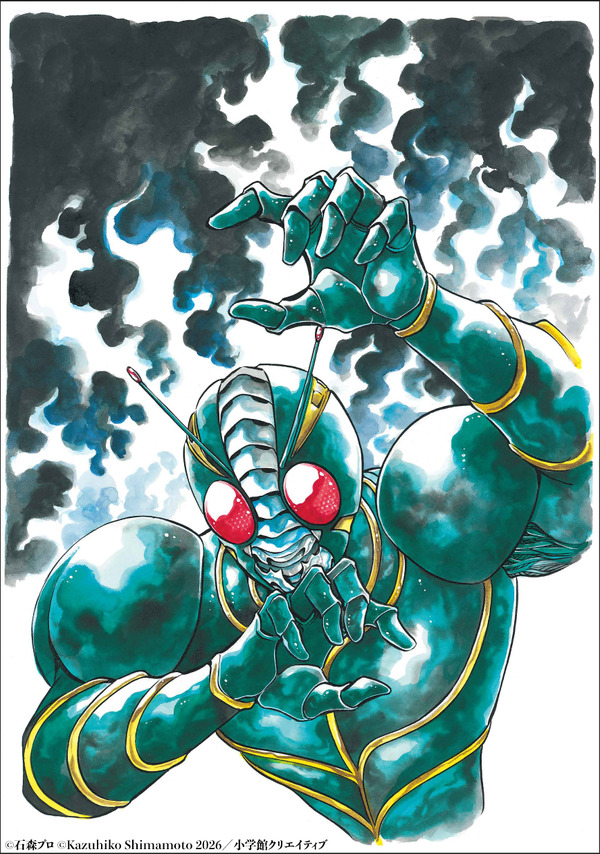
When Toei premiered Kamen Rider Build in late 2017, the production house took an architectural gamble that fundamentally changed Heisei-era visual language. Instead of relying purely on mystical motifs or digital sorcery, designer unit Plex and director Ryuta Tasaki anchored the Rider System in tangible mechanical engineering, asymmetrical biology, and lab equipment. The appetite for archival Tokusatsu hero illustration has surged anew in 2026, galvanized by legendary manga artist Kazuhiko Shimamoto's newly published tribute illustrations and retrospective analyses documented in an アニメ!アニメ!Anime Anime Report. As the overarching Kamen Rider franchise celebrates its 55th anniversary milestone this autumn, Build's mechanical blueprints, production sketches, and striking form evolutions remain a gold standard for industrial design in live-action science fiction.
From the distinct half-and-half collision of organic and kinetic mechanics in RabbitTank Form to the volatile, pitch-black dread of Hazard Form illustration, the series continues to inspire professional character designers and digital illustrators worldwide. The production team's original sketches treated every armor latch, pressure gauge, and hydraulic valve as functional equipment rather than passive decorative trim.
📌 Key Takeaways:
- Design Genesis: Plex designed the Rider System blueprints around practical mechanical physics, using translucent laboratory pipettes and organic animal physiology as a complementary dual-core system.
- Form Evolution: The aesthetic path from RabbitTank Form to the polychromatic Genius Form artwork tracks protagonist Sento Kiryu's psychological arc from amnesiac inventor to master physicist.
- Creative Community: In 2026, high-contrast anime style fan art and official concept art books continue to generate record engagement across international Tokusatsu enthusiast platforms.
The Science Behind the Suit: Rider System Blueprints and Fullbottle Concepts
At the center of Build's visual identity sits the Build Driver, an elaborate hand-cranked centrifuge designed to mix raw chemical compounds. Pre-production art reveals how Plex tackled the creative mandate: combining two wildly incompatible objects, a rabbit and a tank, a diamond and a gorilla, into a coherent combat suit. Early Fullbottle design concepts prioritized tactile, translucent materials that simulated bubbling laboratory reagents. Sento Kiryu sketches created by production concept artists depicted the Rider not as an armored samurai, but as an experimental chassis held together by industrial copper piping, hex bolts, and safety release valves.
The asymmetric color blocking accomplished something practical on camera. When RabbitTank dashes across a matte screen, the crimson left side delivers curved, organic lines mimicking muscle tissue, while the royal blue right side projects blocky, plated armor reminiscent of military machinery. These structural blueprints rejected the smooth, seamless body stockings typical of early Heisei designs. Instead, the design team embraced exposed joints and functional weight. Every mechanical joint required a visible hydraulic tube or pressure regulator, grounding impossible comic-book science in mechanical plausibility.
From RabbitTank to Genius Form: Visual Mechanics of an Armored Evolution
As the narrative pushed Sento Kiryu into wartime conflicts between fractured Japanese territories, his armor transformed accordingly. The visual journey reflects his emotional deterioration and eventual redemption. Sparkling, high-saturation initial forms gradually gave way to grim combat prototypes. The Hazard Form illustration remains one of the most chilling designs in Toei hero gallery history: an abyssal, carbon-matte black suit stripped of vibrant color, interrupted only by hazard-stripe caution markings and piercing mechanical visor lenses.
Genius Form artwork inverted that visual threat completely. Serving as Build's ultimate combat iteration, Genius incorporates all 60 Fullbottles directly into the suit's outer framework. Where lesser designs might look cluttered, original sketches positioned the miniature glass cylinders along dynamic lines of kinetic force, transforming the protagonist into an iridescent, running particle accelerator. The pure white primary chassis acts as a neutral prism, bouncing light across multi-colored bottle caps that simulate flowing neurotransmitters.
Technical Profile: Visual Framework of the Build Armor System
The progression of Sento Kiryu’s technology across the series tracked specific industrial design paradigms, shifting from agile dual-element experimentation to high-output hazard containment.
| Combat Form | Core Industrial Motif | Structural Mechanics & Color Balancing |
|---|---|---|
| RabbitTank Form | Kinetic Agility vs. Heavy Ballistics | Split asymmetric plating; coil-spring foot mold opposing tank-tread boot chassis. |
| RabbitTank Hazard | Industrial Weaponization & Overdrive | Monochromatic matte black; carbon-composite shell accented with industrial hazard chevrons. |
| Cross-Z Magma | Volcanic Fluidity & Combustion Engine | Transparent magma ducts running over metallic bronze carapace; internal lava chamber visor. |
| Genius Form | Quantum Integration & Laboratory Synthesis | White-coat laboratory chassis fitted with 60 integrated miniature Fullbottle reservoirs. |

The Rivalry in Ink: Blood Stalk Concept Art and Kamen Rider Cross-Z
The narrative tension of Build hinged on the visual polarity between Sento Kiryu and his companions, notably Ryuga Banjo. While Sento’s silhouettes celebrate calculated geometry, secondary protagonist Kamen Rider Cross-Z brings primal, dragon-infused armor to the fray. Concept artists contrasted Sento's clean lab coats with Banjo's raw, blue-flame aesthetic. When Banjo upgraded to his ultimate state, artists produced the Cross-Z Magma tribute plates, swapping cool cobalt tones for scorching bronze carapaces veined with flowing lava chambers.
The visual villains matched this design complexity. Blood Stalk concept art demonstrated how sinister an organic predator could look when trapped inside a metallic deep-sea diving suit. Blood Stalk's crimson cobra helm and pipe-driven smoking vents established Evolto as an alien entity wearing stolen Earth technology. His later iterations stripped away the piping in favor of cosmic, planetary-ring shoulder pauldrons, completing a design curve that scaled directly with his escalating narrative threat.
Industry Masterworks: Toei Hero Gallery and Tokusatsu Character Design Tributes
The visual design of Build does not exist in a vacuum. It represents the pinnacle of an illustration lineage running through five decades of Japanese action cinema. Recent retrospectives have highlighted how veteran designers continue to elevate Tokusatsu character design. Concept sketches from industry legends like Mahiro Maeda (celebrated for his mechanical design on Mad Max: Fury Road and Shin Kamen Rider) showed how classical Showa-era silhouettes could merge with raw industrial grit.
Similarly, the release of high-profile collaborative art projects across the industry, such as the official crossover posters between Evangelion and modern Kamen Rider properties, reaffirms that tokusatsu suits are serious works of speculative industrial design. When veteran animators illustrate Sento Kiryu or his armored alter-egos, they emphasize the friction between human muscle and rigid steel plates. Build's visual legacy endures because the designs look like they could actually break under pressure, leak fluid, or overheat during continuous combat.
Digital Canvases and Community Craft: Anime Style Fan Art in 2026
Nearly a decade after its television debut, Kamen Rider Build commands massive attention across digital creator platforms like Pixiv, ArtStation, and X. Independent digital illustrators continue to reimagine the series through vibrant anime style fan art, frequently exploring alternate "Best Match" configurations that never made it to live-action television sets.
Community illustrators focus intensely on the human element within the steel. Sento's half-unbuttoned trench coats, mismatched socks, and grease-stained drafting tables feature prominently alongside dynamic action scenes. Digital artists frequently render the glowing compound eyes of the helmets using chromatic aberration techniques, highlighting the sensory overload experienced by the Rider System's pilots. By treating the suits as dangerous laboratory prototypes rather than magical armor, the fan art community preserves the gritty, experimental spirit that defined the television production.
Frequently Asked Questions (FAQ)
Q1: Who was responsible for the original suit and gadget concepts in Kamen Rider Build?
A1: The primary mechanical and armor concepts were conceived by design studio Plex in collaboration with Toei's veteran creative directors and Bandai's toy engineering divisions. Plex was instrumental in turning laboratory equipment into wearable action armor.
Q2: Why does Hazard Form remain such a popular subject for illustrators?
A2: Hazard Form strips away the vibrant, friendly split-coloring of the standard Rider System in favor of an intimidating matte-black silhouette with industrial hazard striping. Illustrators favor it because the design visually communicates mechanical instability and psychological danger through stark minimalism.
Q3: Where can enthusiasts find verified official concept sketches and production art?
A3: Official illustrations, technical blueprints, and pre-production sketches are primarily preserved in Toei's official Kamen Rider Build Character Book volumes, the Uchusen (Space Ship) Tokusatsu yearbooks, and curated Toei Hero Gallery commemorative art exhibitions.
The Lasting Visual Blueprint of Heisei Tokusatsu
The visual success of Kamen Rider Build stems from its refusal to hide the moving parts. While superhero design frequently drifts toward seamless, weightless digital textures, Sento Kiryu’s technology honors the tactile majesty of gears, valves, glass tubes, and pressurized steam. Whether captured in official Toei production archives or celebrated through community fan art, the Rider System remains an undeniable masterwork of modern Japanese speculative design.